Compare fractions Addition Worksheets for Ages 5-8
6 filtered results
-
From - To
Introduce young learners to the basics of fractions and addition with our specially designed Compare Fractions Addition Worksheets for Ages 5-8. These engaging printables make learning fun and interactive by combining simple fraction comparisons with addition exercises. Perfect for building foundational math skills, these worksheets enhance kids' understanding of fraction concepts while strengthening their addition capabilities. Crafted to align with educational standards, they provide balanced challenges suited to early grade levels. Boost your child’s confidence and competence in math with our vibrant and easy-to-follow worksheets. Ideal for classrooms or at-home practice, a fun and effective way to nurture mathematical thinking!
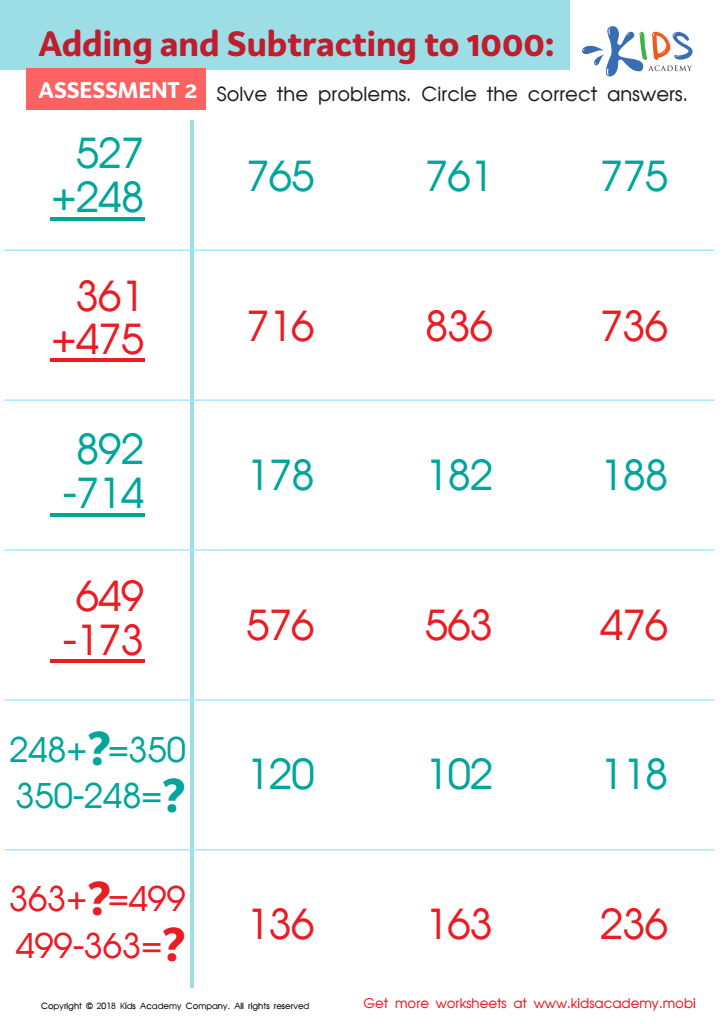
Adding and Subtracting to 1 Worksheet: Assessment 2
 Assign to My Students
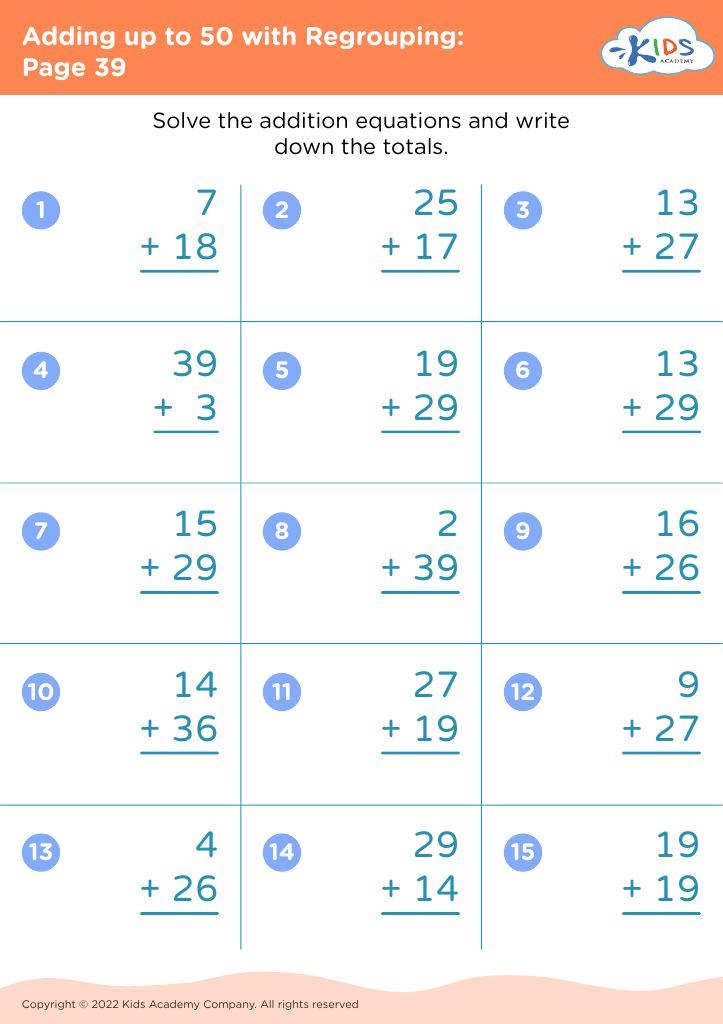
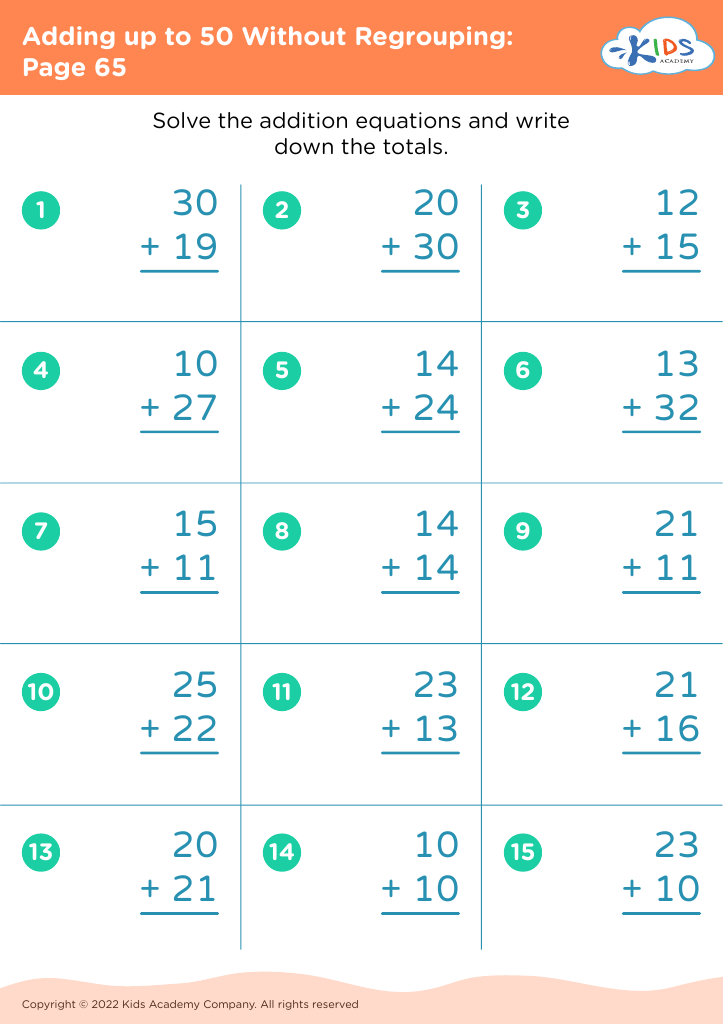








Understanding how to compare and add fractions at an early age lays a critical foundation for more advanced math skills. At ages 5-8, children are developing their number sense—how numbers relate to each other—which is crucial for all future learning in mathematics.
Learning to compare fractions helps kids grasp the concept of parts of a whole. This introduces them to the idea that numbers can be split into smaller, equal parts, fostering a deeper understanding of division and multiplication. When children learn to compare fractions, they start understanding relationships between different numerical values.
Addition of fractions helps build the skill of finding common denominators, strengthening their problem-solving abilities and critical thinking. Kids learn flexibility in numbers, seeing that there can be multiple ways to arrive at the same answer.
Moreover, these skills are not only essential academically but are also applicable in everyday situations such as cooking or dividing objects among friends or family. Developing such practical life skills can boost a child's confidence and independence.
For teachers and parents, emphasizing these concepts early can set a child on a path to mathematical proficiency, providing a strong base for more complex topics such as algebra and geometry, and nurturing a positive attitude towards math overall.








