Comparing numbers Addition Worksheets for Ages 5-8
4 filtered results
-
From - To
Welcome to our "Comparing Numbers Addition Worksheets" designed for children aged 5-8! Our engaging and interactive worksheets help young learners master the skill of comparing numbers while reinforcing their addition abilities. These worksheets are thoughtfully crafted to promote critical thinking, enabling kids to identify greater, lesser, and equal values. With colorful visuals and fun exercises, children will enjoy practicing comparison concepts while building a strong foundation in math. Perfect for classroom use or home learning, our resources make math a playful and enjoyable experience. Explore our variety of worksheets and watch your child's confidence and skills in comparing numbers soar!
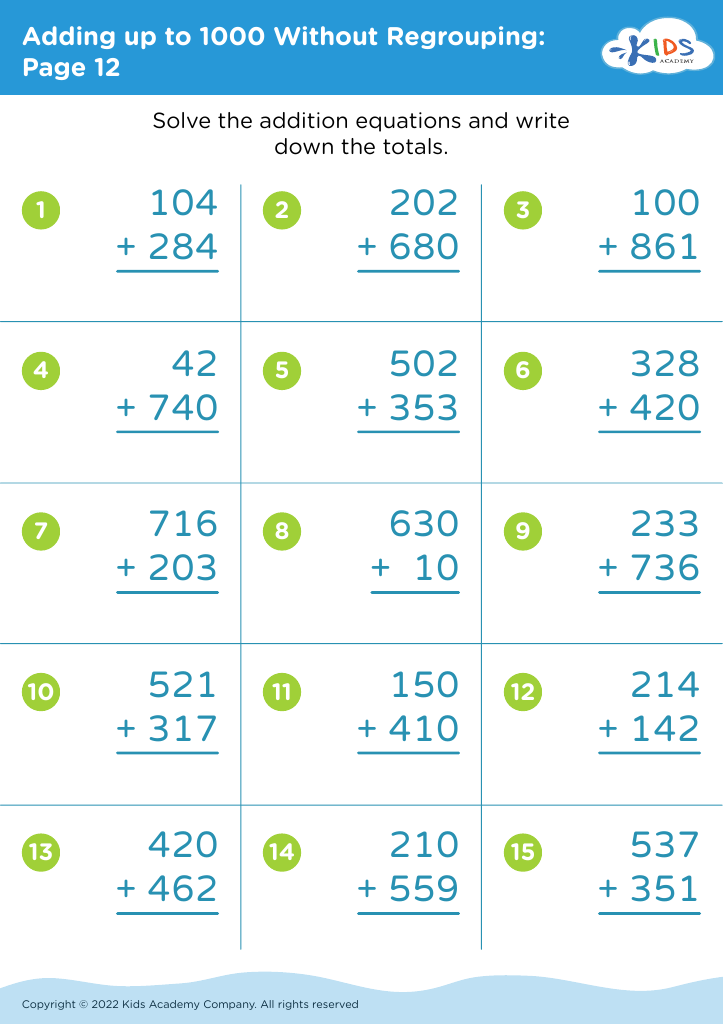
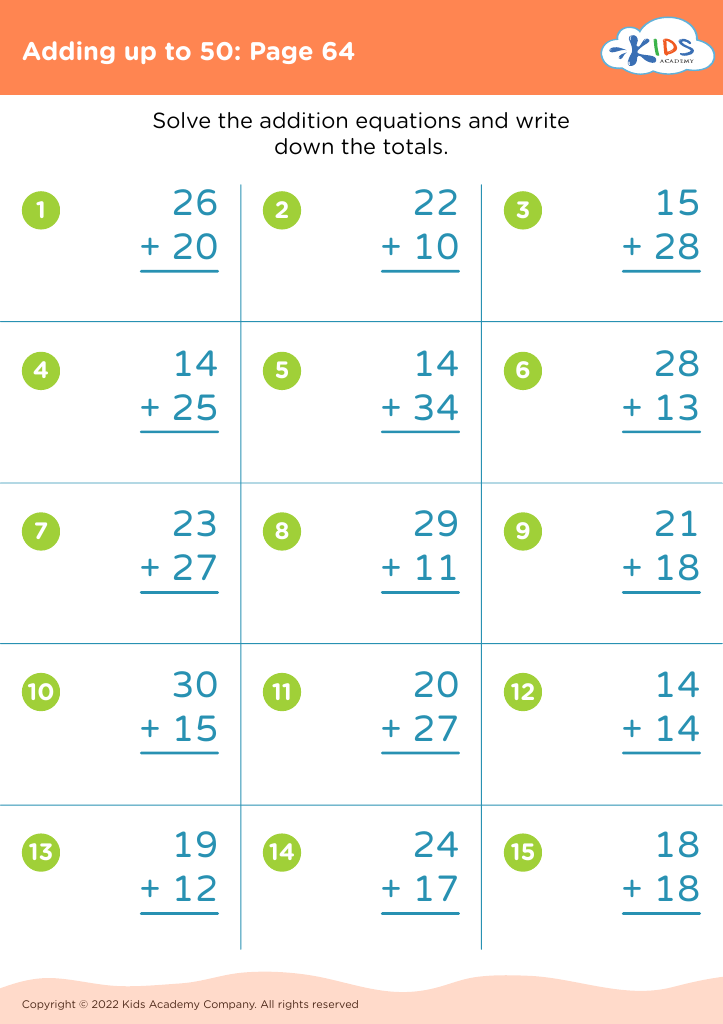
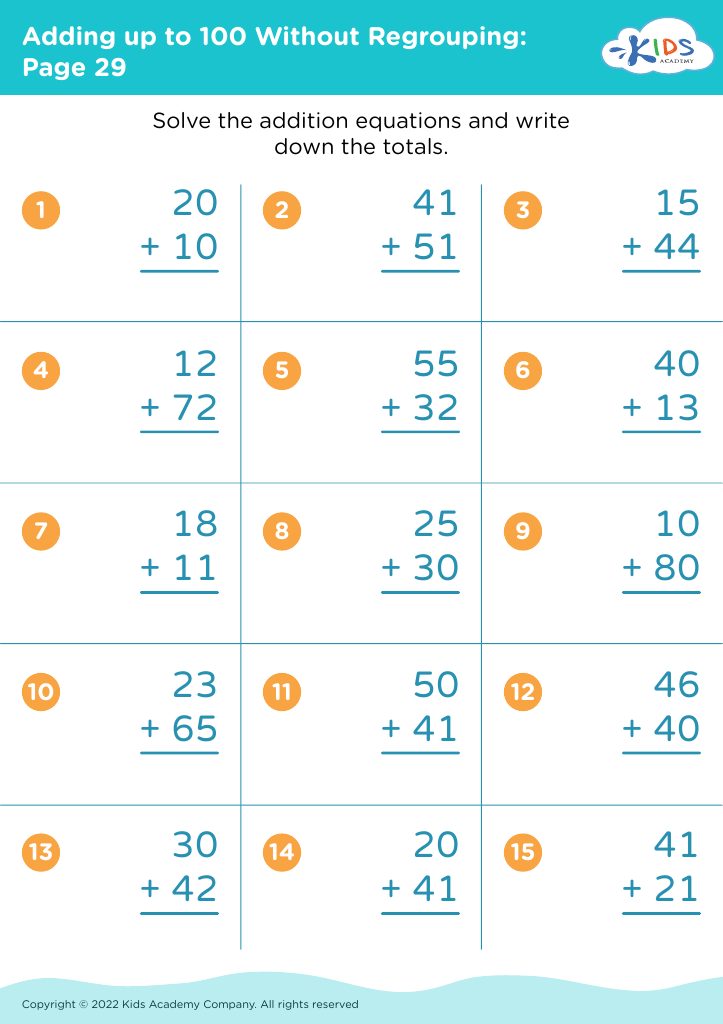
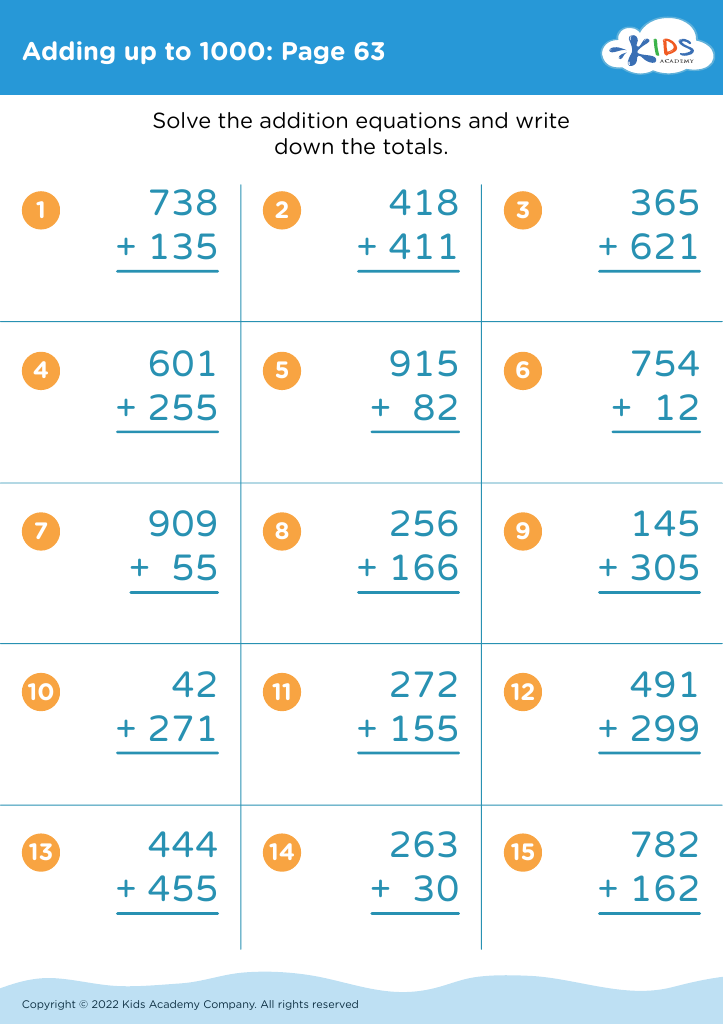








Comparing numbers and performing addition are essential foundational skills for children ages 5-8, and it's crucial for both parents and teachers to prioritize these concepts. First, mastering number comparison helps children understand quantity and relative value, which are fundamental in everyday decision-making, budgeting, and even programming logic later in life. When kids learn to compare numbers, they develop critical thinking and problem-solving skills that are applicable beyond mathematics.
Addition, on the other hand, is not just a mathematical operation; it serves as a building block for more complex mathematical concepts and skills. Proficient addition skills enable children to tackle subtraction, multiplication, and division with confidence. Encouraging children to perform these tasks through fun activities, games, or practical examples helps enhance their mathematical fluency and promotes positive attitudes towards math.
Moreover, by emphasizing these skills, parents and teachers can foster a collaborative learning environment, enabling children to share their understanding and strategies. Ultimately, nurturing strong mathematical foundations in early education sets the stage for academic success, emotional resilience, and a lifelong love for learning. Thus, prioritizing number comparison and addition is vital for both immediate academic performance and future educational opportunities.








