Comparing quantities Addition Worksheets for Ages 5-8
7 filtered results
-
From - To
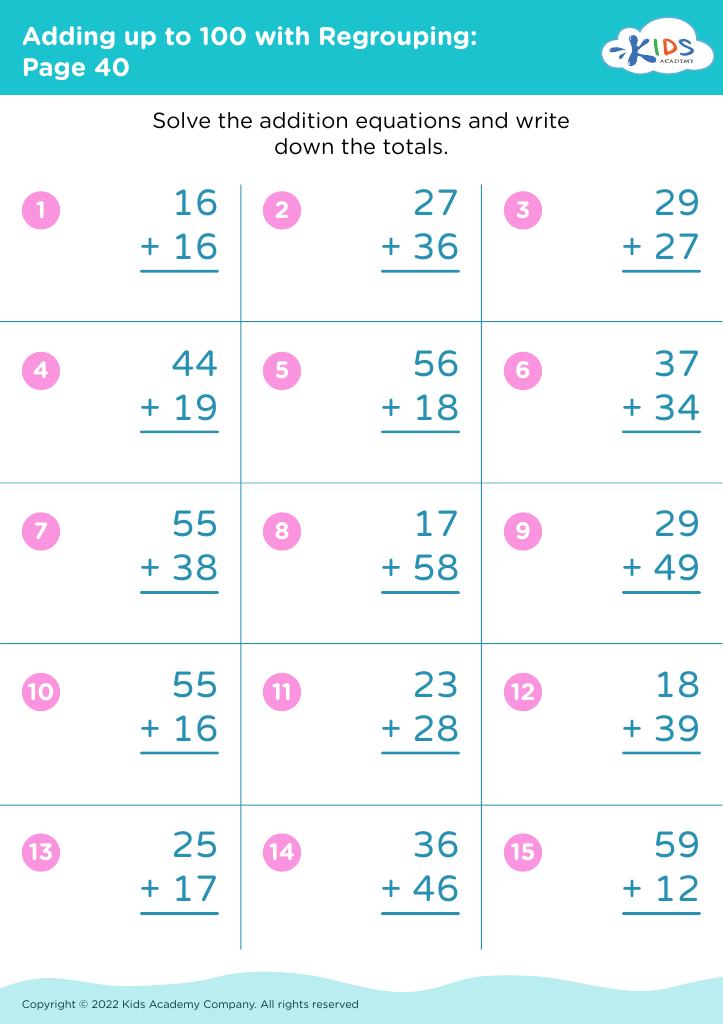
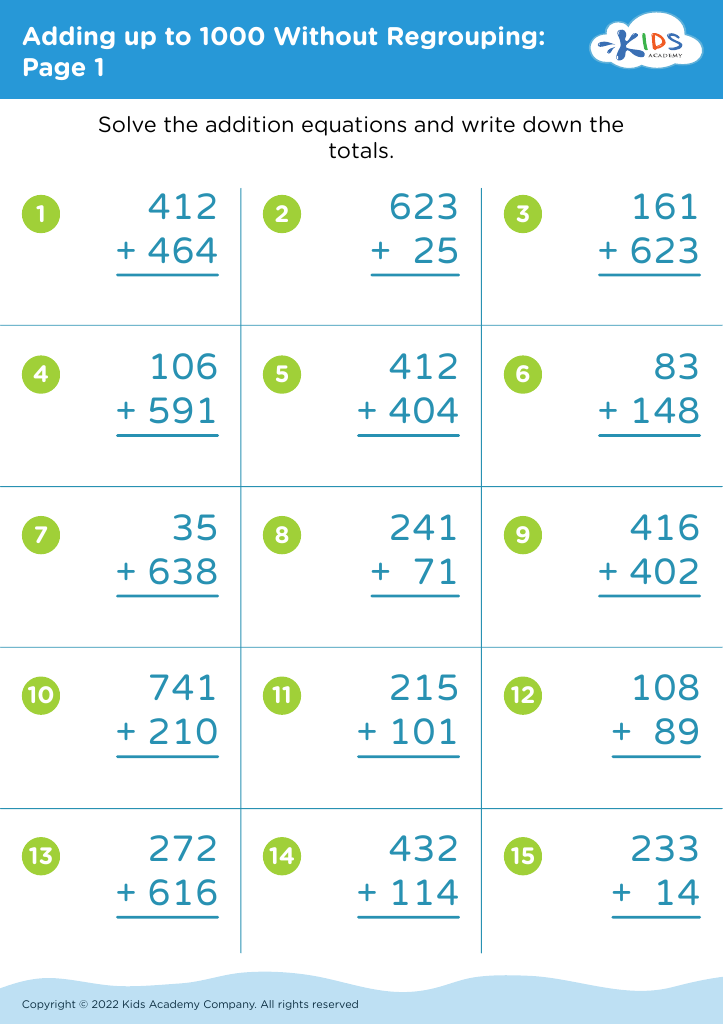
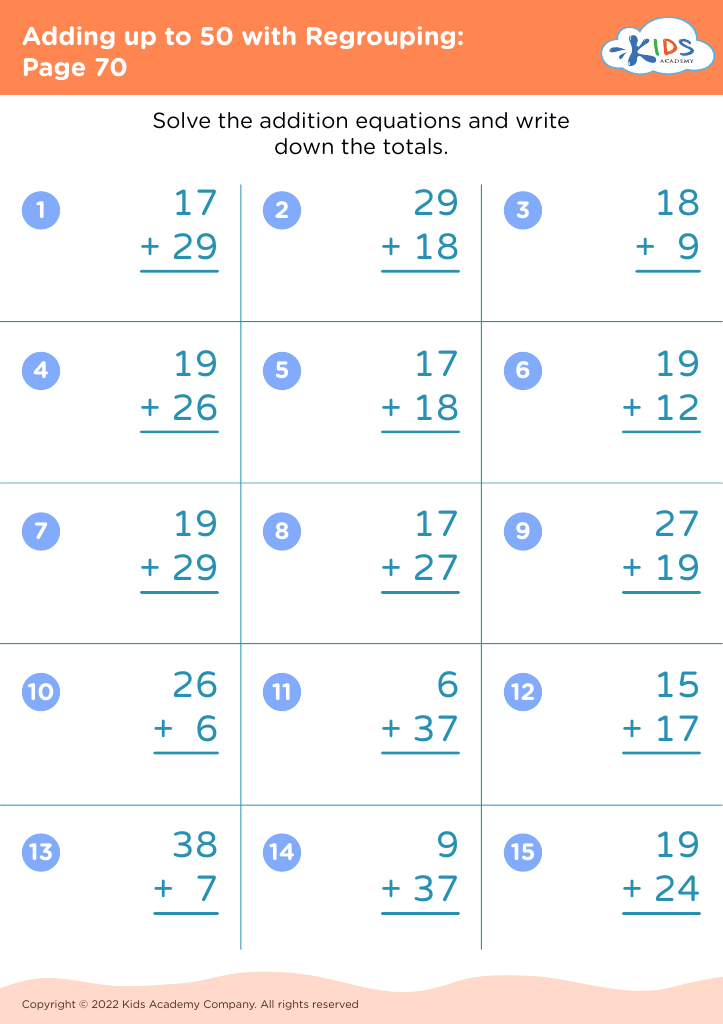
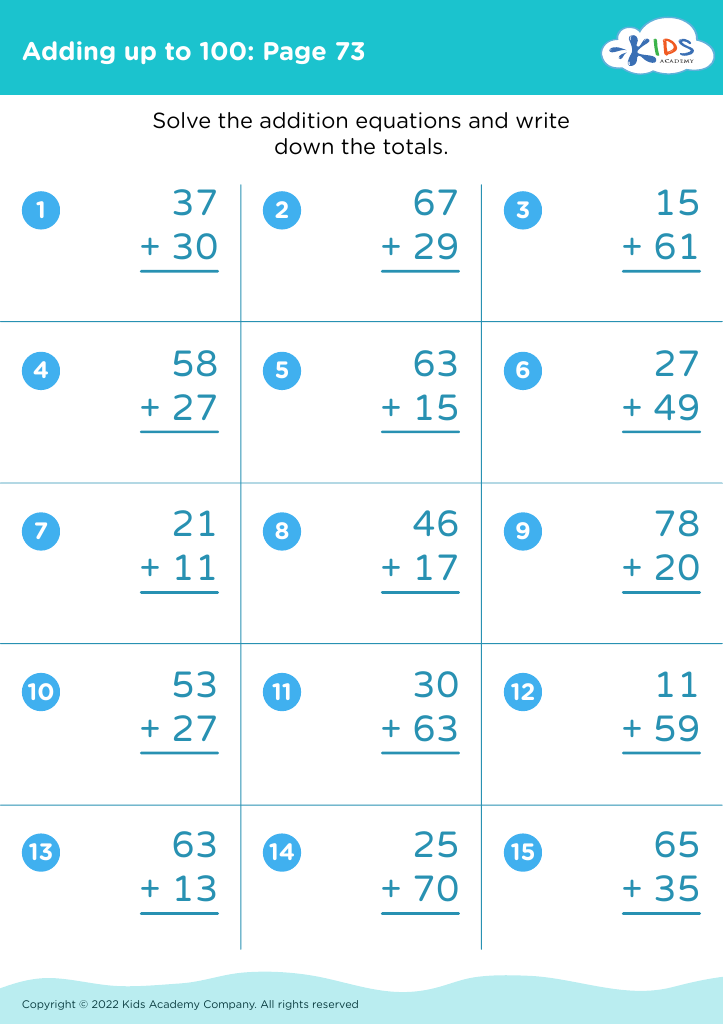
Our "Comparing Quantities Addition Worksheets for Ages 5-8" are designed to introduce young learners to the fundamental concepts of addition and comparison. These engaging worksheets feature fun and relatable visuals to help children easily grasp how to compare quantities and add numbers effectively. Perfect for early elementary students, these activities enhance counting, number sense, and basic arithmetic skills while fostering critical thinking and problem-solving abilities. Whether used in the classroom or for extra practice at home, our worksheets provide a solid foundation for future mathematical development in a playful and educational manner.
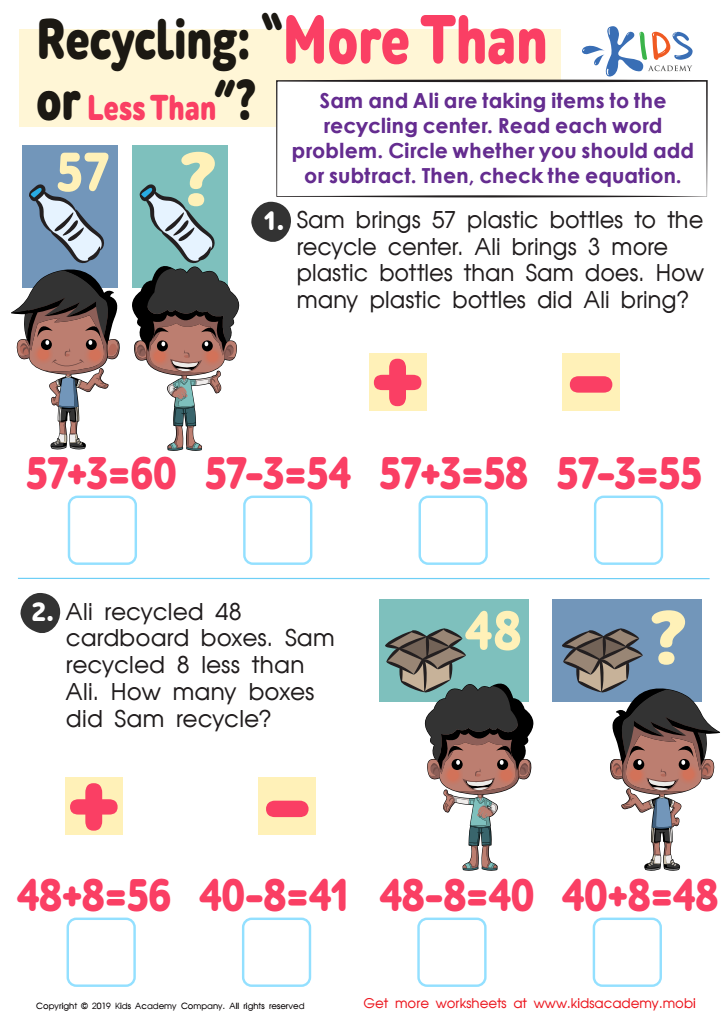
Recycling - More or Less Worksheet
 Assign to My Students








Comparing quantities and teaching addition to children ages 5-8 is foundational for their mathematical development, critical thinking skills, and problem-solving abilities. At this formative age, children are establishing their basic understanding of numbers and how they interact. Here’s why parents and teachers should emphasize these concepts:
-
Numeracy Development: Comparing quantities helps children develop number sense, the ability to understand, relate, and connect numbers. An understanding of more, less, and equal sets the stage for future arithmetic and algebraic concepts.
-
Cognitive Skills: Engaging in comparing and adding quantities enhances cognitive abilities such as memory, attention to detail, and logical reasoning. These skills are not only vital for mathematics but are transferable to other subjects and everyday situations.
-
Problem-Solving: Addition is a fundamental operation in math. Early proficiency with addition supports higher-level math learning and empowers children to tackle a variety of challenges both in academic settings and in real-life scenarios.
-
Confidence Building: Success in early math experiences can boost a child's confidence and foster a positive attitude towards learning. This sense of accomplishment promotes a love of learning and helps children to be persistent and resilient when faced with new challenges.
-
Practical Applications: Understanding and comparing quantities, coupled with basic addition, are used in everyday life situations —from counting toys or snacks to managing their allowance money.
Investing in these early mathematical competencies sets the groundwork for continued academic success and practical problem-solving throughout life.








