Critical thinking skills Addition Worksheets for Ages 5-8
7 filtered results
-
From - To
Enhance your child's mathematical abilities with our engaging Critical Thinking Skills Addition Worksheets, designed specifically for ages 5-8. These worksheets go beyond simple addition practice; they challenge young learners to think critically and apply problem-solving skills in various contexts. With fun activities and scenarios, children will develop their reasoning and analytical skills while mastering addition. Our easy-to-follow format encourages independent learning, making math enjoyable and interactive. Perfect for parents and teachers alike, these worksheets are a valuable tool to foster critical thinking in early education. Download now and watch your child's confidence and abilities soar!
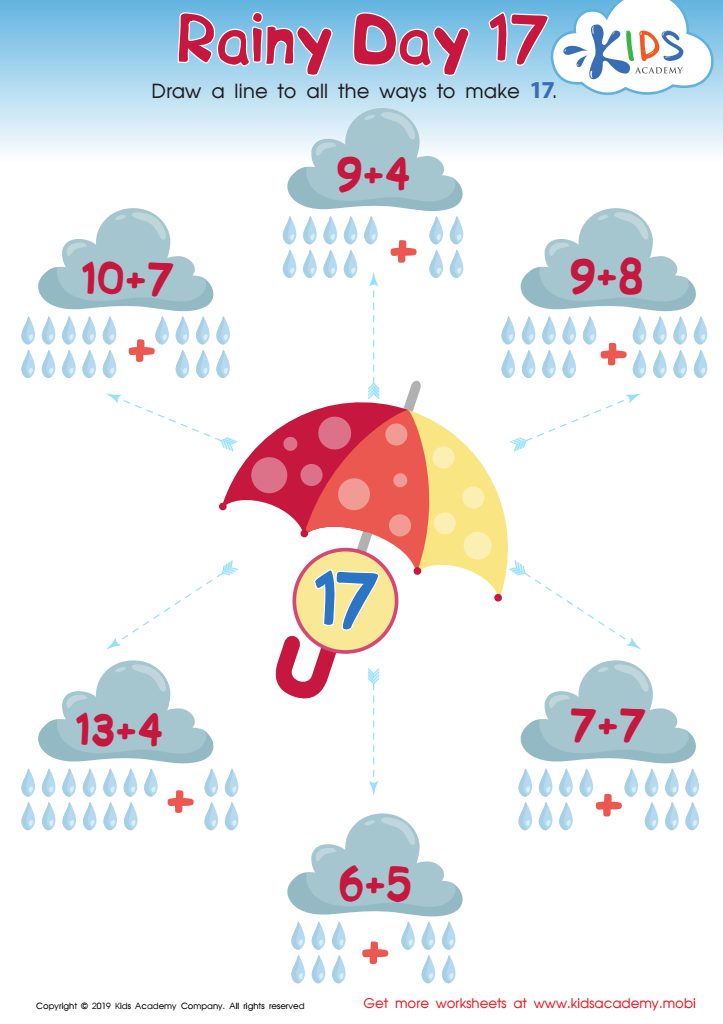
Rainy Day 17 Worksheet
 Assign to My Students
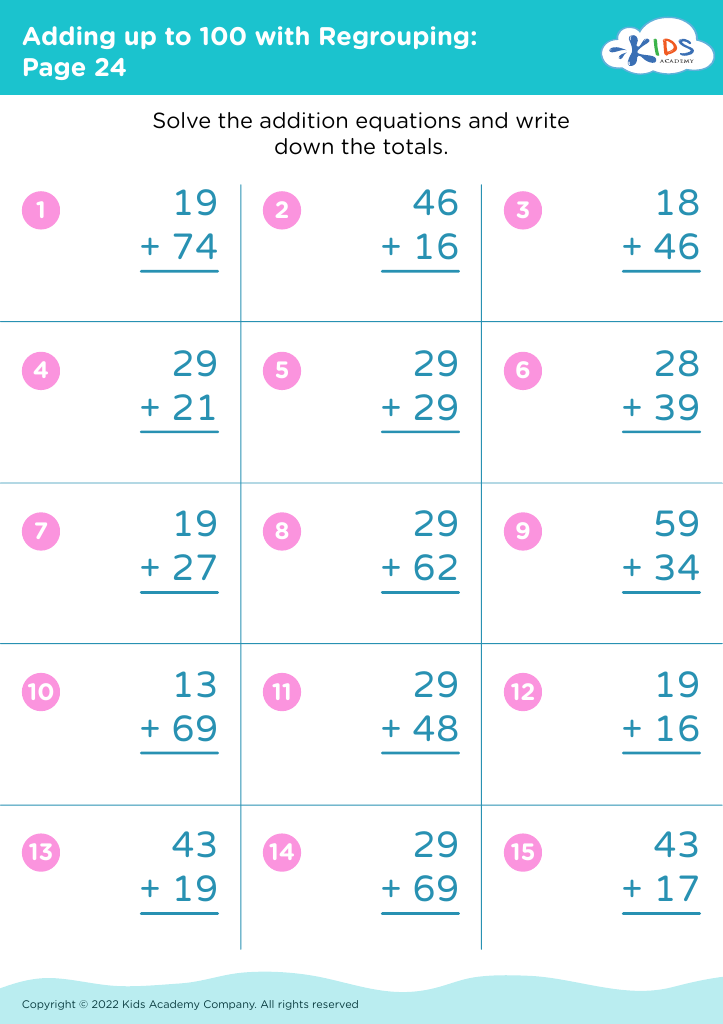
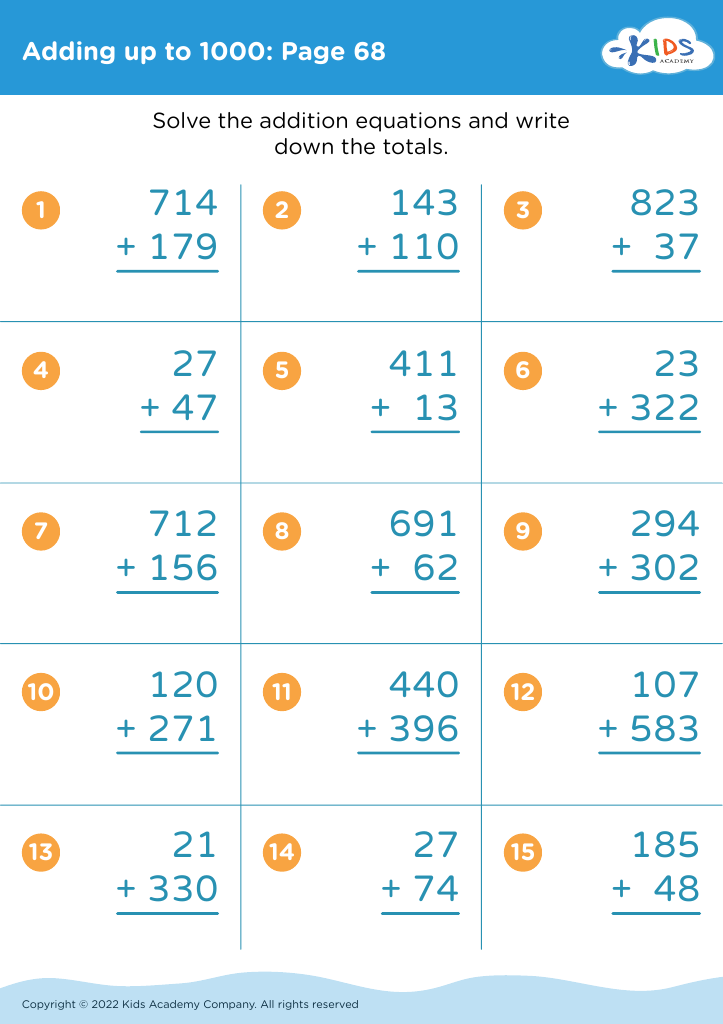
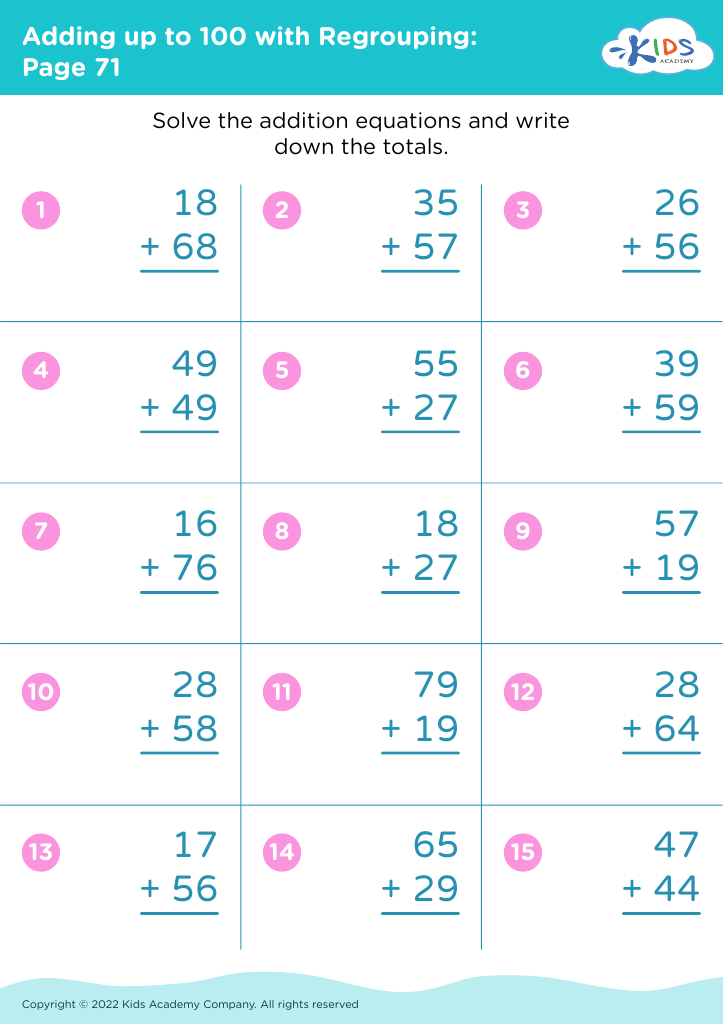
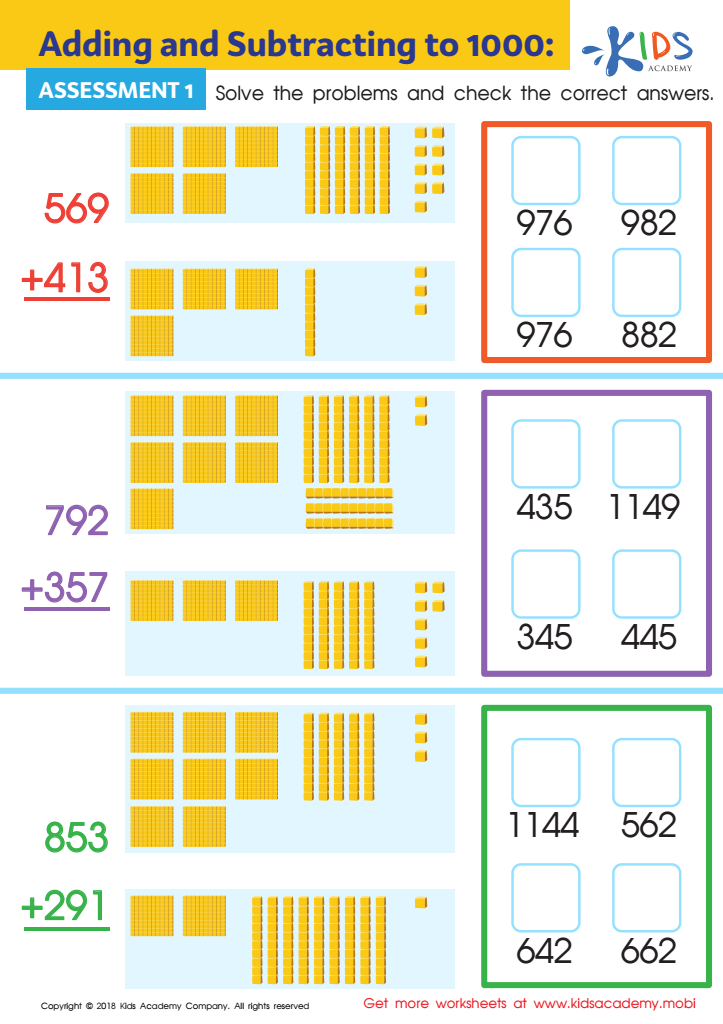
Adding and Subtracting to 1 Worksheet: Assessment 1
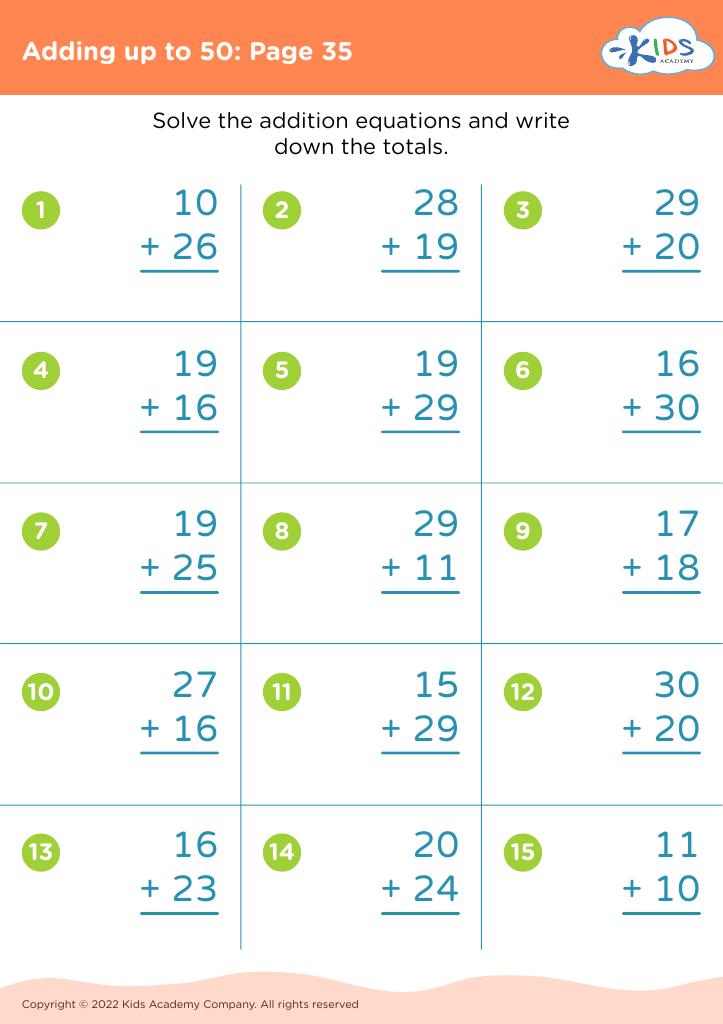
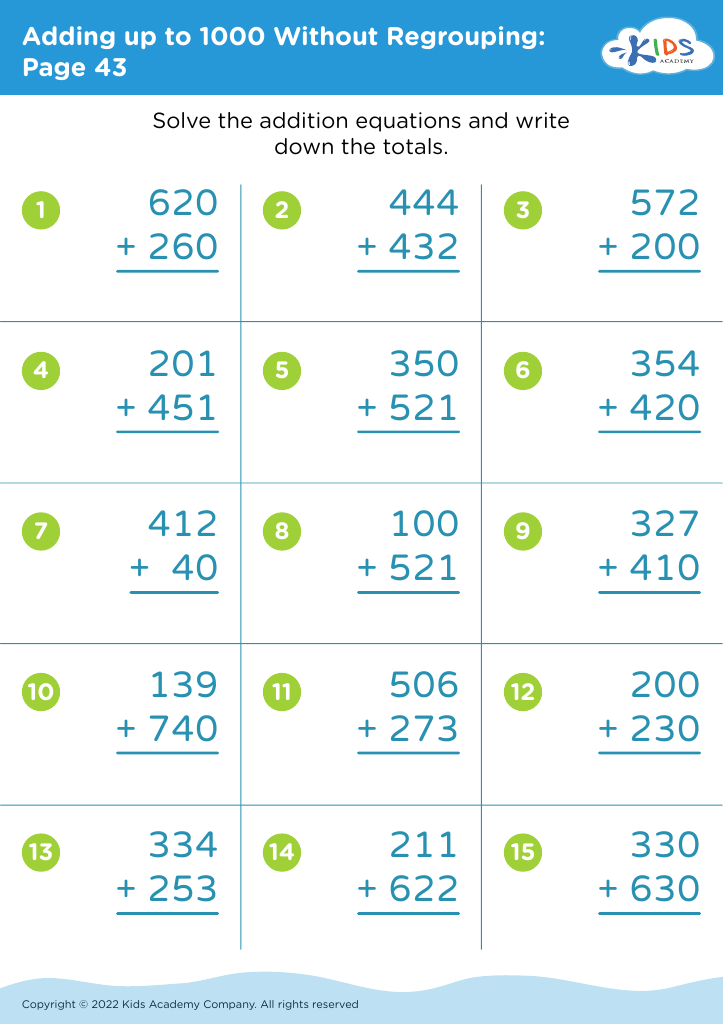








Critical thinking skills are essential for children aged 5-8 as they lay the foundation for effective problem-solving and decision-making throughout life. At this developmental stage, children start to explore the world more independently, making it crucial for parents and teachers to foster an environment that nurtures critical thinking.
Developing these skills helps young learners analyze information, evaluate options, and justify their choices. As they engage in discussions and activities, they learn to ask questions, express ideas, and consider different perspectives. This skill set not only aids academic success but also prepares children to navigate social interactions, enhancing their emotional intelligence.
Incorporating critical thinking activities, like puzzles or open-ended questions, can stimulate interest and creativity. When parents and teachers prioritize these skills, they encourage children to take initiative in their learning, becoming curious and confident individuals. Moreover, critical thinking enables kids to understand cause and effect, foresee potential pitfalls, and make informed decisions, both individually and collaboratively.
By embracing critical thinking, parents and teachers equip children with the tools to face challenges in an increasingly complex world, fostering lifelong learning and adaptability, traits that are invaluable in their future endeavors.








