
Develop logical thinking Addition Worksheets for Ages 5-8
9 filtered results
Difficulty Level
Grade
Age
-
From - To
Subject
Activity
Standards
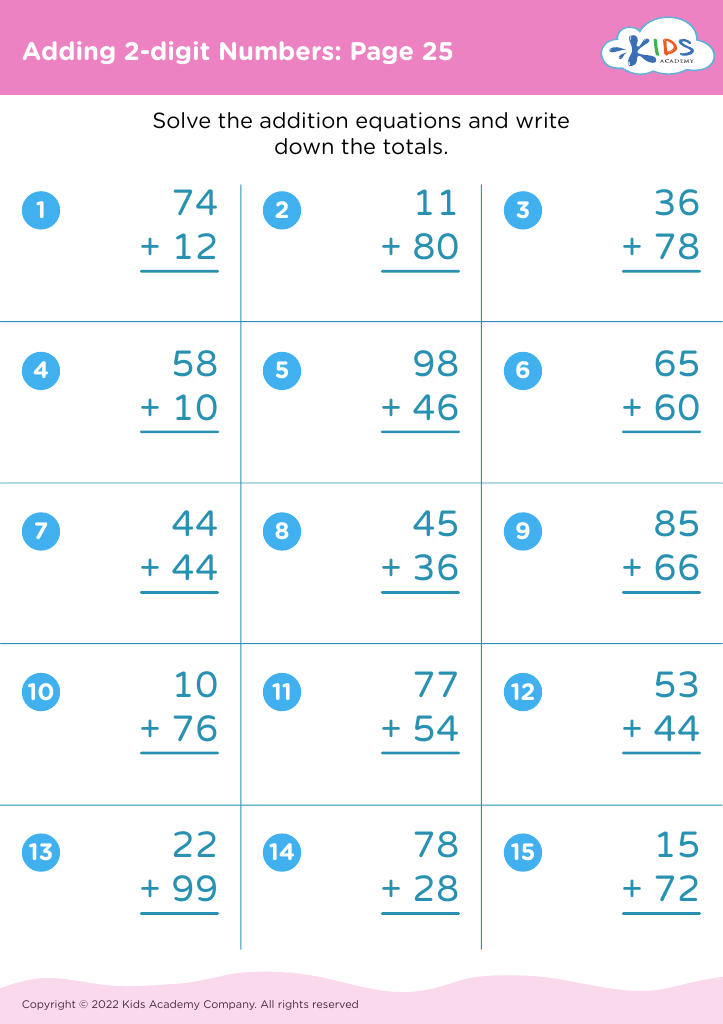
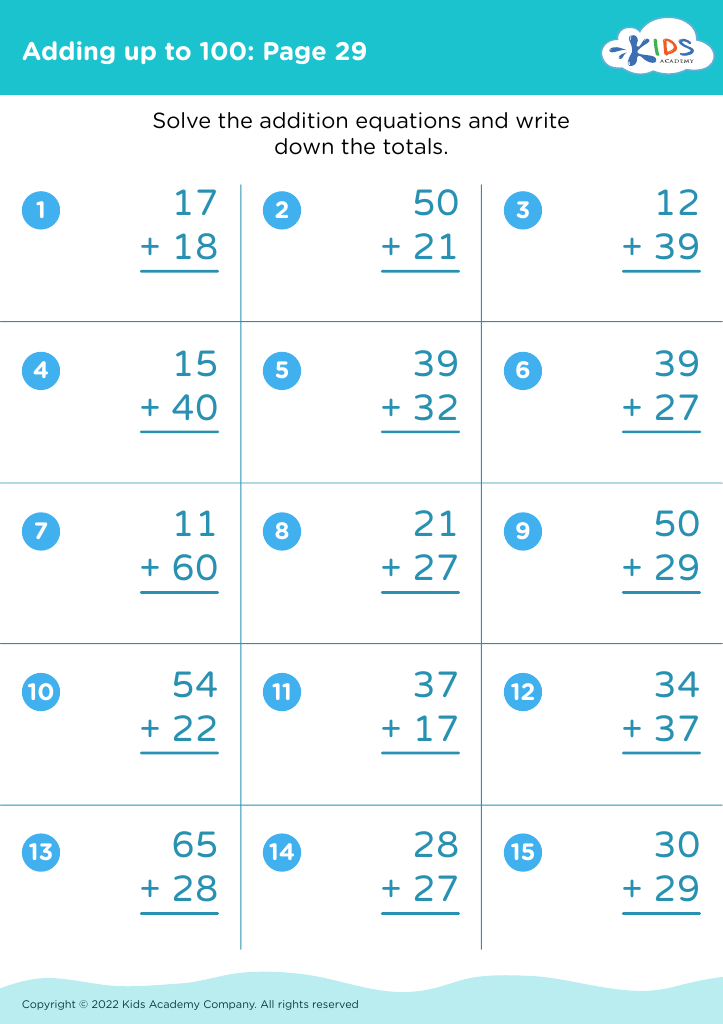
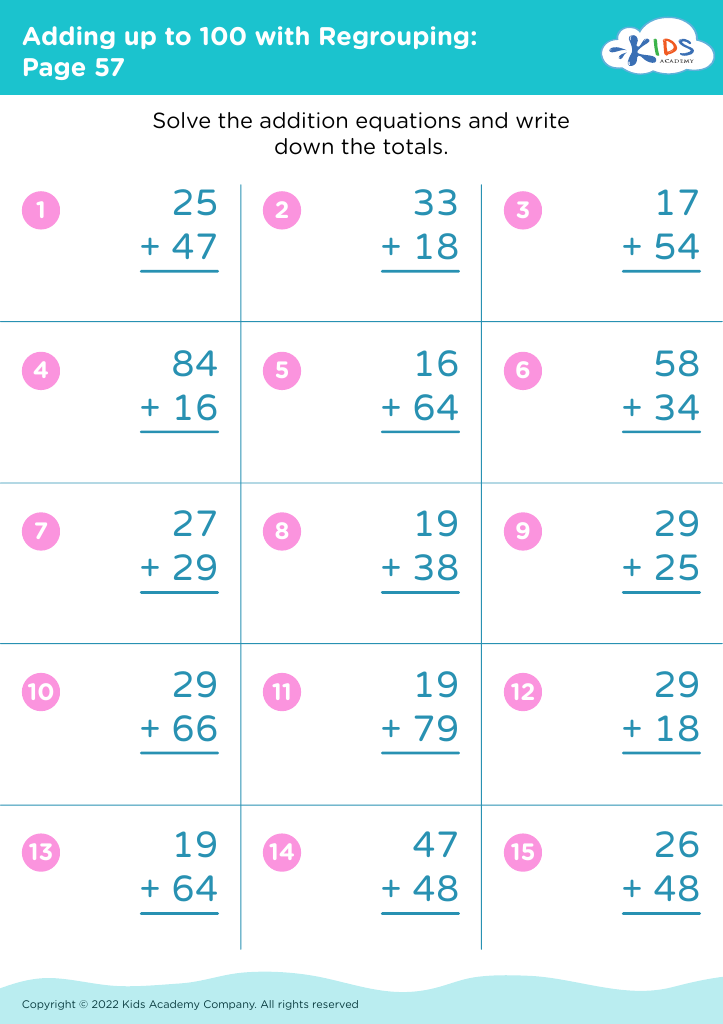
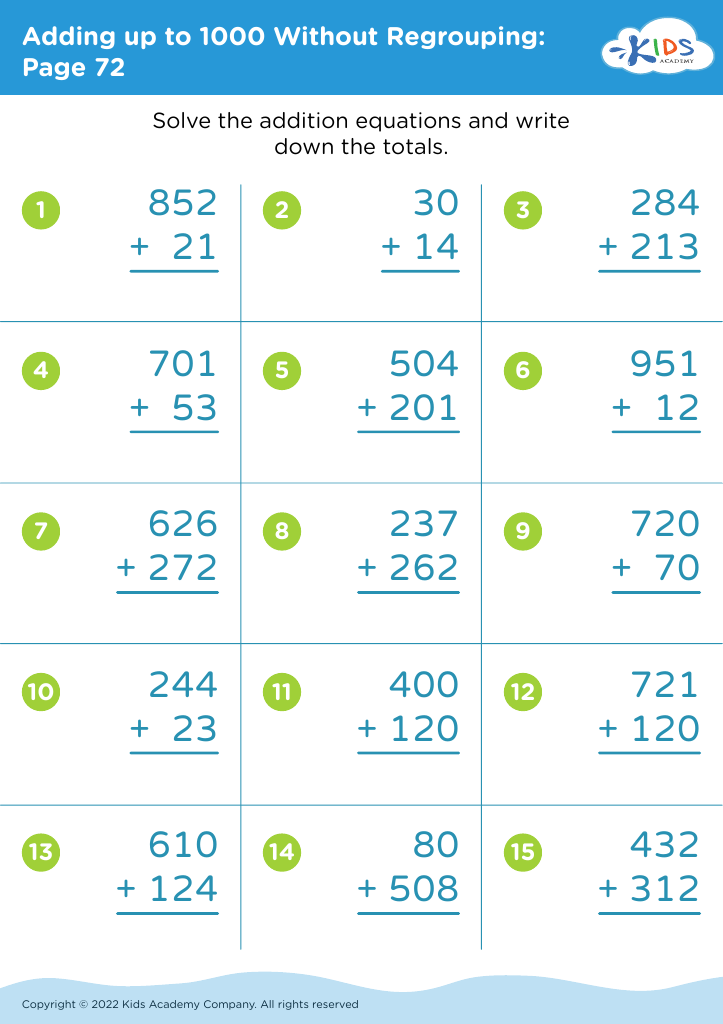
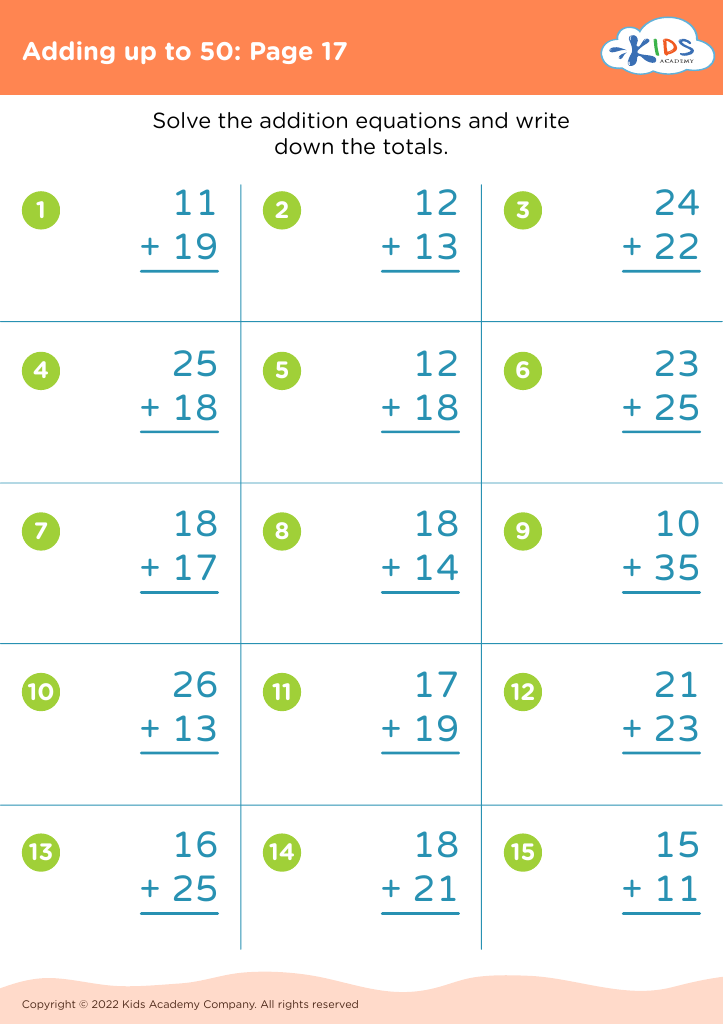
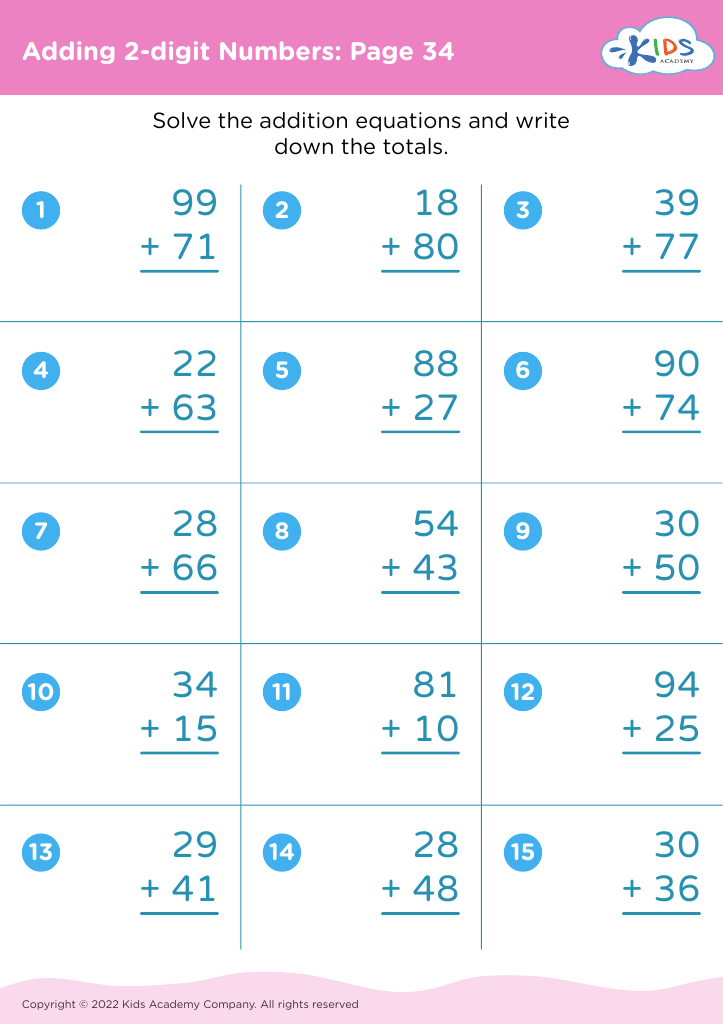
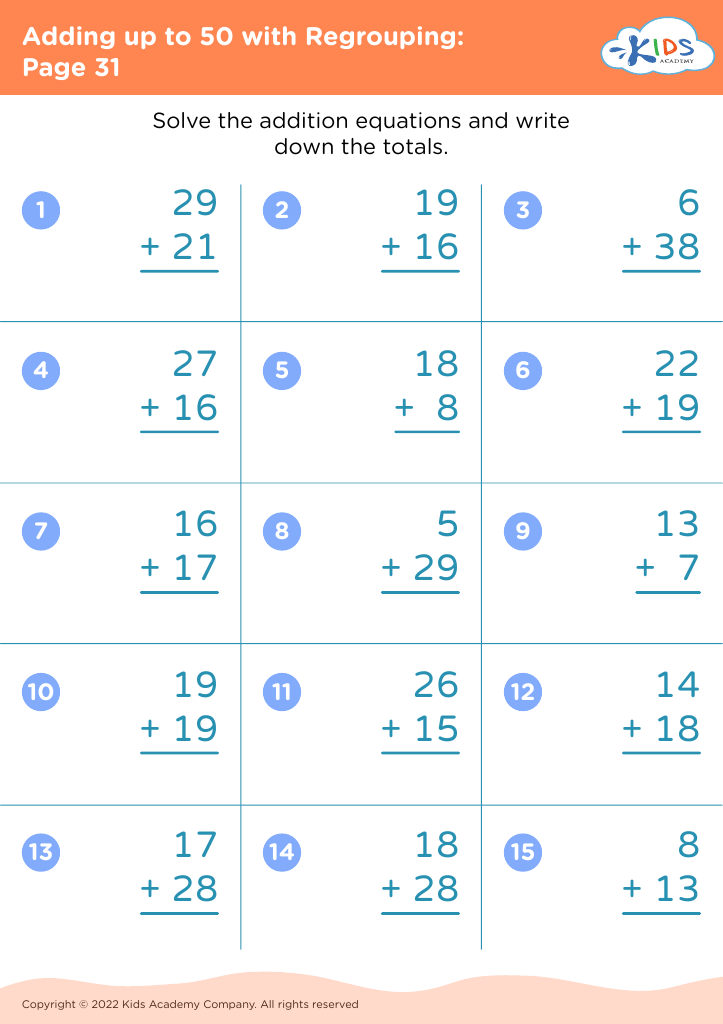
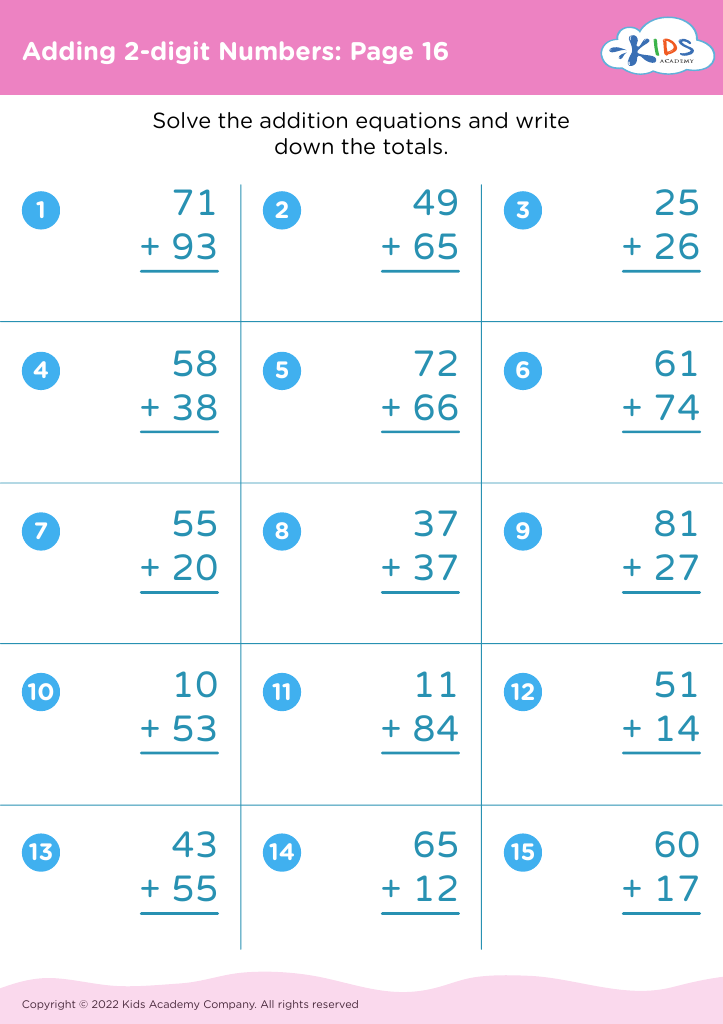
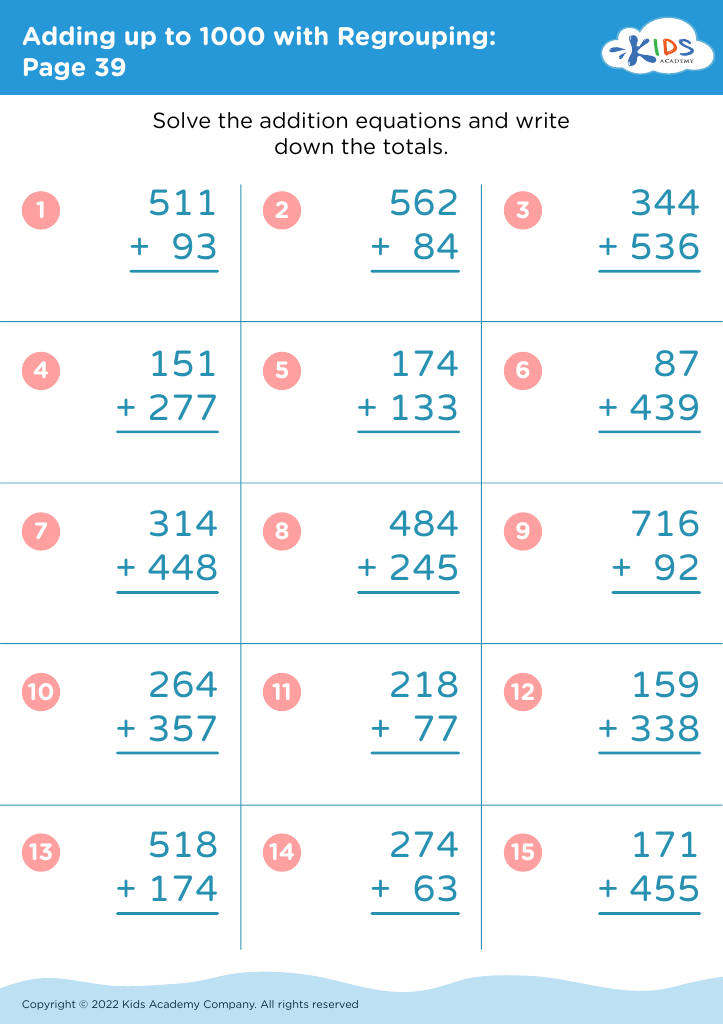
Discover our engaging "Develop Logical Thinking Addition Worksheets," designed specifically for children aged 5-8. These hands-on activities seamlessly blend fun with learning, helping young minds build a strong foundation in addition while enhancing their logical thinking skills. Ideal for kindergarten to grade 2, each worksheet features age-appropriate challenges that promote critical thinking, problem-solving, and numerical fluency. Perfect for use at home or in the classroom, these resources support your child's mathematical journey, turning addition into an exciting adventure. Unlock your child's potential with our expertly crafted exercises. Visit us to get started!
Favorites
With answer key
Interactive
Join Kids Academy for Free
Who is primarily going to use this learning content?







Parents and teachers should care about developing logical thinking addition skills in children aged 5-8 because it lays a crucial foundation for future learning and critical problem-solving abilities. This age group is in a sensitive period for cognitive development, and fostering logical thinking helps kids understand basic arithmetic concepts that are the building blocks for more advanced math skills.
Mastering addition at an early age not only strengthens numerical proficiency but also enhances a child's ability to reason, make connections, and recognize patterns. Logical thinking in addition promotes mental discipline and the process of understanding how parts make up a whole, which is applicable in various life situations beyond math. For instance, when children solve simple addition problems, they practice organizing their thoughts and following steps systematically, skills that are transferable to reading, science, and more.
Moreover, the confidence gained from mastering early math problems boosts a child's self-esteem and encourages a positive attitude towards learning. Through engaging and practical exercises, children become more comfortable with making mistakes and learning from them, which is a valuable mindset for any academic or real-life challenges they will face in the future. Supporting logical thinking addition in young children thus sets them on a path toward academic success and well-rounded cognitive development.








