Enhance fine motor skills Addition Worksheets for Ages 5-8
4 filtered results
-
From - To
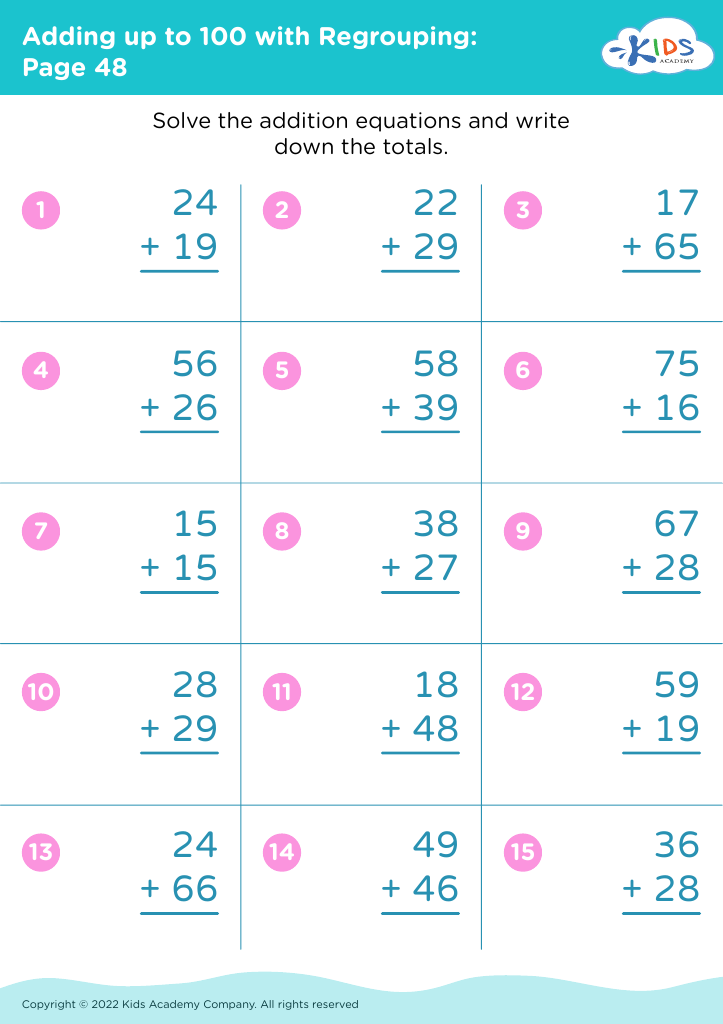
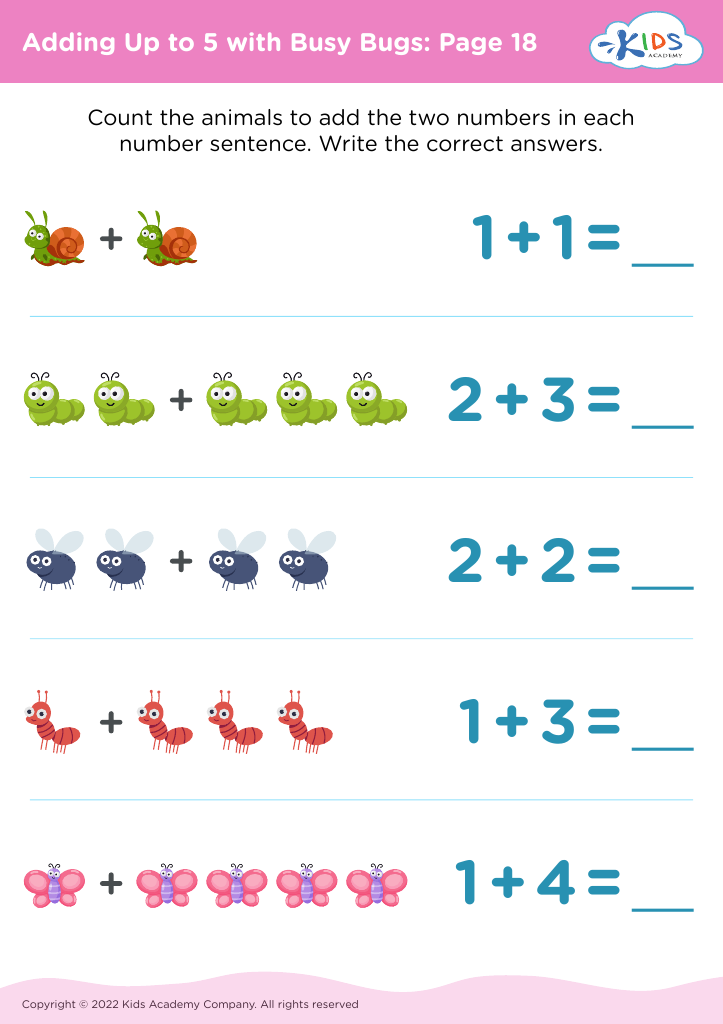
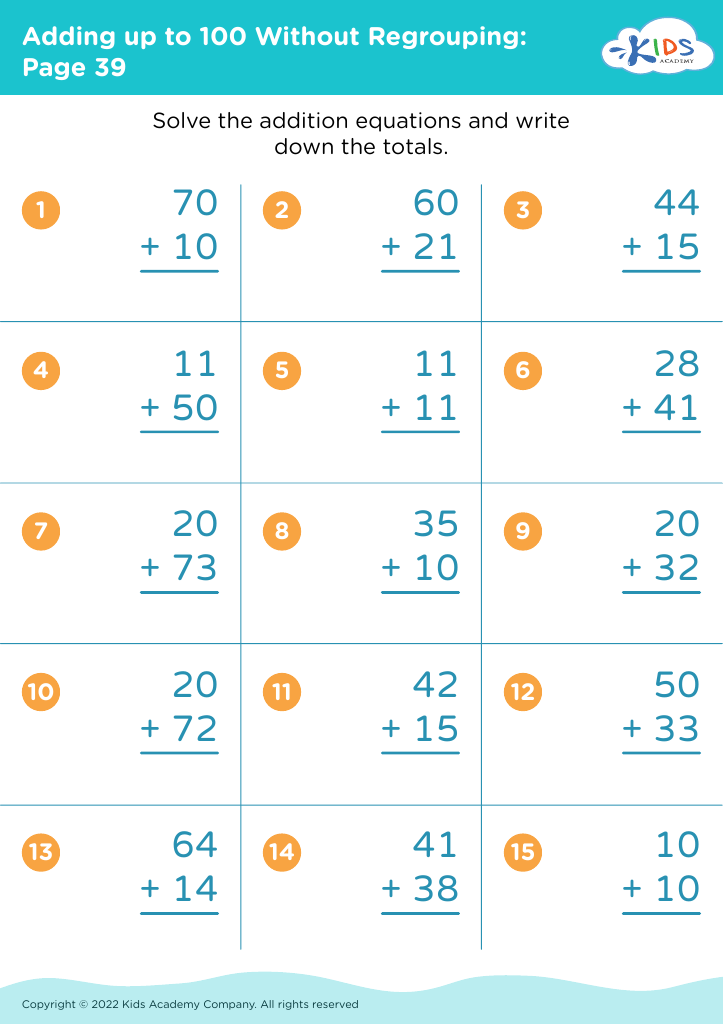
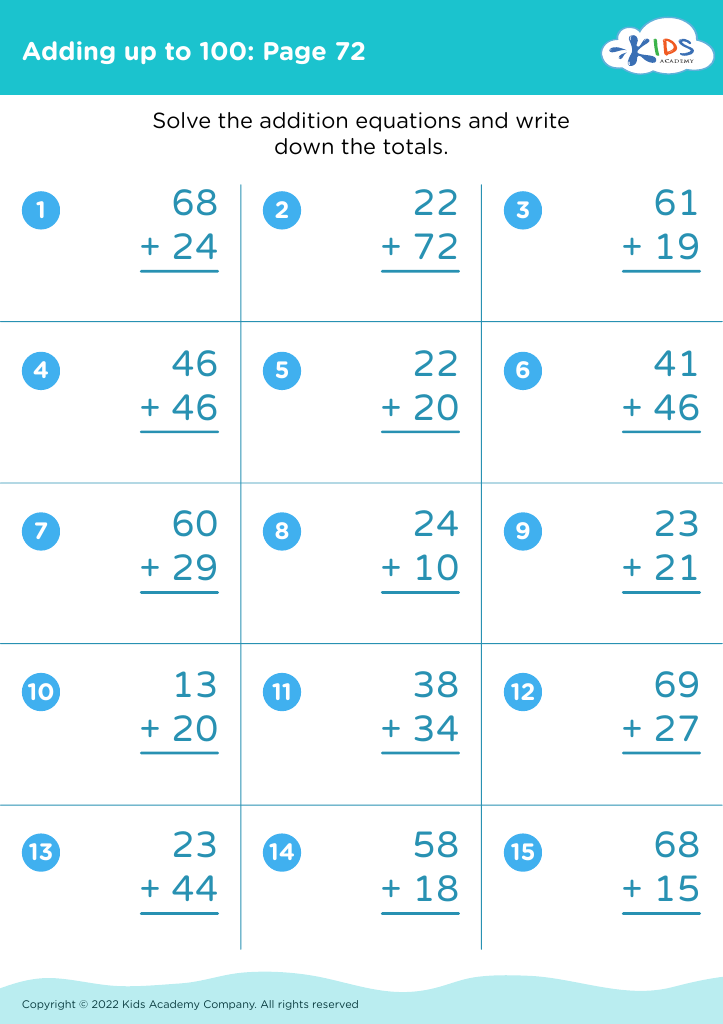
Enhance Fine Motor Skills Addition Worksheets for Ages 5-8 are designed to seamlessly combine math practice with the development of essential fine motor skills. Feature-rich and engaging, these worksheets from Kids Academy offer young learners the opportunity to strengthen their addition abilities while enhancing hand-eye coordination, pencil grasp, and overall writing precision. Perfect for both classroom activities and home practice, these colorful and interactive worksheets make learning fun and effective. Support your child's growth in foundational math skills and fine motor development effortlessly with our expertly crafted addition worksheets. Discover the joy of successful learning today!








Parents and teachers should care about enhancing fine motor skills in children ages 5-8 because these skills are fundamental for a child's academic and everyday functioning. Fine motor skills involve the small muscles of the hands and fingers, which are essential for a range of activities from writing and cutting with scissors to buttoning a shirt and tying shoelaces. Developing these skills at an early age lays the foundation for future success in school and life.
Children who have well-developed fine motor skills are often more adept at tasks that require precision and control. When children struggle with these skills, they may face challenges in the classroom, such as difficulties with handwriting or using tools. This can lead to frustration and impact their confidence and academic performance.
Moreover, fine motor development is linked with cognitive development. Tasks like coloring within lines, tracing shapes, and constructing objects help improve hand-eye coordination and problem-solving skills. Through these activities, children learn to follow directions, enhance their concentration, and develop perseverance.
For teachers, integrating fine motor activities into the curriculum supports not just physical development but also literacy and math skills. For parents, engaging children in fun activities at home such as playing with playdough, drawing, or assembling puzzles can further reinforce these essential skills and foster a child’s independence and self-esteem.








