Improving mathematical skills Addition Worksheets for Ages 5-8
4 filtered results
-
From - To
Discover our engaging "Improving Mathematical Skills: Addition Worksheets" designed for children ages 5 to 8. These printable worksheets are crafted to enhance your child's addition skills through fun and interactive exercises. Tailored to build a strong mathematical foundation, each worksheet incorporates enjoyable activities, such as colorful visuals and real-life applications, to maintain your child's interest. Ideal for both parents and educators, these resources support varied learning styles, helping children grasp fundamental concepts with ease. Transform math time into an exciting journey as your young learners master addition while cultivating confidence and problem-solving skills. Start improving your child's math proficiency today!
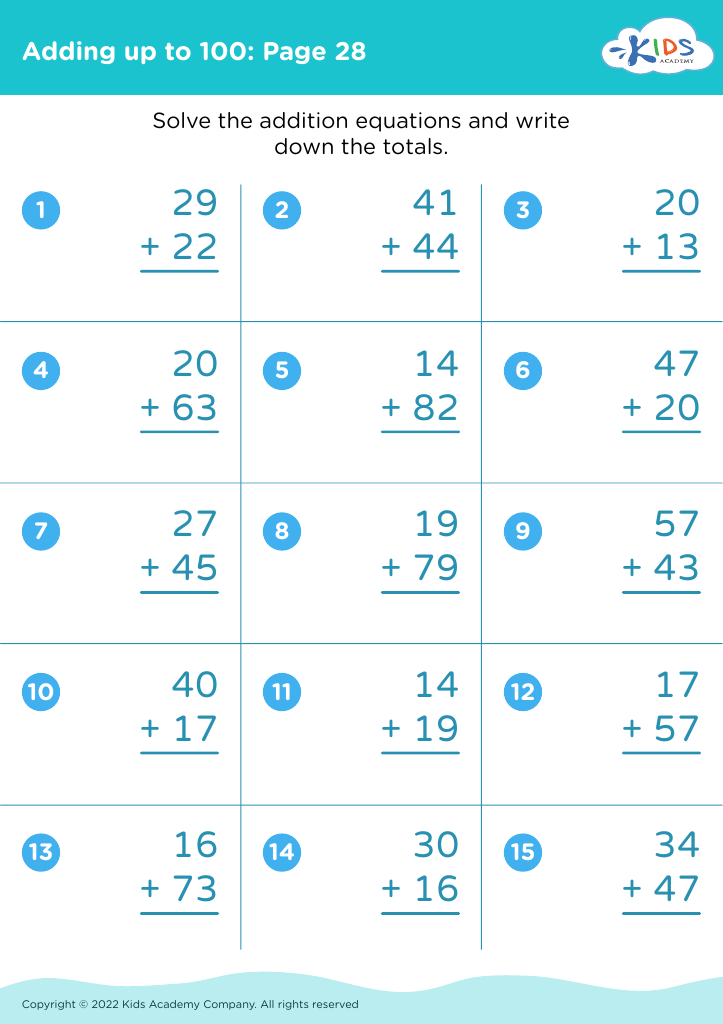
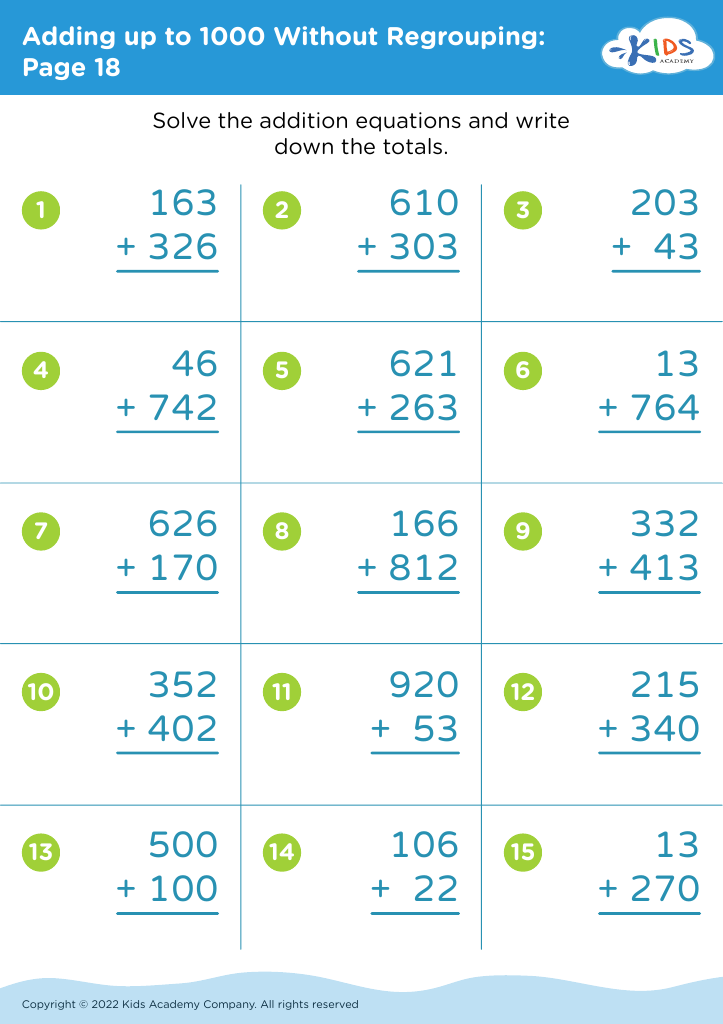
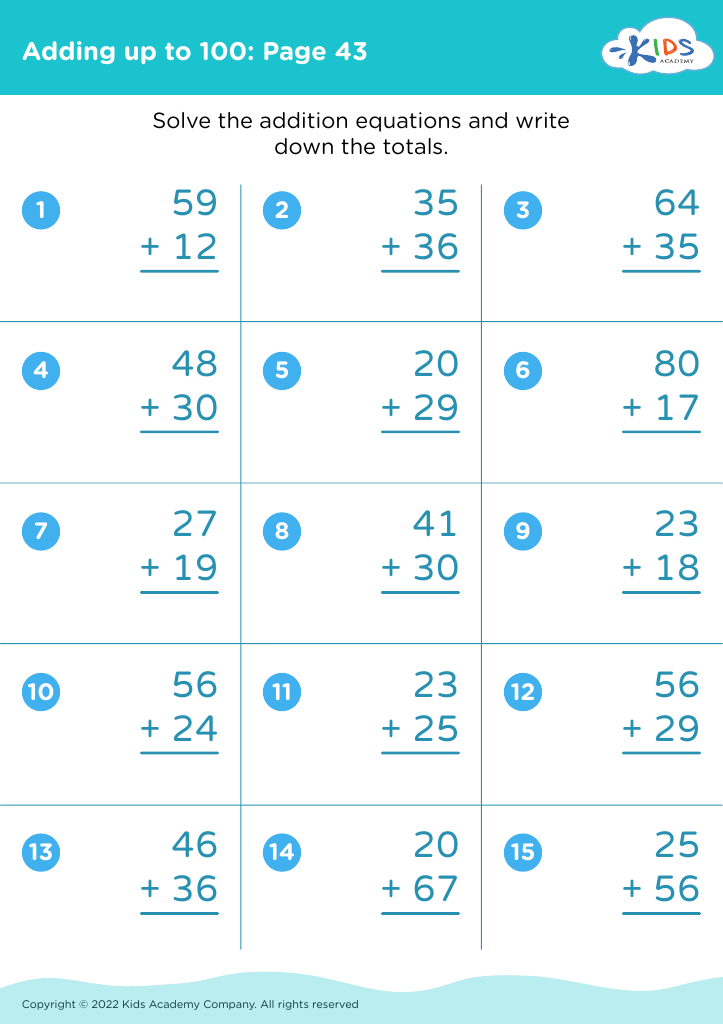
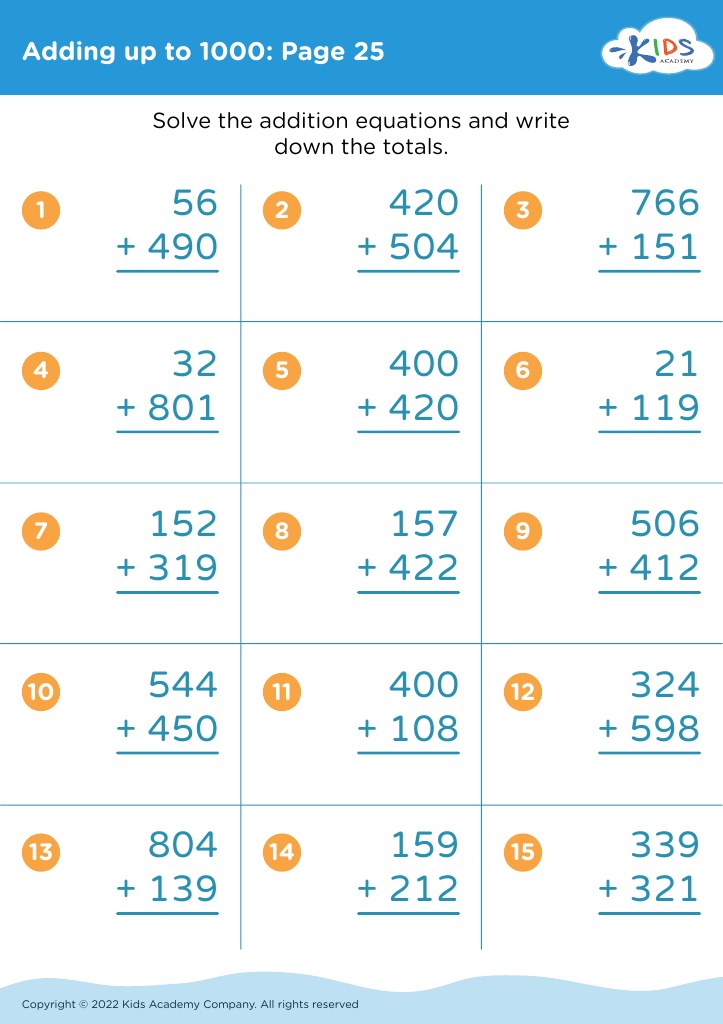








Improving mathematical skills, particularly addition, for children aged 5-8 is crucial for several reasons. First and foremost, strong foundational math skills are essential for academic success. At this age, children are introduced to the building blocks of mathematics, and mastery of addition lays the groundwork for more complex concepts they will encounter later, such as subtraction, multiplication, and division.
Furthermore, enhancing addition skills helps develop critical thinking and problem-solving abilities. Children learn to approach challenges methodically, fostering their analytical minds. This foundational understanding not only aids in academics but supports day-to-day activities, enhancing their confidence and instilling a lifelong appreciation for mathematics.
Parents and teachers play a critical role in creating a positive learning environment. By incorporating engaging activities, such as games and hands-on learning, they can make mathematical concepts enjoyable, which promotes consistent practice and retention. Additionally, parental involvement with homework and real-life applications nurtures a growth mindset, helping children see the value in persistence and effort.
Ultimately, improving addition skills equips children with essential life skills, from simple daily tasks in shopping or cooking to preparing them for future educational endeavors, making it imperative for educators and parents to prioritize this area of learning.








