Improving numeracy skills Addition Worksheets for Ages 5-8
3 filtered results
-
From - To
Discover our engaging and effective addition worksheets designed to enhance numeracy skills for children aged 5-8. These specially crafted resources promote foundational math concepts through fun and interactive exercises, helping young learners master addition with confidence. Our worksheets offer a variety of activities, including visual aids, games, and problems that are aligned with learning standards. Ideal for home or classroom use, these materials encourage exploration and creativity while building essential math skills. Foster a love for learning and watch your child flourish in their numerical abilities with our thoughtfully designed addition worksheets. Start your numeracy journey today!
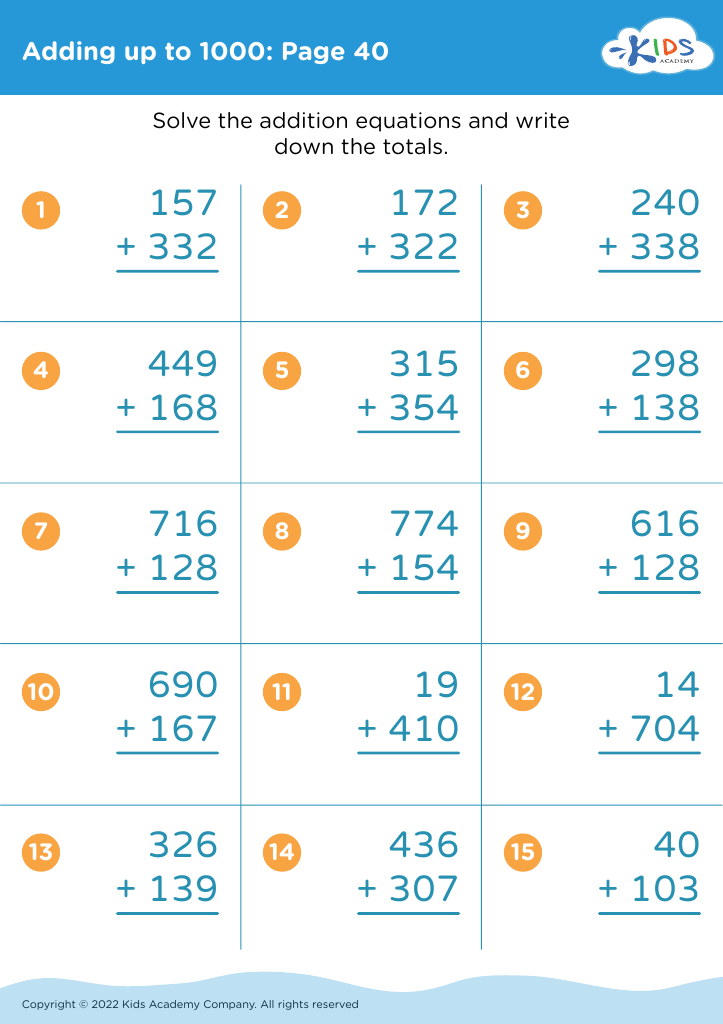
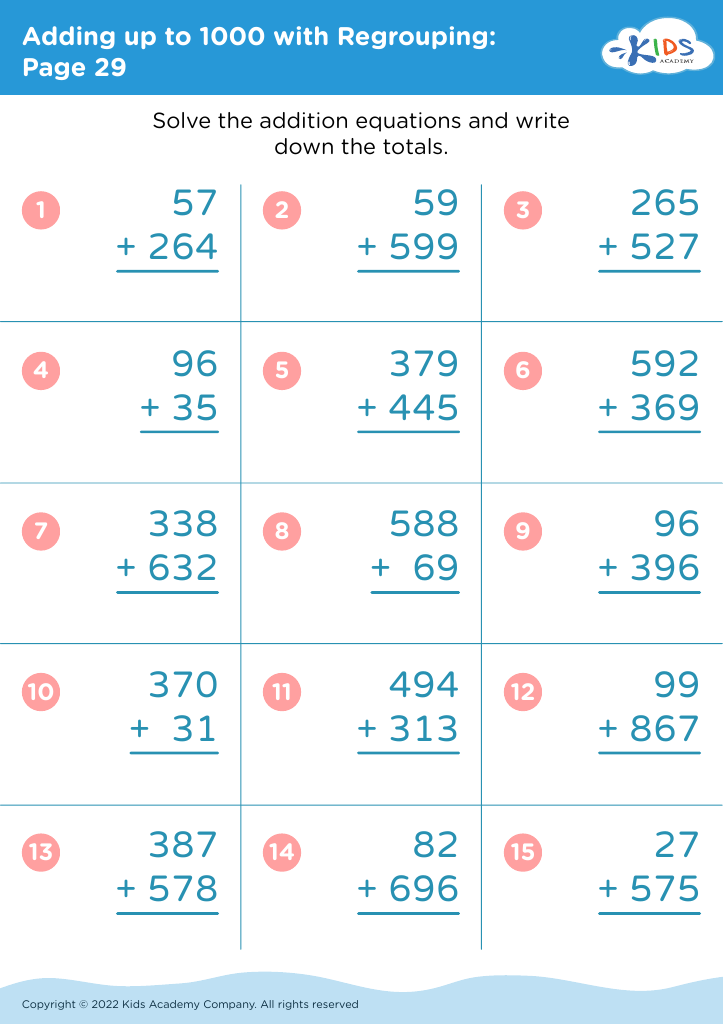
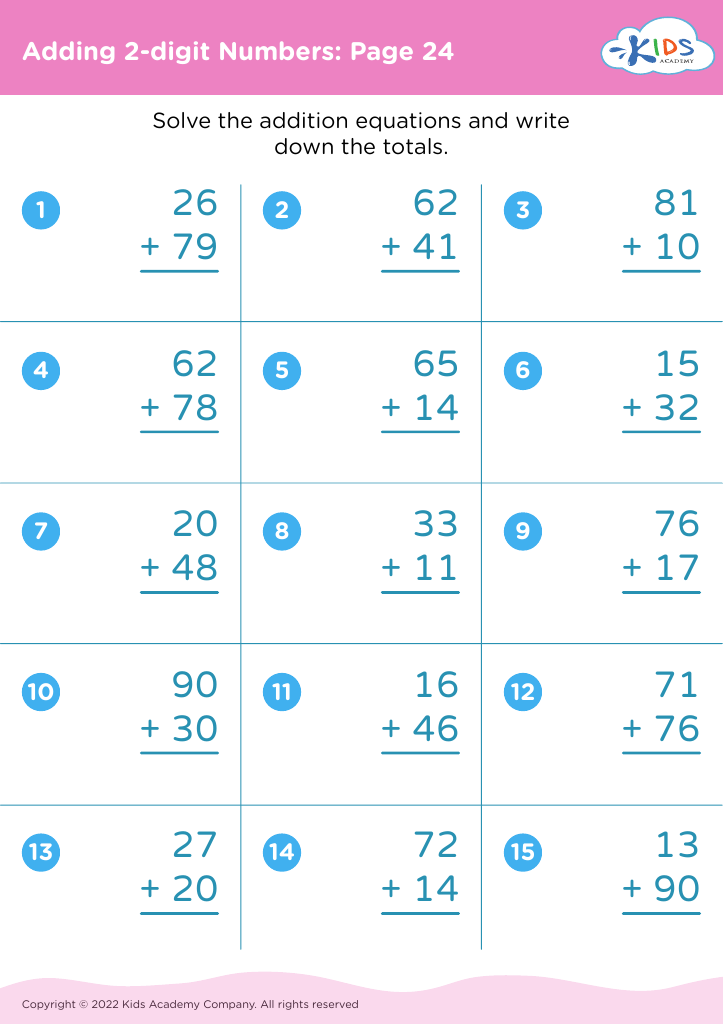








Improving numeracy skills, particularly in addition, for children aged 5-8 is vital for several reasons. Firstly, a solid foundation in basic math builds confidence, essential for tackling more complex mathematical concepts later in life. Mastering addition not only aids in comprehension but also enhances problem-solving abilities, which are critical skills in everyday situations.
Parents and teachers should focus on developing these skills early, as this age range is crucial for cognitive development. Engaging with numbers through fun and interactive methods can spark a child's interest in math and encourage a positive attitude toward learning. Furthermore, strong numeracy skills are linked to academic success across various subjects; they enhance literacy, as understanding texts often involves interpreting numerical data.
Additionally, numeracy skills prepare children for real-life applications, be it in managing money, cooking, or helping with household tasks, thereby promoting independence. Lastly, collaboration between parents and teachers through reinforcement and shared learning experiences fosters a supportive environment, crucial for encouraging a lifelong love of learning. Ultimately, a focus on early numeracy lays the groundwork for future academic achievement and equips children with essential life skills.








