Learn subtraction Addition Worksheets for Ages 5-8
4 filtered results
-
From - To
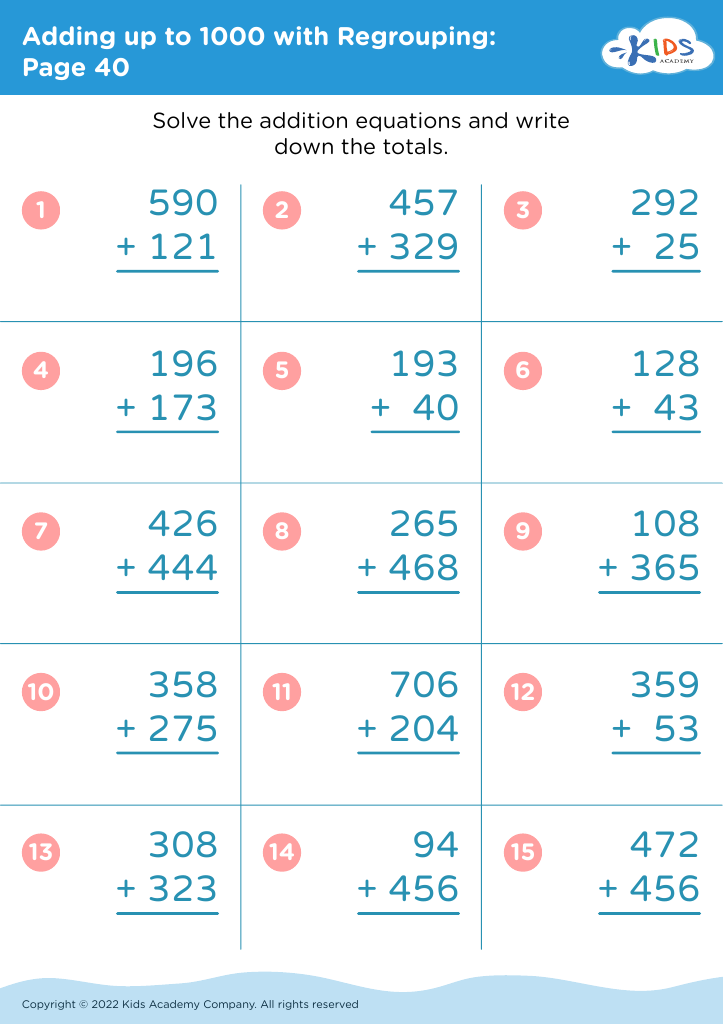
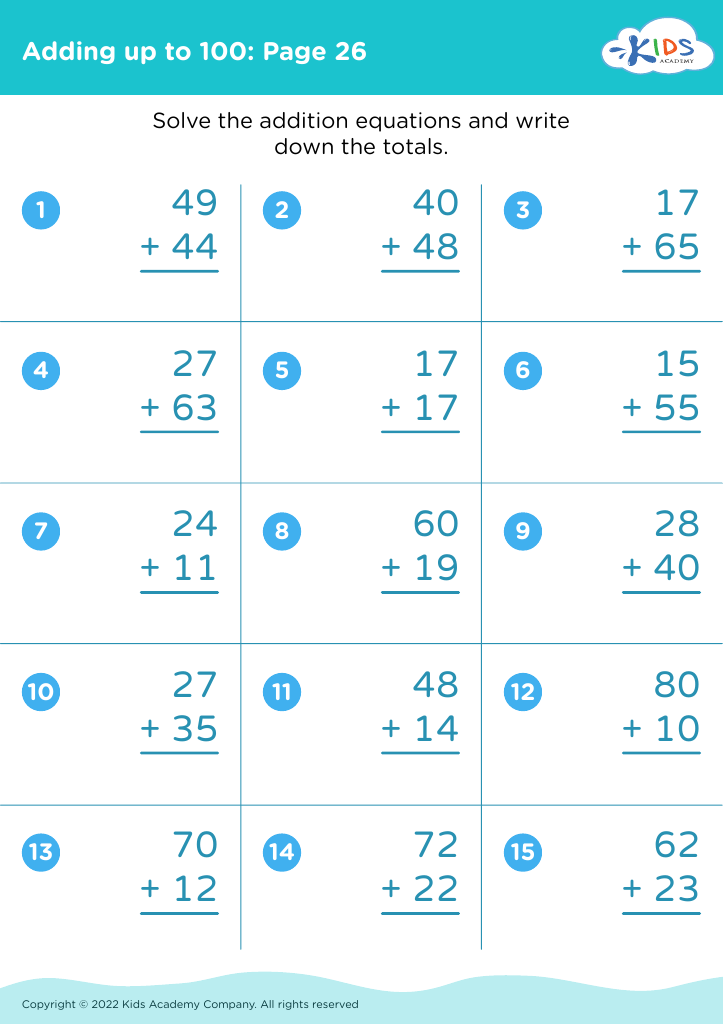
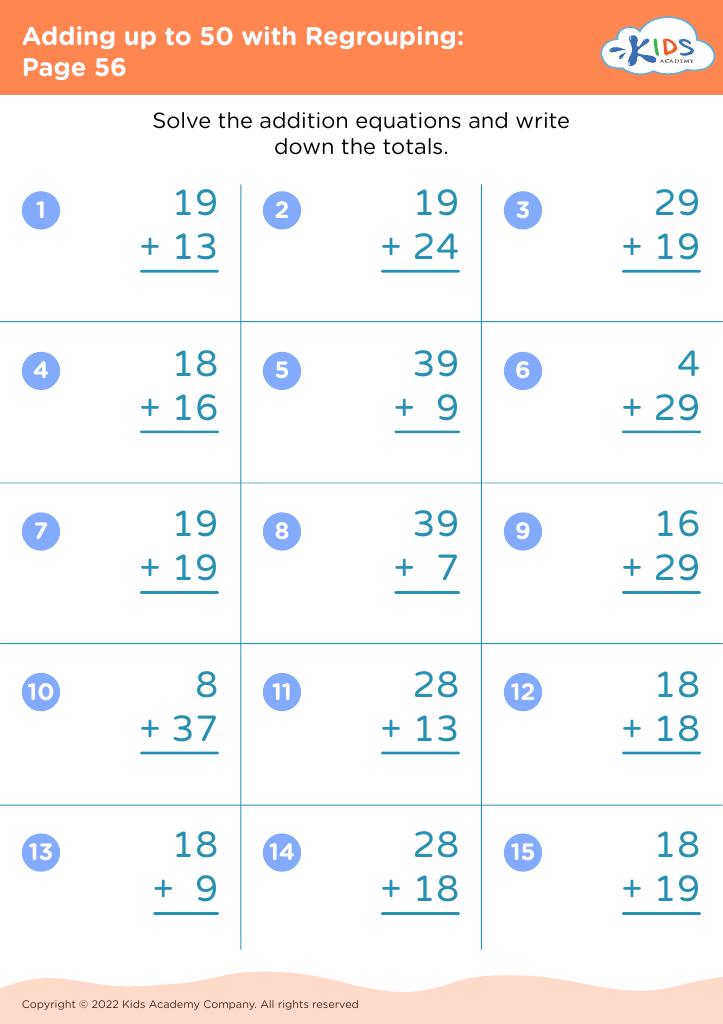
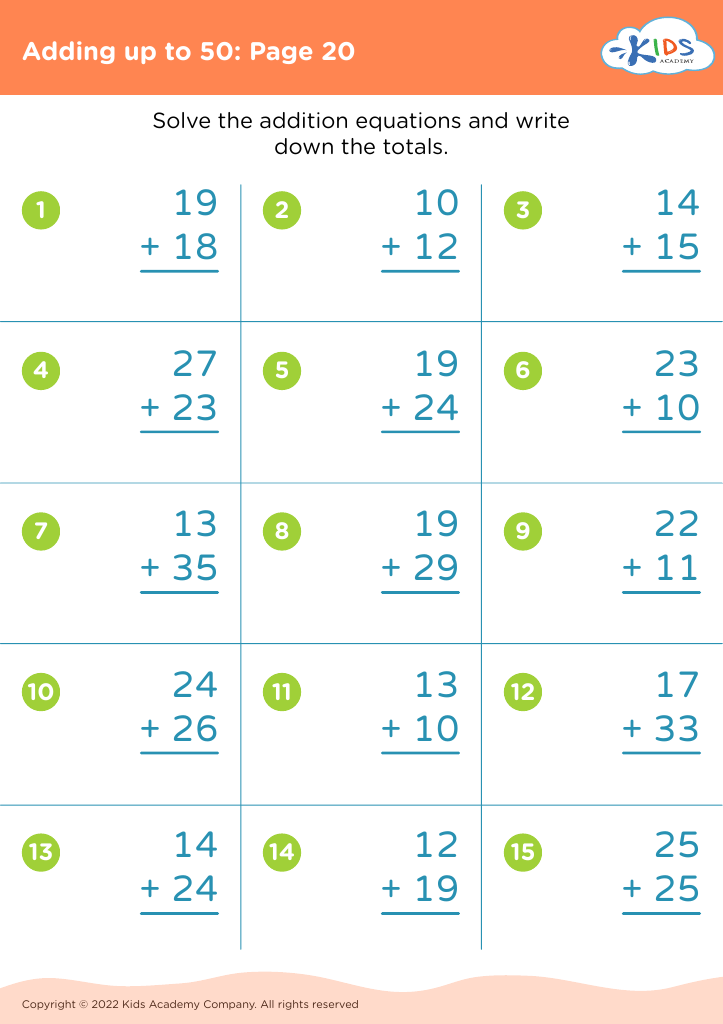
Boost your child's arithmetic skills with our engaging "Learn Subtraction and Addition Worksheets for Ages 5-8". These expertly designed printable worksheets focus on fundamental addition and subtraction concepts, making learning fun and interactive. Perfectly tailored for young learners, our exercises incorporate colorful illustrations and easy-to-follow instructions to stimulate kids' curiosity and enhance their understanding. Whether practicing single-digit or double-digit operations, your child will develop confidence and accuracy. Visit our webpage today and watch as your little mathematician flourishes through playful practice and educational activities. Empower their learning journey with our premium worksheets.








Teaching addition and subtraction to children aged 5-8 is foundational for several reasons, crucial for parents and teachers to understand. At this age, children's brains are highly adaptable, making it the perfect time to establish core mathematical principles that will support more complex problem-solving skills in the future.
First, mastering basic arithmetic like addition and subtraction enhances cognitive development. These fundamental skills help children develop logical thinking, improve memory, and enhance their ability to grasp more complicated math concepts later on. By learning how to add and subtract, children also improve their number sense, which involves understanding numbers and their relationships, a critical component of early math education.
Second, these skills are vital for everyday life. Arithmetic is used in daily activities such as shopping, cooking, and even playing games. When children learn these skills early, they gain confidence and autonomy in handling these tasks, fostering independence.
Lastly, early exposure to math can boost academic performance across various subjects. Studies indicate that early math skills are a strong predictor of later academic success, even more so than early literacy. This early success builds a growth mindset and resilience, which are vital traits for long-term educational and personal success.
Caring about early arithmetic not only equips children for future academic challenges but also builds essential life skills and cognitive abilities.








