
Matching skills Addition Worksheets for Ages 5-8
3 filtered results
Difficulty Level
Grade
Age
-
From - To
Subject
Activity
Standards
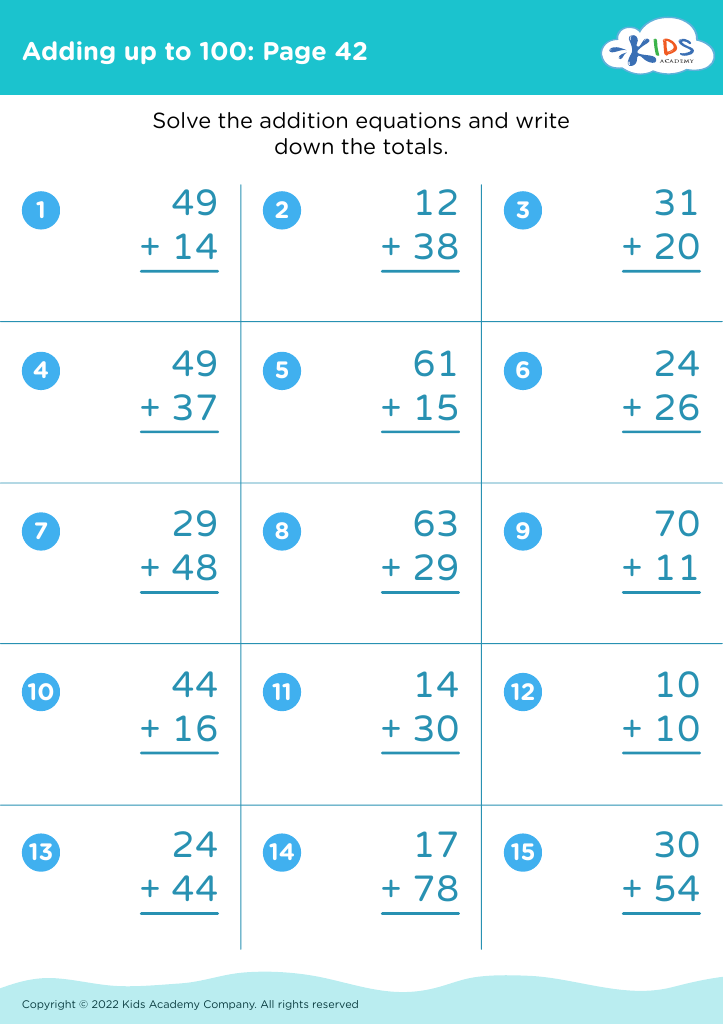
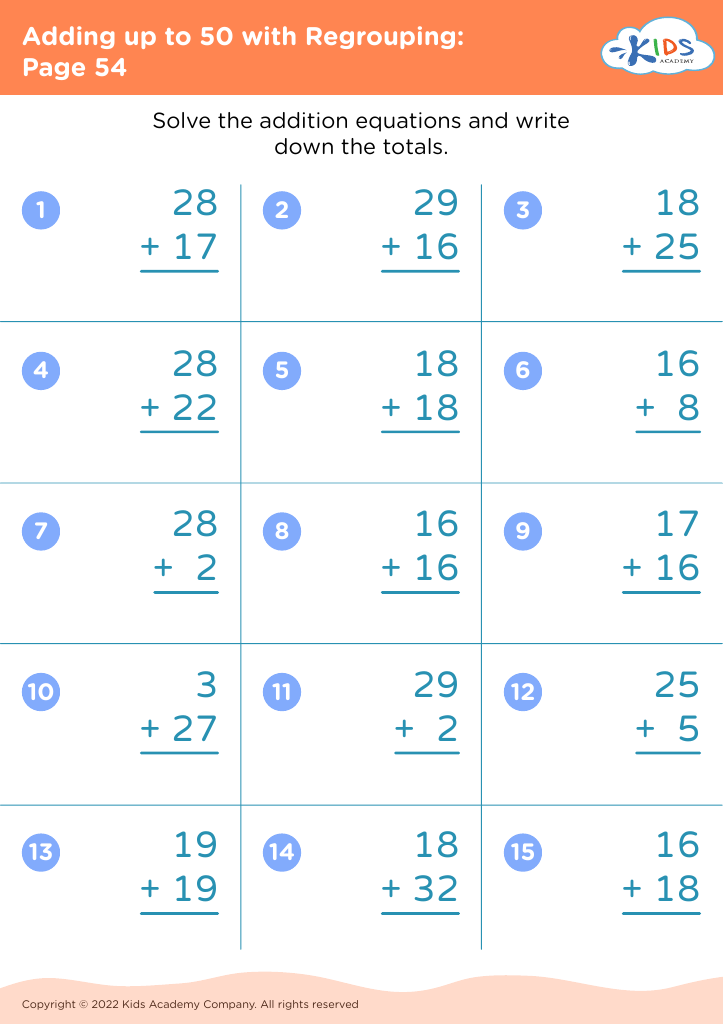
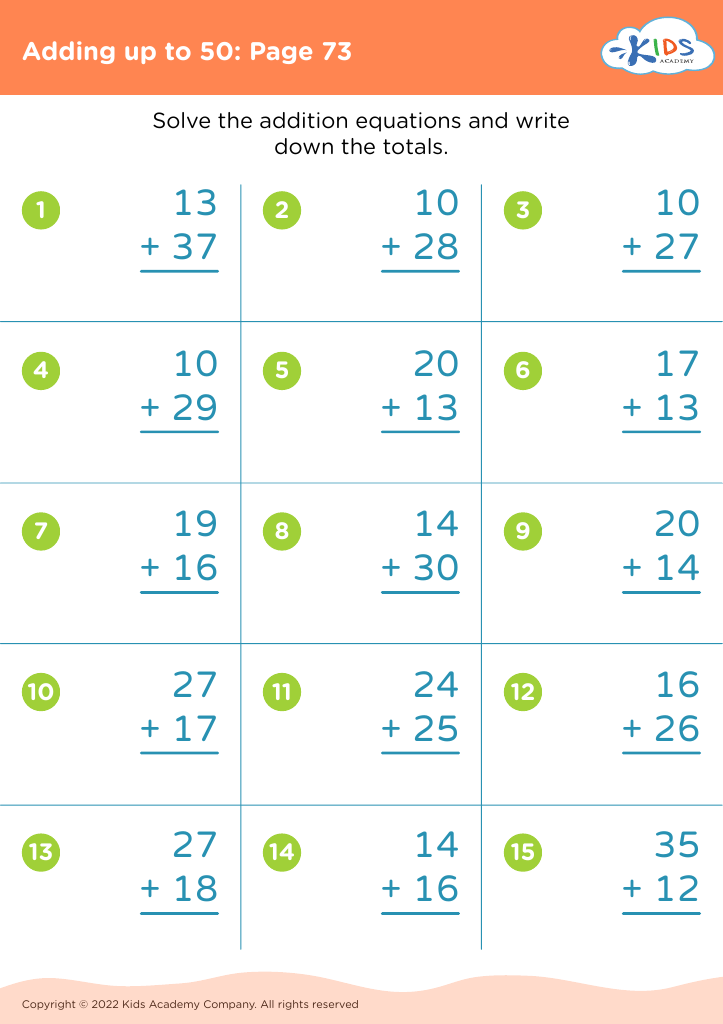
Introduce your child to the exciting world of numbers with our "Matching Skills Addition Worksheets" designed for ages 5-8! These fun, engaging activities help young learners develop essential math skills by focusing on matching, counting, and simple addition. Our worksheets provide a unique blend of colorful visuals and interactive exercises that make learning enjoyable. Perfectly suited for early math explorers, they promote critical thinking and boost confidence in solving problems. Tailored to align with school curriculums, these worksheets are an ideal resource for both classroom and at-home learning. Explore our collection today and watch your child's math skills flourish!
Favorites
With answer key
Interactive
Join Kids Academy for Free
Who is primarily going to use this learning content?








Parents and teachers should prioritize developing matching skills and addition knowledge in children aged 5-8 years for several important reasons. Early childhood is a critical period for cognitive development, and engaging activities like matching games and basic addition help build a strong foundation for future learning.
Matching skills enhance children's ability to recognize patterns, categorize items, and improve memory. These foundational skills are essential for more complex cognitive processes, such as problem-solving and logical thinking. When children participate in matching activities, they learn to observe details and make connections between different pieces of information, which strengthens their overall cognitive abilities.
Addition, on the other hand, is a fundamental math skill that lays the groundwork for any further mathematical learning. By mastering simple addition, children become more comfortable working with numbers, which fosters a positive attitude towards math. This early proficiency can lead to increased confidence and better academic performance in mathematics later on.
Incorporating matching skills and addition not just boosts cognitive and mathematical abilities but also supports overall academic readiness. It ensures children are well-prepared for more complex subjects and strengthens their persistence, concentration, and critical thinking. Overall, paying attention to these areas during early childhood sets children on a path to lifelong learning and academic success.








