Math problem-solving skills Addition Worksheets for Ages 5-8
3 filtered results
-
From - To
Boost your child's math problem-solving skills with our engaging Addition Worksheets tailored for ages 5-8. Designed to enhance critical thinking and arithmetic abilities, these worksheets offer a fun and interactive approach to mastering addition. Through a variety of exercises, including word problems and visual aids, children will learn to apply their math knowledge in real-life situations. Perfect for parents and educators looking to support young learners, these printable resources help reinforce essential math concepts while building confidence. Explore our collection now and watch your child thrive in their mathematical journey! Kids will enjoy learning as they solve exciting addition problems.
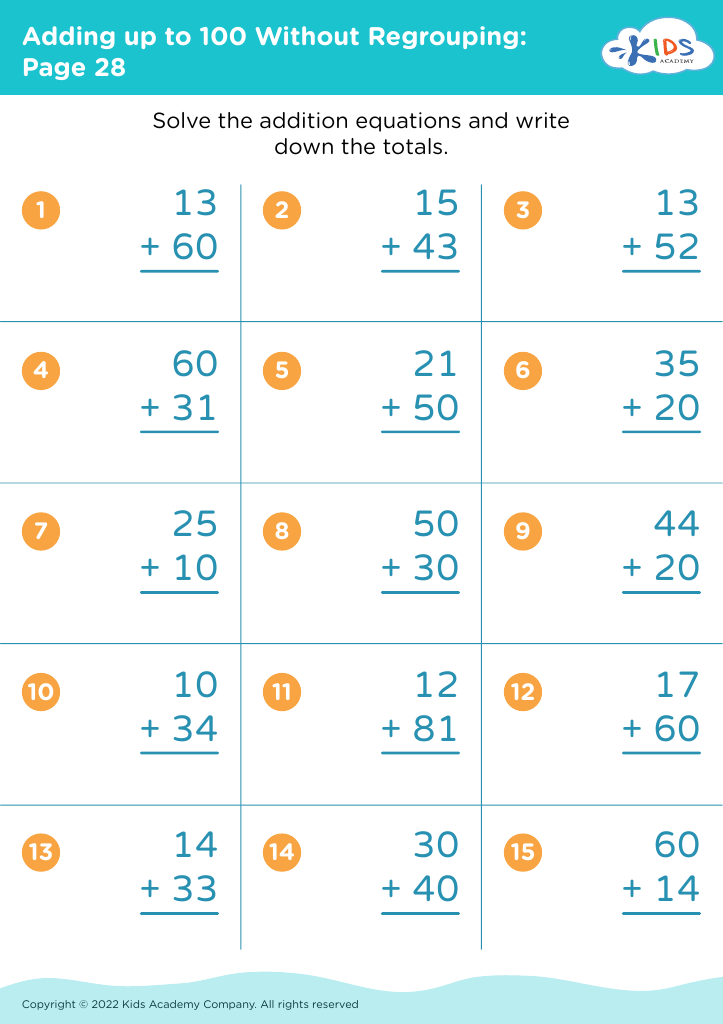
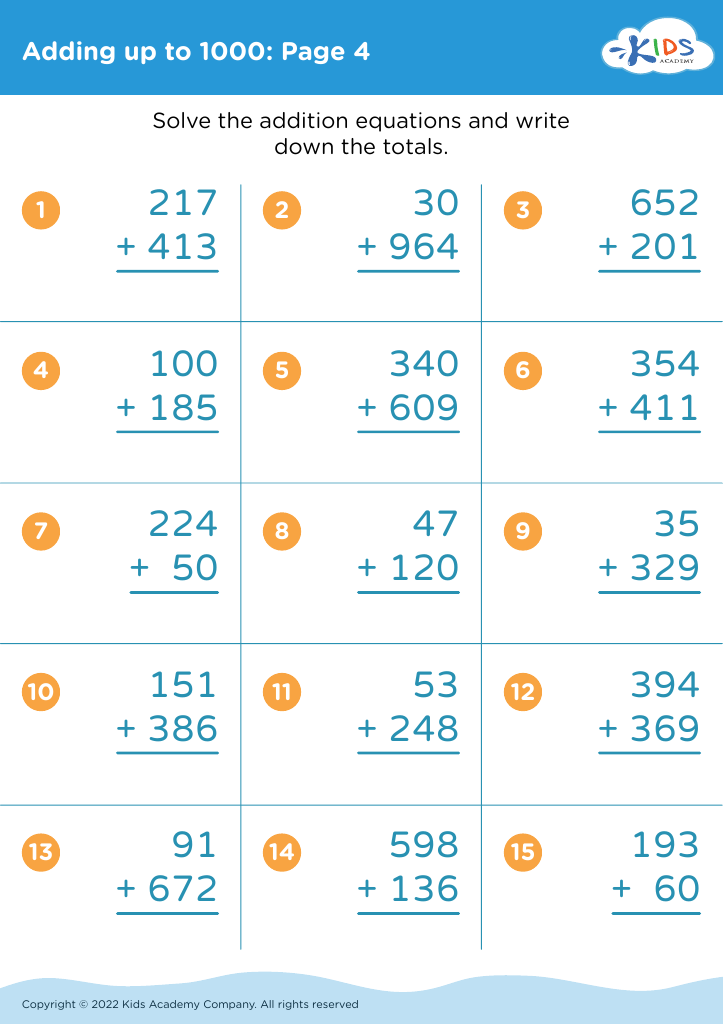
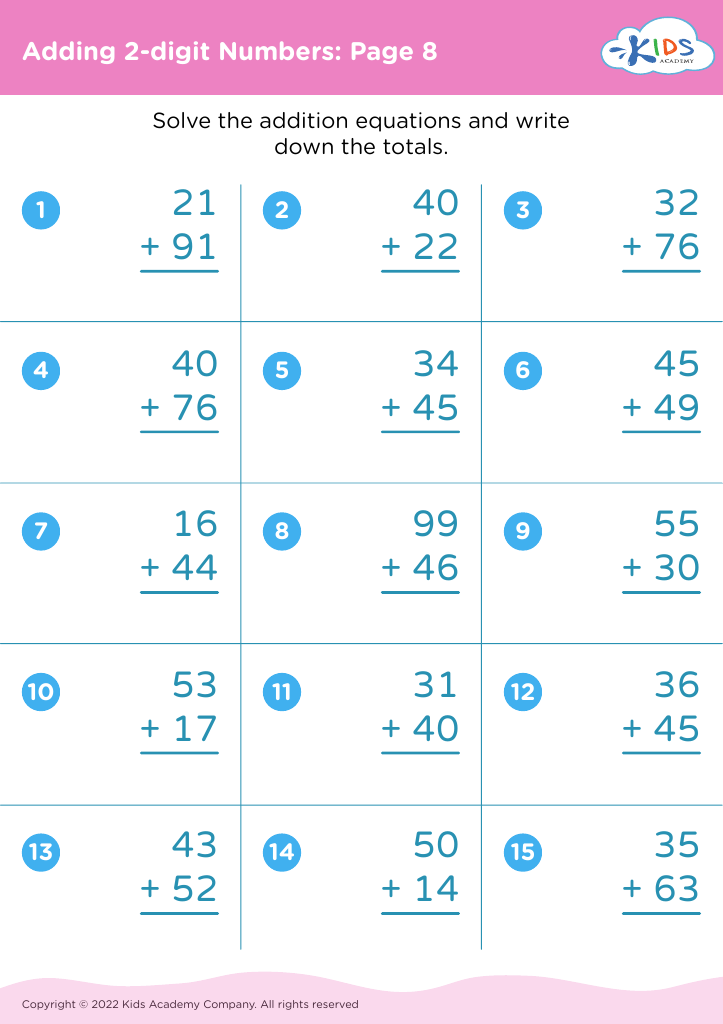








Math problem-solving skills, particularly in addition, are crucial for children aged 5-8 as they lay the foundation for future mathematical understanding and overall cognitive development. Mastering addition enhances logical thinking, promotes critical reasoning, and empowers children to approach problems confidently. When parents and teachers focus on nurturing these skills, they support the child's ability to understand more complex mathematical concepts in later years.
Additionally, addition is a life skill that students utilize daily, from counting change to sharing equally among friends. This real-world relevance motivates children and helps them see the practical importance of math. Engaging in problem-solving activities fosters a growth mindset by encouraging persistence and resilience when faced with challenging tasks.
Moreover, a solid grasp of addition can improve a child's self-esteem and reduce math anxiety, allowing them to participate actively in classroom discussions and collaborative learning. By integrating math activities into play and daily routines, adults can enhance children’s interest and enjoyment in mathematics. Ultimately, parents and teachers play a significant role in building these essential skills, promoting a positive attitude toward learning, and preparing children for academic success in all subjects. Investing in their math abilities today shapes a brighter and more confident future for them.








