
Number identification Addition Worksheets for Ages 5-8
5 filtered results
Difficulty Level
Grade
Age
-
From - To
Subject
Activity
Standards
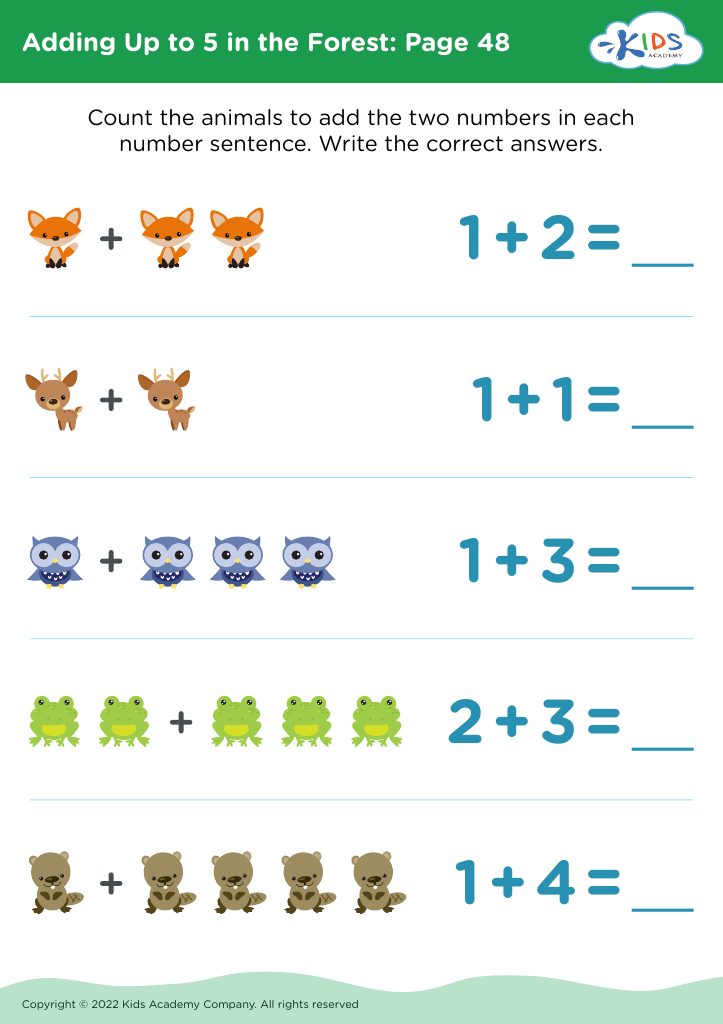
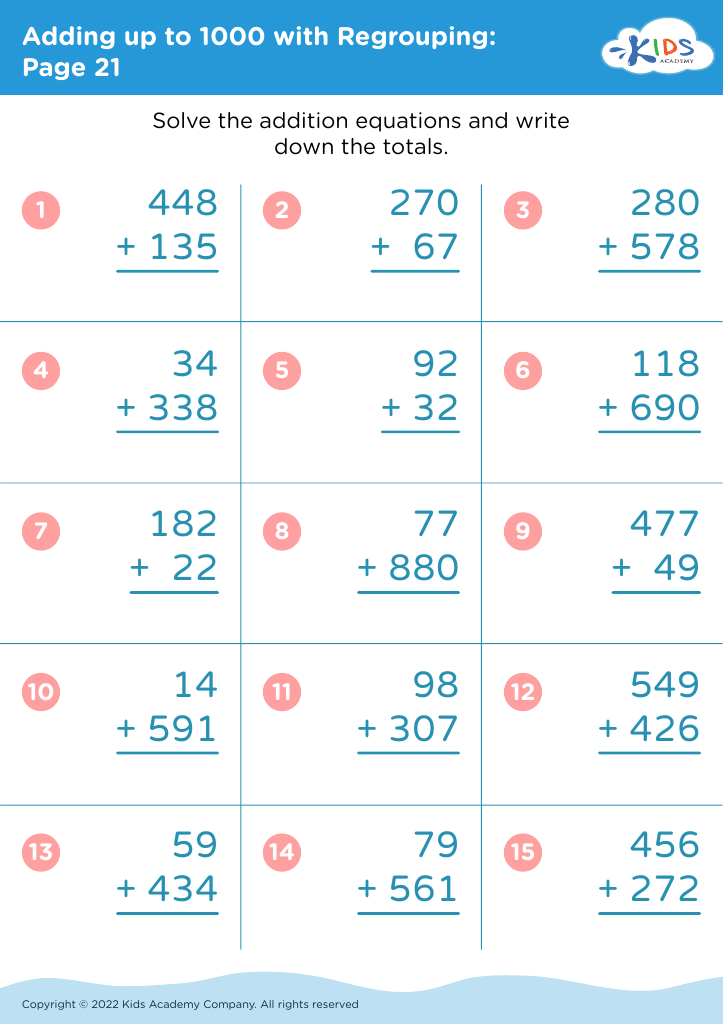
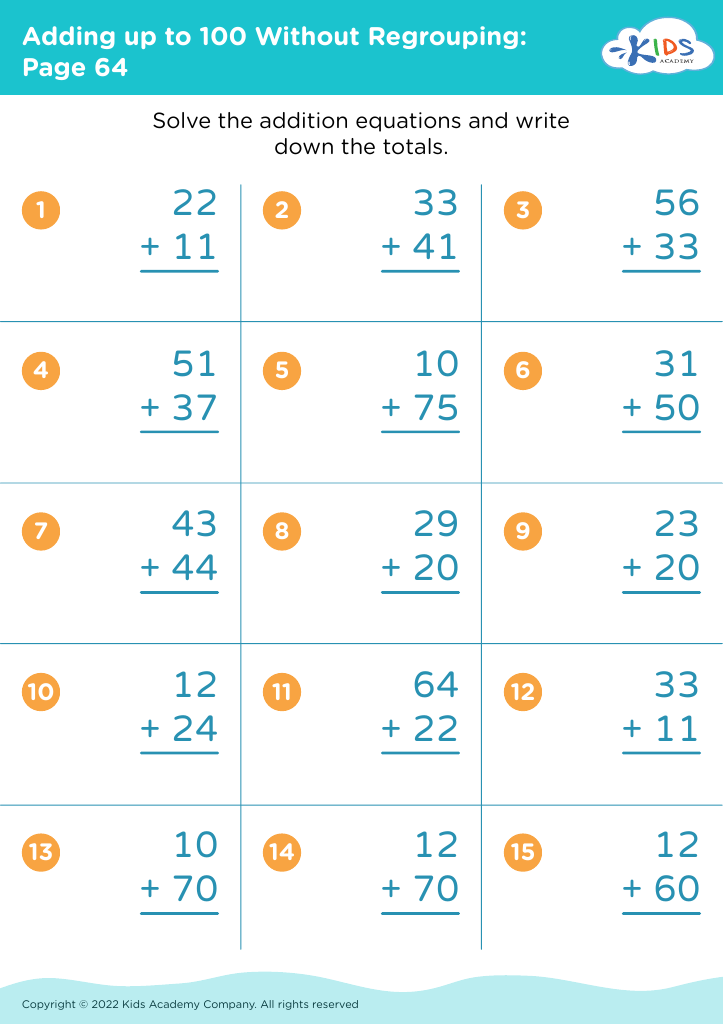
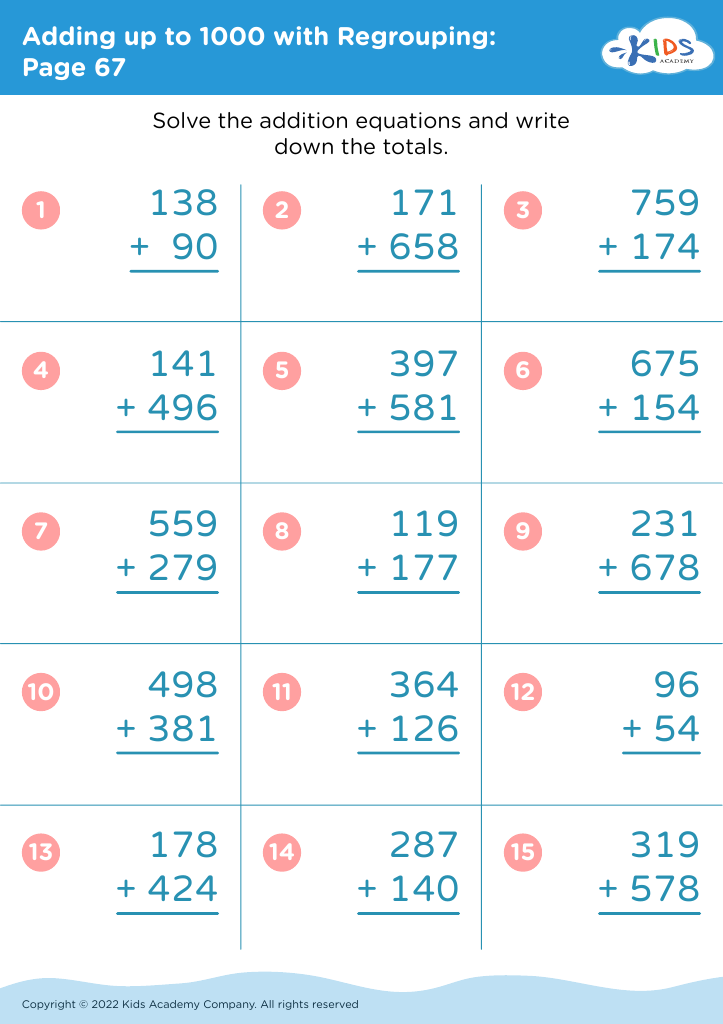
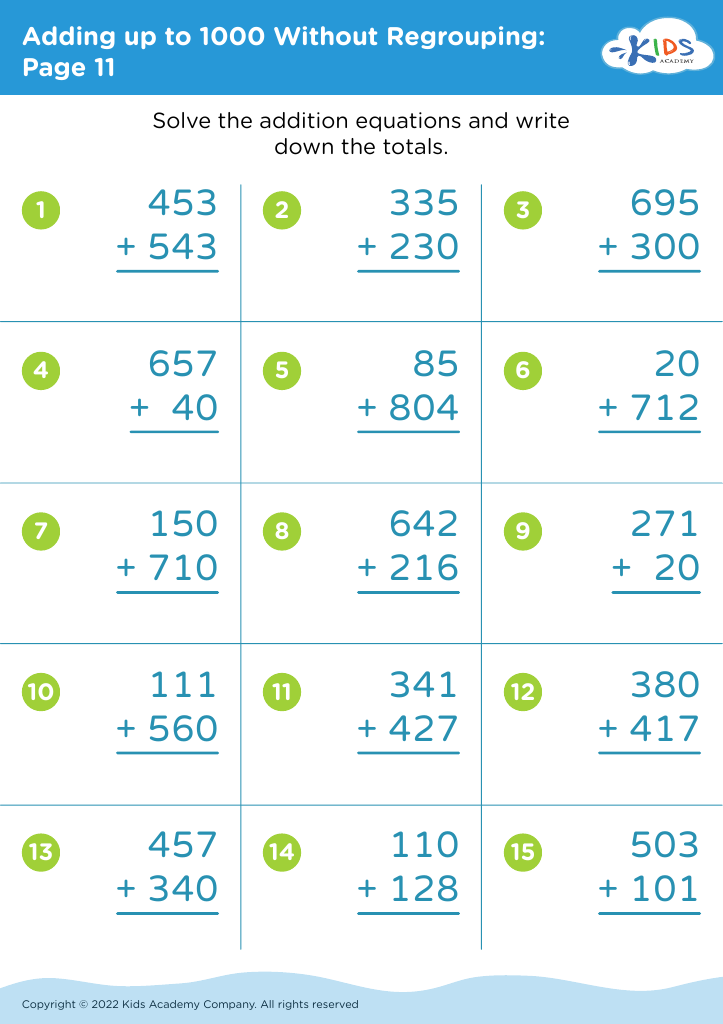
Discover our engaging Number Identification Addition Worksheets, designed specifically for children aged 5-8! These worksheets help young learners develop essential math skills by combining number recognition and basic addition concepts. With colorful illustrations and interactive exercises, children will not only identify numbers but also practice adding them together in a fun and stimulating way. Designed by education experts, our printable resources cater to diverse learning styles and ensure an enjoyable learning experience. Perfect for home or classroom use, these worksheets lay a solid foundation in math, boosting confidence and skills for future success. Start your child's educational journey today!
Favorites
With answer key
Interactive
Join Kids Academy for Free
Who is primarily going to use this learning content?








Parents and teachers should prioritize number identification and addition for children aged 5-8, as these fundamental skills serve as the building blocks for future mathematical learning. Learning to recognize numbers and perform basic addition helps young learners develop crucial cognitive abilities, such as problem-solving, critical thinking, and logical reasoning.
At this age, children are rapidly absorbing new concepts, and mastering number identification paves the way for more complex arithmetic operations in later stages of education. Understanding place value and developing number sense early on fosters a positive attitude towards mathematics, making students more confident and engaged learners.
Additionally, number identification and addition are not just academic skills; they play a vital role in everyday life. From counting items in a grocery store to understanding time and making change, these skills enhance a child's ability to navigate the world around them. When parents and teachers effectively focus on these skills, they create a solid math foundation that leads to increased success in school and beyond.
Ultimately, nurturing these skills helps create well-rounded individuals who are better prepared to tackle both academic challenges and everyday situations, contributing to their overall development and lifelong learning.








