Numerical problem solving Addition Worksheets for Ages 5-8
3 filtered results
-
From - To
Welcome to our engaging “Numerical Problem Solving Addition Worksheets” tailored for children aged 5 to 8! These worksheets are designed to enhance young learners' understanding of addition through fun, practical scenarios. Each worksheet offers a variety of problems that encourage critical thinking, allowing kids to improve their problem-solving skills in an enjoyable way. With colorful visuals and age-appropriate challenges, these resources aim to foster a love for math from an early age. Help your child build confidence and proficiency in addition while developing their critical thinking abilities. Explore our printable worksheets today for an exciting math adventure!
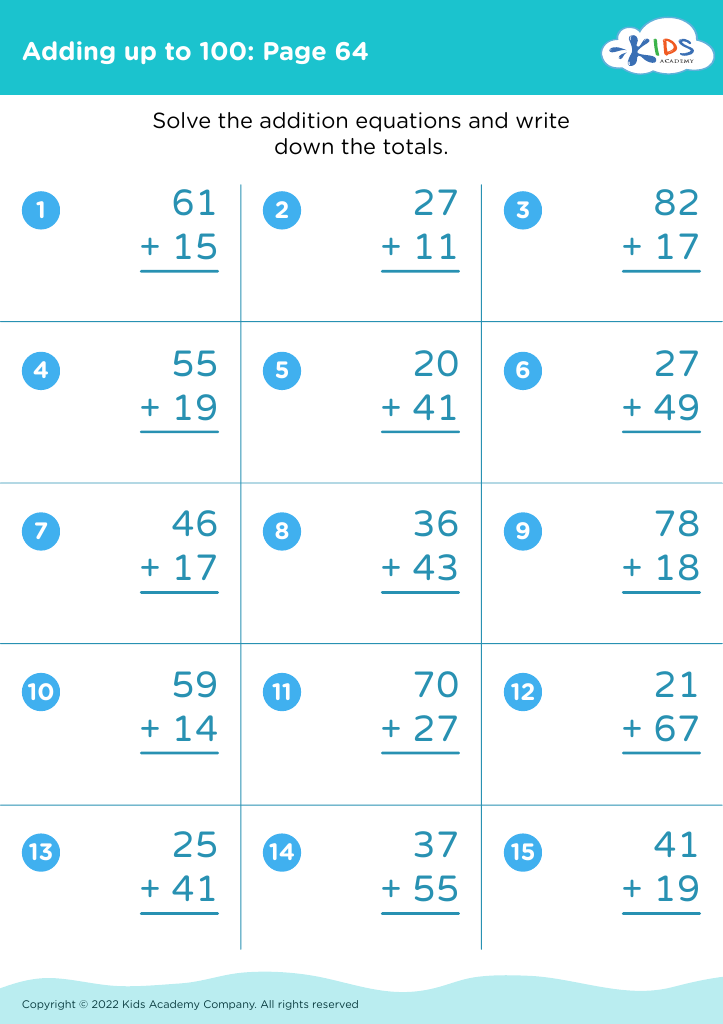
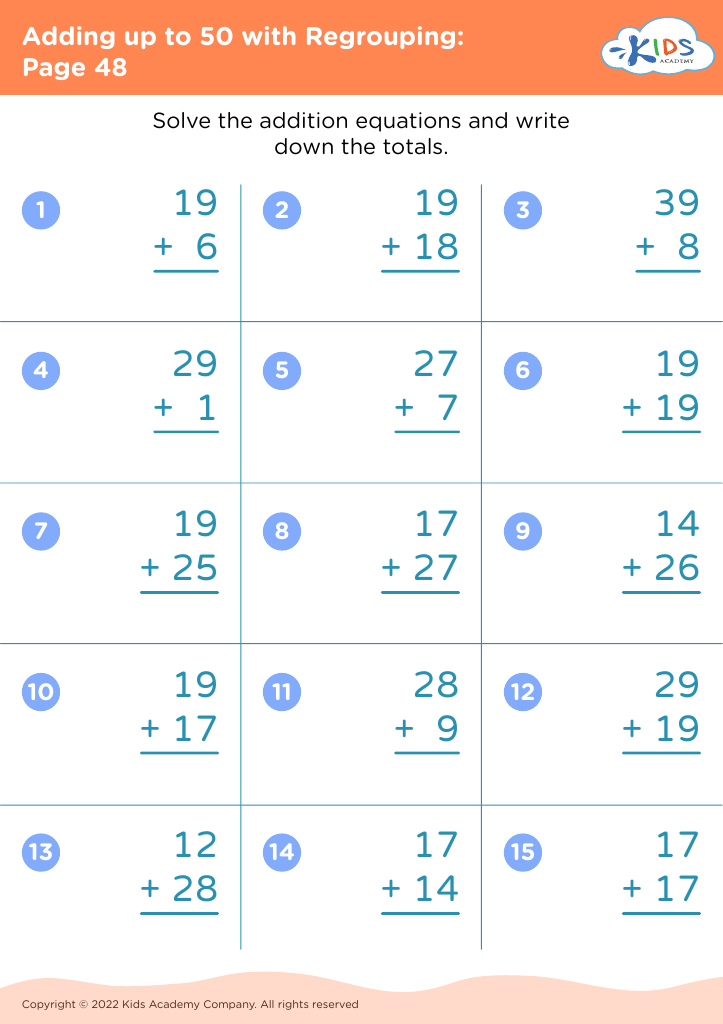
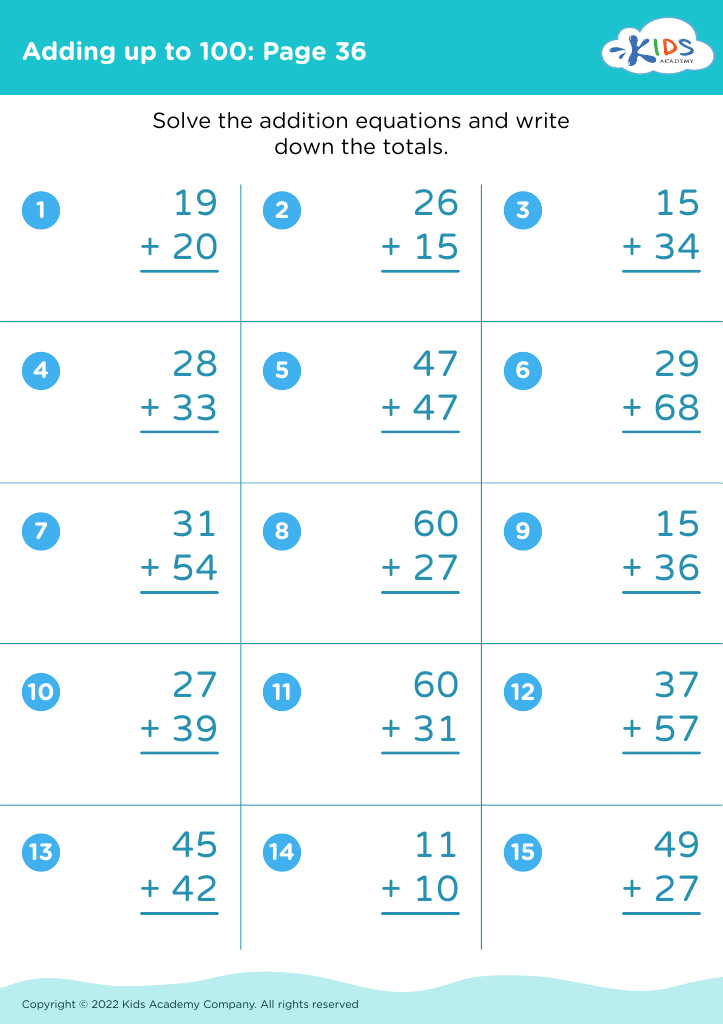








Parents and teachers should care about numerical problem solving in addition for children aged 5-8 because this foundational skill is integral to young learners' cognitive development and future academic success. Mastery of addition fosters not only mathematical understanding but also enhances critical thinking and problem-solving abilities. These skills are essential as children encounter more complex mathematical concepts in later grades.
Early engagement with addition helps develop number sense, allowing children to recognize patterns and relationships between numbers. This not only supports their ability to perform calculations but promotes confidence in tackling math-related challenges. A strong grasp of addition facilitates the transition to more advanced operations, such as subtraction, multiplication, and division.
Moreover, numerical problem-solving encourages persistence and resilience. Children learn to approach problems creatively, developing strategies that promote teamwork when working in pairs or small groups. By integrating playful activities and real-world applications, parents and teachers can make learning more enjoyable, engaging students in meaningful ways.
Lastly, ensuring children are proficient in addition sets a solid foundation for everyday life skills, ranging from managing money to understanding time. In nurturing these skills, adults play a crucial role in preparing children for lifelong learning and future successes in education.








