Practice inference skills Addition Worksheets for Ages 5-8
3 filtered results
-
From - To
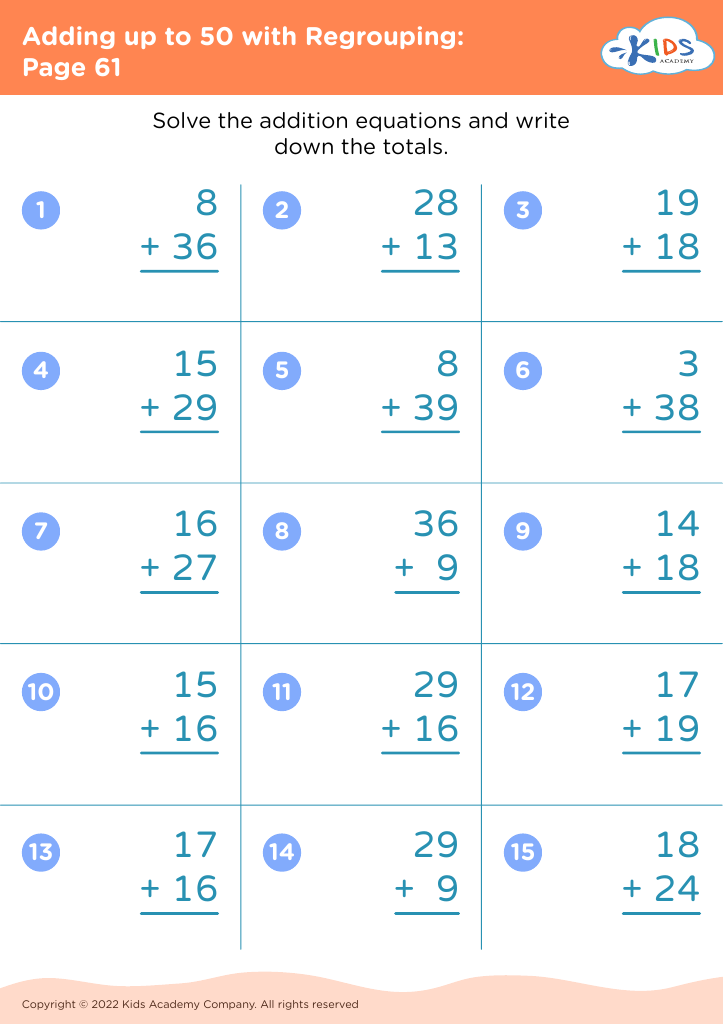
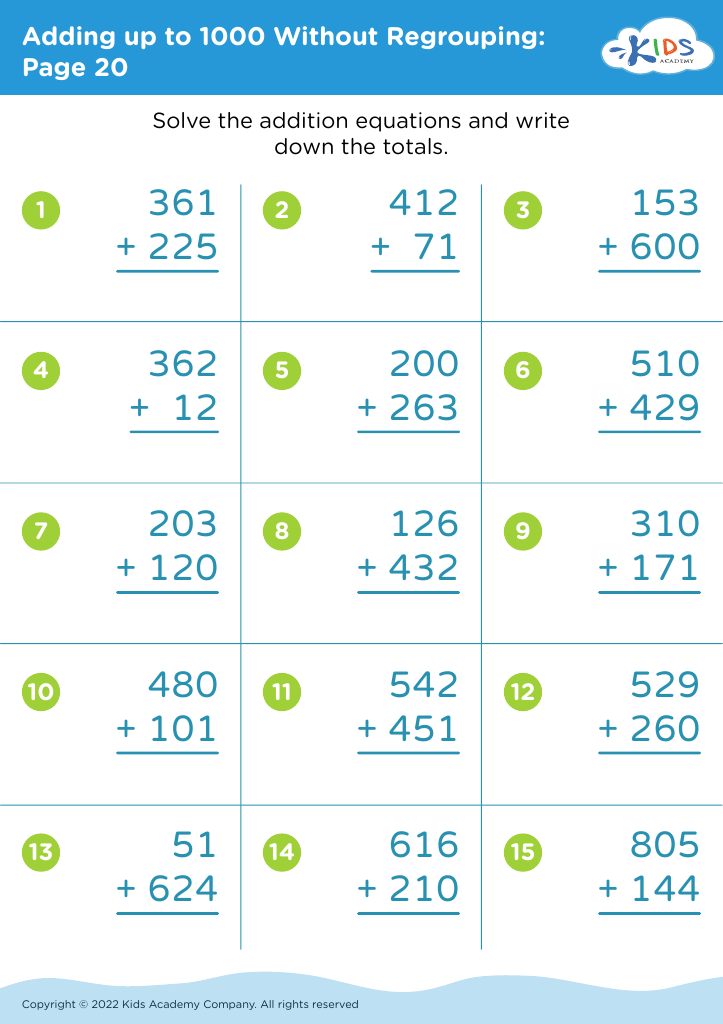
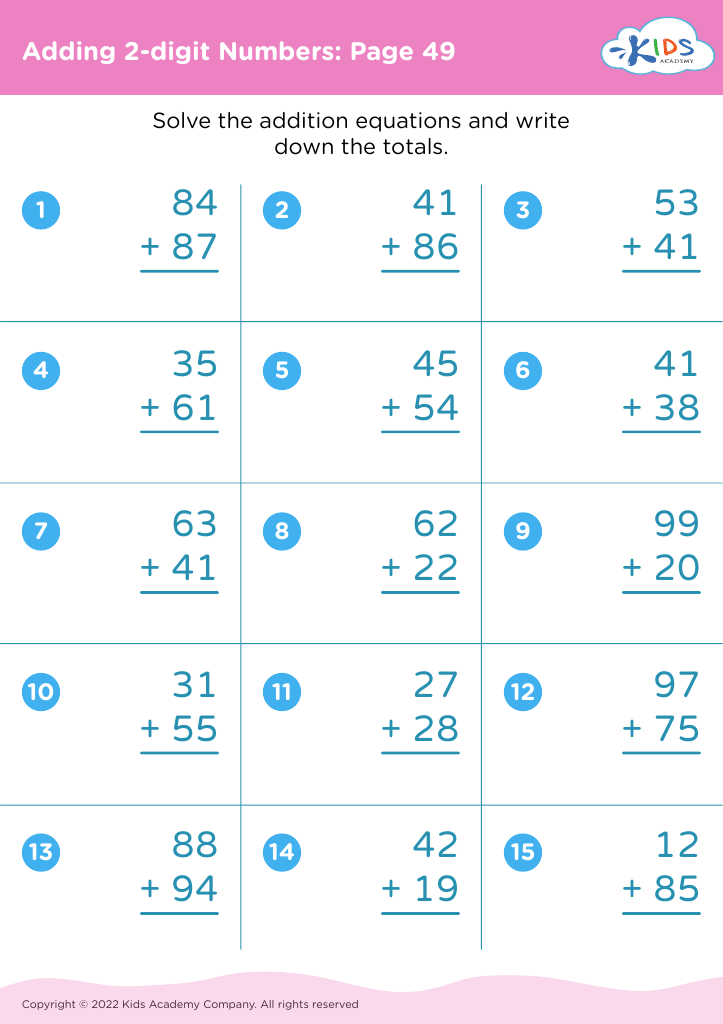
Enhance your child's critical thinking abilities with our Practice Inference Skills Addition Worksheets designed for ages 5-8. These engaging worksheets encourage young learners to develop their inference skills while mastering basic addition. Each activity presents colorful and captivating scenarios that prompt children to make logical connections and solve problems. With a blend of fun and education, these worksheets support early math comprehension, helping kids to build a strong foundation for future learning. Perfect for both classroom and at-home use, they provide a delightful way to make math exciting and accessible. Elevate your child's learning journey today!



.jpg)




Parents and teachers should deeply care about practicing inference skills in addition for ages 5-8 because these foundational years are crucial for cognitive development. Inference skills help children make connections and predictions based on different pieces of information, which is vital for advanced learning. When integrated with addition, this practice strengthens both mathematical understanding and critical thinking.
During ages 5-8, children’s brains are highly receptive to learning concepts that will become the building blocks for more complex operations. By encouraging them to deduce and infer in mathematical contexts, they develop a stronger numeracy mentality. They learn not merely to add numbers but also understand patterns, relationships, and the reasoning behind arithmetic concepts. This holistic comprehension transforms math from rote memorization into insightful problem-solving.
Additionally, enhancing these skills in young students fosters confidence and curiosity. When children successfully infer solutions, they build self-esteem and become more open to tackling challenging problems in the future. Working on inference through fun, engaging activities tailored to their developmental stage makes learning feel more like discovery than obligation.
Overall, nurturing inference skills combined with basic arithmetic essentially sets the stage for lifelong mathematical skills and a broader educational foundation, contributing positively to a child’s academic and personal growth.








