Filters

21 filtered results

Clear all filters
Favorites
With answer key
Interactive

21 filtered results

Difficulty Level

Grade


Enhance your child's math skills with our engaging Problem Solving Addition Worksheets designed for ages 5-8. At Kids Academy, our expertly crafted worksheets encourage critical thinking and boost confidence. Each activity combines fun, relatable scenarios with essential addition practice, perfect for young learners. Through these worksheets, children will develop problem-solving strategies, improve numerical fluency, and gain a love for math. Whether for classroom use or extra practice at home, our printable, colorful exercises make learning enjoyable and effective. Set your child on the path to success with Kids Academy's Problem Solving Addition Worksheets today!
Check out this FREE Trial Lesson on Addition for age 5-8!

Match Objects that Fit Together

Favorites
With answer key
Interactive
  • 5-8
  • Problem Solving
  • Addition
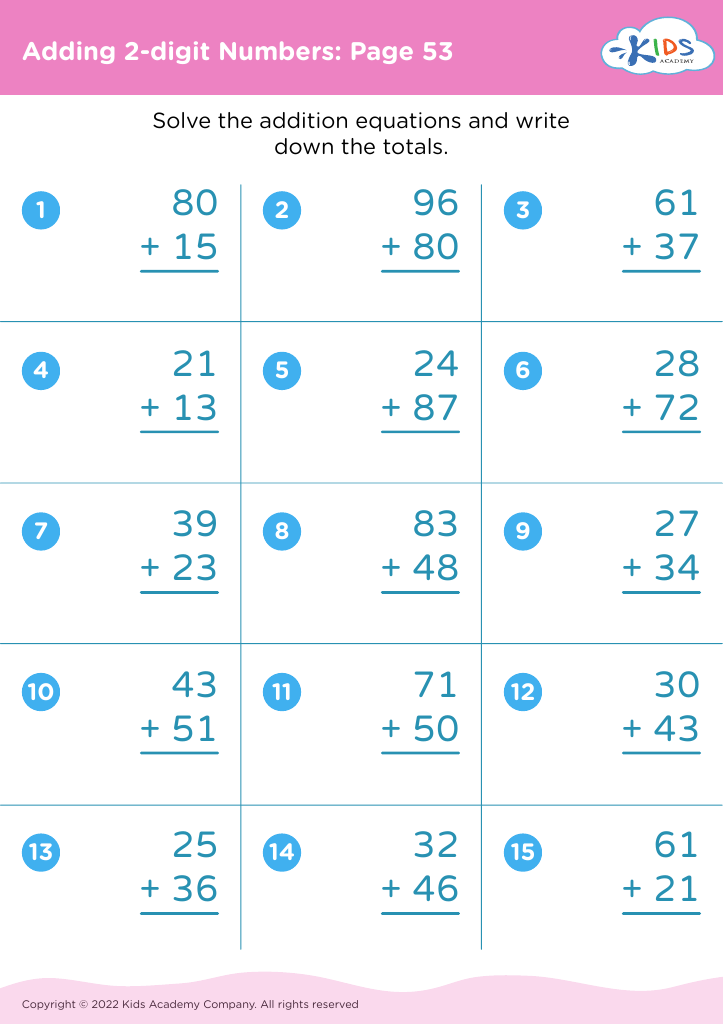
Adding 2-digit Numbers: Page 53

Adding 2-digit Numbers: Page 53

Adding 2-digit Numbers: Page 53
Worksheet
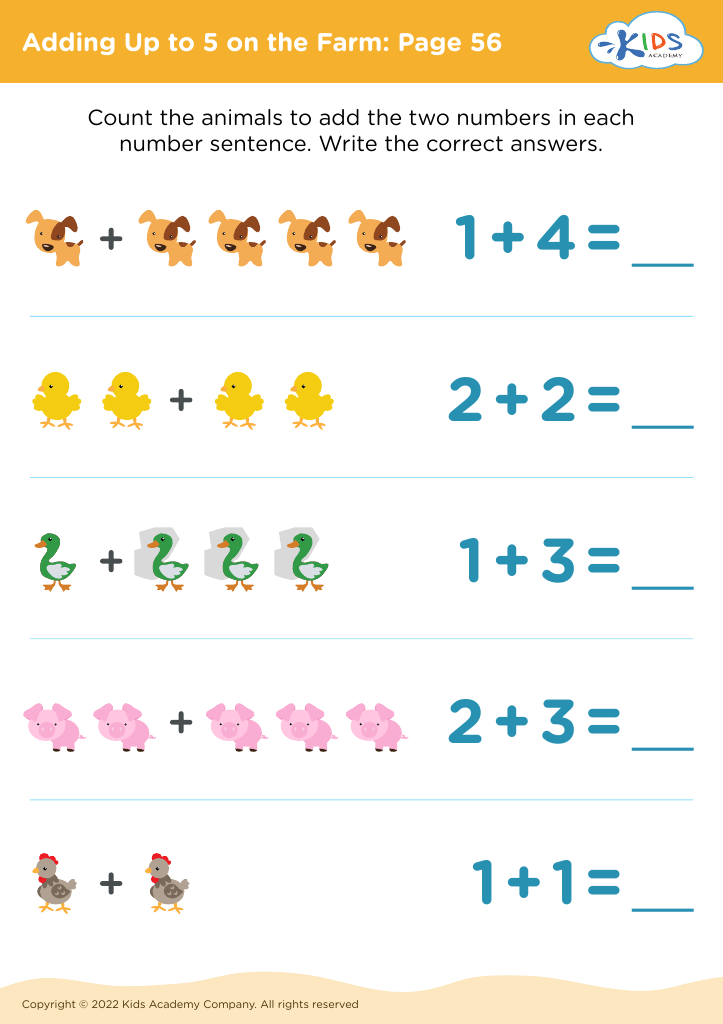
Adding Up to 5 on the Farm: Page 56
Worksheet
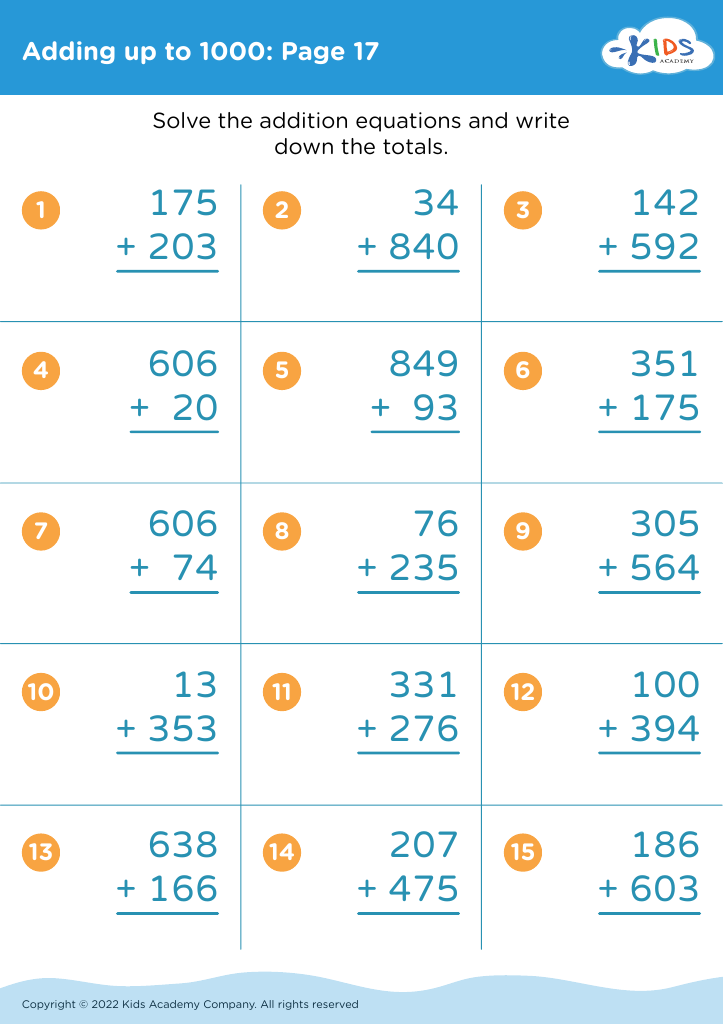
Adding up to 1000: Page 17

Adding up to 1000: Page 17

Adding up to 1000: Page 17
Worksheet
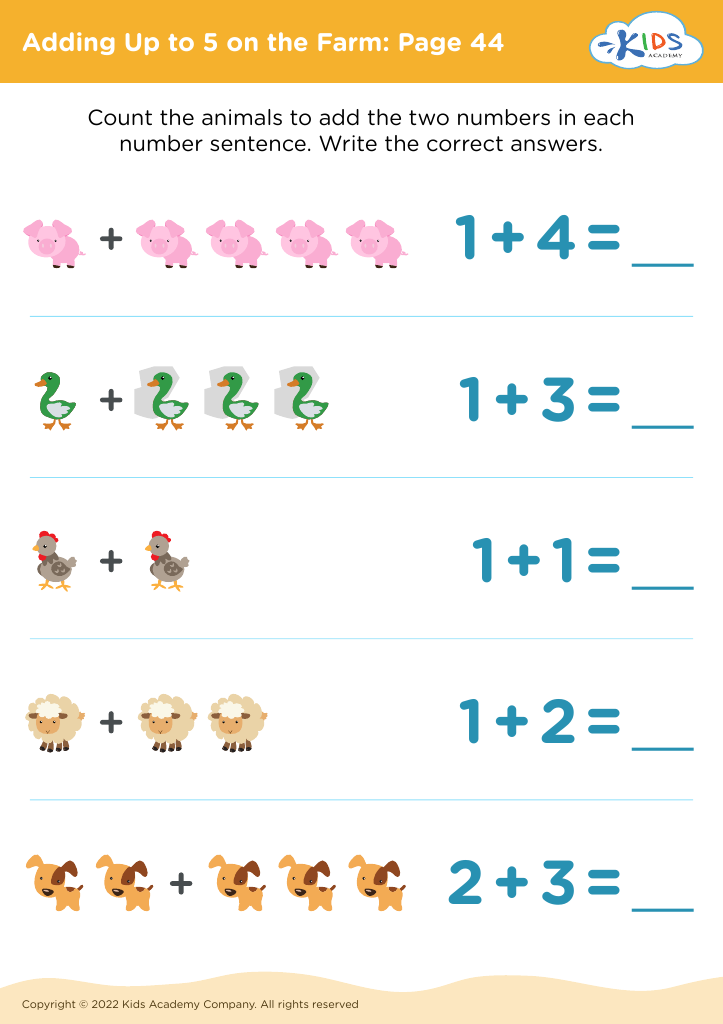
Adding Up to 5 on the Farm: Page 44
Worksheet
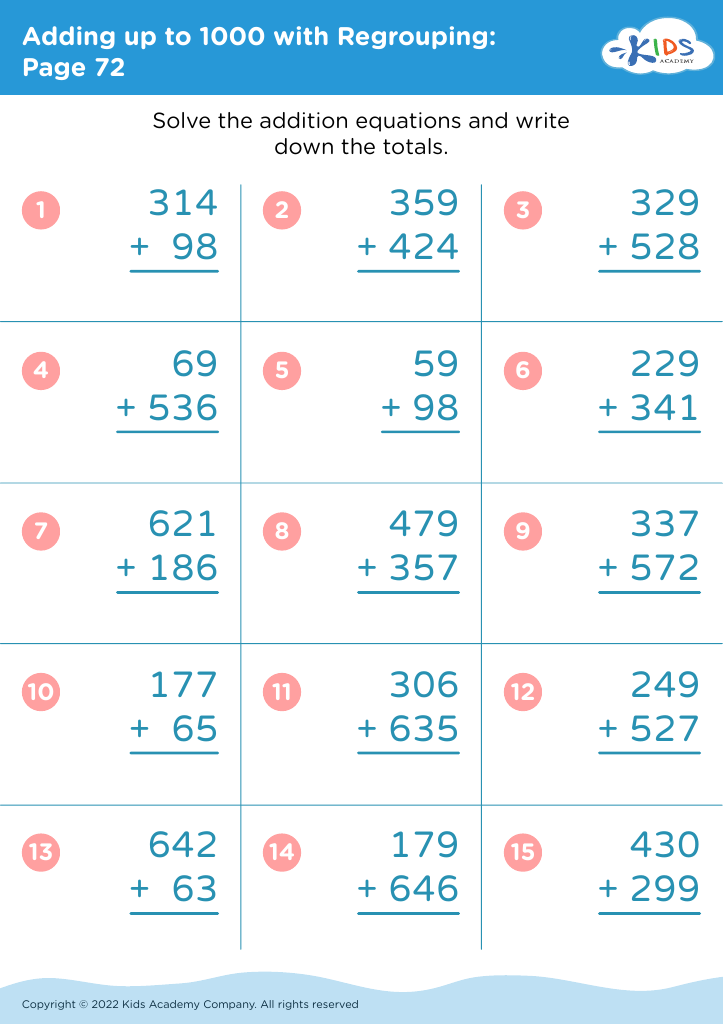
Adding up to 1000 with Regrouping: Page 72
Worksheet
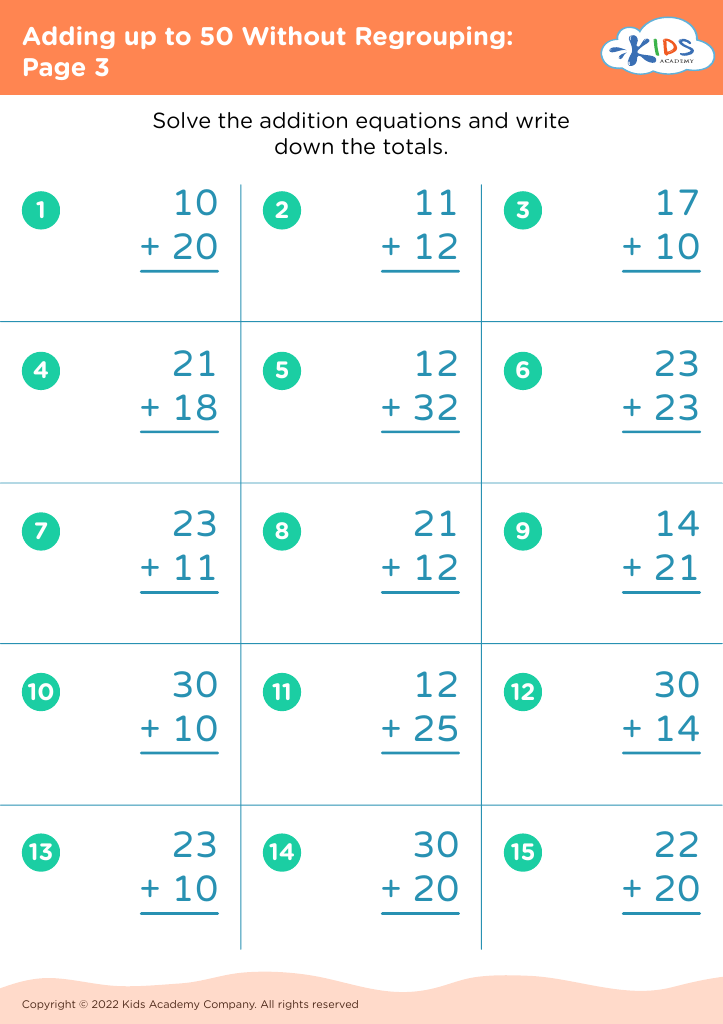
Adding up to 50 Without Regrouping: Page 3
Worksheet
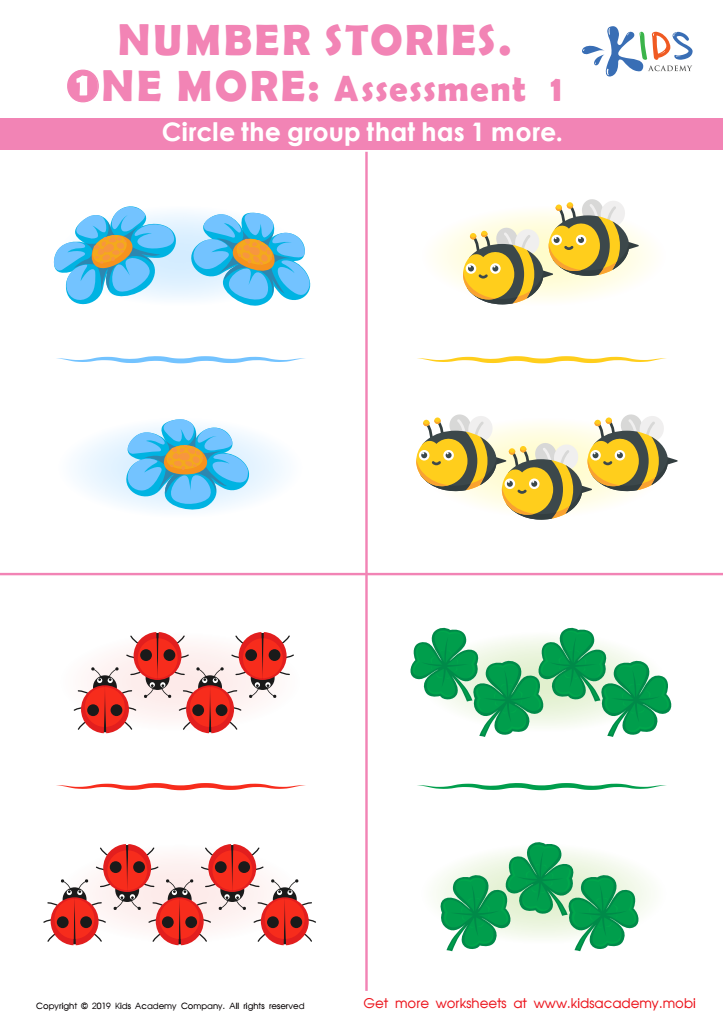
Number Stories One More - Assessment 1 Worksheet Preview

Number Stories One More – Assessment 1 Worksheet

Does your child need a fun way to practice distinguishing between different groups of numbers? This free PDF worksheet will have them circle the group that has one more. With its colorful nature drawings, it's an attractive activity that visual learners will enjoy!
Number Stories One More – Assessment 1 Worksheet
Worksheet
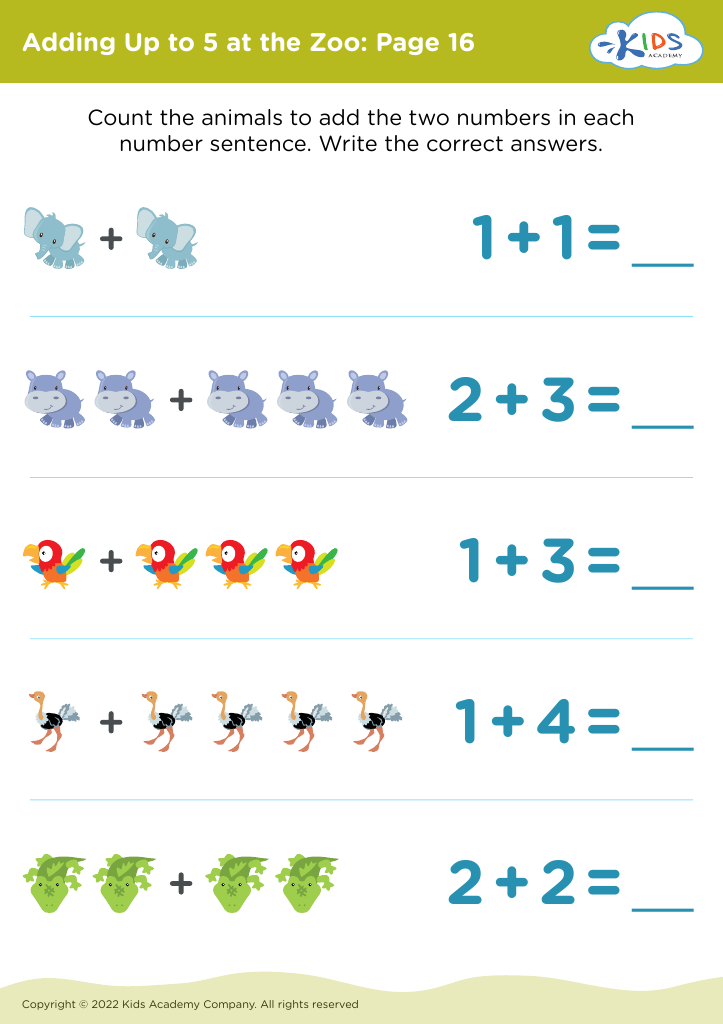
Adding Up to 5 at the Zoo: Page 16
Worksheet
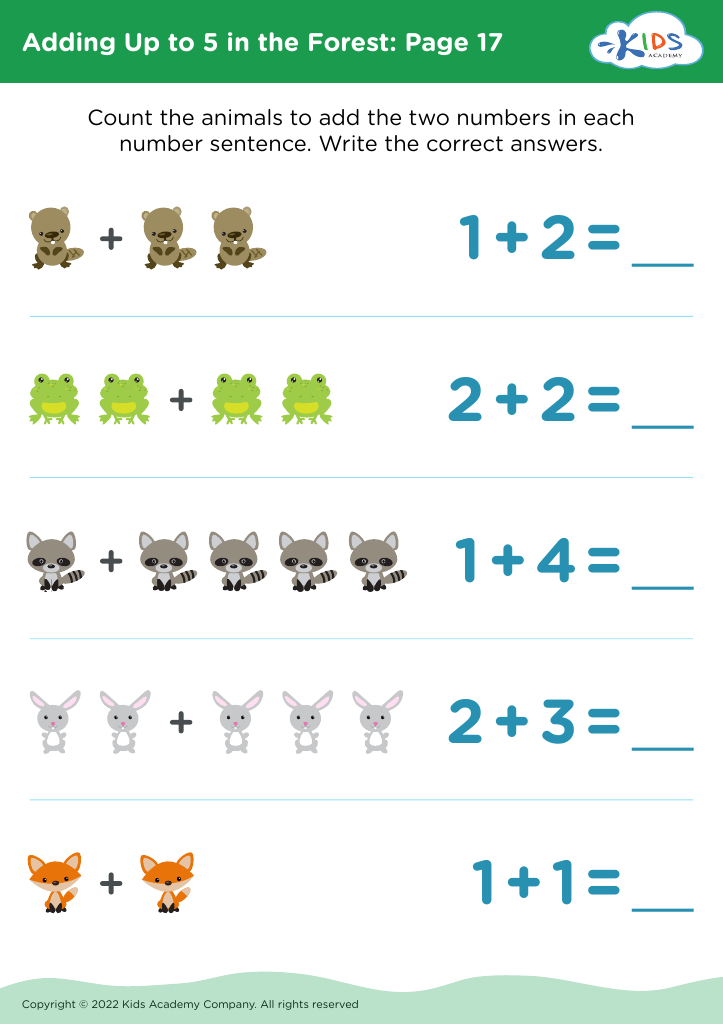
Adding Up to 5 in the Forest: Page 17
Worksheet
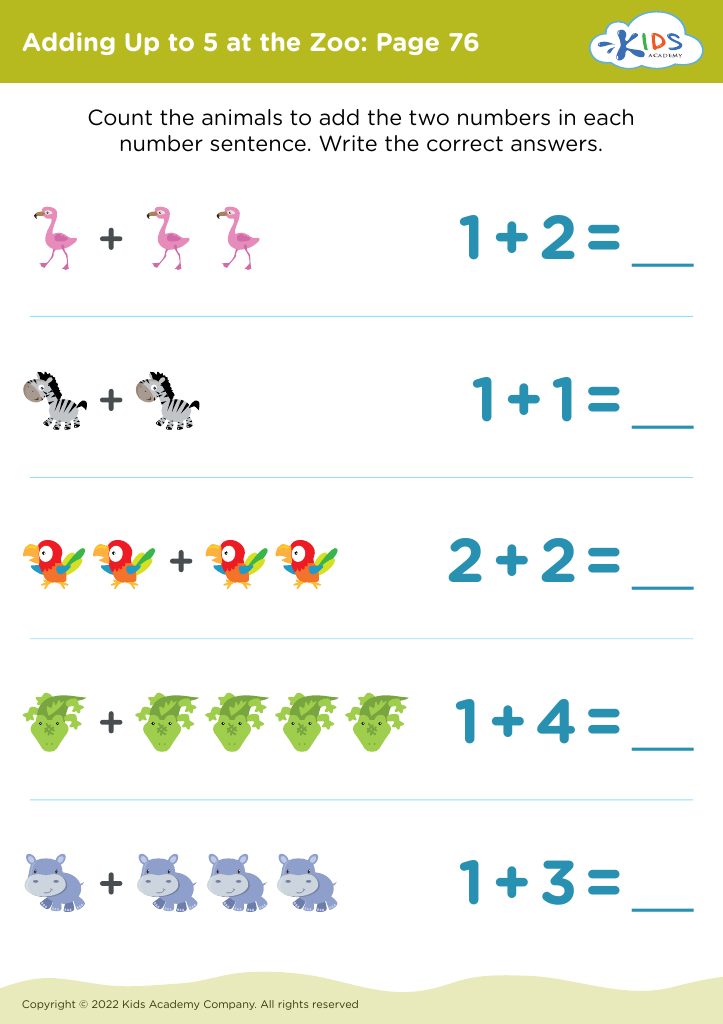
Adding Up to 5 at the Zoo: Page 76
Worksheet
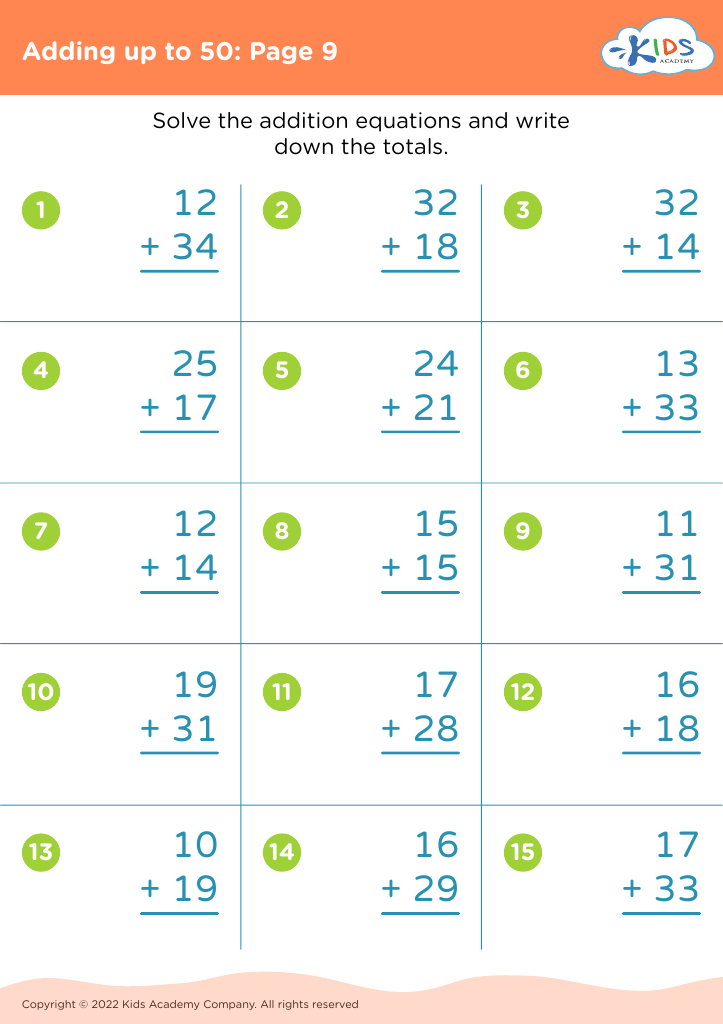
Adding up to 50: Page 9

Adding up to 50: Page 9

Adding up to 50: Page 9
Worksheet
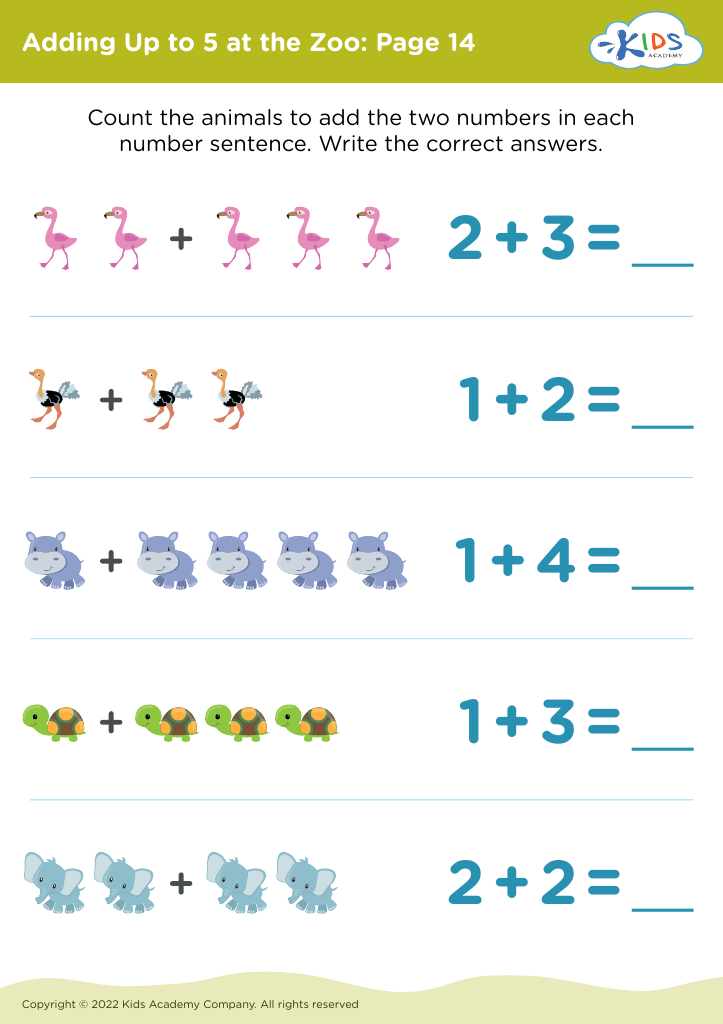
Adding Up to 5 at the Zoo: Page 14
Worksheet
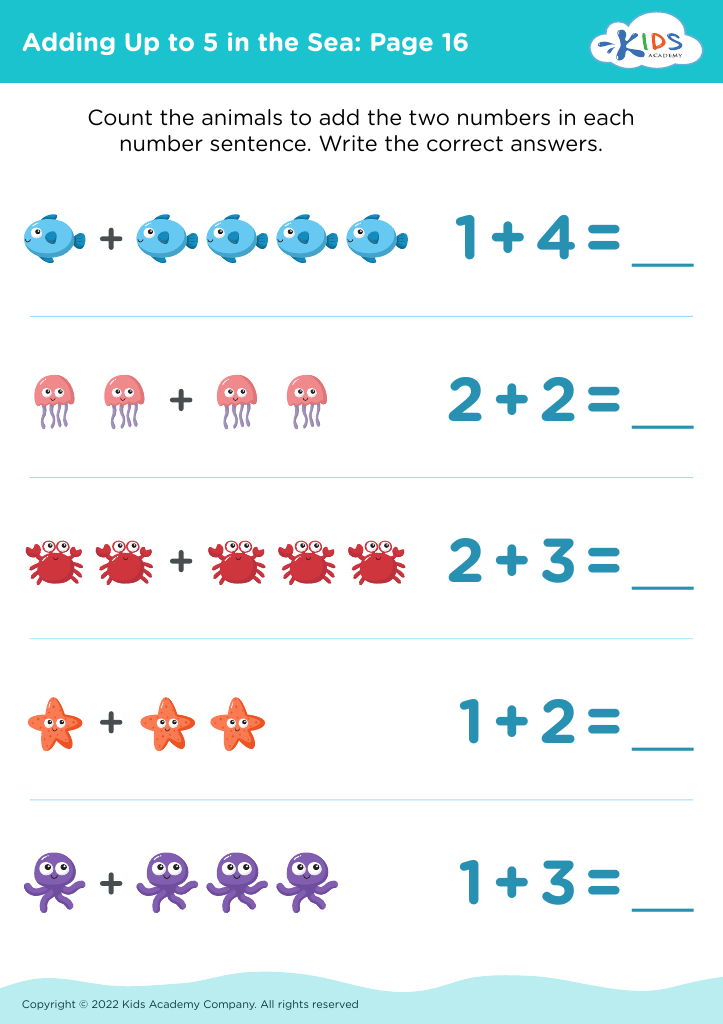
Adding Up to 5 in the Sea: Page 16
Worksheet
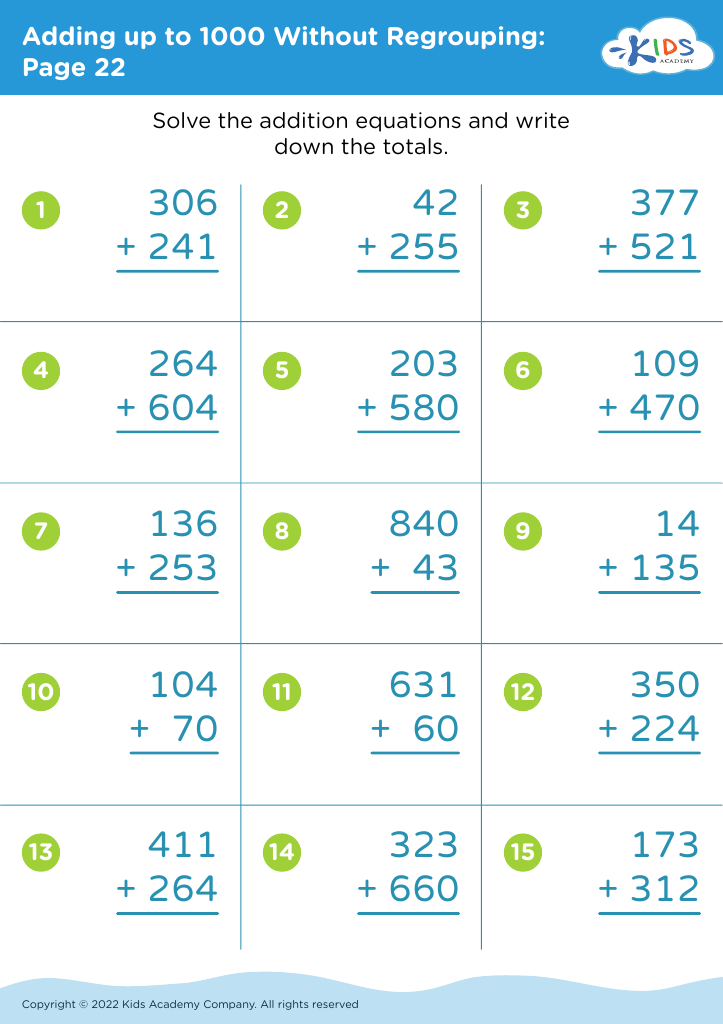
Adding up to 1000 Without Regrouping: Page 22
Worksheet
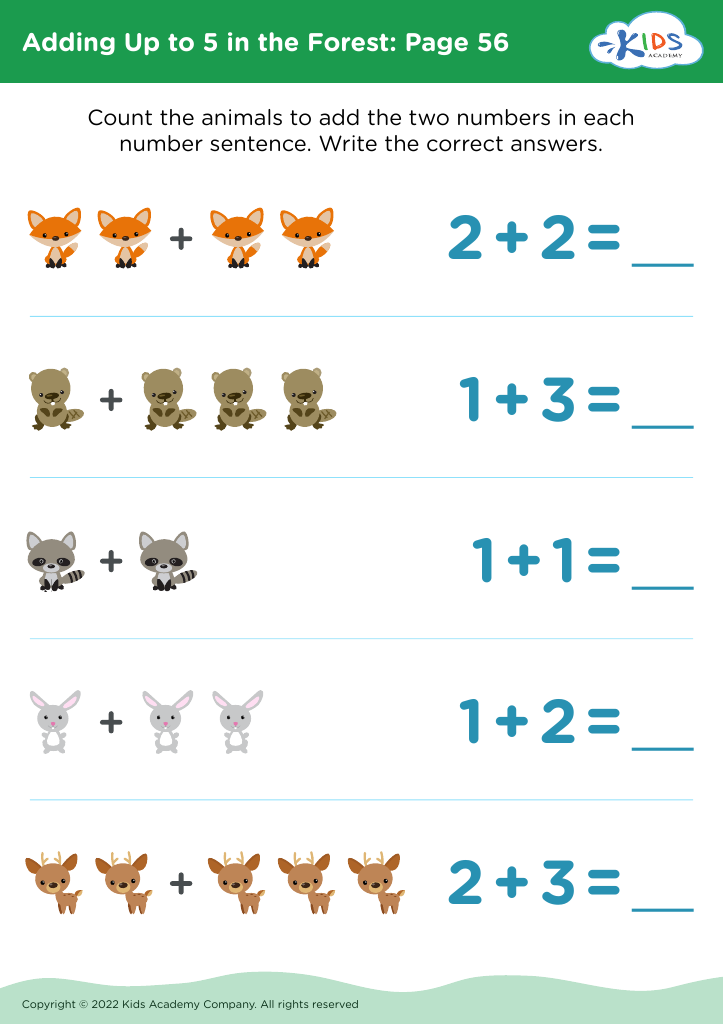
Adding Up to 5 in the Forest: Page 56
Worksheet
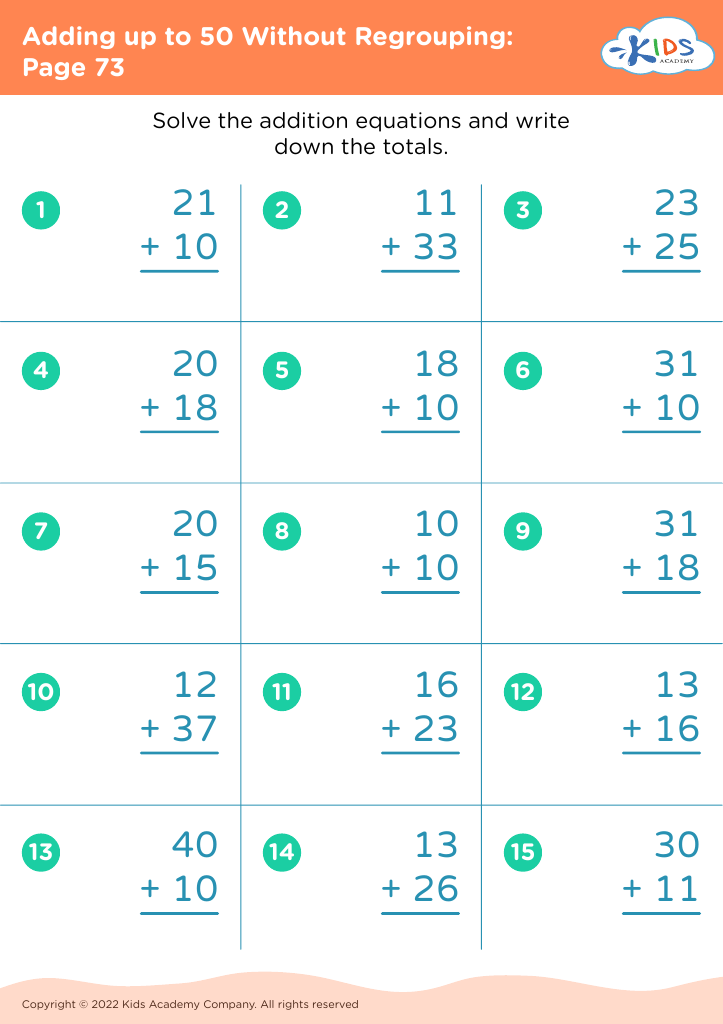
Adding up to 50 Without Regrouping: Page 73
Worksheet
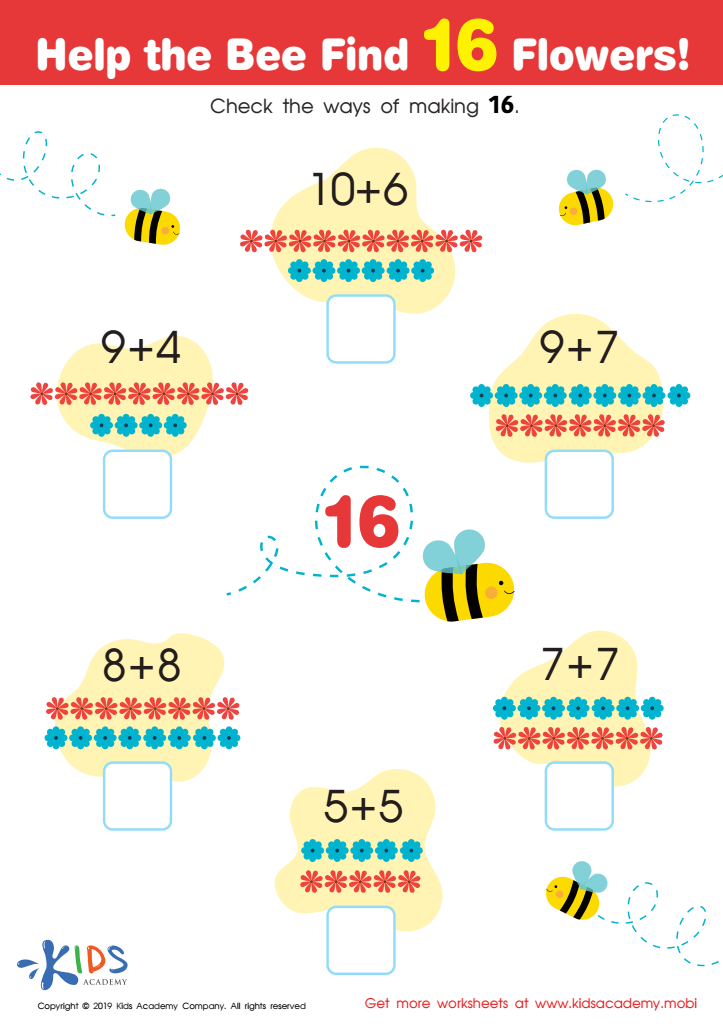
Help the Bee Find 16 Flowers Worksheet
Help the Bee Find 16 Flowers Worksheet
Ask your students to count as high as they can. Show them that different numbers can equal the same figure with examples like 2+2=4 and 3+1=4. Ask for more examples, then help the bees find 16 flowers by checking the ways of making 16.
Help the Bee Find 16 Flowers Worksheet
Worksheet
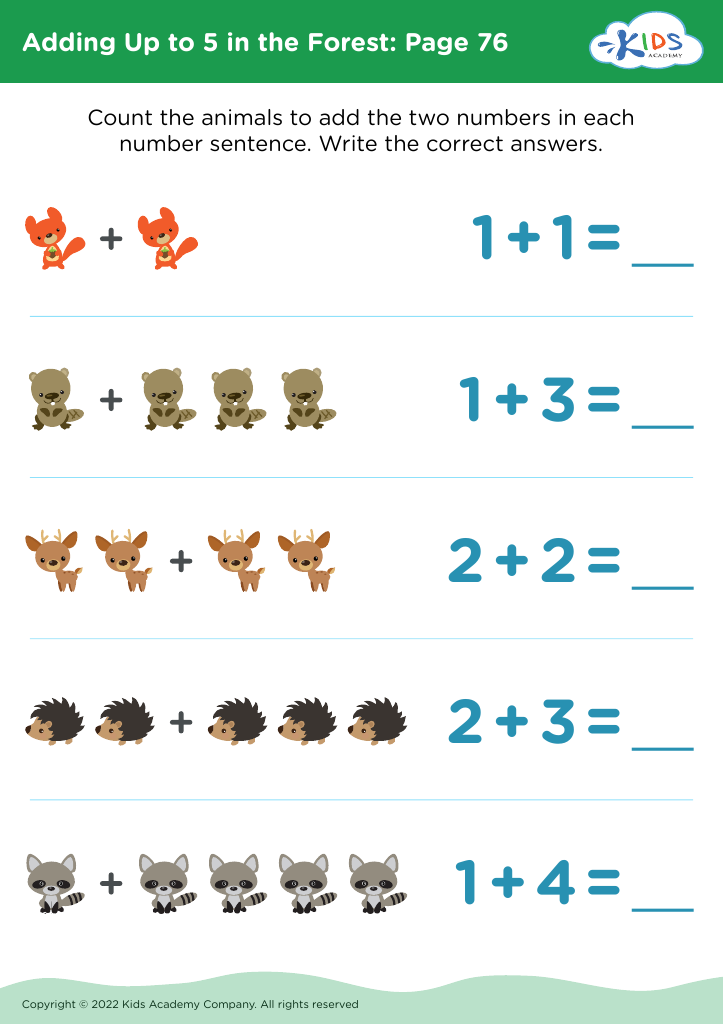
Adding Up to 5 in the Forest: Page 76
Worksheet
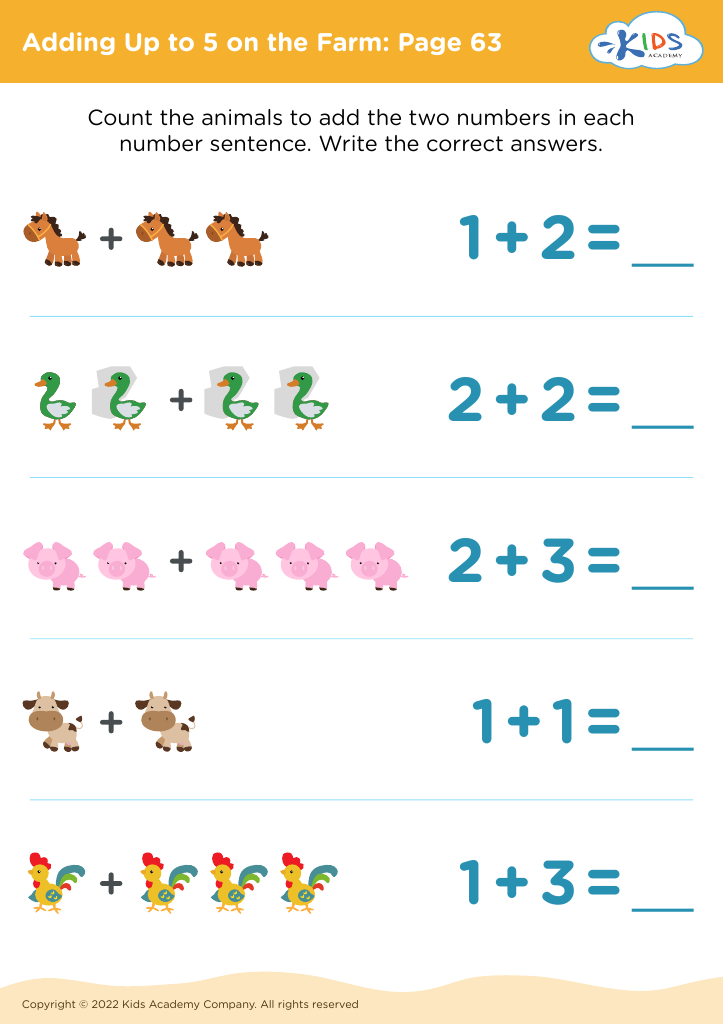
Adding Up to 5 on the Farm: Page 63
Worksheet
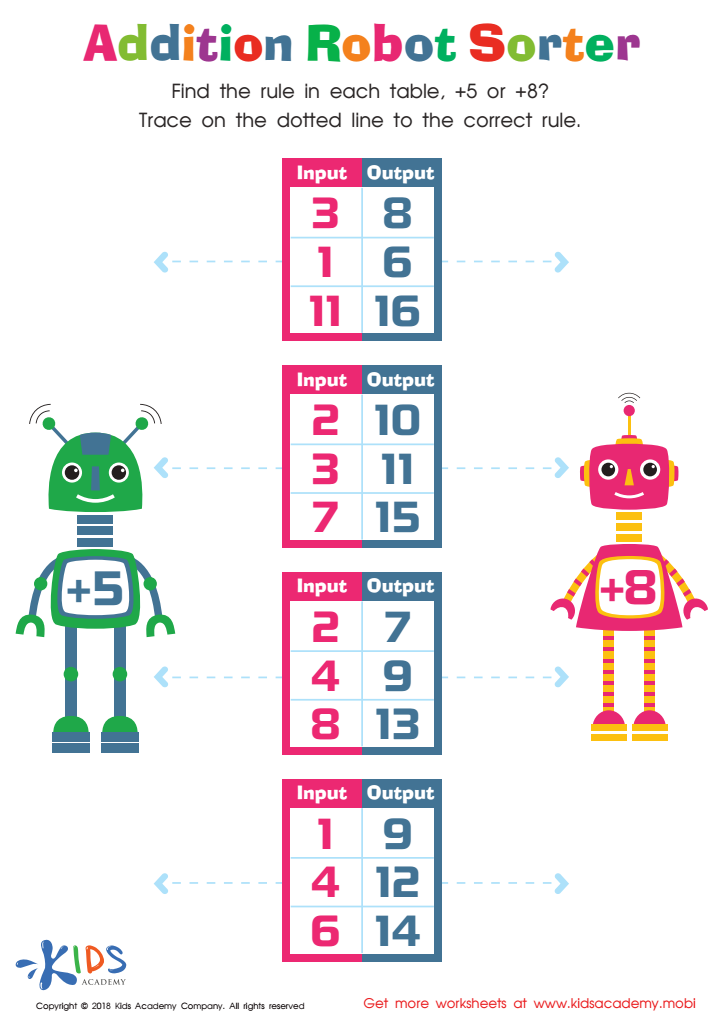
Addition Robot Sorter Worksheet

Addition Robot Sorter Worksheet

This worksheet helps your child understand addition. Have them trace the dotted lines to the correct equations: +8 and +5. It's a great way to aid their mathematical comprehension and get them comfortable with adding equations.
Addition Robot Sorter Worksheet
Worksheet
Free addition PDF worksheet for 3rd grade

Free Addition Worksheet

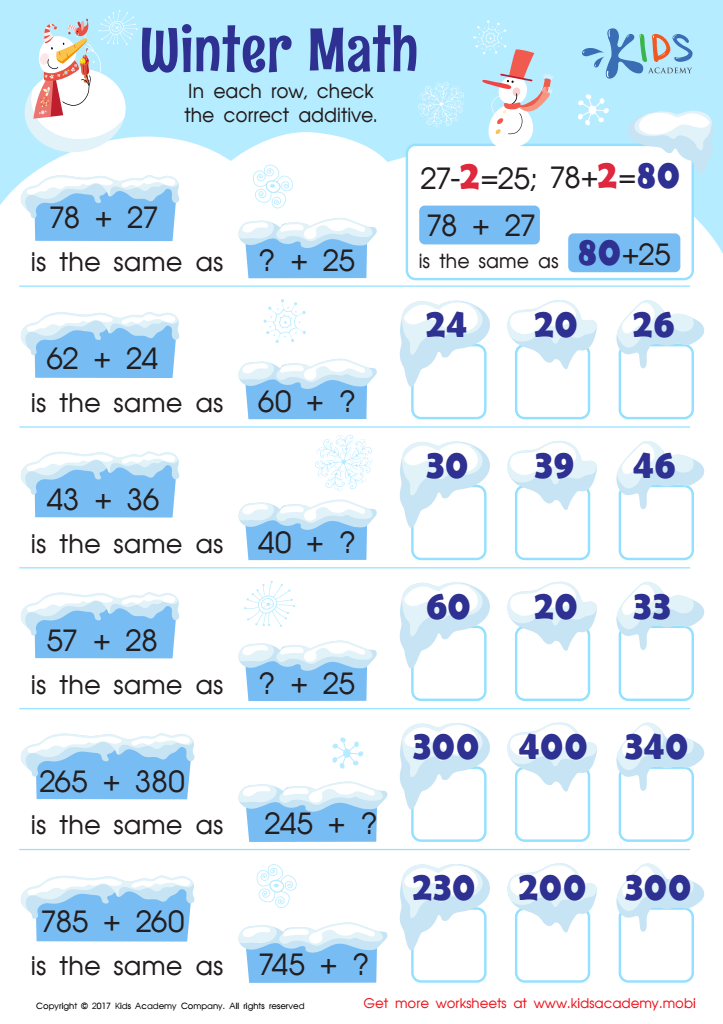
Perfect for a wintry day, challenge your 3rd grader to compare addition equations and fill in the missing numbers in the PDF. This winter-themed worksheet is sure to bring a smile while your 3rd grader practices their addition skills. Perfect for a blustery day, challenge your child to compare addition equations and complete the missing numbers in the PDF.
Free Addition Worksheet
Worksheet


Problem-solving addition for ages 5-8 is crucial as it lays the foundation for essential mathematical skills and promotes cognitive development. Engaging young children in addition problems teaches them to think critically and approach challenges with a problem-solving mindset. Early exposure to these skills helps to build a solid understanding of numerical concepts and sets the stage for more advanced math in later years.

Parents and teachers should care about fostering problem-solving addition because it enhances logical reasoning and improves memory and concentration in young learners. These skills are not just limited to mathematics but translate to overall academic success. By encouraging kids to solve addition problems, adults help develop their perseverance and ability to handle frustration, which are important life skills.

Moreover, learning addition through problem-solving makes math more engaging and relatable. It shifts the focus from rote memorization to meaningful understanding. When parents and teachers emphasize this approach, children are more likely to develop a positive attitude towards math and gain confidence in their ability to tackle new problems.

Finally, early mastery of addition problems can lead to higher achievement in math, as these initial skills become building blocks for more complex operations. Investing time and effort into teaching problem-solving addition fosters a strong, confident, and curious mindset in young learners.