Filters

29 filtered results

Clear all filters
Favorites
With answer key
Interactive

29 filtered results

Difficulty Level

Grade


Our Addition Worksheets for ages 5-8 are expertly designed to enhance problem-solving abilities while making math fun and accessible. Featuring diverse and engaging activities, these printable worksheets help young learners develop critical thinking skills through practical addition challenges. Each worksheet combines visual aids with interactive problems to encourage a deeper understanding of math concepts, promoting confident problem-solving techniques. Aligned with educational standards, they are perfect for both classroom use and at-home practice. Unlock your child's potential and foster a lifelong love for learning with our dynamic addition worksheets tailored for young mathematicians.
Check out this FREE Trial Lesson on Addition for age 5-8!

Unknown Parts Addition Word Problems

Favorites
With answer key
Interactive
  • 5-8
  • Problem-solving abilities
  • Addition
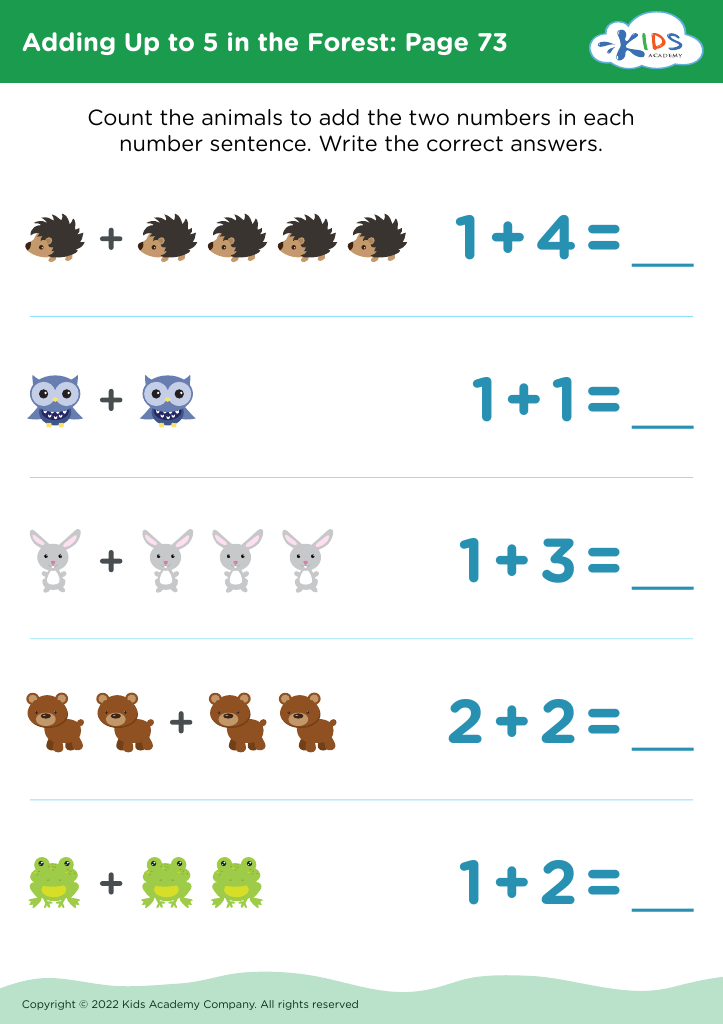
Adding Up to 5 in the Forest: Page 73
Worksheet
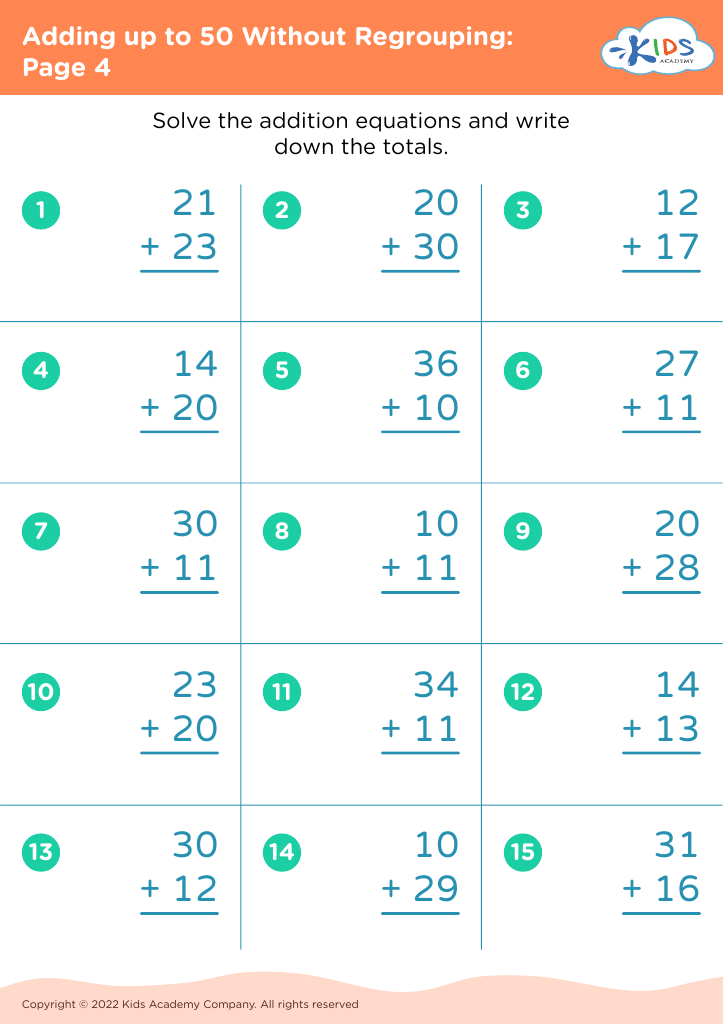
Adding up to 50 Without Regrouping: Page 4
Worksheet
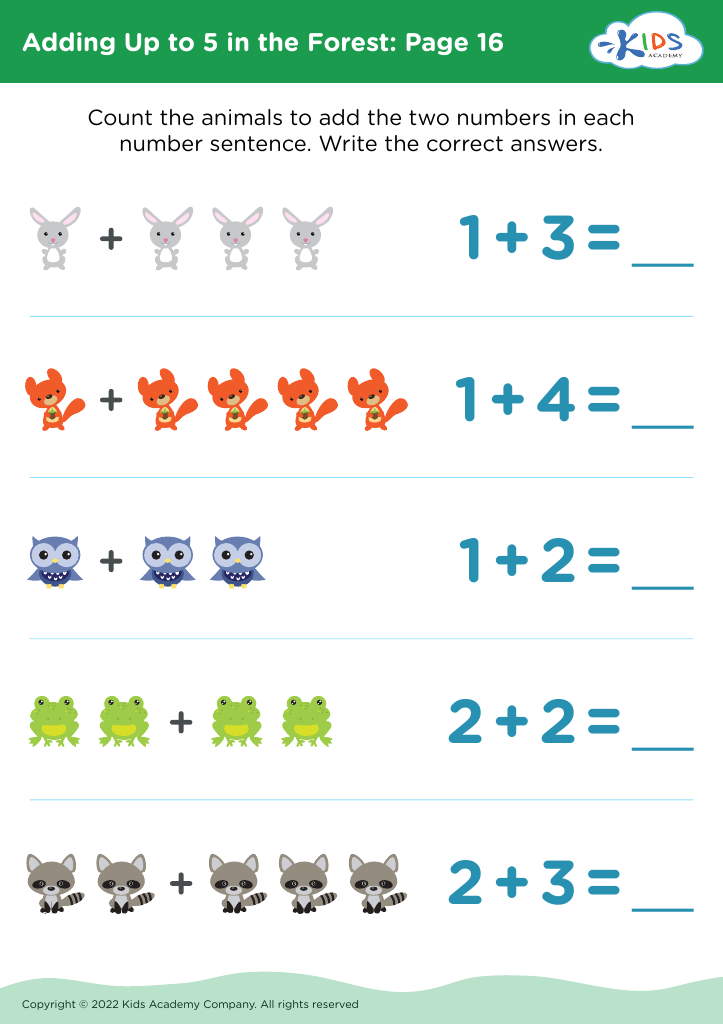
Adding Up to 5 in the Forest: Page 16
Worksheet
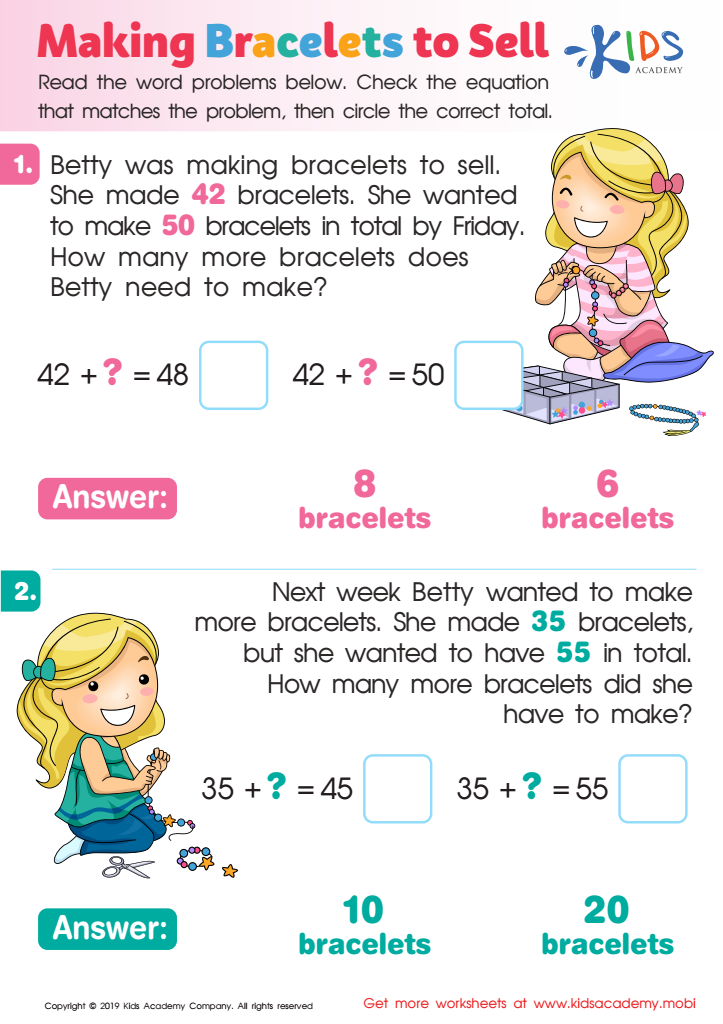
Making Bracelets to Sell Worksheet

Making Bracelets to Sell Worksheet

Got kids who love crafting? This worksheet will be right up their alley! Let them use their creative and problem-solving skills to check equations and decide the correct total. It's just like making beads into a bracelet but on paper! Print out this downloadable PDF and get ready for a fun craft session.
Making Bracelets to Sell Worksheet
Worksheet
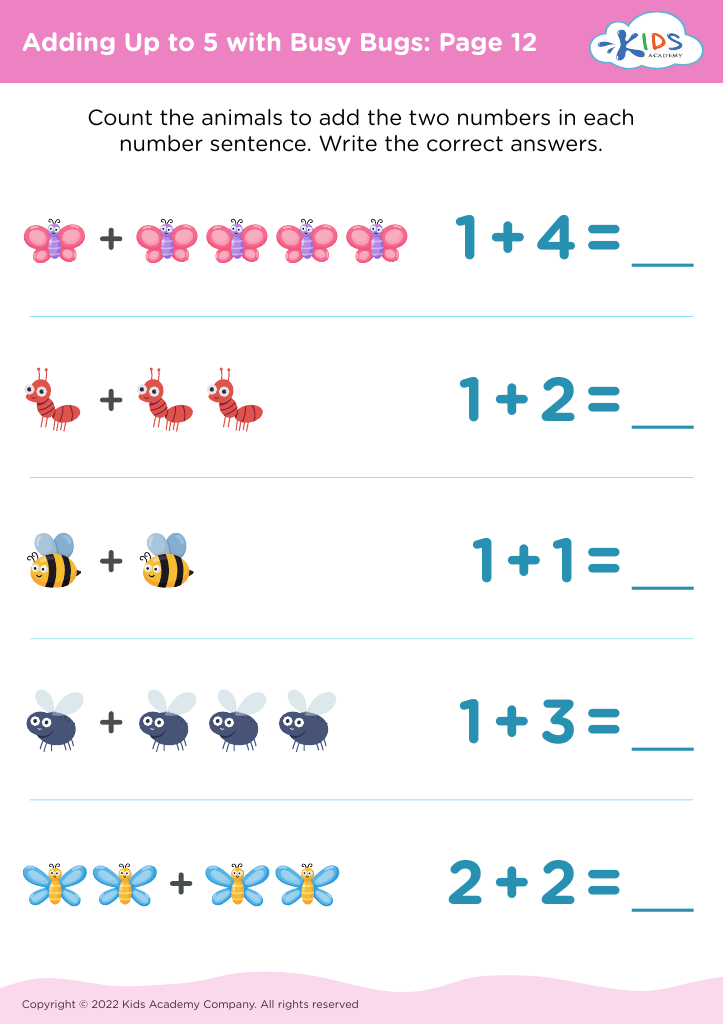
Adding Up to 5 with Busy Bugs: Page 12
Worksheet
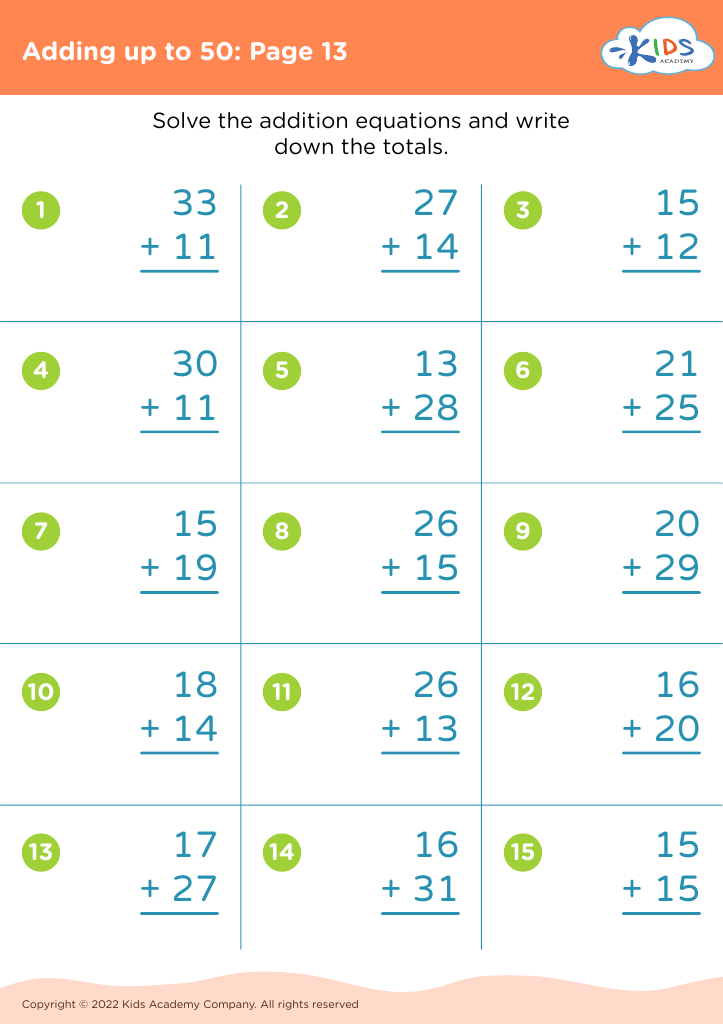
Adding up to 50: Page 13

Adding up to 50: Page 13

Adding up to 50: Page 13
Worksheet
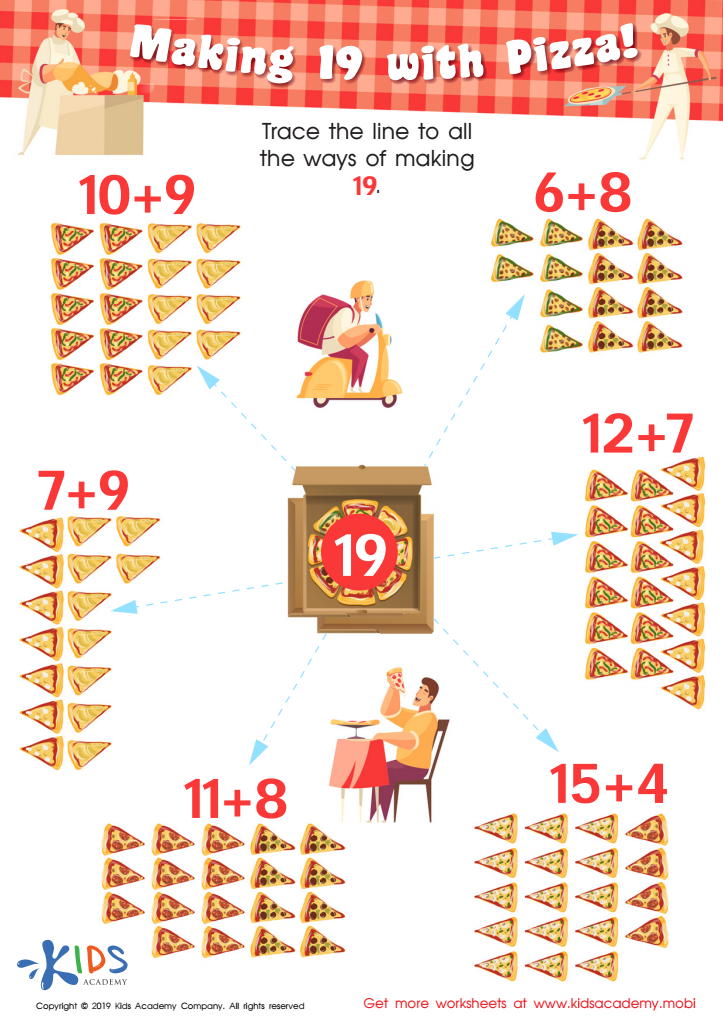
Making 19 with Pizza! Worksheet
Making 19 with Pizza! Worksheet

Who loves pizza? Your kids do! Next time you need to teach them math, make it fun by combining it with something they enjoy. This worksheet uses a pizza-themed problem to help them practice solving equations. Have them trace the line to figure out how to make 19. It's a great way to make learning math fun!
Making 19 with Pizza! Worksheet
Worksheet
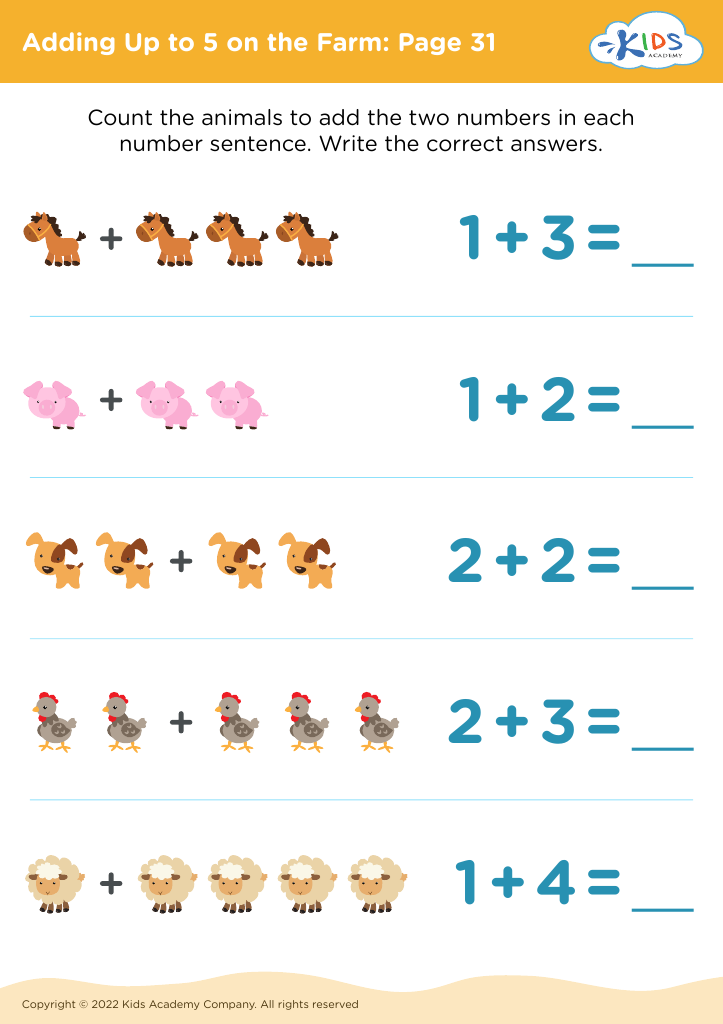
Adding Up to 5 on the Farm: Page 31
Worksheet
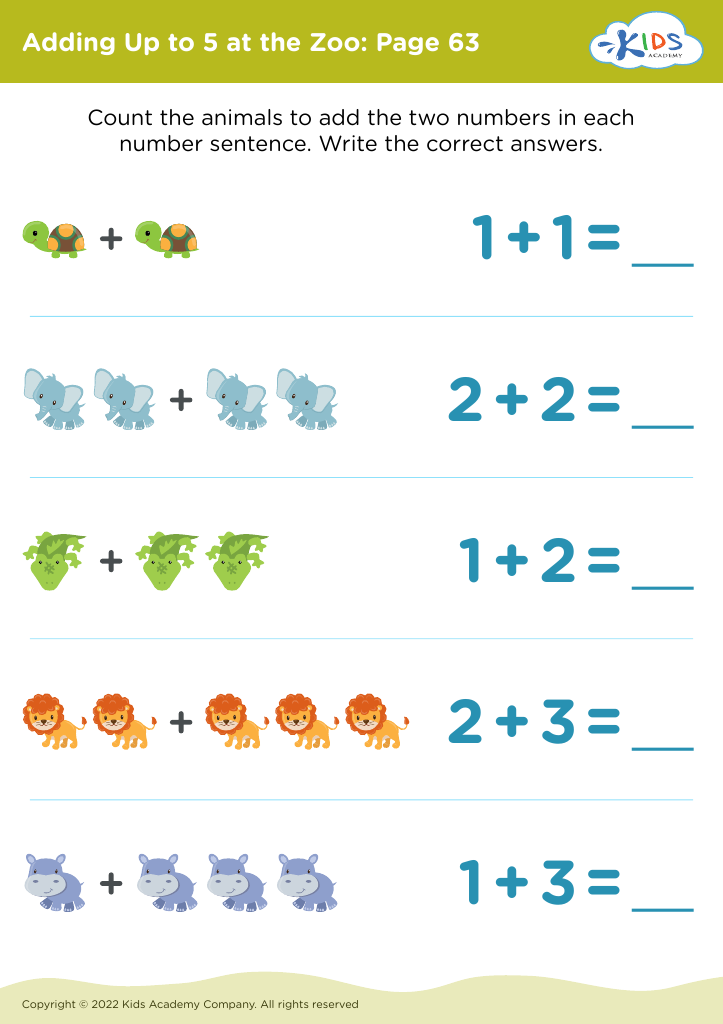
Adding Up to 5 at the Zoo: Page 63
Worksheet
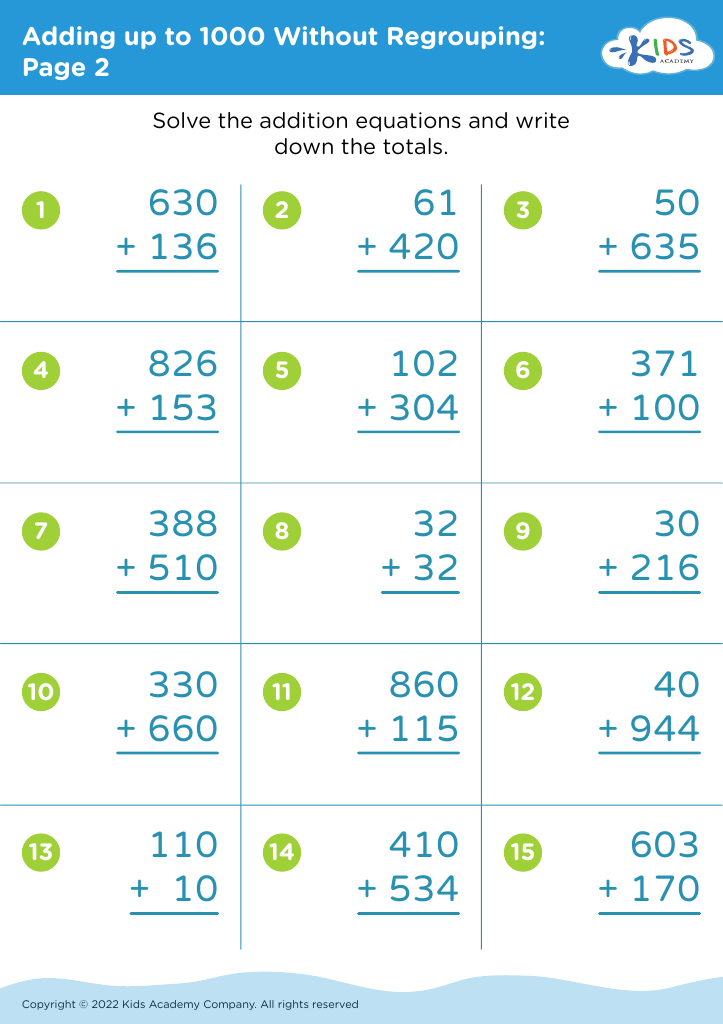
Adding up to 1000 Without Regrouping: Page 2
Worksheet
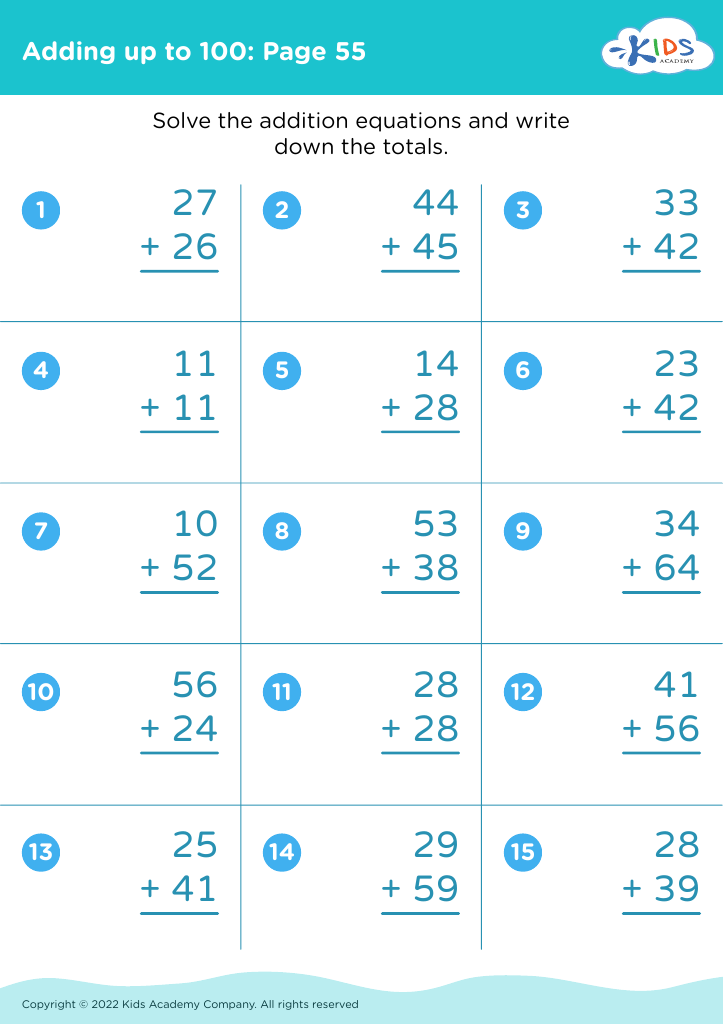
Adding up to 100: Page 55

Adding up to 100: Page 55

Adding up to 100: Page 55
Worksheet
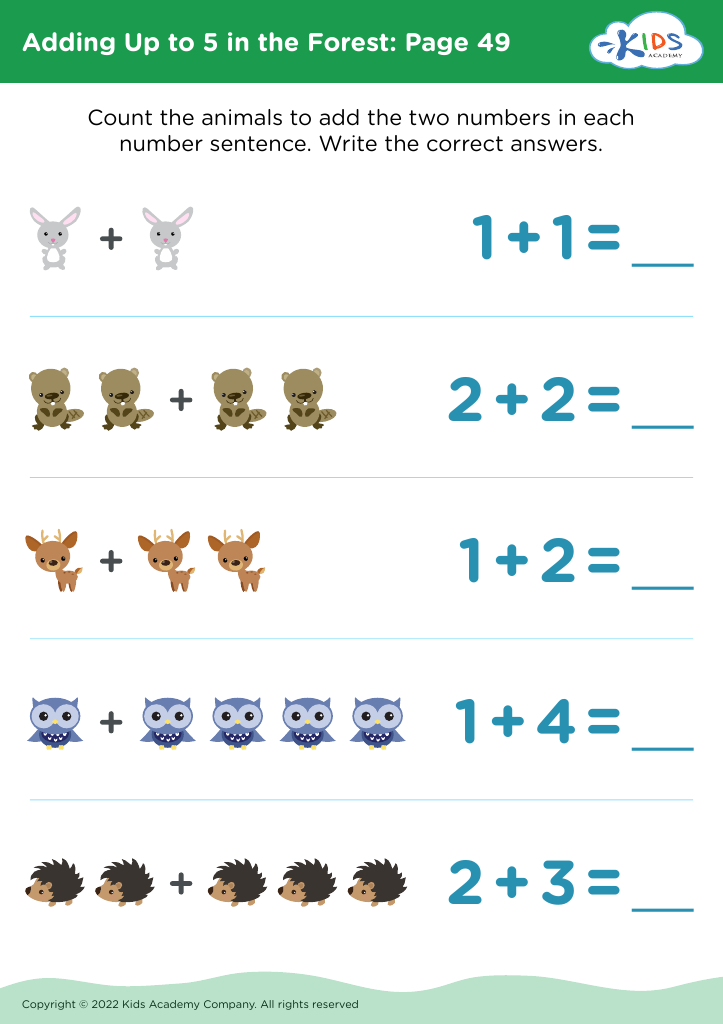
Adding Up to 5 in the Forest: Page 49
Worksheet
Adding at the Hospital Worksheet
Adding at the Hospital Worksheet
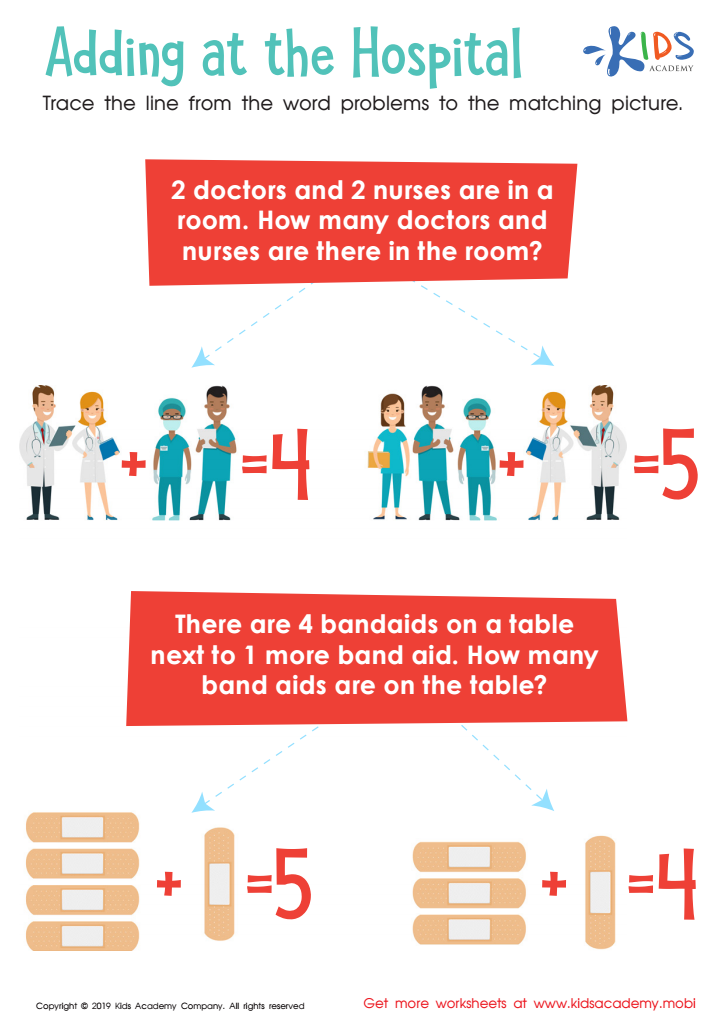
A hospital visit doesn't have to be scary for kids. With this worksheet, they can count along with doctors and nurses, by reading the word problems and tracing lines to the corresponding picture. Guide them through it and you'll help them have a fun experience.
Adding at the Hospital Worksheet
Worksheet
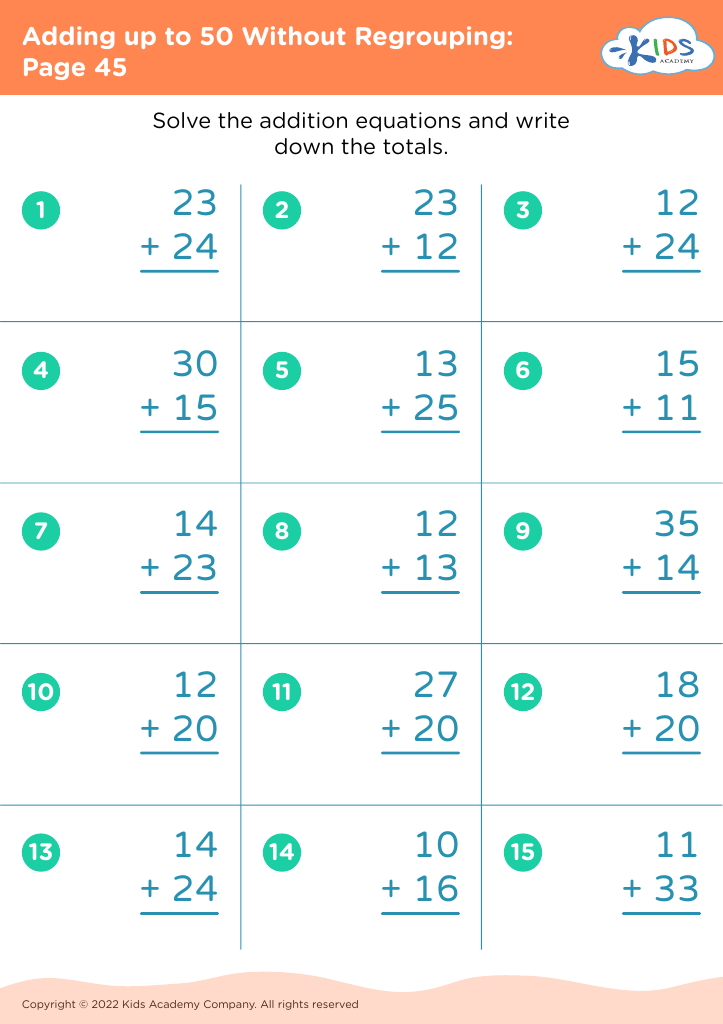
Adding up to 50 Without Regrouping: Page 45
Worksheet
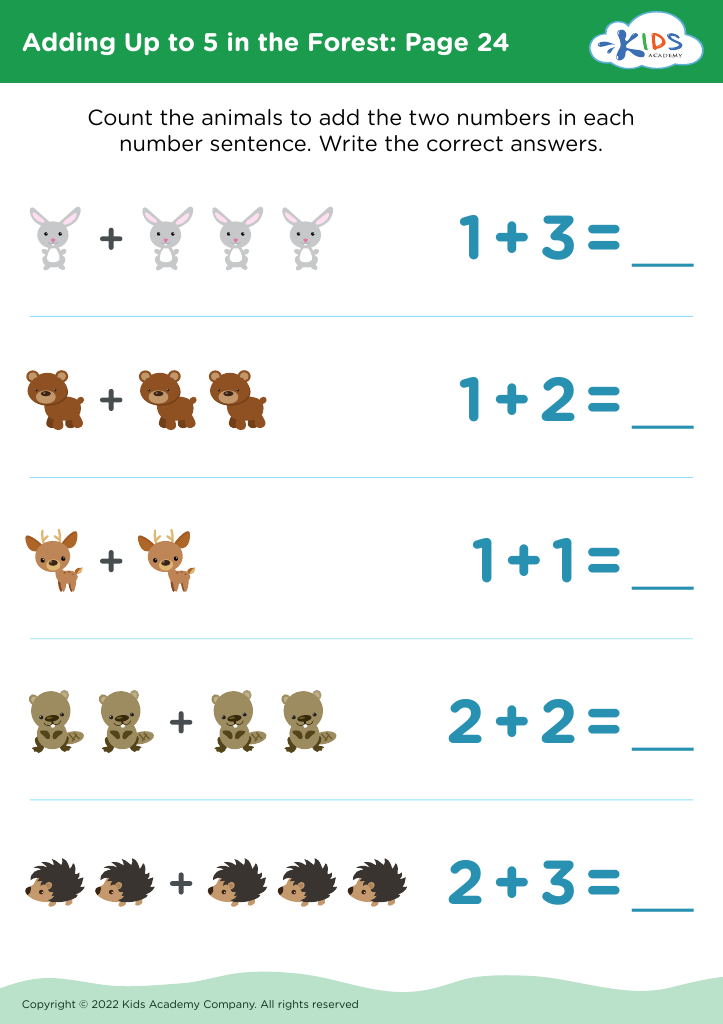
Adding Up to 5 in the Forest: Page 24
Worksheet
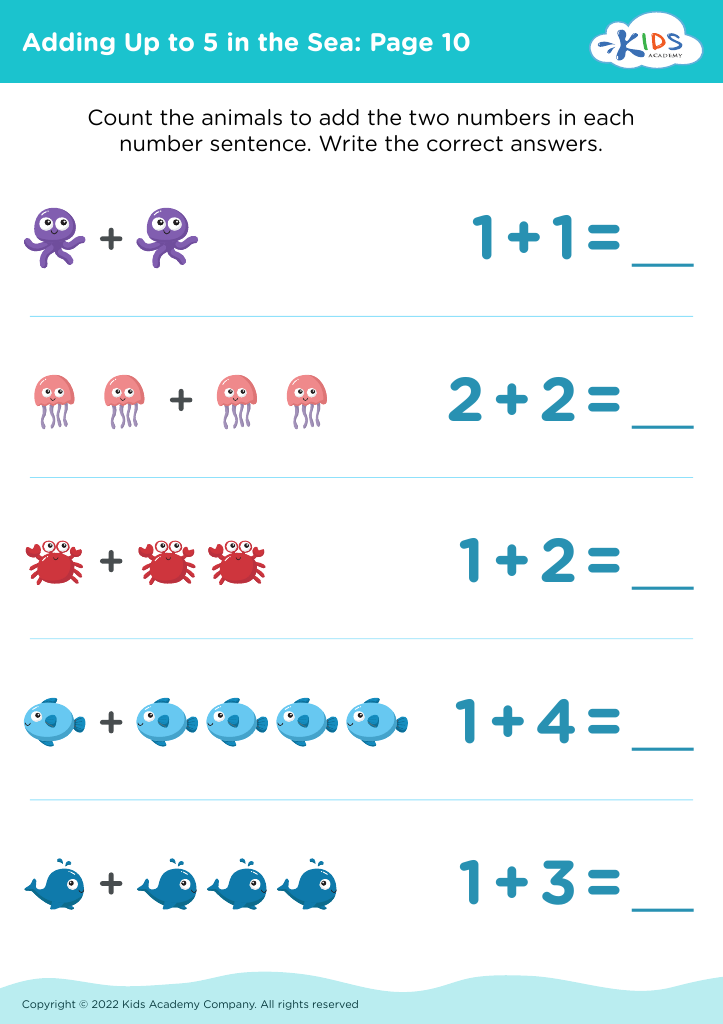
Adding Up to 5 in the Sea: Page 10
Worksheet
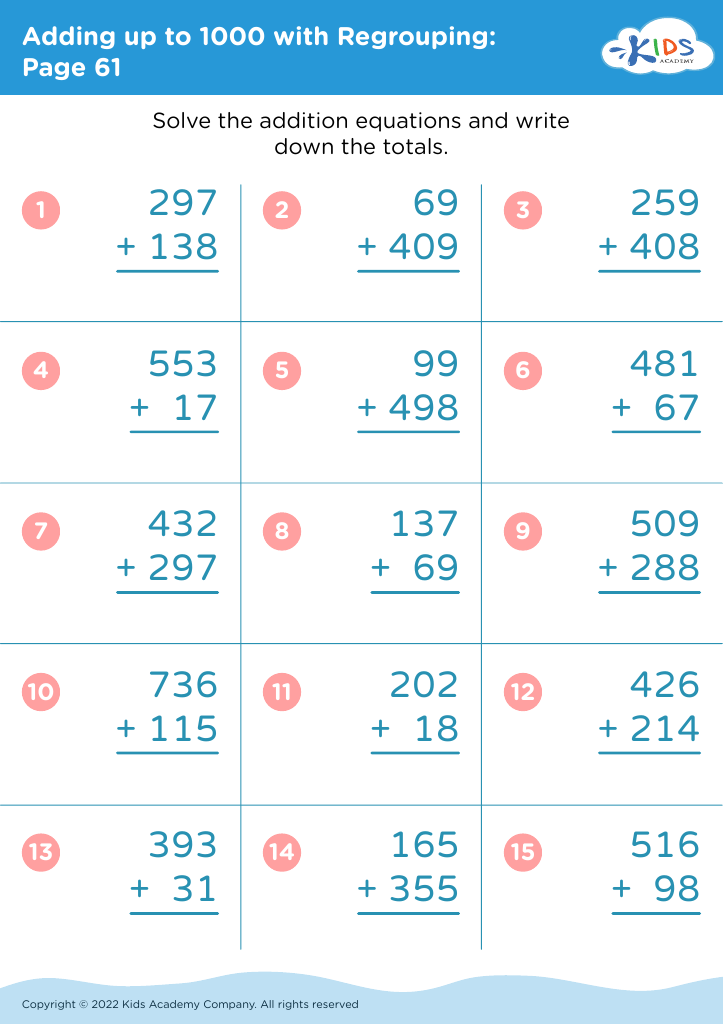
Adding up to 1000 with Regrouping: Page 61
Worksheet
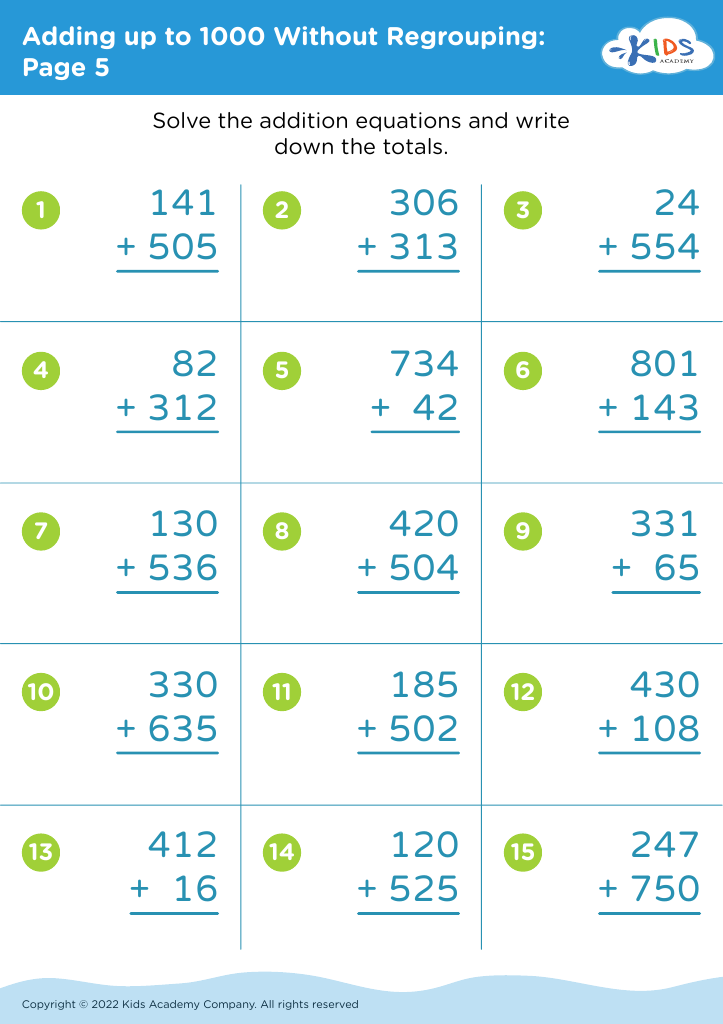
Adding up to 1000 Without Regrouping: Page 5
Worksheet
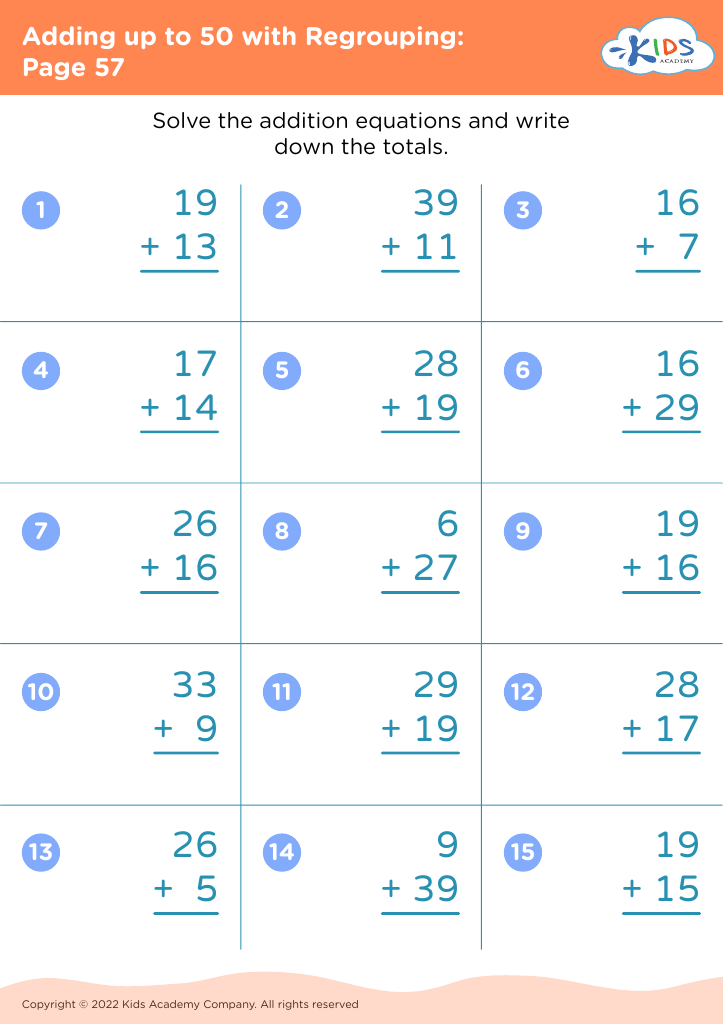
Adding up to 50 with Regrouping: Page 57
Worksheet
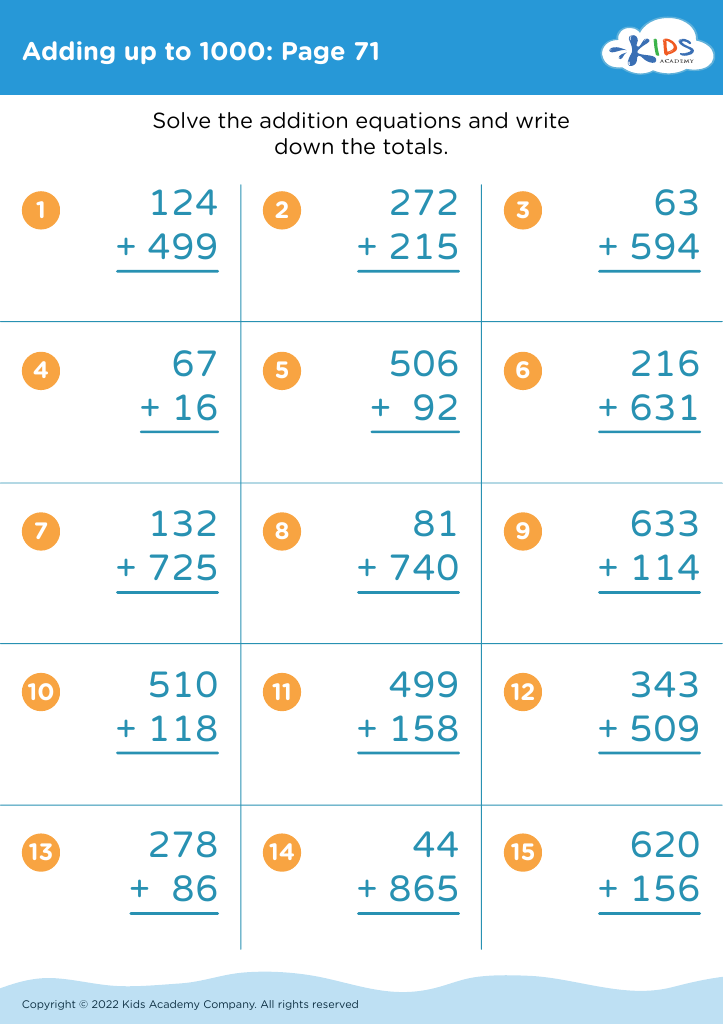
Adding up to 1000: Page 71

Adding up to 1000: Page 71

Adding up to 1000: Page 71
Worksheet
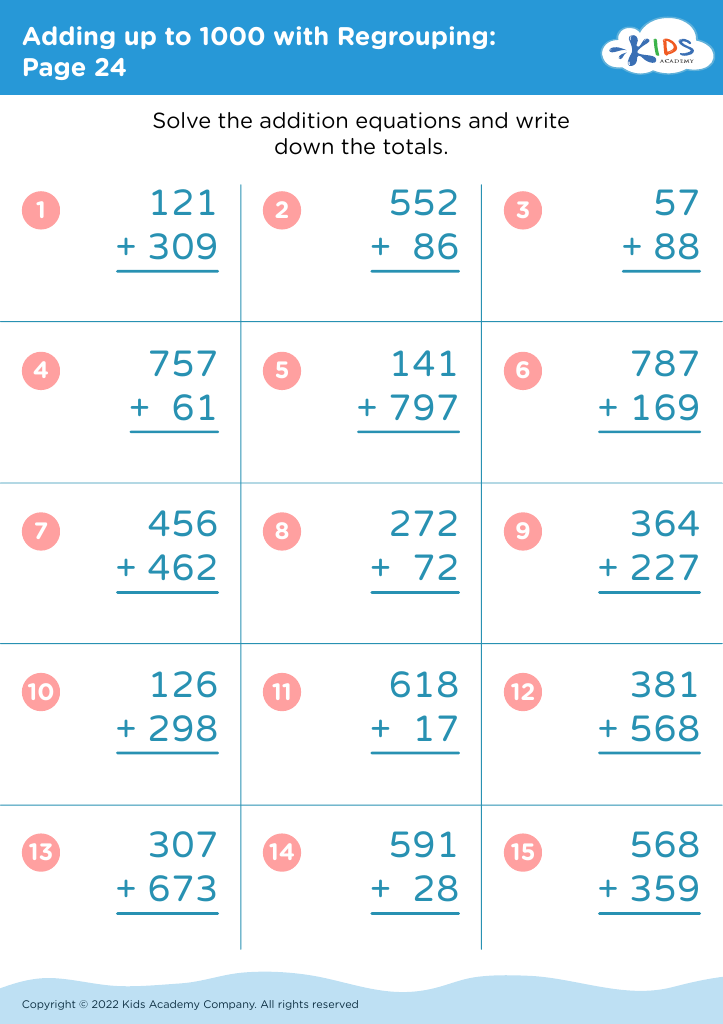
Adding up to 1000 with Regrouping: Page 24
Worksheet
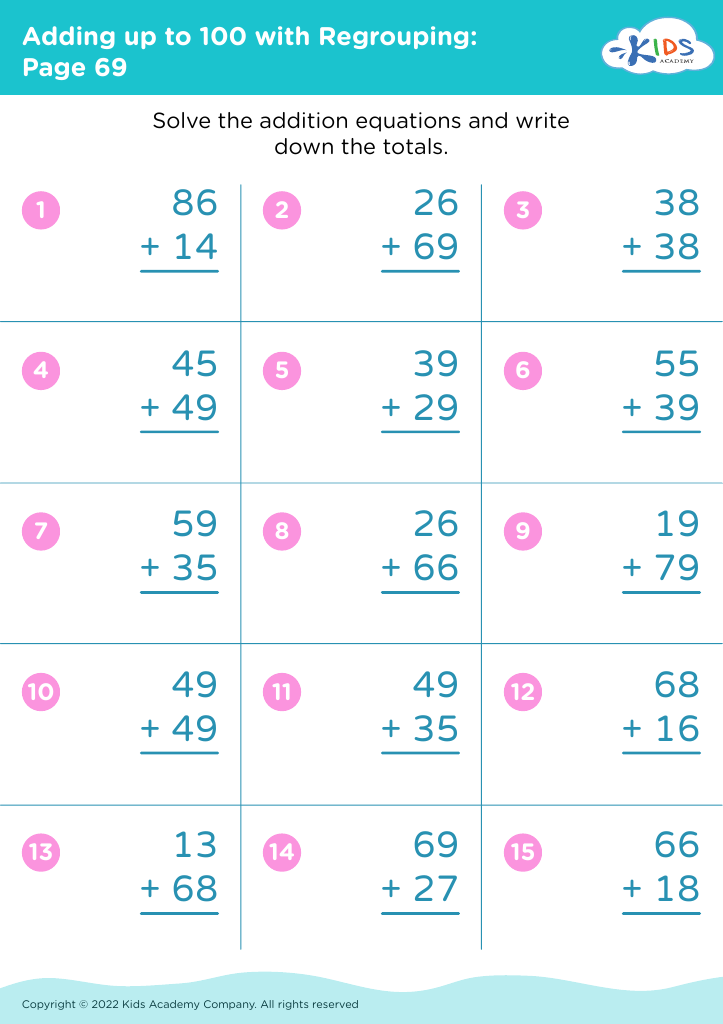
Adding up to 100 with Regrouping: Page 69
Worksheet
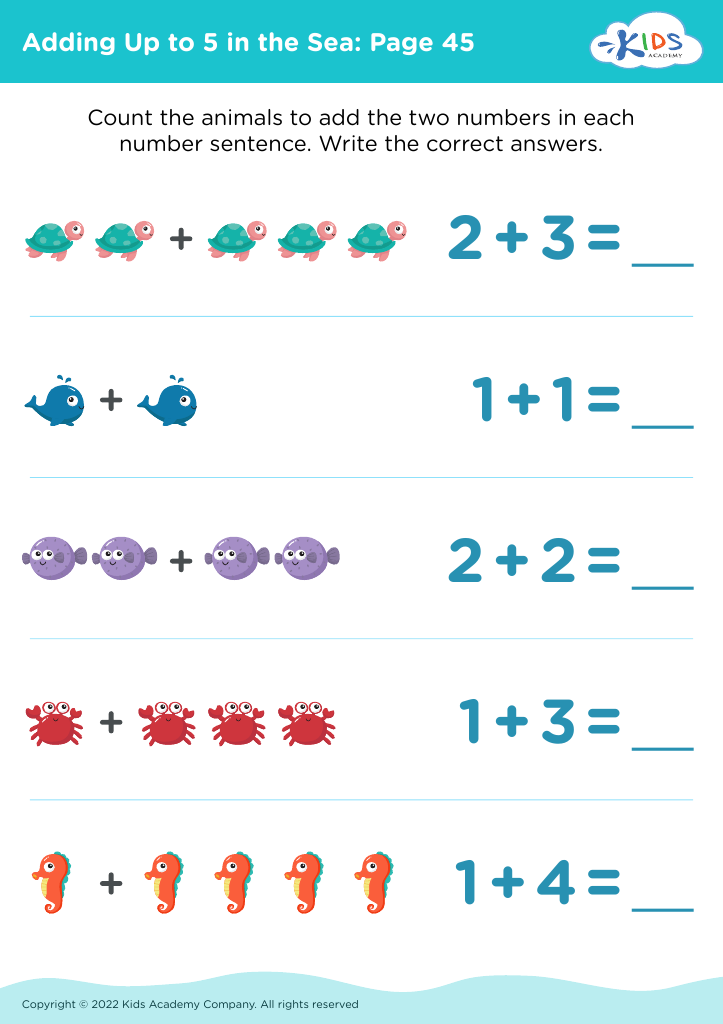
Adding Up to 5 in the Sea: Page 45
Worksheet
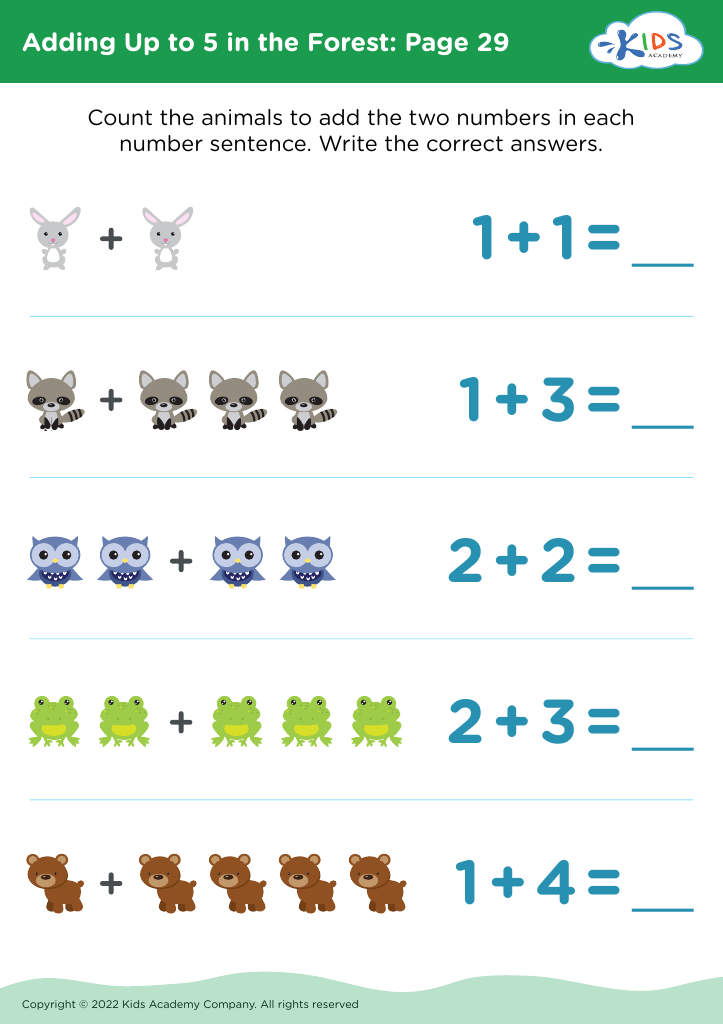
Adding Up to 5 in the Forest: Page 29
Worksheet


Problem-solving abilities in addition are critical for children aged 5-8 because they lay the groundwork for future mathematical understanding and cognitive development. When children engage in addition problems, they learn not only numerical processing but also fundamental skills such as logical reasoning, pattern recognition, and decision-making. These skills extend beyond math, contributing to problem-solving capabilities in everyday life, fostering independent thinking and boosting confidence.

Understanding addition at an early age fosters a positive mathematical mindset. When children encounter success in solving addition problems, they develop a sense of accomplishment and are more likely to approach future mathematical challenges with confidence rather than fear. This creates a solid foundation for advanced mathematical concepts like subtraction, multiplication, and division.

Moreover, addition problem-solving promotes cognitive functions like memory and attention. For instance, figuring out problems helps improve working memory as children need to retain intermediate steps in their minds to reach a solution. This sharpening of memory and attention is beneficial academically and in various everyday tasks.

Engaging in problem-solving activities also enhances social skills. Strategies like collaborative problem-solving help children learn to work with peers, improving communication and teamwork. Therefore, nurturing these abilities at a young age equips children with essential life skills, opening doors to educational and personal growth.