Telling time Addition Worksheets for Ages 5-8
3 filtered results
-
From - To
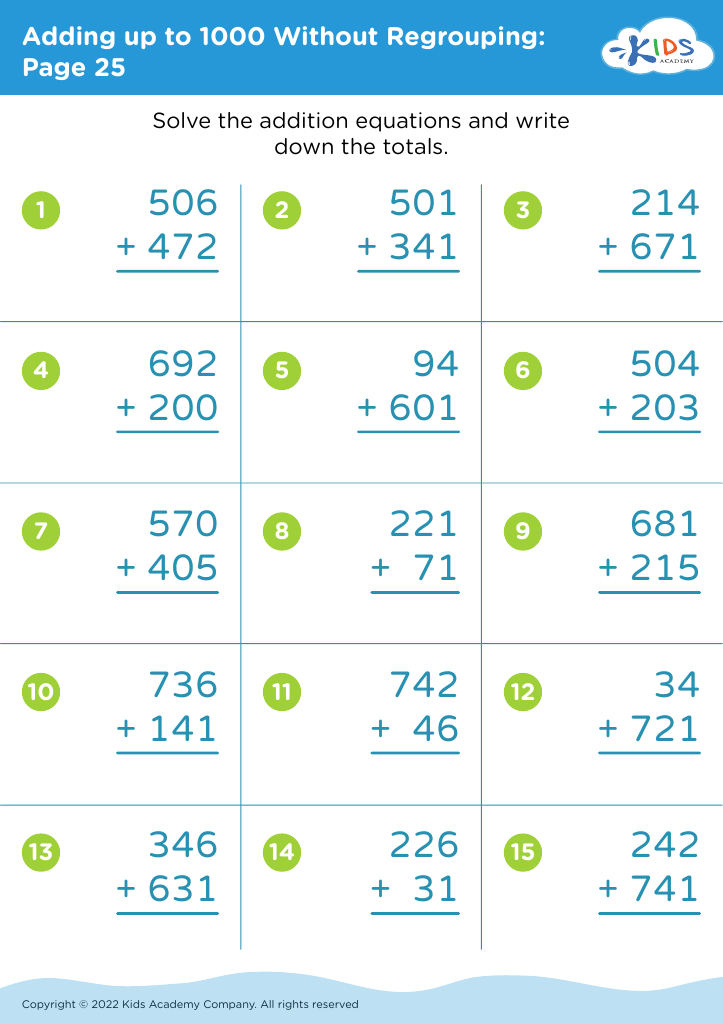
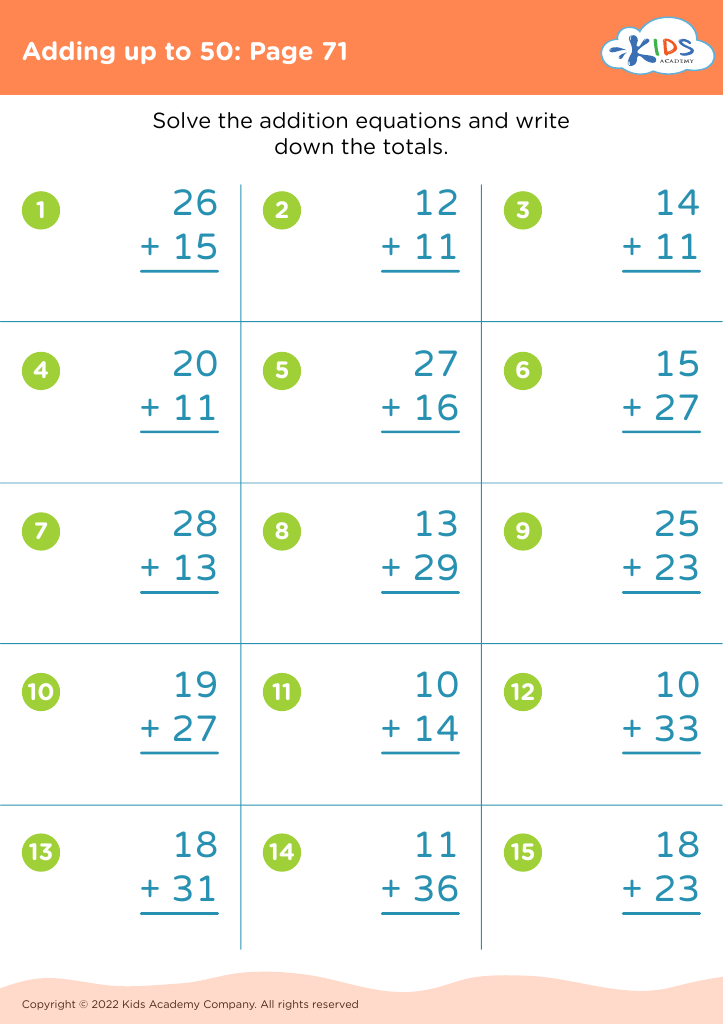
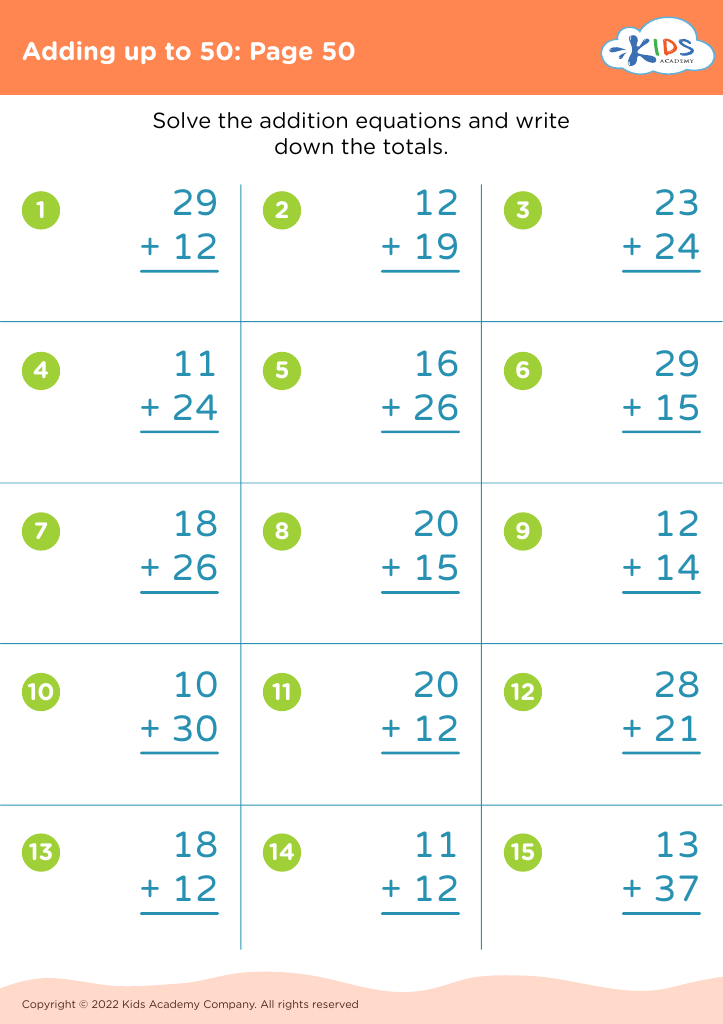
Introduce young learners to the concept of telling time with our engaging "Telling Time Addition Worksheets for Ages 5-8". Expertly designed for early grades, these printable worksheets combine time-telling and addition skills to create a fun and educational experience. Ideal for both classroom and at-home learning, they encourage children to practice reading clocks, understanding hours and minutes, and performing basic addition calculations. Perfect for developing mathematical thinking, these worksheets enhance cognitive skills, and build a strong foundation for future learning. Make learning enjoyable and effective with our exciting collection tailored to young minds.




.jpg)



Telling time and mastering addition are foundational skills for children aged 5-8 that parents and teachers should prioritize for several key reasons. Firstly, telling time helps young learners develop a sense of routine and responsibility. They understand concepts like morning, afternoon, and bedtime, making daily transitions smoother. This fosters skills in time management, essential for their future academic and personal lives.
In addition, addition lays the groundwork for all future math learning. At this age, children are naturally curious and absorb information quickly. Grasping basic addition helps them build confidence and encourages a positive attitude towards more complex math concepts later. It also enhances their problem-solving abilities and logical thinking.
Integrating telling time with addition can make learning these skills more engaging. For instance, asking a child what time it will be in an hour if it's currently 2 PM introduces them to both concepts simultaneously and practically.
For parents and teachers, focusing on these skills ensures that children are equipped with essential tools for daily life and future academics. It’s not just about learning numbers or reading clocks; it’s about nurturing a well-rounded, capable individual ready to tackle the diverse challenges ahead.








