Understand patterns Addition Worksheets for Ages 5-8
6 filtered results
-
From - To
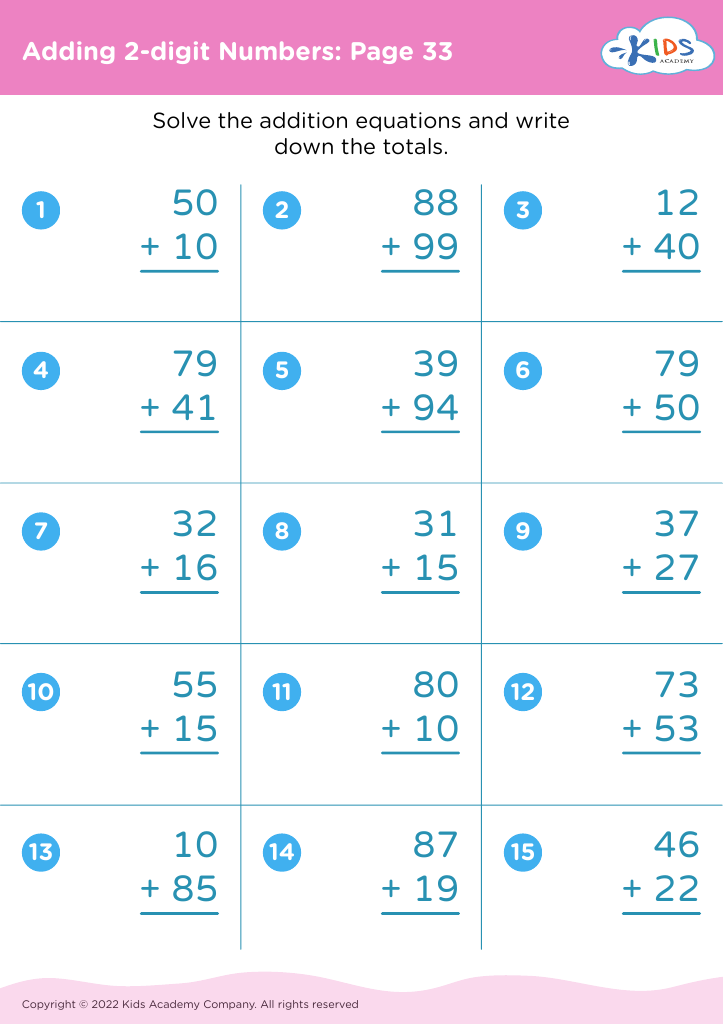
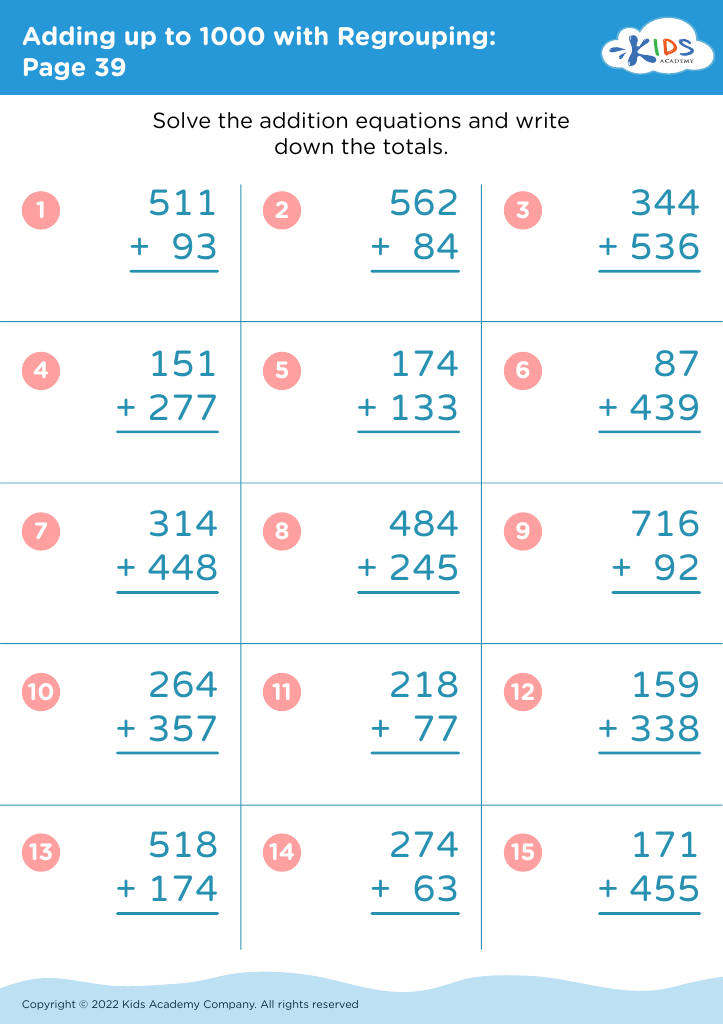
Explore our "Understand Patterns Addition Worksheets" designed for children aged 5-8! These engaging worksheets will help young learners grasp the essential concept of patterns in addition. Featuring colorful illustrations and age-appropriate exercises, our resources foster critical thinking and problem-solving skills in a fun and interactive way. With various difficulty levels, children gain confidence as they practice recognizing and creating patterns while mastering addition. Perfect for classroom settings or homeschooling, these worksheets are an excellent tool for reinforcing math skills and enhancing cognitive development. Download now and watch your child's understanding of patterns and addition soar!
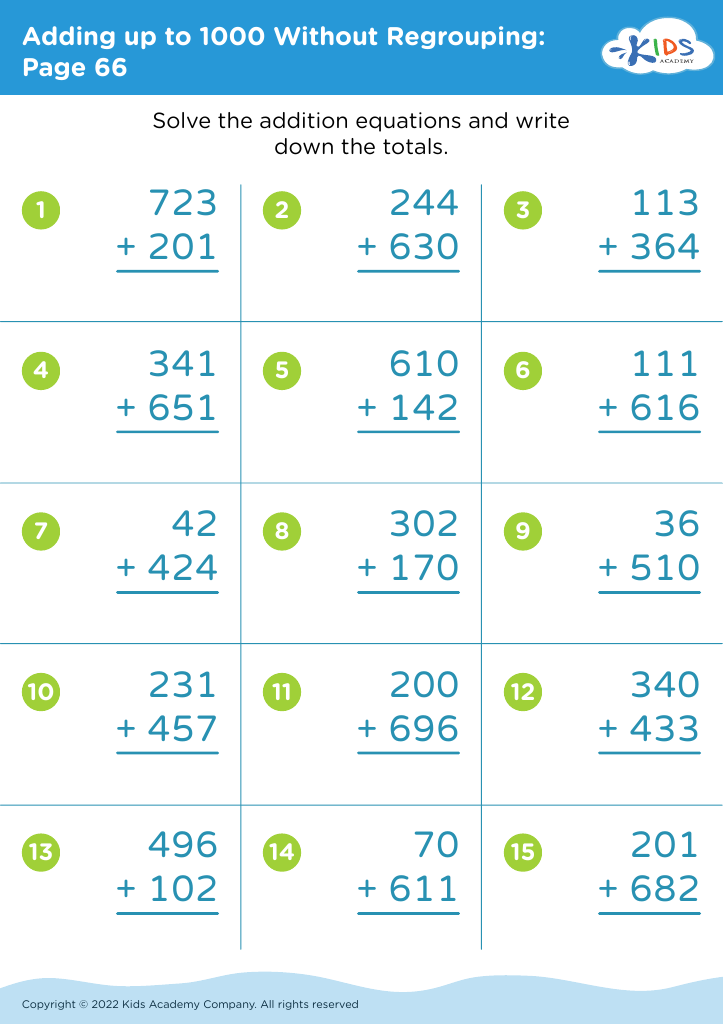
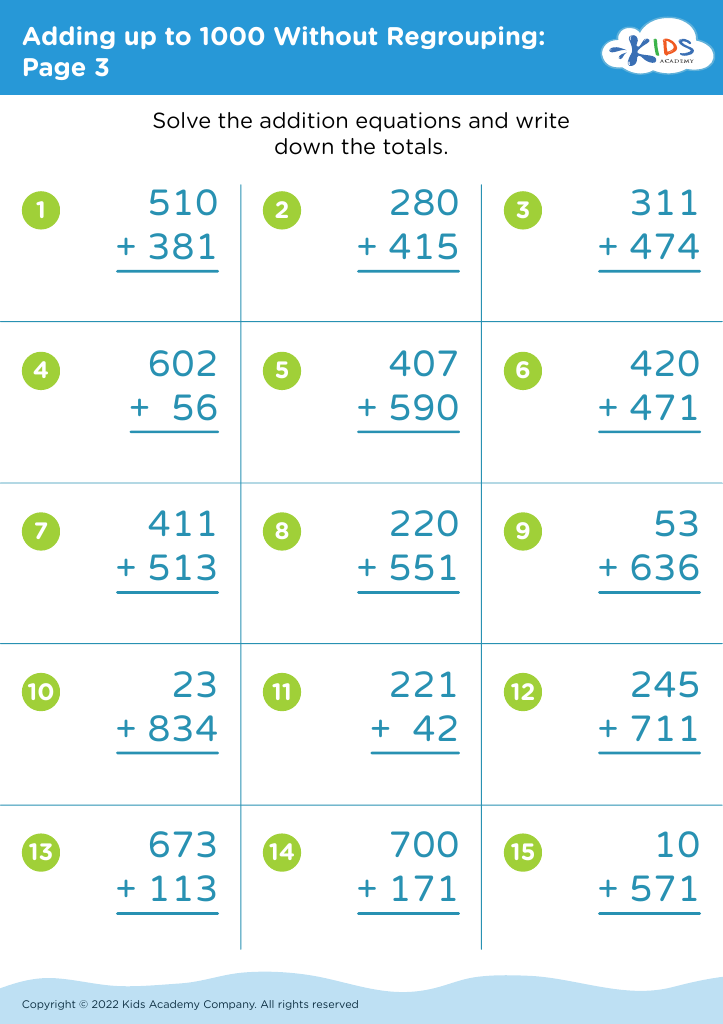
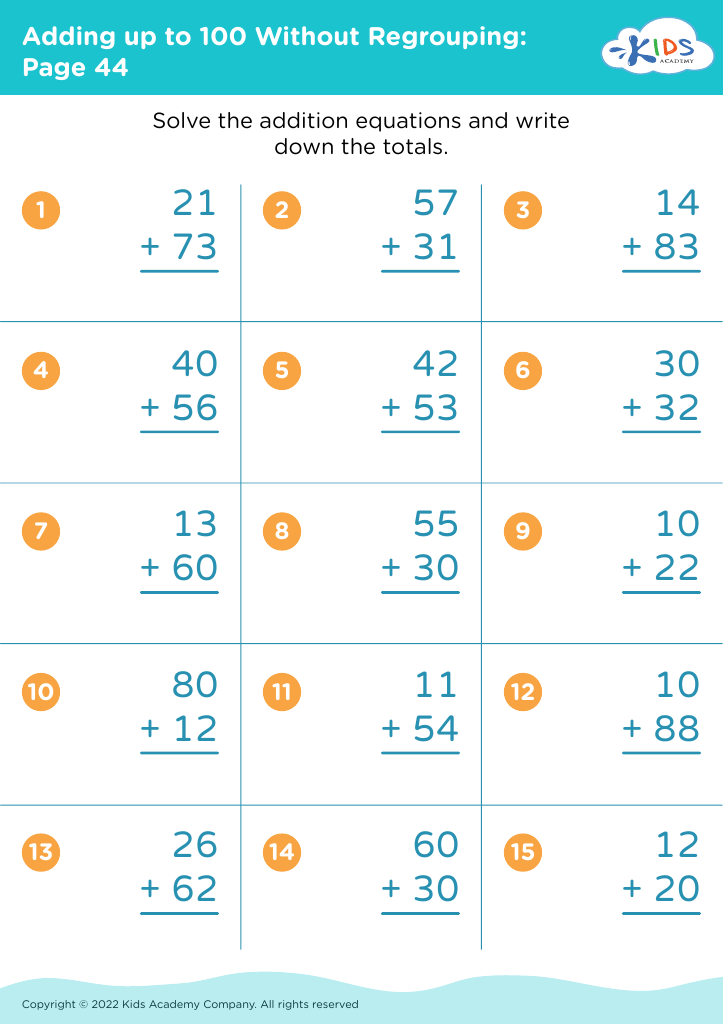
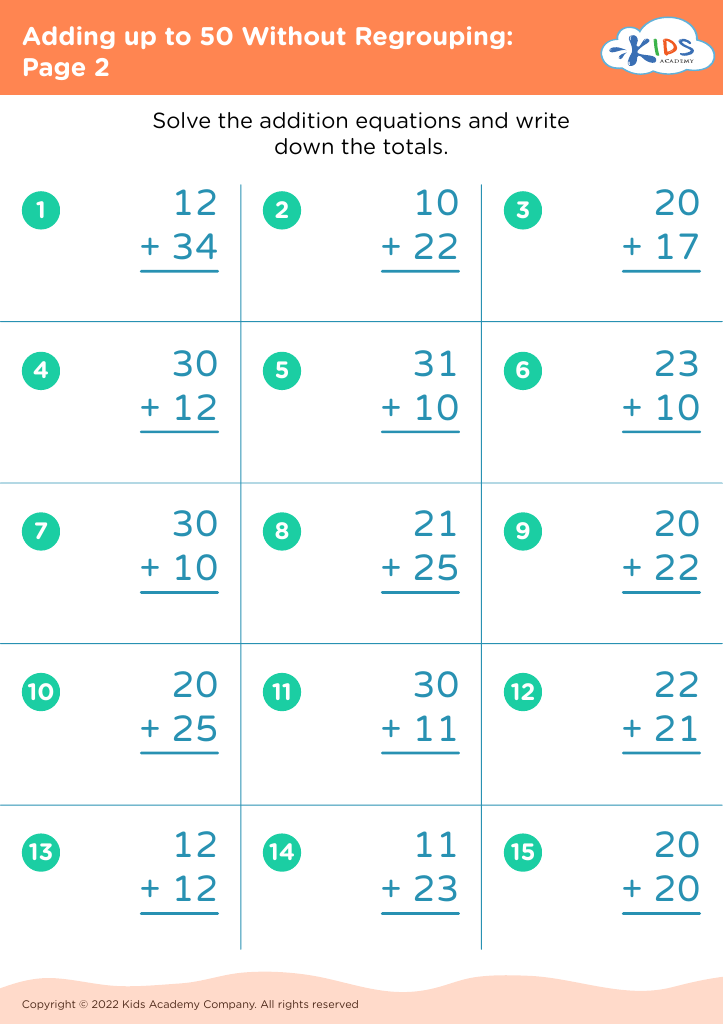








Understanding patterns in addition is crucial for children aged 5-8 because it lays the foundation for more advanced mathematical concepts. At this age, children are developing their cognitive abilities, and recognizing patterns helps them make connections in their learning. Patterns provide a sense of predictability and structure, enabling children to understand how numbers work together.
When students learn to identify patterns in addition, they can often solve problems more efficiently by using strategies such as skip counting or grouping numbers, rather than relying on rote memorization. This not only boosts their confidence but also cultivates critical thinking and problem-solving skills essential for their academic growth.
As children progress, a solid understanding of patterns allows them to connect addition with other mathematical operations and concepts, like subtraction and multiplication. Furthermore, recognizing patterns can transfer to real-world applications, helping children identify sequences and relationships in everyday situations.
For parents and teachers, emphasizing patterns helps create a more engaging learning environment. When children find joy in recognizing patterns, their interest in math increases, leading to stronger outcomes in their overall education. Ultimately, caring about and nurturing this understanding prepares children for lifelong learning and success in mathematics and beyond.








