Understanding adjectives Addition Worksheets for Ages 5-8
5 filtered results
-
From - To
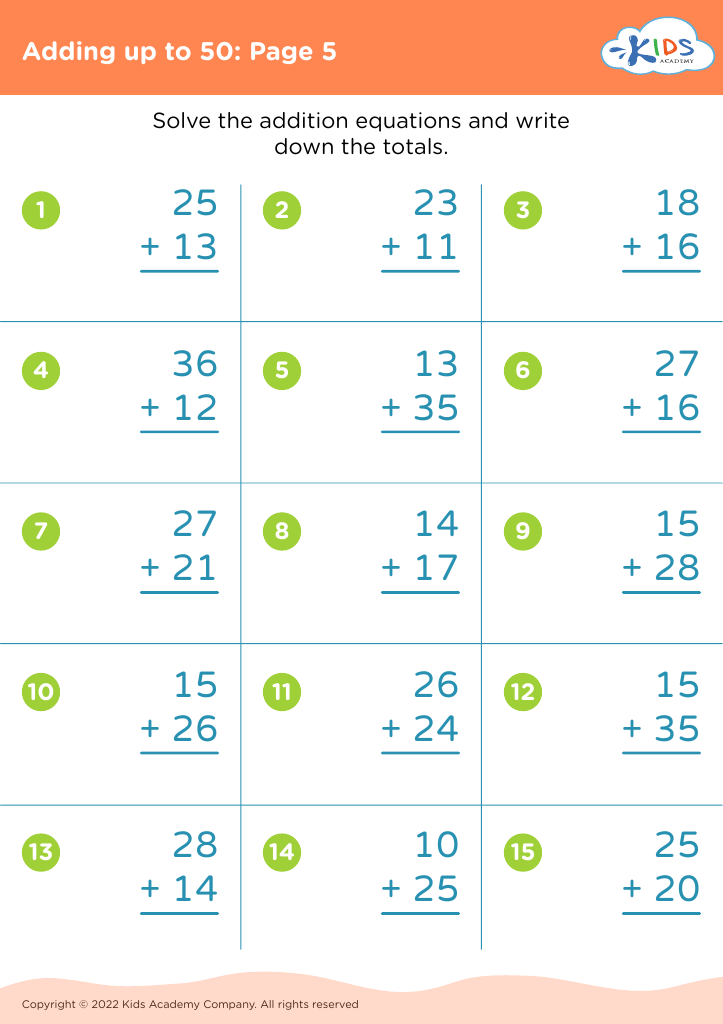
Introducing our "Understanding Adjectives Addition Worksheets for Ages 5-8," a dynamic resource from Kids Academy. These engaging worksheets combine vital addition skills with the understanding of adjectives, helping young learners enhance their math proficiency and language skills simultaneously. Tailor-made for children aged 5-8, each worksheet is designed to captivate and educate, fostering a deeper appreciation of math concepts and descriptive words. The colorful, fun activities not only make learning enjoyable but also reinforce important educational foundations. Perfect for both classrooms and homeschool environments, these worksheets are a smart addition to any early grade curriculum.








Understanding adjectives is crucial for children aged 5-8 as it plays a significant role in their language development and cognitive growth. Adjectives help children to express themselves more clearly and vividly, enhancing their ability to describe objects, people, and experiences. This ability to detail aids in their storytelling and writing skills, allowing their creativity and imagination to flourish.
For both parents and teachers, emphasizing the understanding of adjectives ensures that children can engage more effectively in conversations, improving their social interactions and emotional expressiveness. Adjectives also contribute to better comprehension skills; children who grasp the use of descriptive words will find it easier to understand and enjoy stories, instructions, and information.
Educationally, incorporating adjectives into learning activities can make tasks more engaging. For example, describing colorful objects in a classroom or during a nature walk uses adjectives to make learning interactive and fun. Moreover, a strong vocabulary base supports future academic performance across all subjects, promoting a lifelong love for reading and writing.
In summary, parents and teachers should prioritize teaching adjectives because it enriches a child's expressive abilities, social skills, comprehension, and enjoyment of learning, laying a strong foundation for their future educational journey.








