Understanding numbers Addition Worksheets for Ages 5-8
4 filtered results
-
From - To
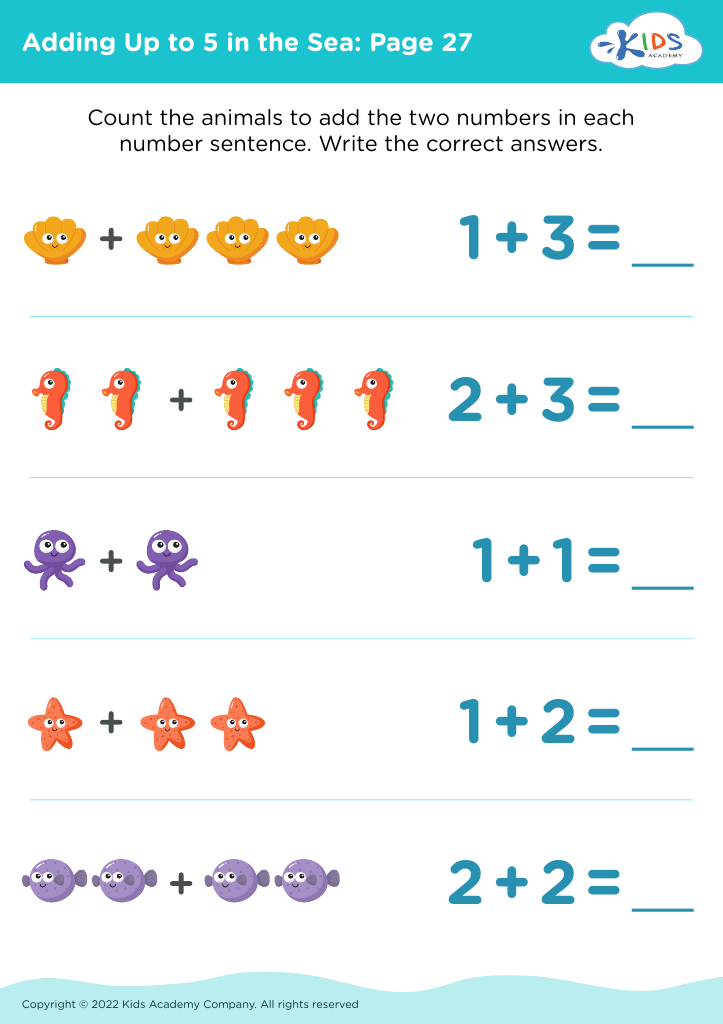
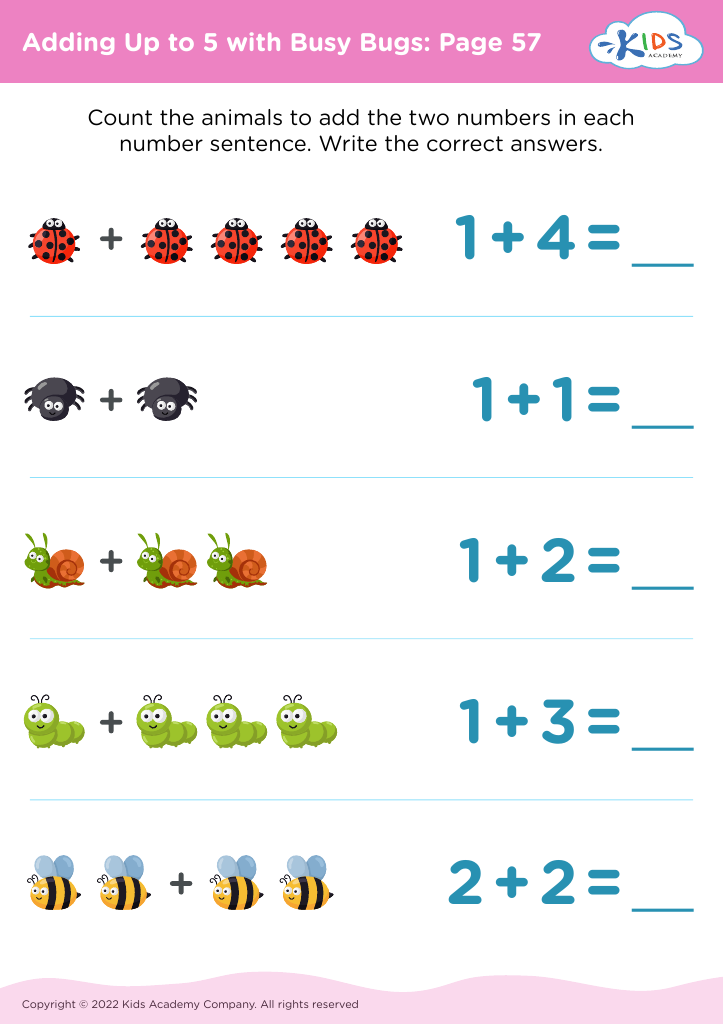
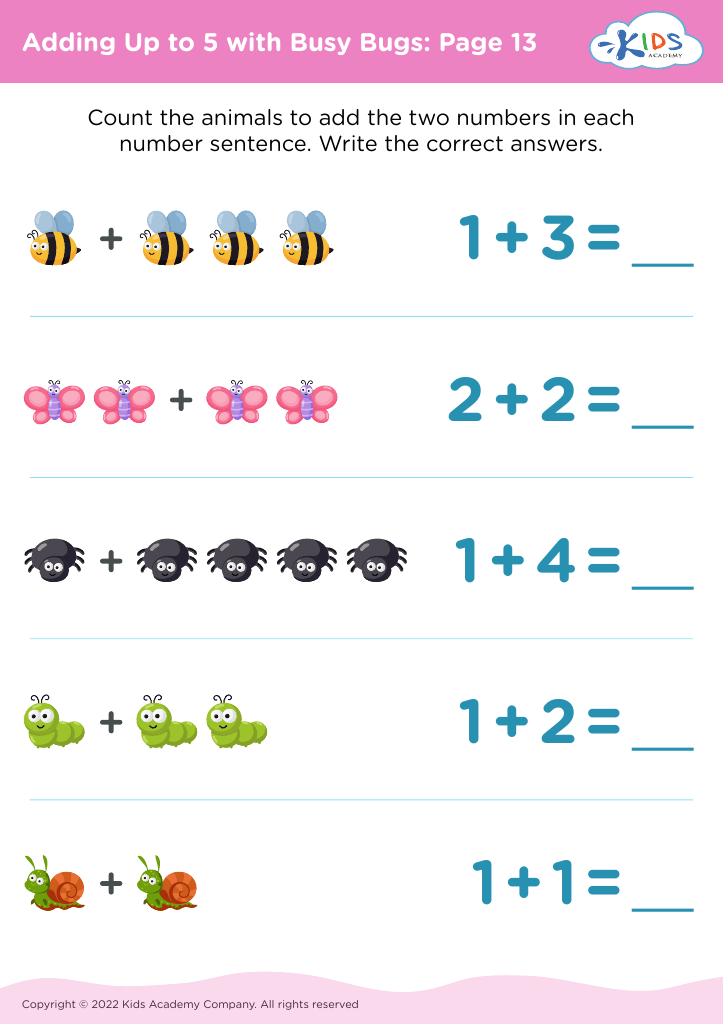
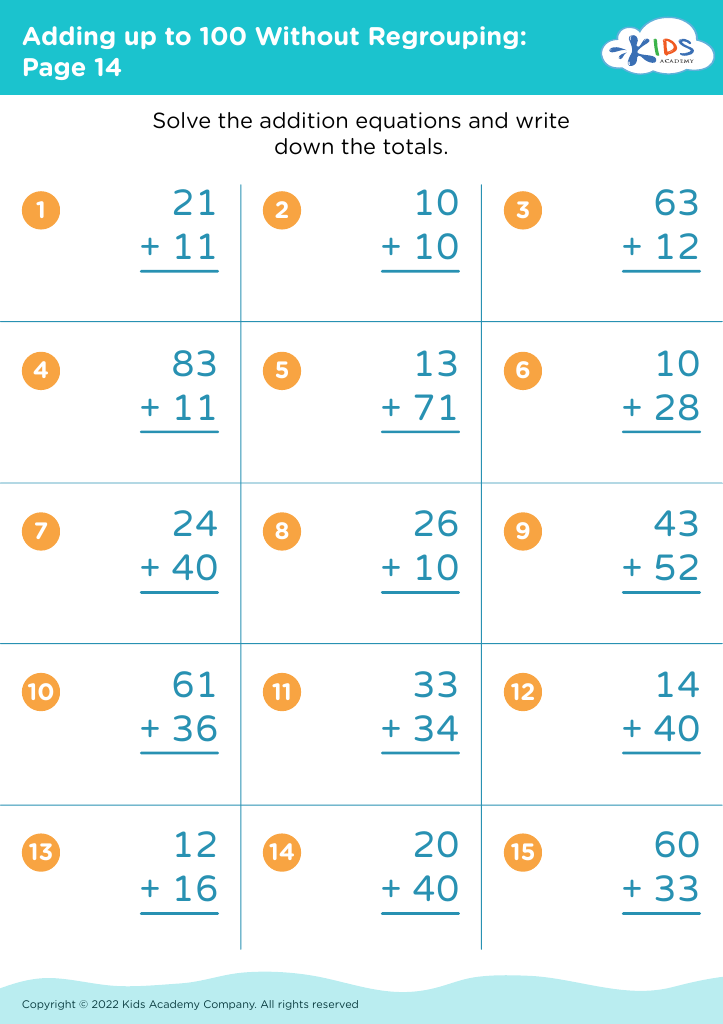
Enhance your child's math skills with our "Understanding Numbers Addition Worksheets" designed for ages 5-8. These engaging and interactive worksheets introduce young learners to the fundamentals of addition through colorful visuals and relatable examples. Each activity focuses on number recognition, counting, and basic addition concepts, fostering a solid math foundation. Perfect for home or classroom use, these worksheets cater to varying skill levels and promote independent learning. Your child will gain confidence in their math abilities while having fun mastering addition. Explore our resources today to support your child's educational journey and boost their numerical understanding!








Understanding numbers and addition is crucial for children aged 5-8 as it lays the foundation for their mathematical learning and critical thinking skills. During this critical developmental stage, children are gaining essential cognitive abilities, and early exposure to numerical concepts fosters their confidence and aptitude in mathematics.
Parents and teachers should prioritize teaching addition because it not only helps children perform basic arithmetic but also enhances their problem-solving abilities. Mastering addition enables students to grasp more complex math concepts later on, such as subtraction, multiplication, and division. Moreover, this foundational skill aids in everyday situations, such as managing money, measuring ingredients for a recipe, or estimating time.
In addition, knowing how to effectively communicate and apply numerical concepts amplifies the interactive experience between children and adults. Engaging in fun activities—such as counting objects, singing songs about numbers, or playing math games—can strengthen bonds and make learning enjoyable.
By understanding addition, children build a sense of achievement and self-esteem, which are essential for their overall development. Parents and teachers who prioritize this early math education encourage lifelong learning habits in children, setting them on a path toward academic success and critical thinking in the future.








