Visual interpretation Addition Worksheets for Ages 5-8
5 filtered results
-
From - To
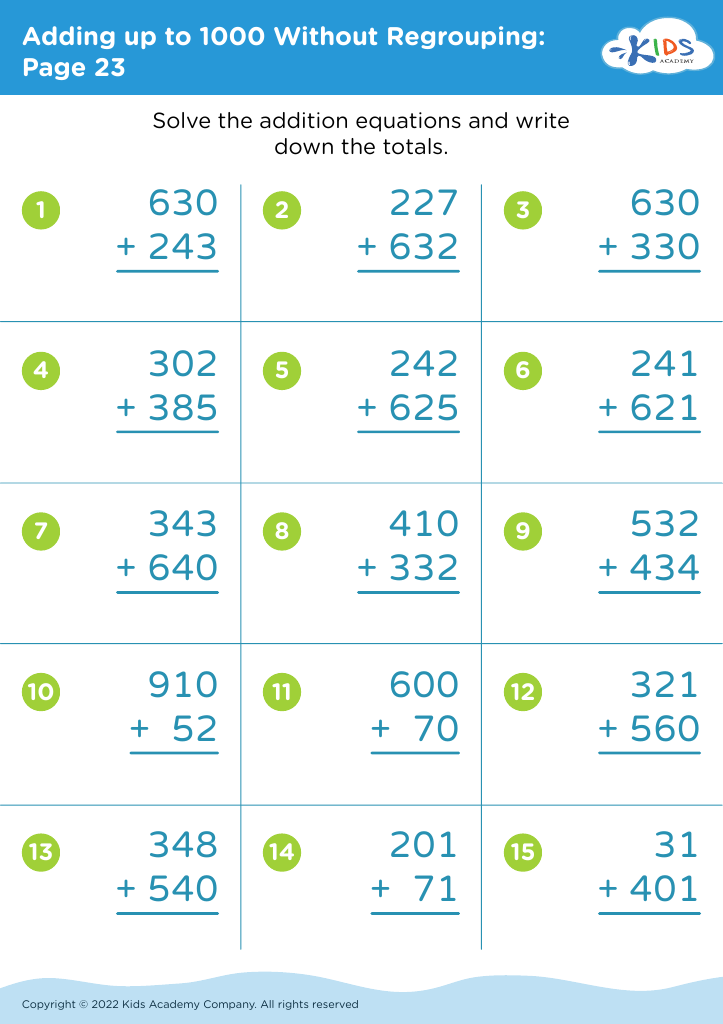
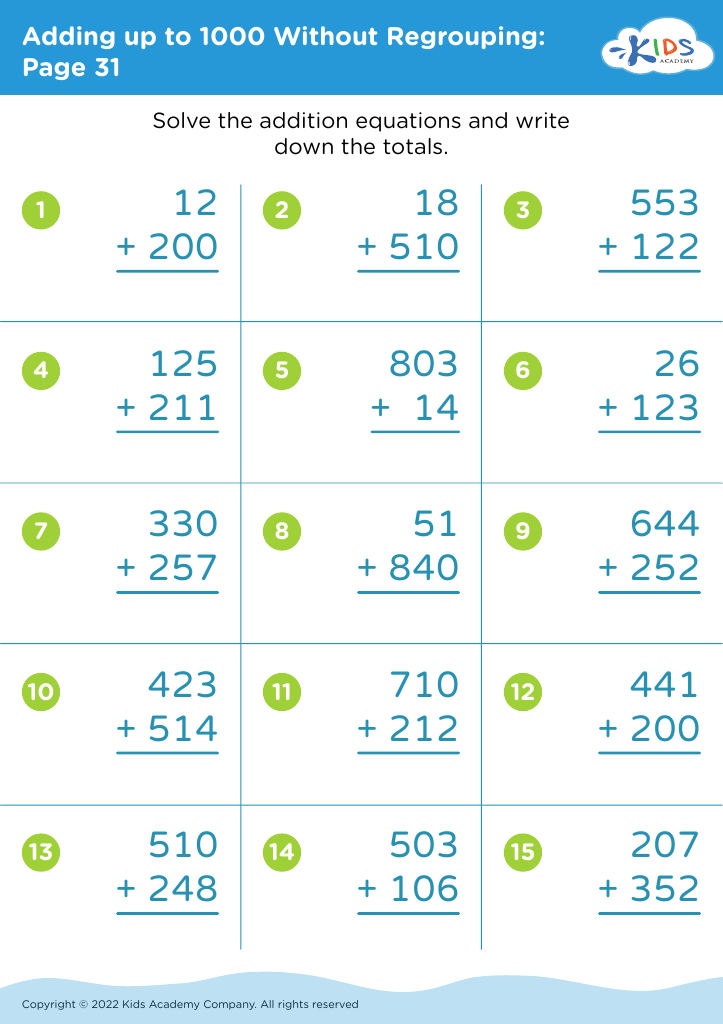
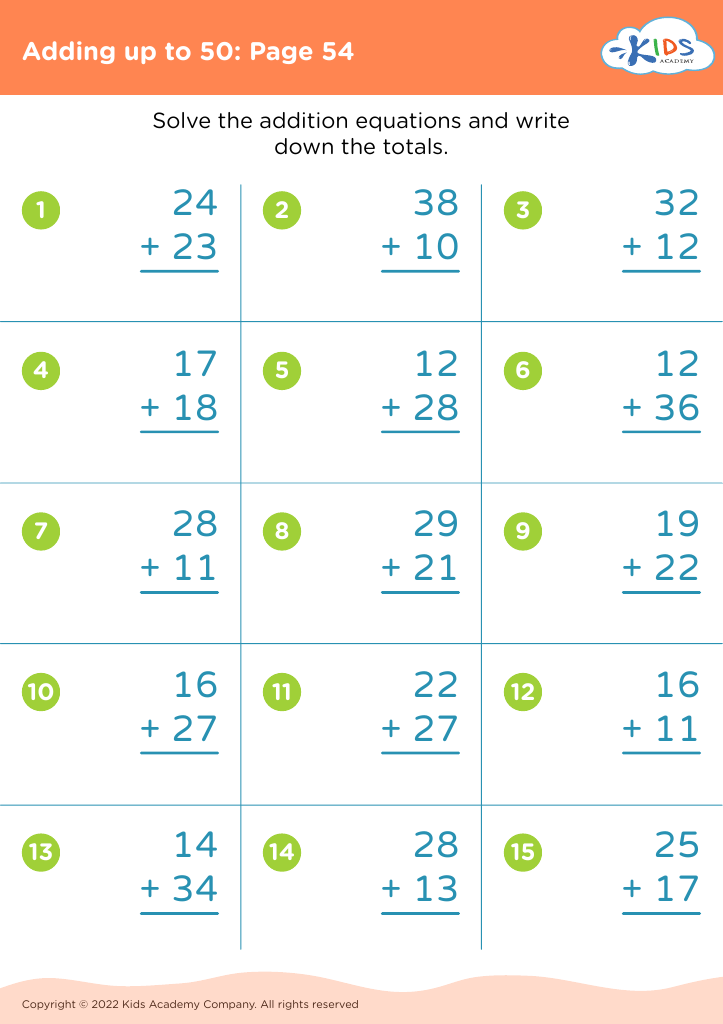
Unlock the power of visual learning with our "Visual Interpretation Addition Worksheets," designed specifically for children ages 5-8. These engaging worksheets help young learners grasp fundamental addition concepts through vibrant illustrations and intuitive visual aids. By integrating pictures with numbers, kids can easily understand the relationship between objects and quantities. Our materials encourage students to enhance their problem-solving skills while building confidence in math. Perfect for home practice or classroom activities, these worksheets provide a fun, interactive way to master addition. Foster a love for learning while developing essential math skills—explore our collection today for hours of educational fun!
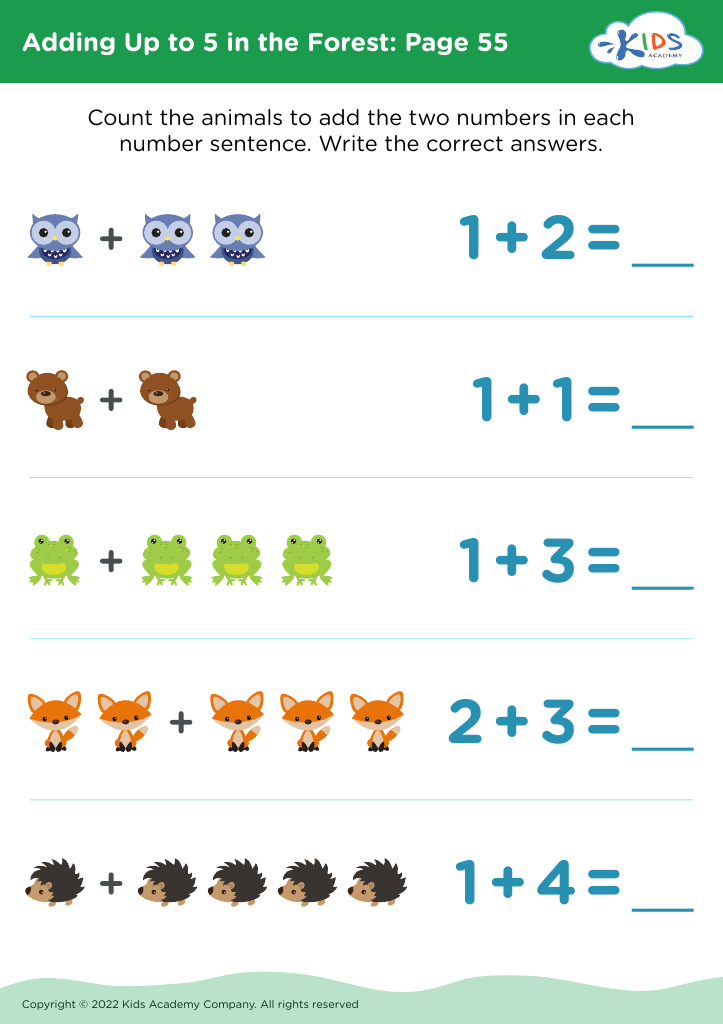
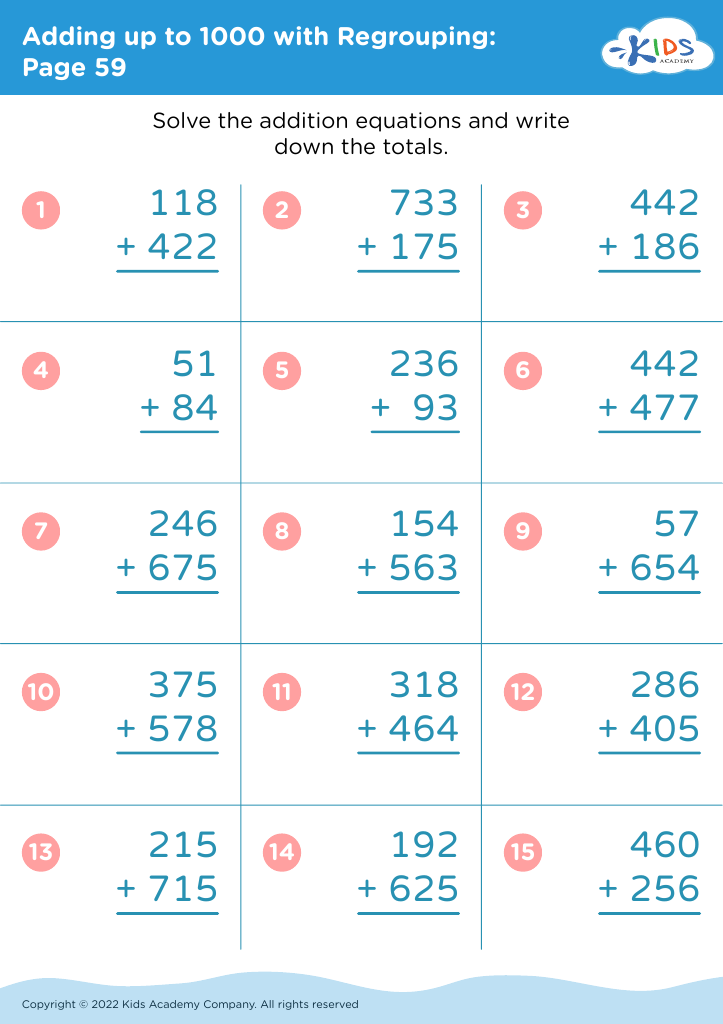








Visual interpretation skills in addition for children ages 5-8 are crucial for their cognitive development and foundational math ability. At this age, children are transitioning from concrete to abstract thinking; therefore, using visual aids like counters, number lines, or drawings becomes essential. These visual tools help young learners grasp the concept of addition in a hands-on and engaging way, making abstract concepts more tangible and easier to understand.
For parents and teachers, fostering an environment where visual interpretation is emphasized can significantly enhance a child’s confidence in mathematics. It helps children to see relationships between numbers, encourages problem-solving skills, and lays the groundwork for more complex mathematical concepts in the future.
Additionally, helping children understand addition visually caters to various learning styles. Some kids are visual learners who thrive when they can see and manipulate objects rather than simply memorizing facts. By incorporating visual interpretation into math education, parents and teachers can create richer, more interactive learning experiences that promote comprehension and retention. Ultimately, prioritizing visual interpretation in early math education supports the development of critical thinking skills, fostering a lifelong positive relationship with math.








