Visual learning reinforcement Addition Worksheets for Ages 5-8
6 filtered results
-
From - To
Introduce your child to a world of math fun with our Visual Learning Reinforcement Addition Worksheets designed for ages 5-8! These engaging resources make learning addition more enjoyable and effective by incorporating bright visuals and interactive elements. Perfect for young minds, our worksheets help enhance comprehension and retention while making math less intimidating. Through colorful diagrams, fun illustrations, and easy-to-follow instructions, children will quickly grasp basic addition concepts. Whether used at home or in the classroom, these printable worksheets from Kids Academy provide a solid foundation in math, ensuring your child’s academic success and building confidence with every sum they solve.
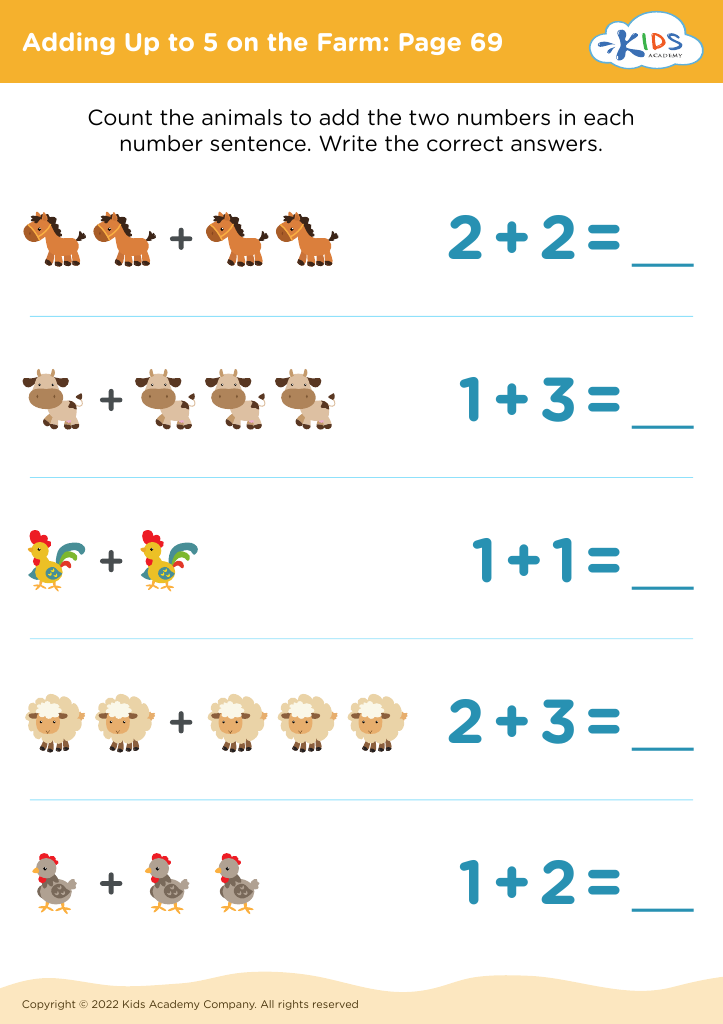
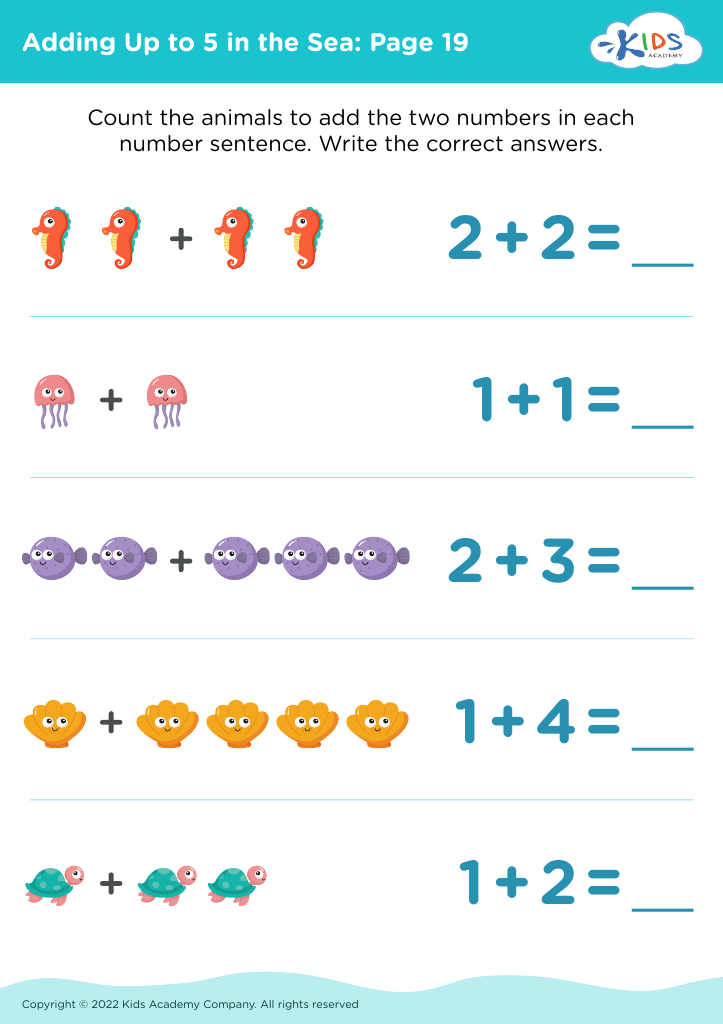
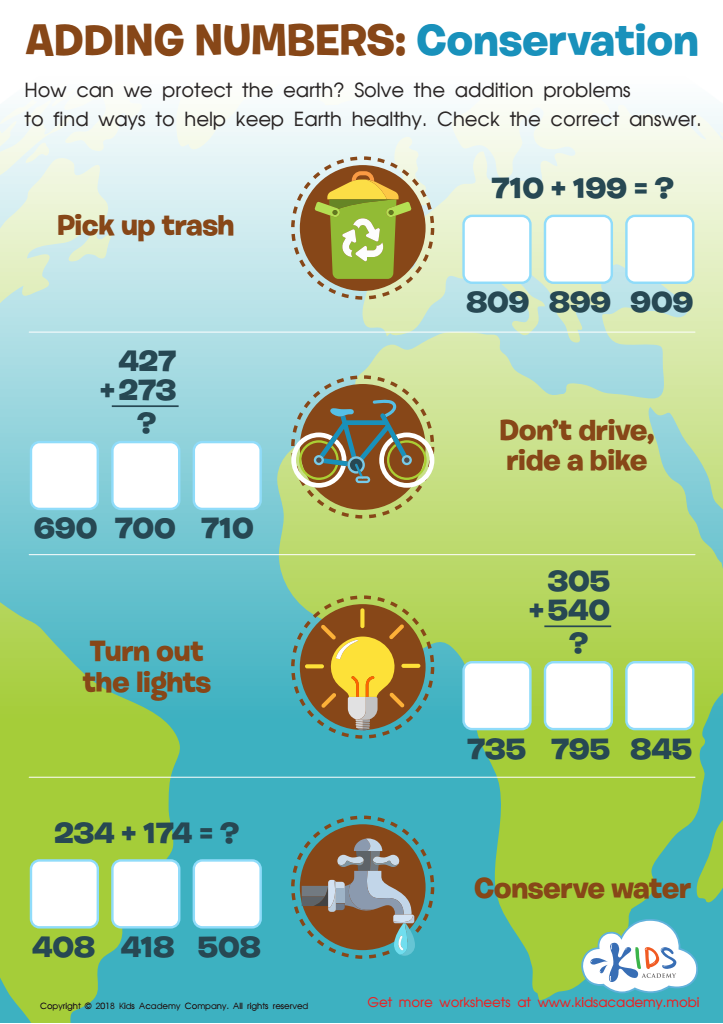
Adding Numbers: Conservation Worksheet
 Assign to My Students
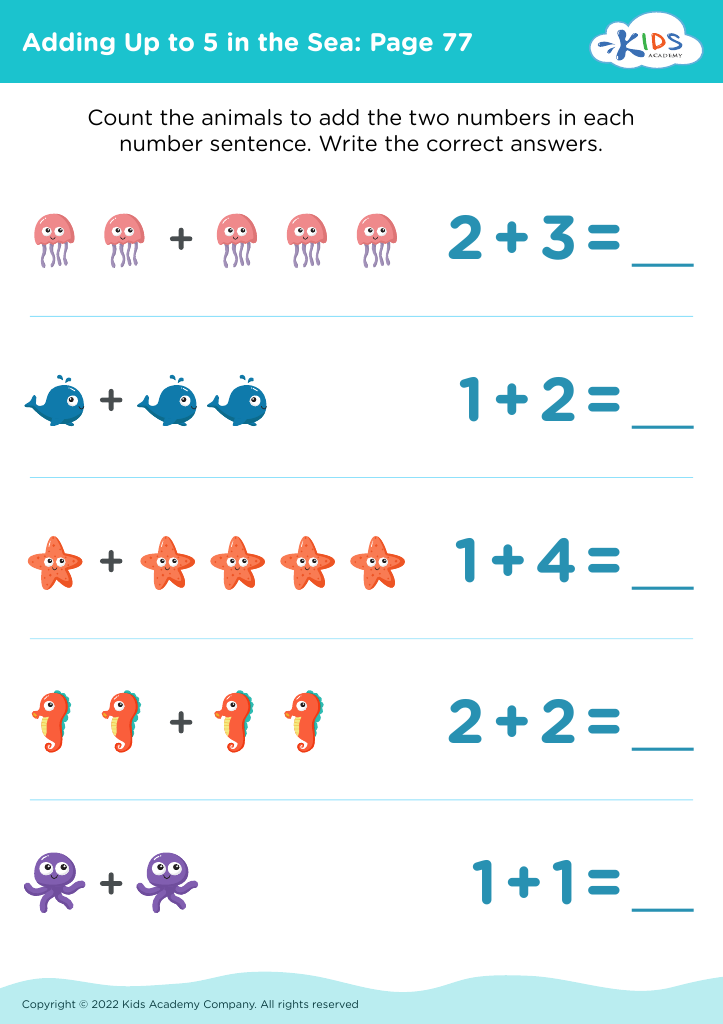
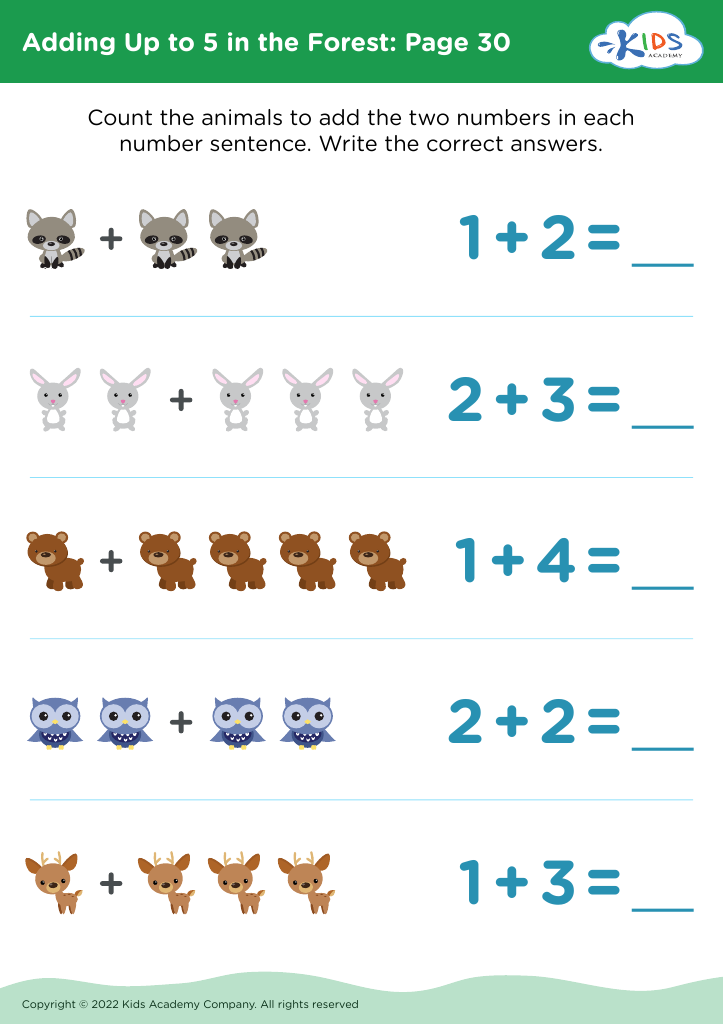
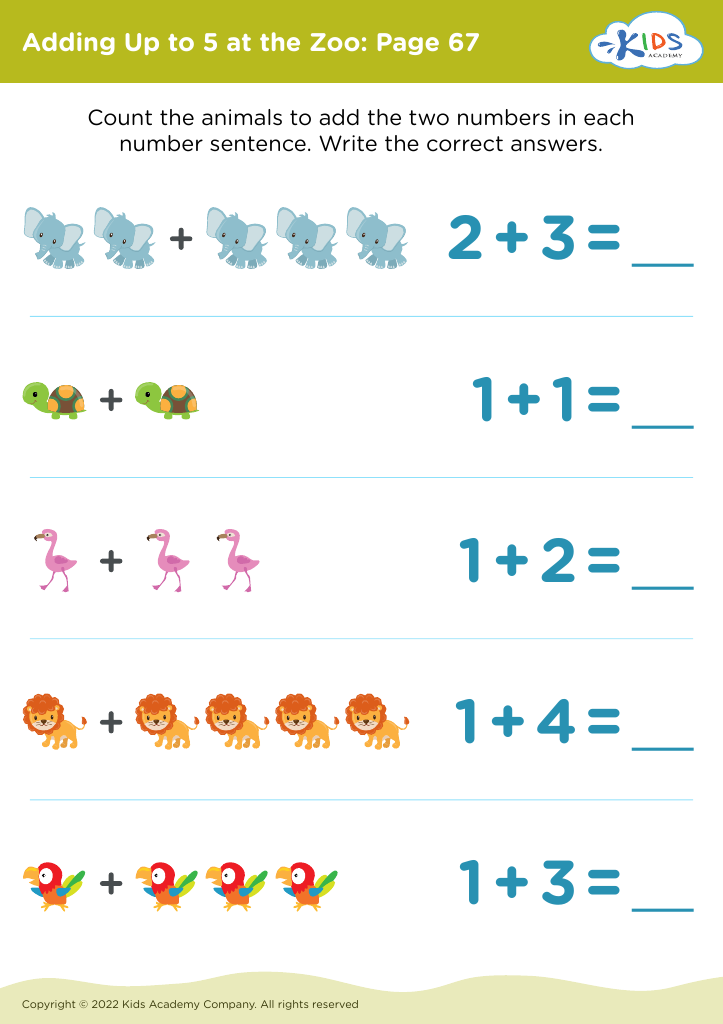








Parents and teachers should care about visual learning reinforcement for addition in young children aged 5-8 because it leverages the natural strengths of early learners and enhances their cognitive development. At this stage, children's brains are highly receptive to visual stimuli, making visual aids an effective educational tool. Visual learning, which includes the use of pictures, graphs, and manipulatives like counters or blocks, helps clarify abstract concepts by making them concrete. When children can see and manipulate objects, they better understand how addition works, thereby boosting comprehension.
Moreover, visual learning caters to diverse learning styles, ensuring that even those who may struggle with traditional verbal or written instruction still grasp essential mathematical concepts. It promotes engagement and motivation by making learning interactive and enjoyable. By seeing addition in action, children build stronger mental models, aiding in long-term retention and the ability to apply their knowledge to future mathematical problems.
Additionally, visual reinforcement complements other teaching methods, creating a robust and comprehensive learning environment. Parents and teachers who integrate visual tools provide a more inclusive education that recognizes the varied needs of young learners, ultimately laying a solid foundation for future academic success and a positive attitude towards mathematics.








