Historical Knowledge Arrays Worksheets for Ages 5-8
4 filtered results
-
From - To
Explore our engaging "Historical Knowledge Arrays Worksheets" designed specifically for children aged 5-8. These worksheets combine essential math skills with fascinating historical facts, encouraging young learners to connect number concepts with the past. Through fun and interactive array activities, children will enhance their understanding of multiplication and problem-solving while discovering important historical events and figures. Perfect for classroom use or at-home learning, these worksheets are ideal for developing early math skills in an enjoyable way. Ignite a love for history and numbers with our specially crafted resources that cater to curious minds!
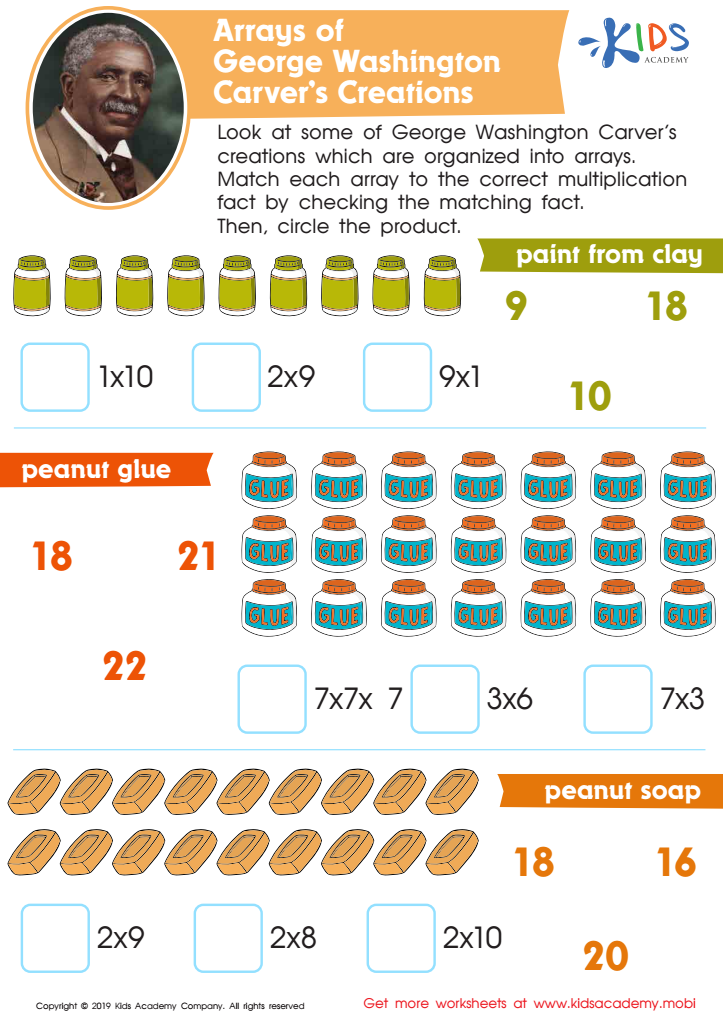
Arrays of George Washington Carver’s Creations Worksheet
 Assign to My Students
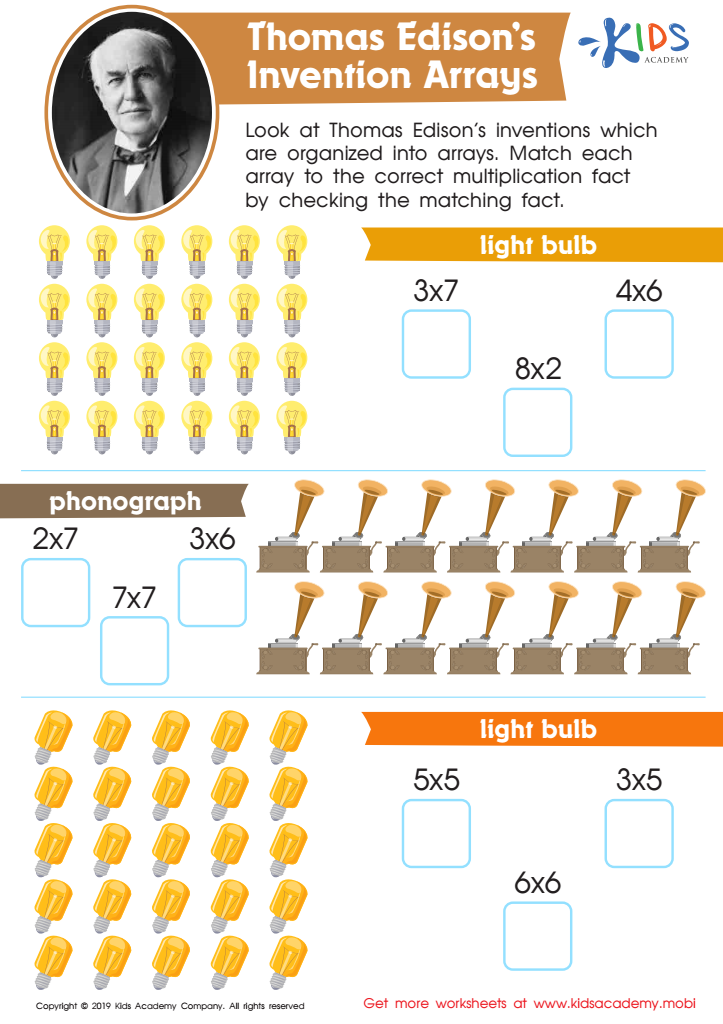
Thomas Edison’s Invention Arrays Worksheet
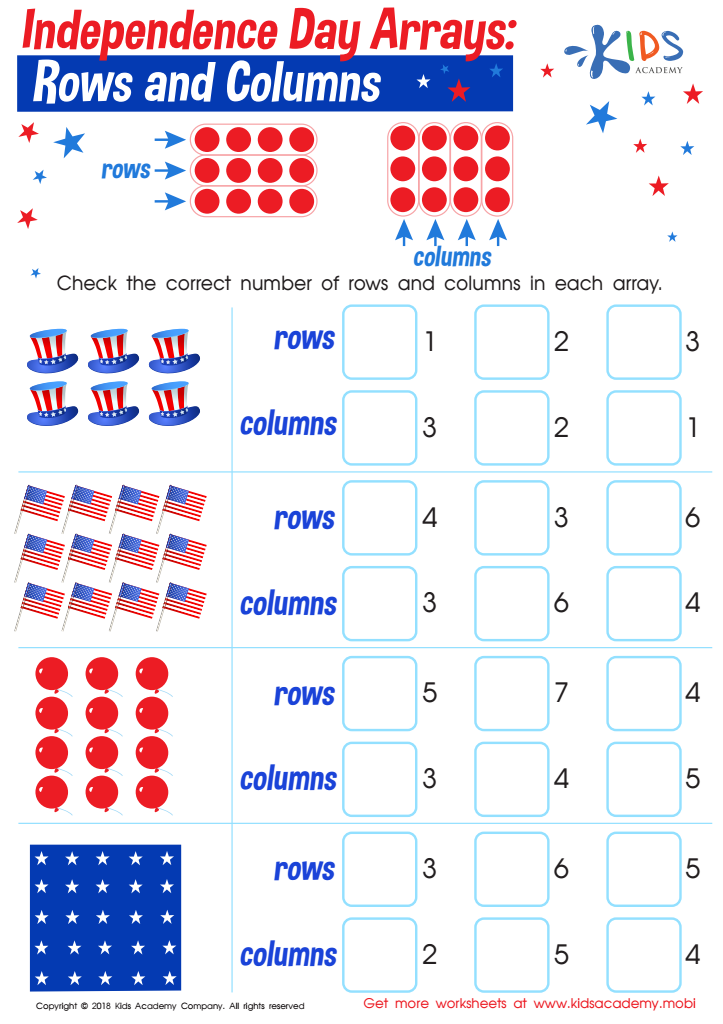
Independence Day Arrays: Rows and Columns Worksheet
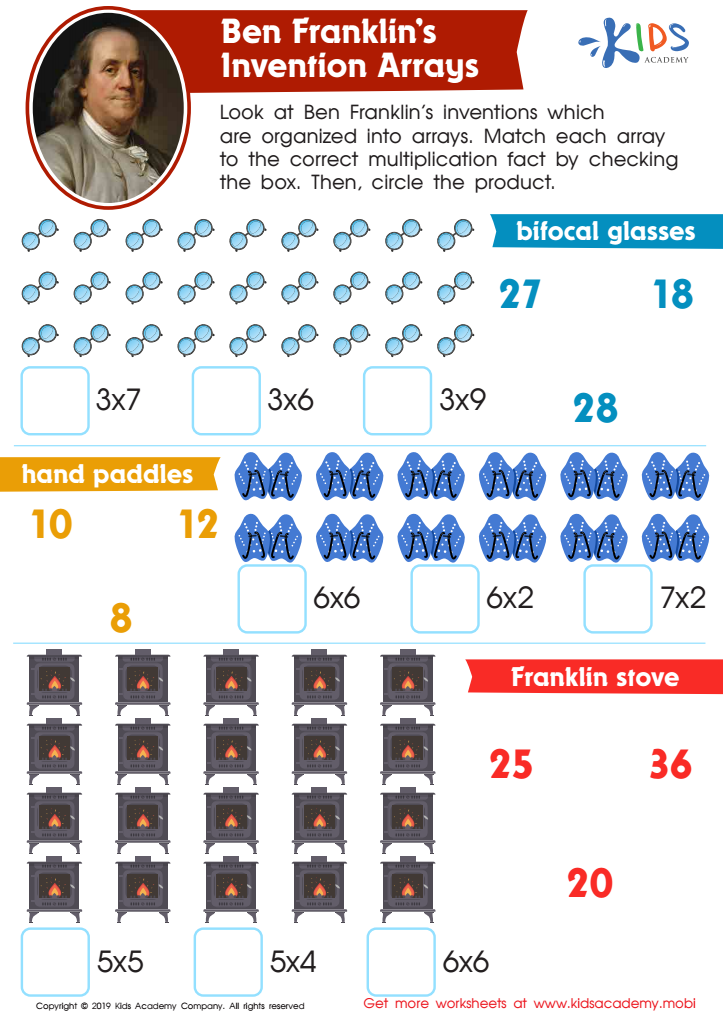
Ben Franklin’s Invention Arrays Worksheet








Parents and teachers play a crucial role in shaping young learners' understanding of history through Historical Knowledge Arrays (HKAs) designed for ages 5-8. At this foundational stage, children are naturally curious about their world, making it an ideal time to introduce them to historical concepts. HKAs provide a structured and engaging way to present historical information, linking key events, people, and themes into interconnected webs of knowledge.
By incorporating HKAs into early education, caregivers can enhance children's critical thinking and comprehension skills. Children learn to see the relationships between the past and present, fostering a sense of continuity and identity. This approach not only makes history more relevant but also ignites a passion for learning. Additionally, HKAs cater to diverse learning styles, using visuals, stories, and songs to engage young minds.
Furthermore, understanding history nurtures empathy and cultural awareness, as children explore different perspectives and experiences. By investing in historical knowledge at an early age, parents and teachers lay a strong foundation for lifelong learning, promoting informed and active citizenship in future generations. Ultimately, HKAs enhance the educational experience, making learning both meaningful and enjoyable for young learners.








