Multiplication practice Arrays Worksheets for Ages 5-8
4 filtered results
-
From - To
Unlock the magic of multiplication for your young learners with our engaging Multiplication Practice Arrays Worksheets, designed for ages 5-8. These printable resources help children visualize and understand the concept of multiplication through fun and interactive array exercises. Each worksheet allows kids to practice paired row and column multiplication, strengthening their foundational math skills. Perfect for classroom or at-home learning, our worksheets transform abstract numbers into concrete learning experiences. Start building your child's confidence and proficiency in multiplication today with these helpful, easy-to-use educational tools. Download now to ignite a love for math in your child!
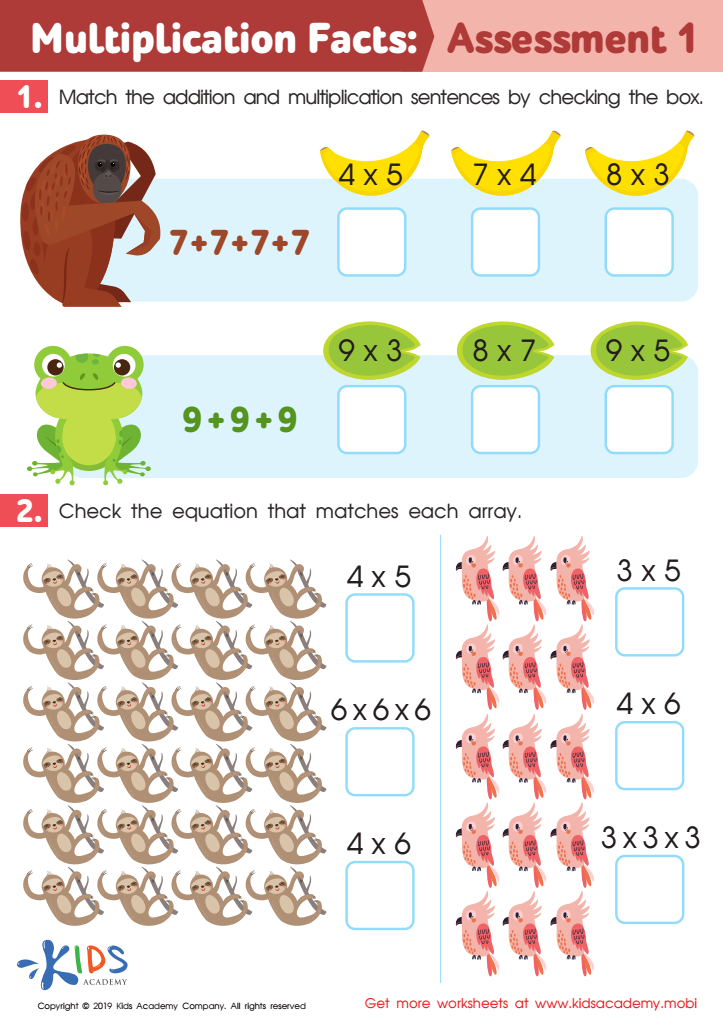
Multiplication Facts: Assessment 1 Worksheet
 Assign to My Students
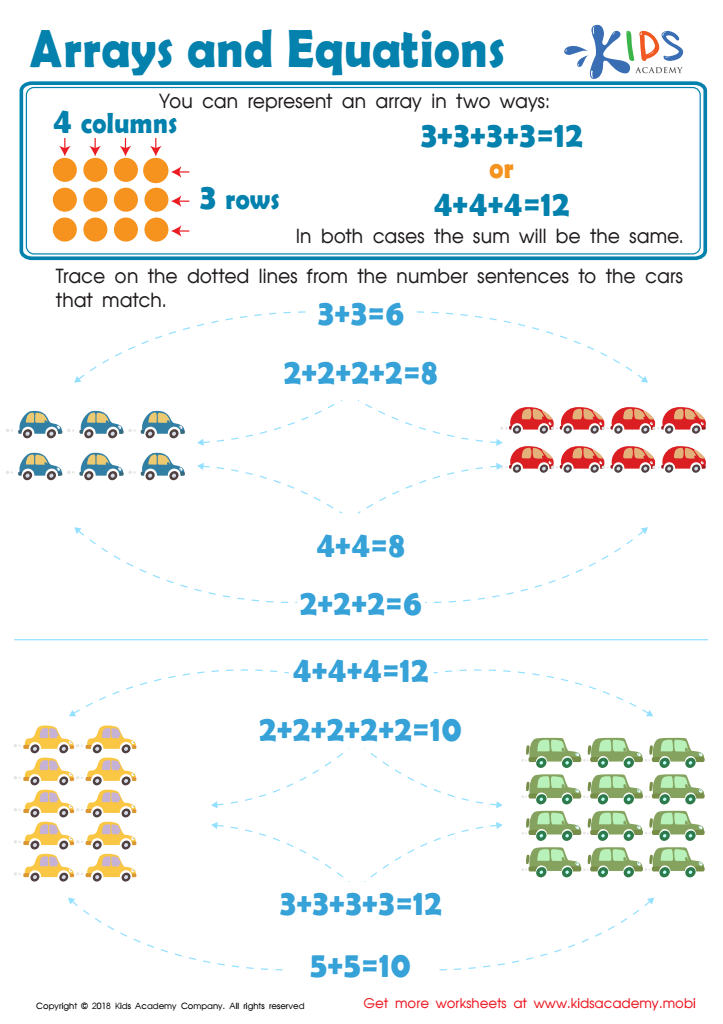
Arrays and Equations Worksheet
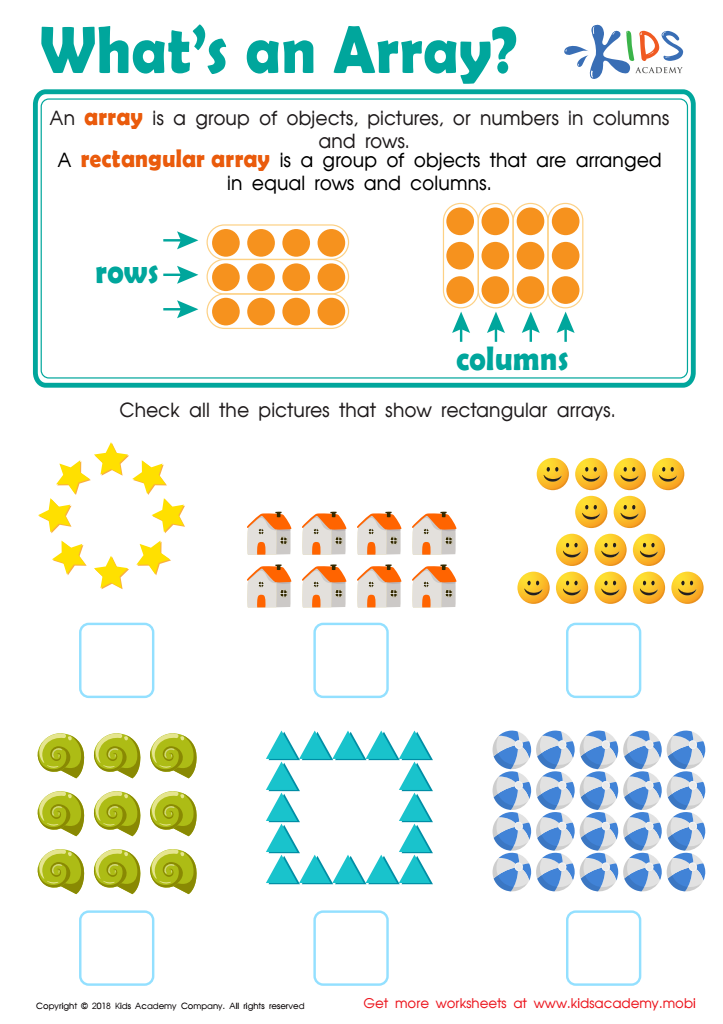
What's an Array? Worksheet
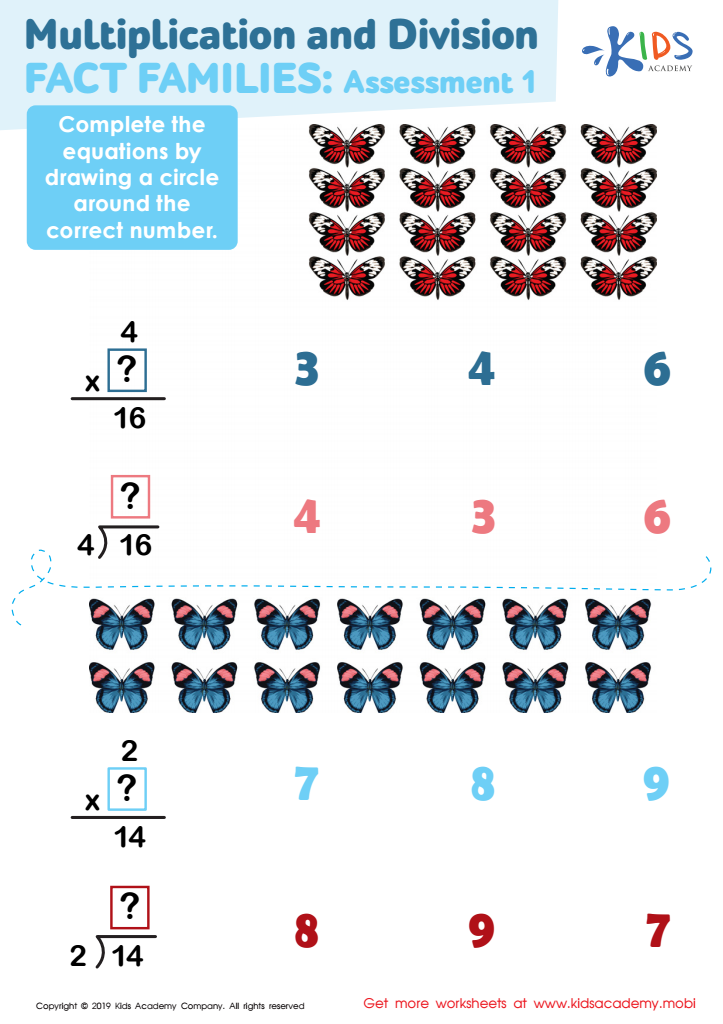
Multiplication and Division Fact Families Assessment 1 Worksheet








Multiplication practice arrays are vital learning tools for young children, particularly those aged 5-8, as they lay the essential foundation for mathematical understanding and future academic success. Arrays help visualize multiplication by organizing objects into rows and columns, making it easier for young learners to grasp the concept of repeated addition—the idea that multiplying 2 by 3, for instance, is equivalent to adding 2 three times (2+2+2) or arranging six items into 2 rows of 3.
Using arrays at an early age can improve a child’s numerical fluency, allowing them to recognize patterns and develop problem-solving skills. Moreover, the hands-on and visual nature of arrays can cater to different learning styles, making it engaging and effective for children who may struggle with abstract numerical concepts.
For parents and teachers, encouraging the practice of multiplication through arrays also boosts children’s confidence, as they will have a tangible method to approach and solve problems. Early mastery of these basic math skills ultimately leads to a smoother transition to more complex mathematical concepts in later grades, enhancing overall academic performance. Given their formative role, integrating multiplication practice arrays into early education is not just beneficial, but essential.








