
Multiplication practice Basic Times Tables up to 12 Worksheets for Ages 5-8
12 filtered results
Difficulty Level
Grade
Age
-
From - To
Subject
Activity
Standards
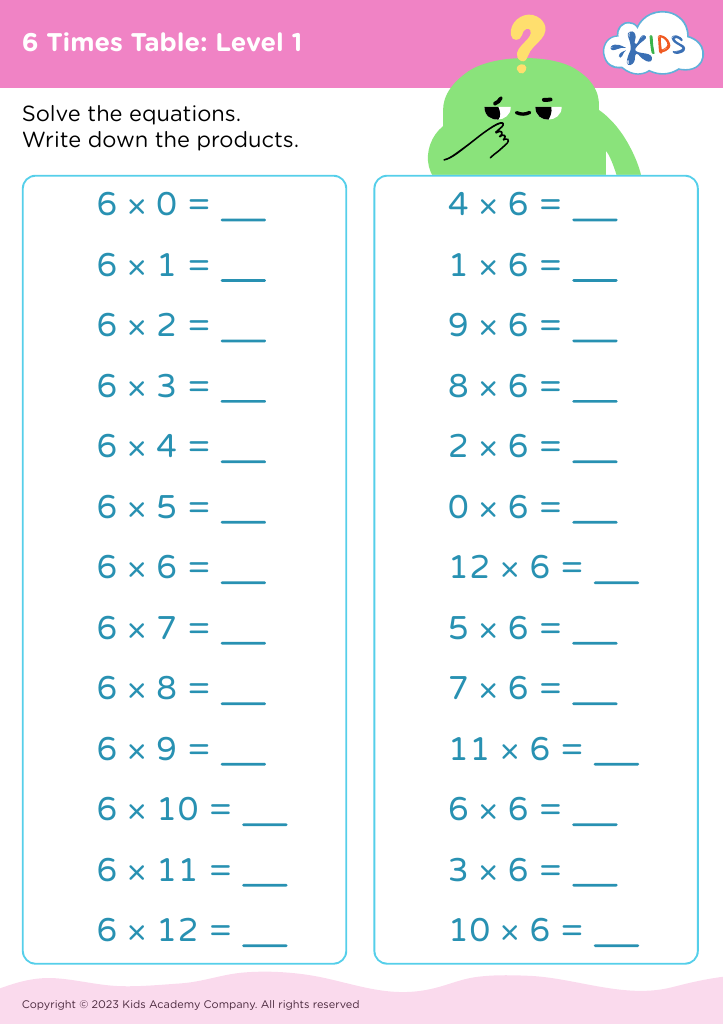
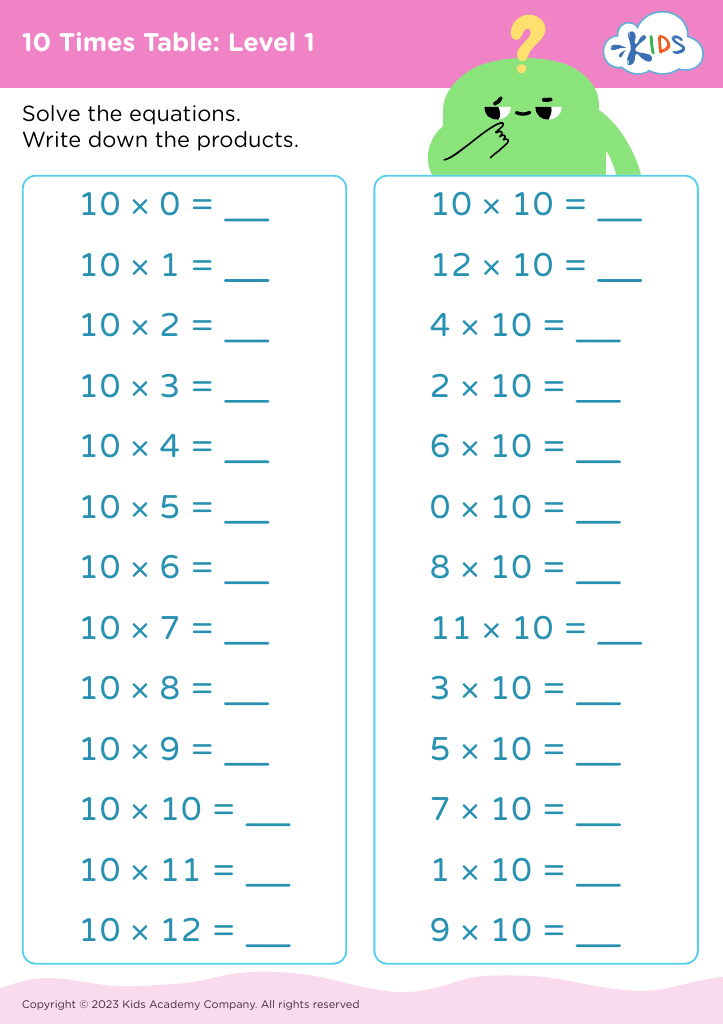
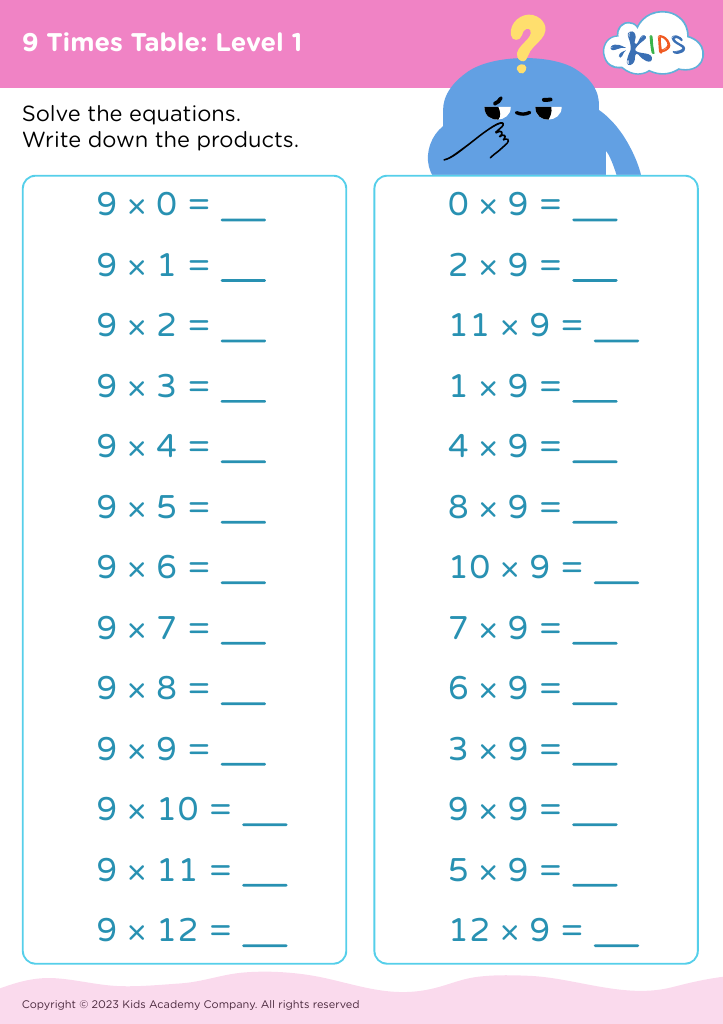
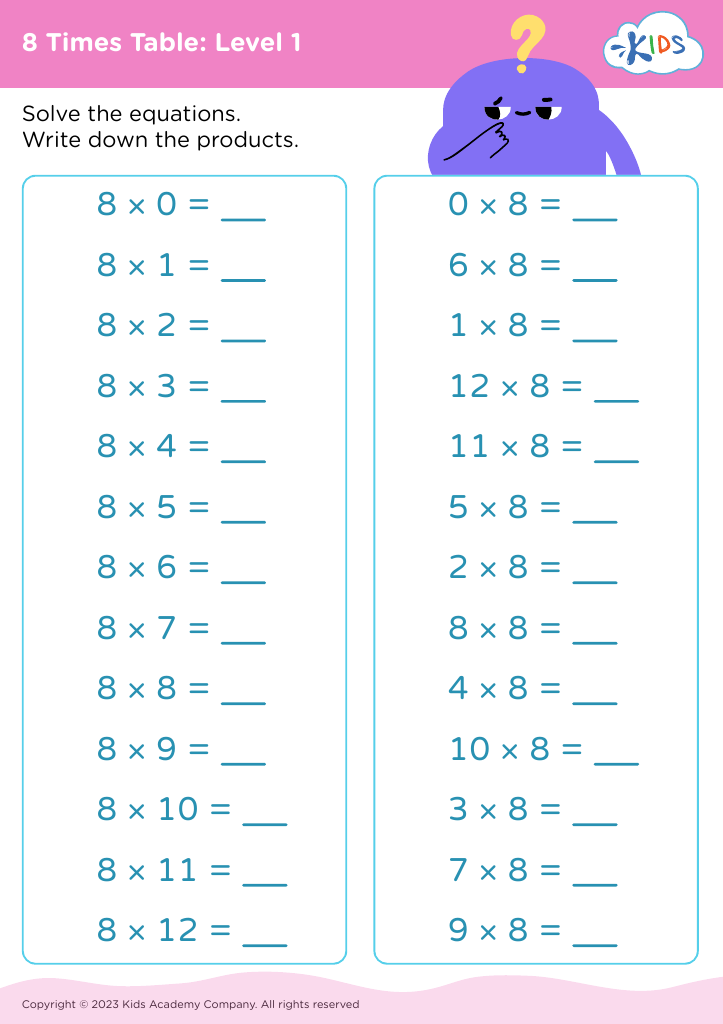
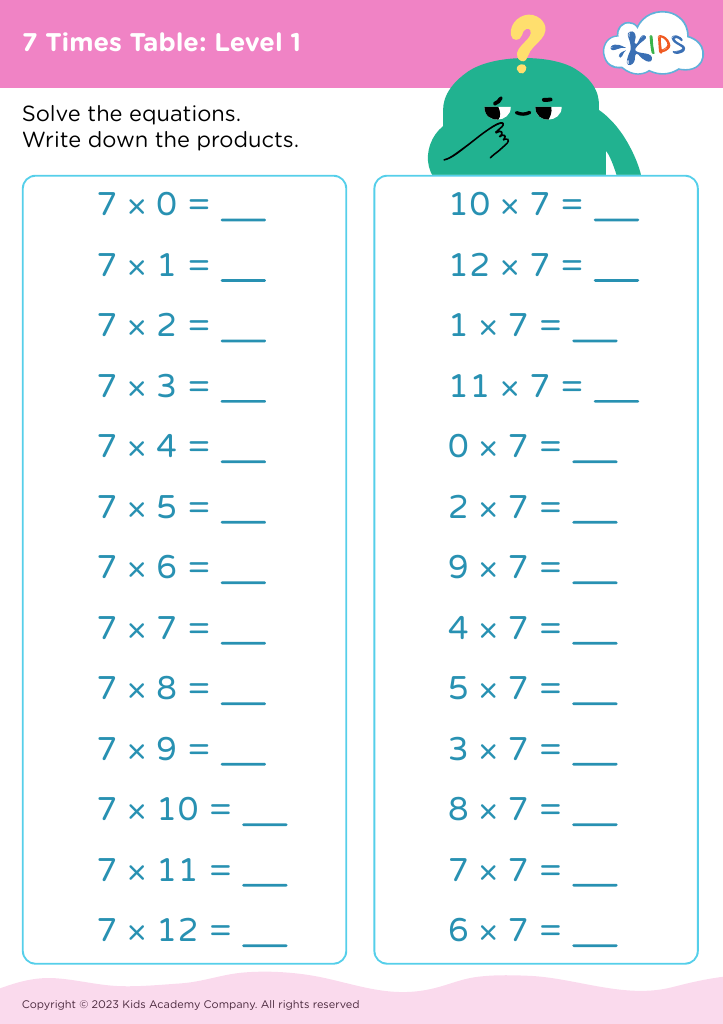
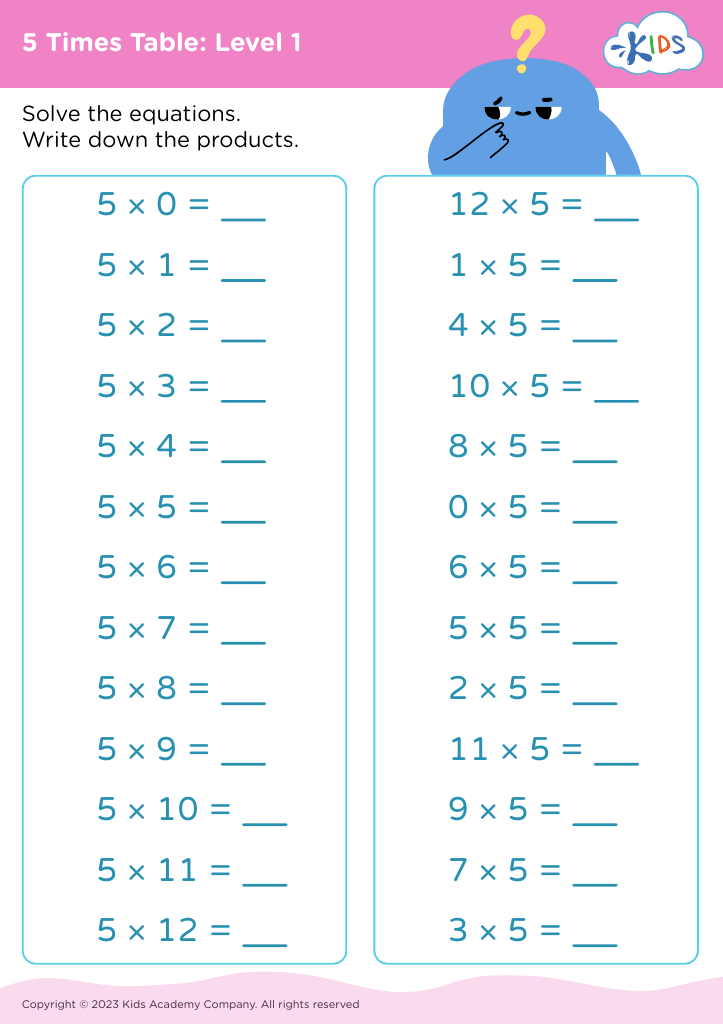
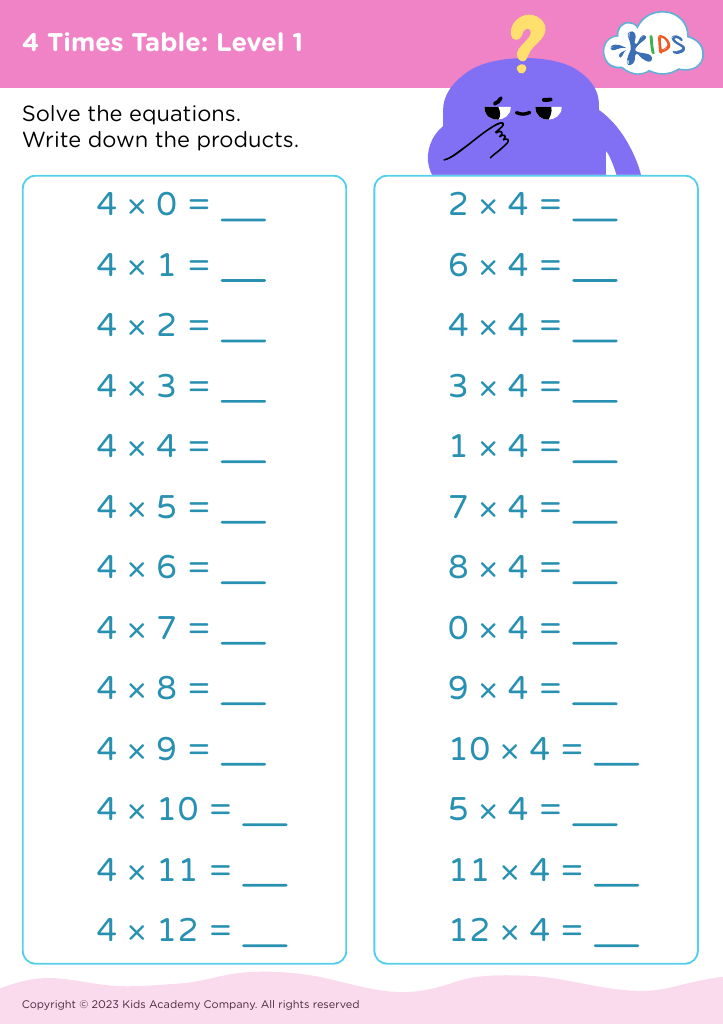
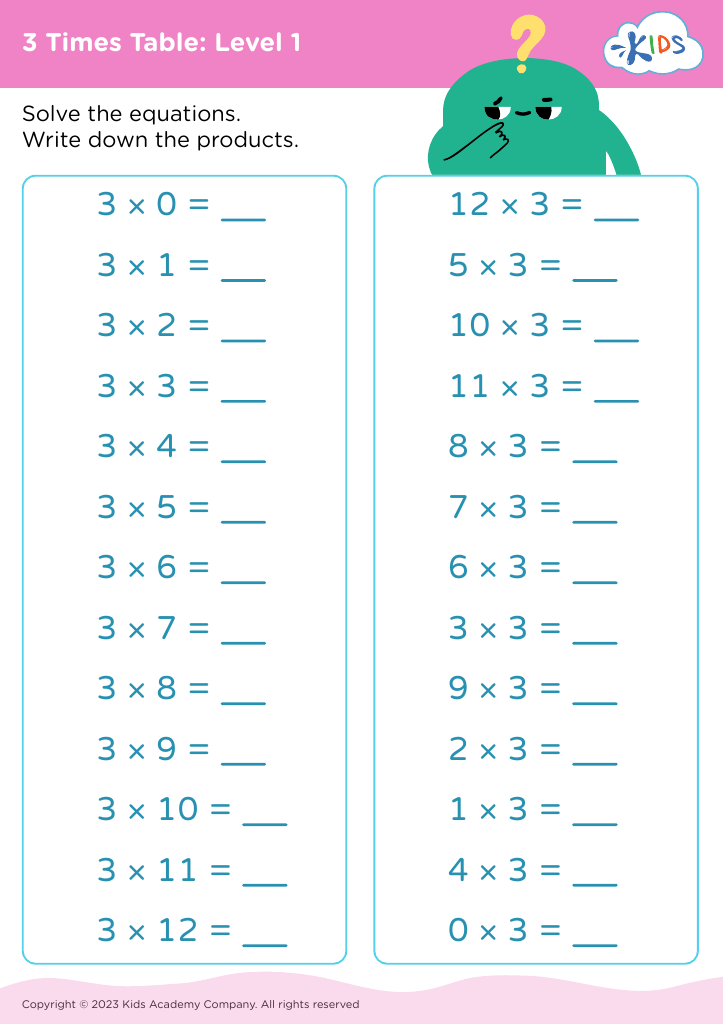
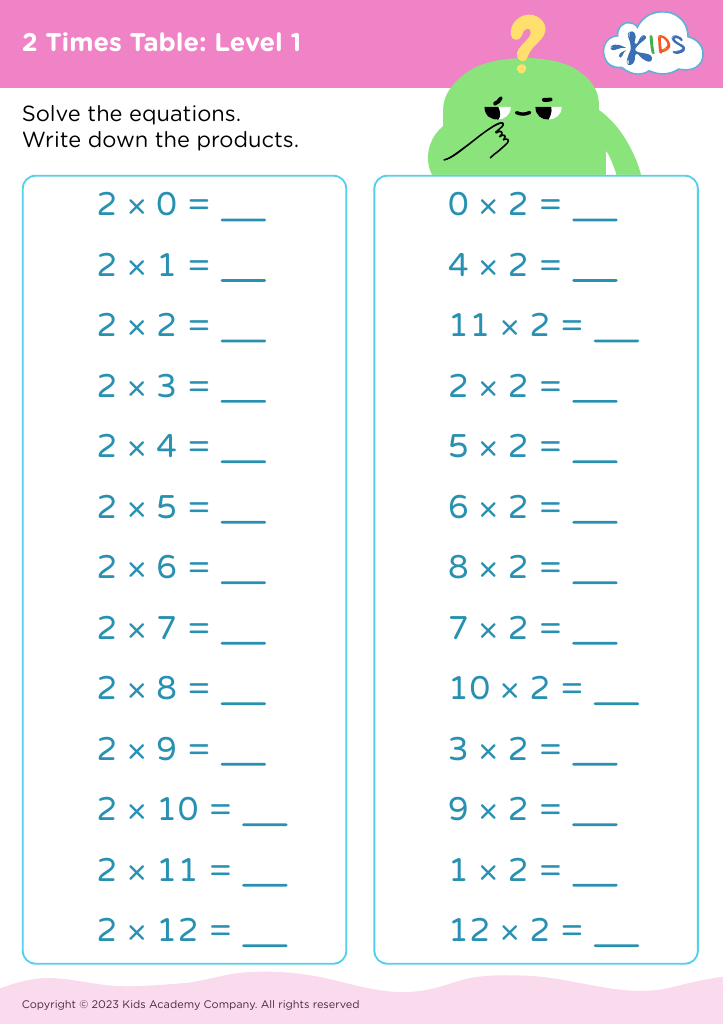
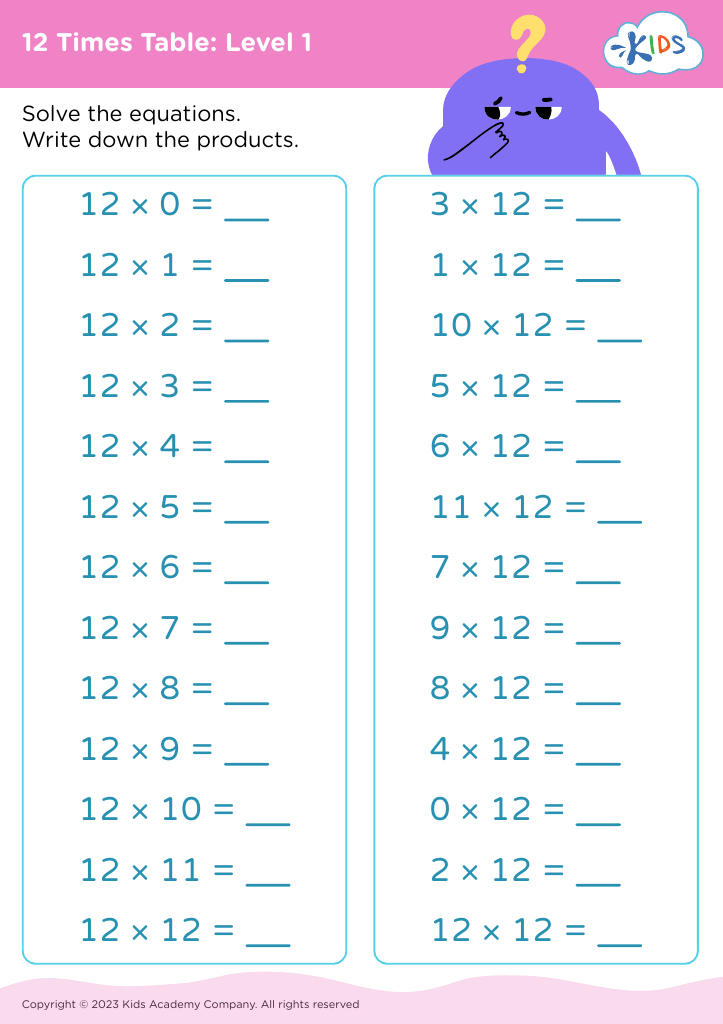
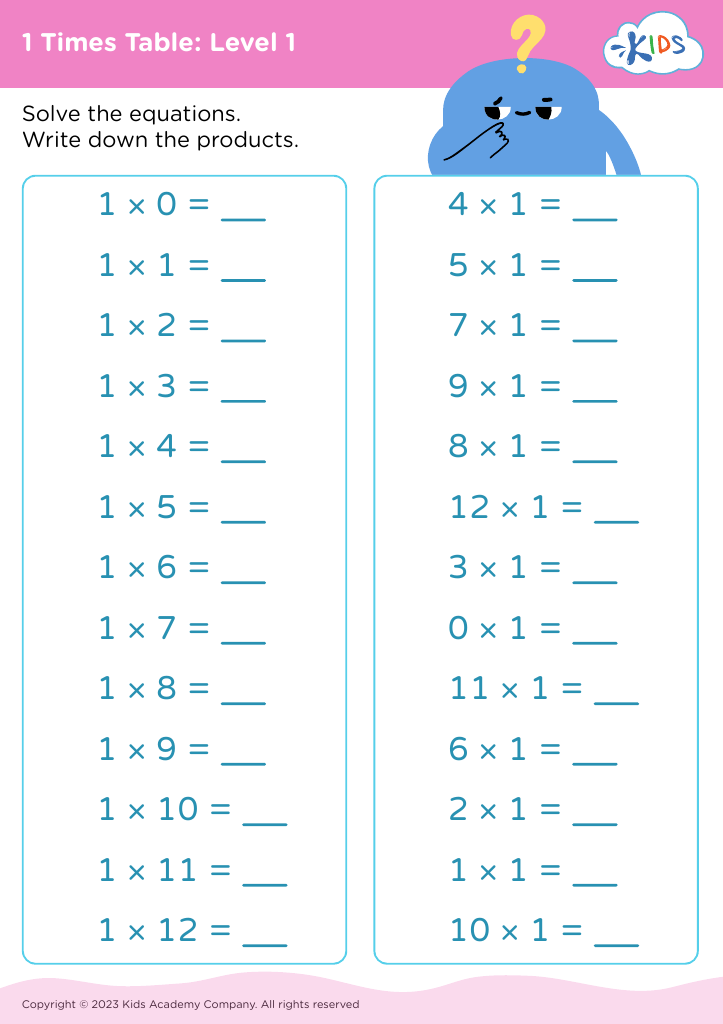
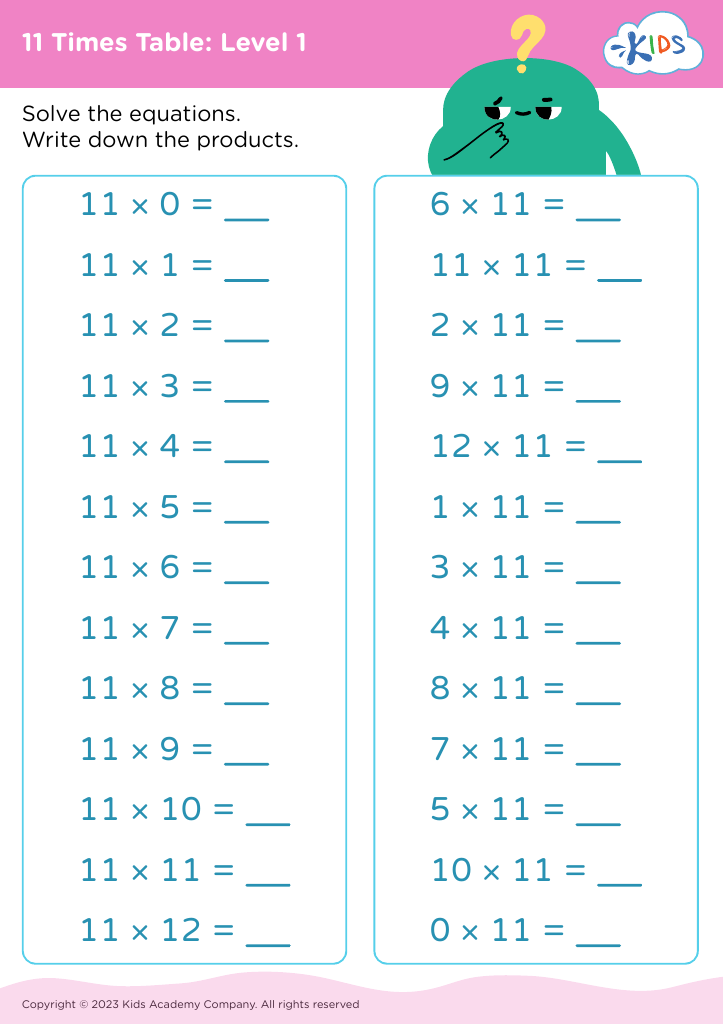
Enhance your child's math skills with our engaging multiplication practice worksheets, designed specifically for ages 5-8. These basic times tables worksheets cover multiplication facts up to 12, providing young learners with the tools they need to build a strong foundation in mathematics. Each worksheet features fun activities and colorful illustrations that keep kids motivated and make learning enjoyable. Whether in the classroom or at home, these resources promote confidence in multiplication, fostering essential skills for future success. Explore our collection today and support your child's educational journey with effective practice that aligns with their learning needs!
Favorites
With answer key
Interactive
Join Kids Academy for Free
Who is primarily going to use this learning content?


Parents and teachers should prioritize multiplication practice, particularly the basic times tables up to 12, for children aged 5 to 8 years for several compelling reasons. Firstly, mastering basic multiplication forms a critical foundation for later mathematical concepts, such as division, fractions, and even algebra. Children equipped with a solid grasp of multiplication are more likely to approach complex problems confidently.
Moreover, regular practice enhances students’ mathematical fluency. When kids can quickly recall multiplication facts, it reduces cognitive load during problem-solving, allowing them to focus on understanding concepts rather than struggling with basic calculations. This competence fosters a positive mathematical identity, which significantly boosts their confidence and interest in the subject.
Additionally, mastery of multiplication tables aligns with educational standards and prepares students for standardized assessments. Parents and teachers working together can create engaging and meaningful practice routines, making learning both fun and effective. Incorporating games, songs, and interactive activities encourages retention and engagement, nurturing a love for math.
Ultimately, investment in multiplication practice at a young age hones essential skills that extend beyond mathematics, cultivating critical thinking, perseverance, and a positive attitude toward learning. In nurturing these skills, children are better equipped for academic success.








