Understanding patterns Basic Times Tables up to 12 Worksheets for Ages 5-8
3 filtered results
-
From - To
Welcome to our "Understanding Patterns: Basic Times Tables up to 12" worksheets designed for children aged 5-8! These engaging resources help young learners grasp fundamental multiplication concepts by recognizing patterns in the times tables. Our specially crafted worksheets offer a visually stimulating environment, making math both fun and accessible. Kids will enhance their critical thinking skills as they explore various patterns and relationships between numbers, building a solid foundation for future math success. Perfect for home or classroom use, these worksheets encourage independent practice while boosting confidence. Download our adorable, kid-friendly worksheets today and inspire a love for math in your little ones!
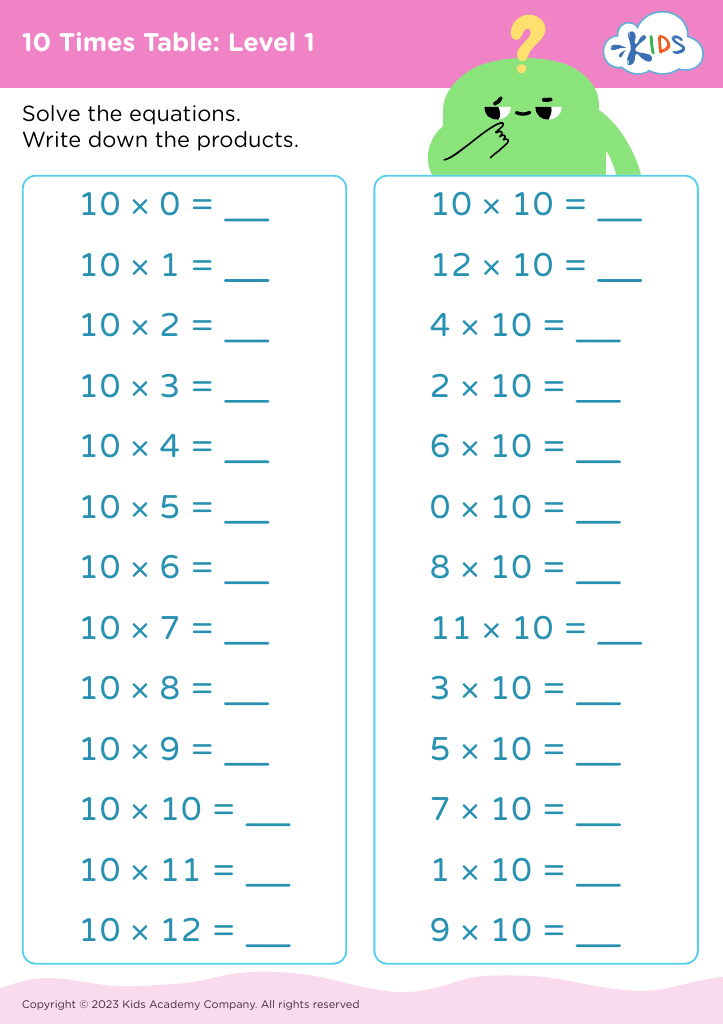
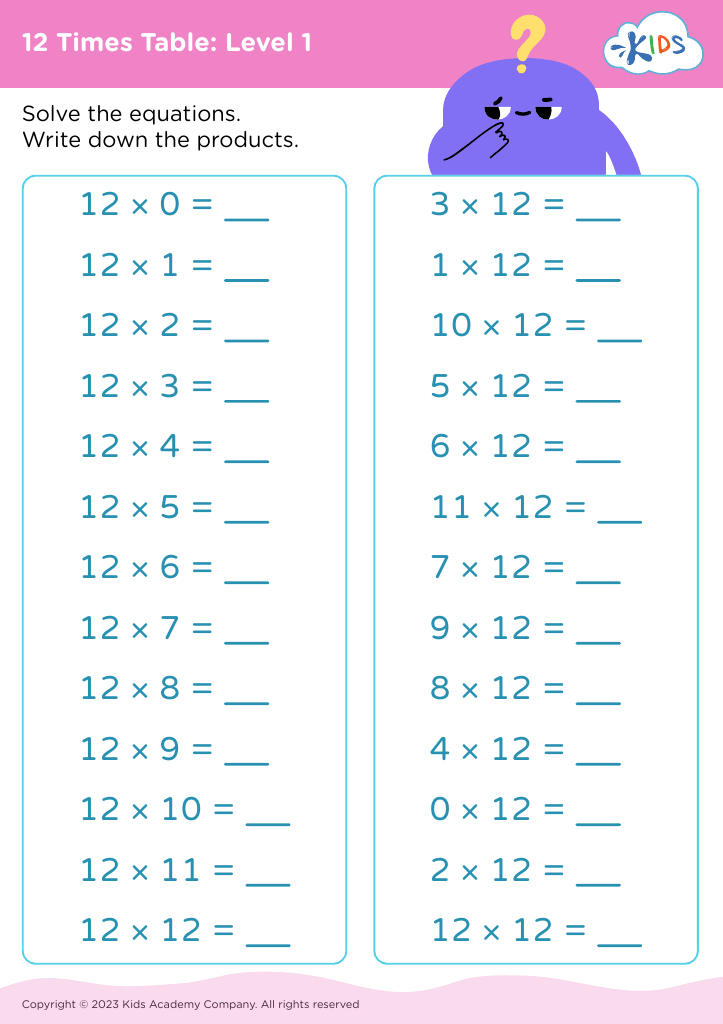
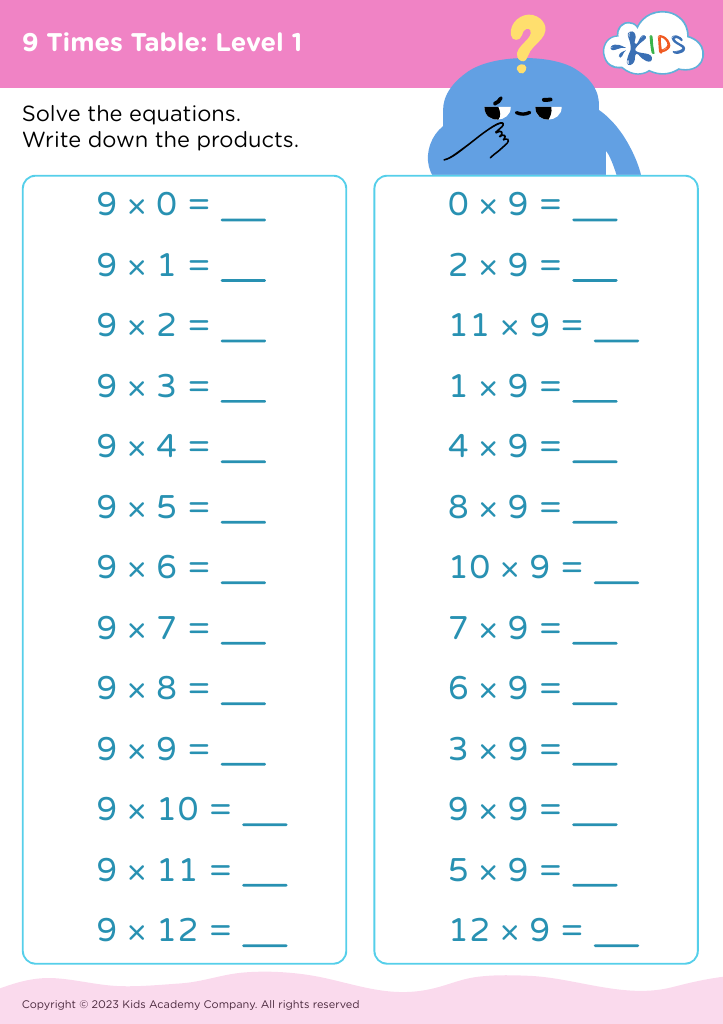


Understanding patterns and basic times tables up to 12 is crucial for children aged 5-8 as it lays a foundation for their mathematical skills. At this age, children are naturally curious and eager to recognize similarities and differences, making it an ideal time to introduce them to patterns. Comprehending patterns helps children to think critically and fosters problem-solving skills, which are essential in all areas of learning.
When children grasp basic times tables, they begin to see the relationships between numbers, promoting numerical fluency. Mastering these core concepts prepares them for more complex mathematical operations in later years, such as addition, subtraction, multiplication, and division. Furthermore, early understanding of multiplication as repeated addition aids in developing a strong conceptual base, enhancing their confidence in math.
Parents and teachers should care about this foundational knowledge because it not only supports academic achievement but also builds cognitive skills that children will use throughout their lives. Engaging students in fun and interactive ways to learn these patterns can make math enjoyable, encouraging a positive attitude towards the subject. In essence, early exposure to times tables and patterns primes children for future success, both in school and beyond.








