Filters

7 filtered results

Clear all filters
Favorites
With answer key
Interactive

7 filtered results

Difficulty Level

Grade


Enhance your child's math skills with our Counting Practice Geometry Worksheets, designed specifically for ages 5-8. These engaging worksheets combine the excitement of geometry with essential counting skills, providing a fun and interactive way for young learners to grasp concepts like shapes and numbers. With visually appealing designs and age-appropriate activities, each worksheet encourages critical thinking and reinforces understanding through hands-on practice. Perfect for homeschooling, classroom use, or extra practice at home, these resources will help your child confidently develop their counting abilities while exploring the colorful world of geometry. Download our worksheets today and watch your child's skills soar!

Check out this FREE Trial Lesson on Geometry for age 5-8!

Counting Faces 3D

Favorites
With answer key
Interactive
  • 5-8
  • Counting practice
  • Geometry
Let's Count Faces! Worksheet

Let's Count Faces! Worksheet

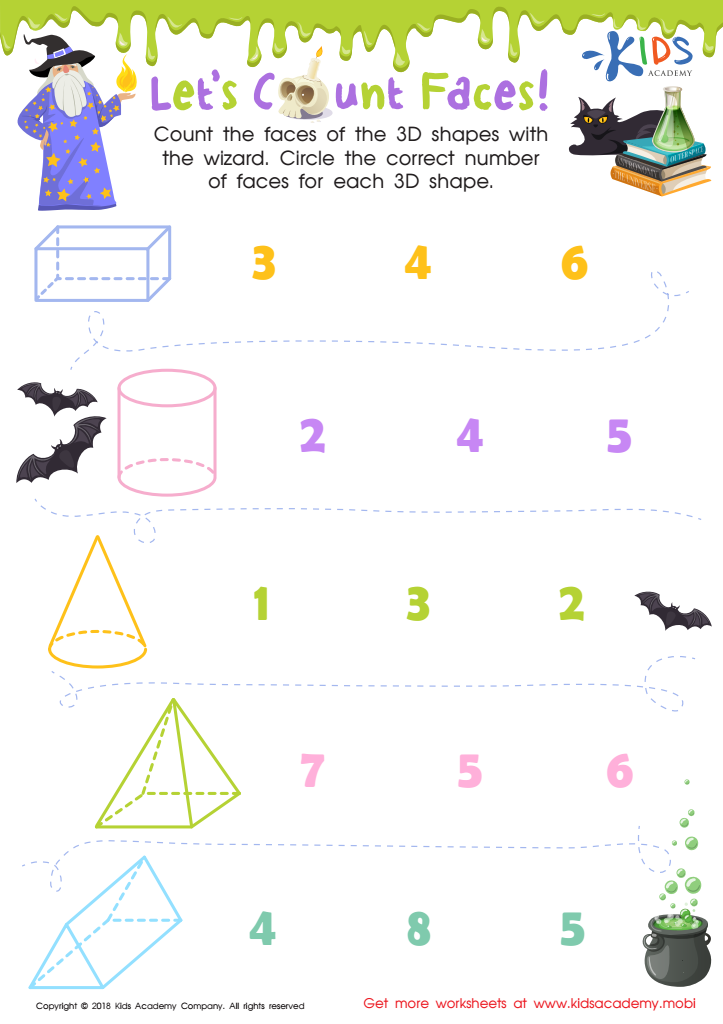
Help the wizard count the faces of 3D shapes! Ask your kids to identify the shapes before beginning, then have them circle the correct number of faces. Enjoy this fun wizard-themed worksheet with your kids!
Let's Count Faces! Worksheet

Worksheet
Using Triangles to Make Squares and Rhombuses Worksheet

Using Triangles to Make Squares and Rhombuses Worksheet

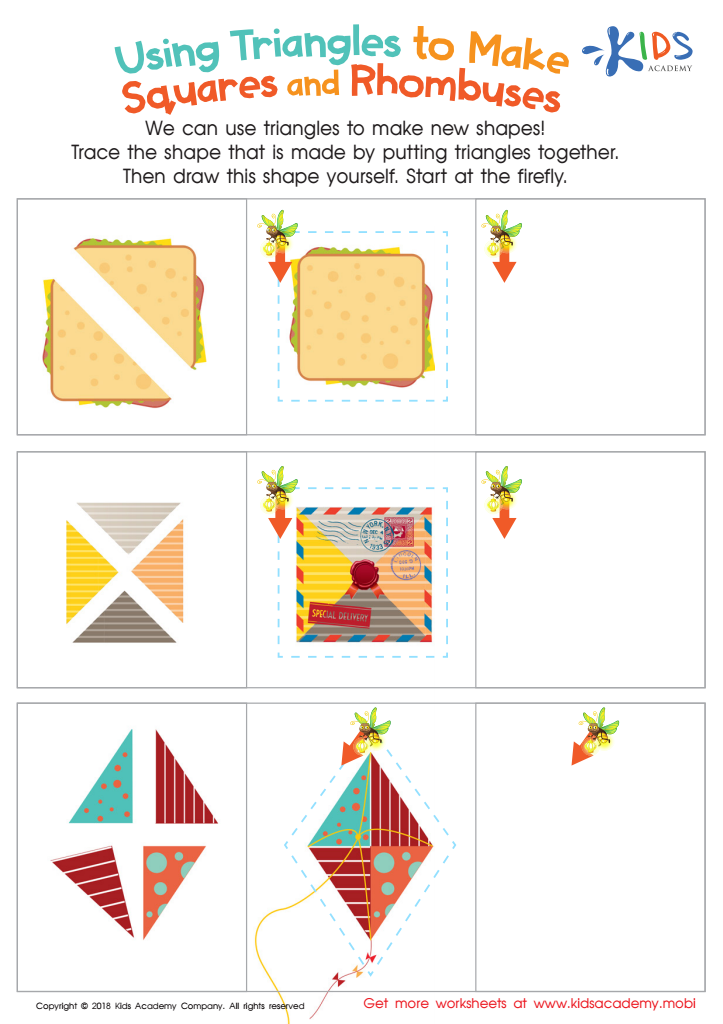
Learning shapes is a fun way to boost spatial skills and critical thinking. This worksheet shows children how to use triangles to construct squares and rhombuses. Clear illustrations and a printout help children draw the new shape. A great activity for the math classroom! 80 words.
Using Triangles to Make Squares and Rhombuses Worksheet
Worksheet
Robot Fun Worksheet
Robot Fun Worksheet

Robot Fun Worksheet

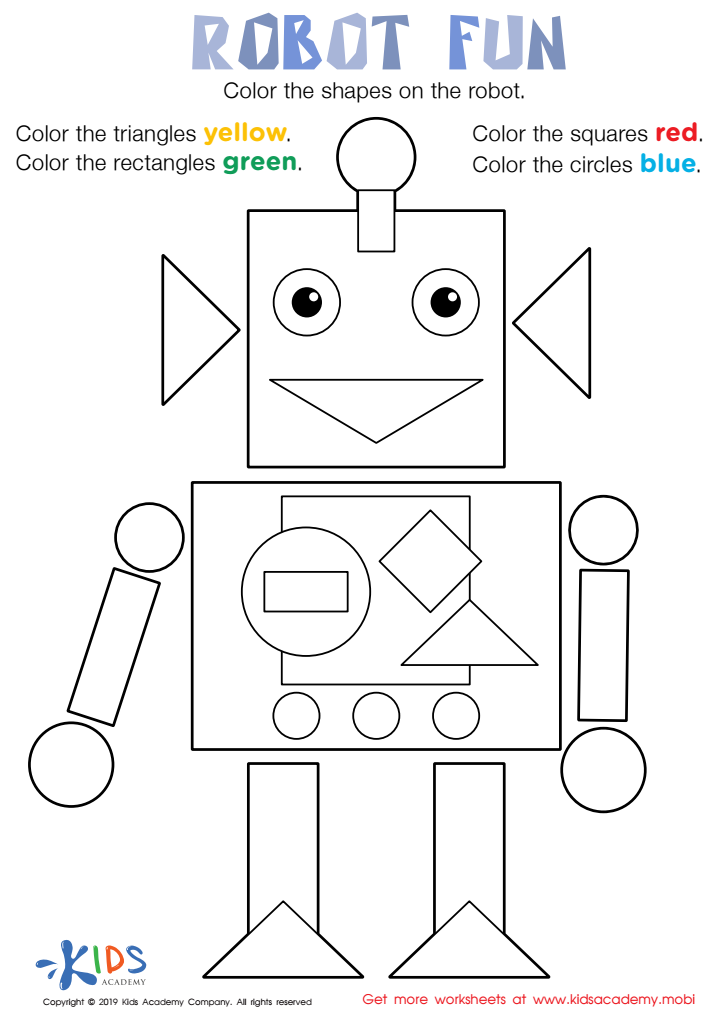
Help your child learn about basic shapes with this fun robot worksheet! Kids practice identifying circles, squares, rectangles and triangles, then color each shape according to directions. Make math practice enjoyable with this coloring page that teaches all four basic shapes - it's an important math skill!
Download (PDF)
Assign to My Students
Robot Fun Worksheet
Worksheet
Find Quarters Worksheet

Find Quarters Worksheet

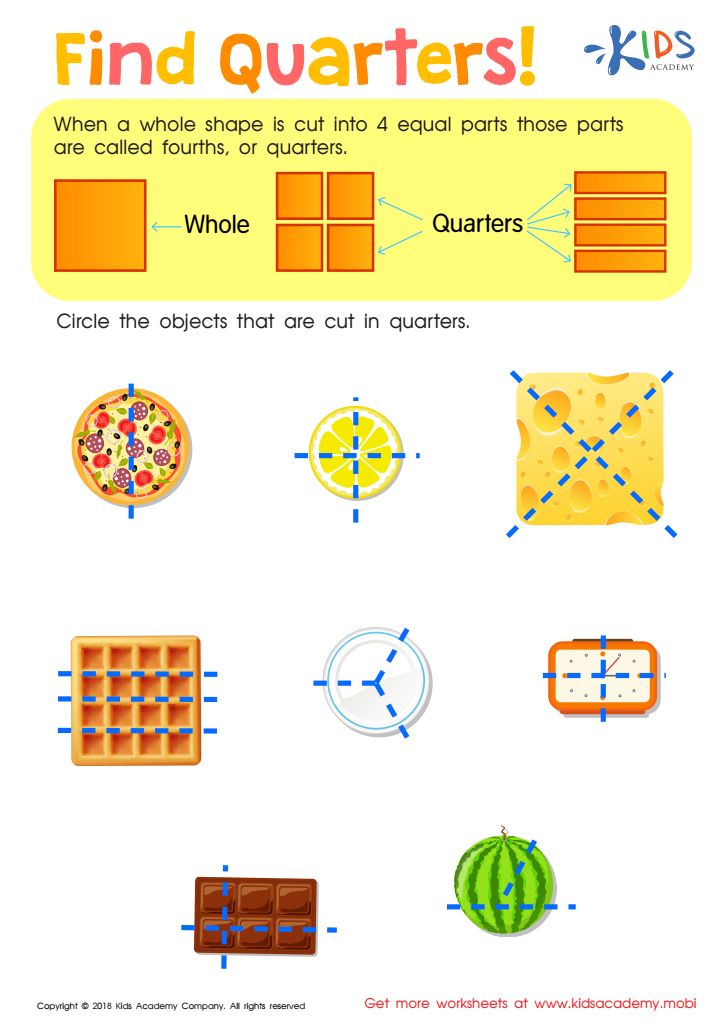
Ask your child if they know what it is called when a shape is cut into two equal parts. If yes, introduce them to quarters. Tell them that when a shape is cut into 4 equal parts, each part is called a quarter. Have them do this exercise by finding and circling objects split into quarters.
Find Quarters Worksheet
Worksheet
Let's Look! Part 2 Worksheet

Let's Look! Part 2 Worksheet

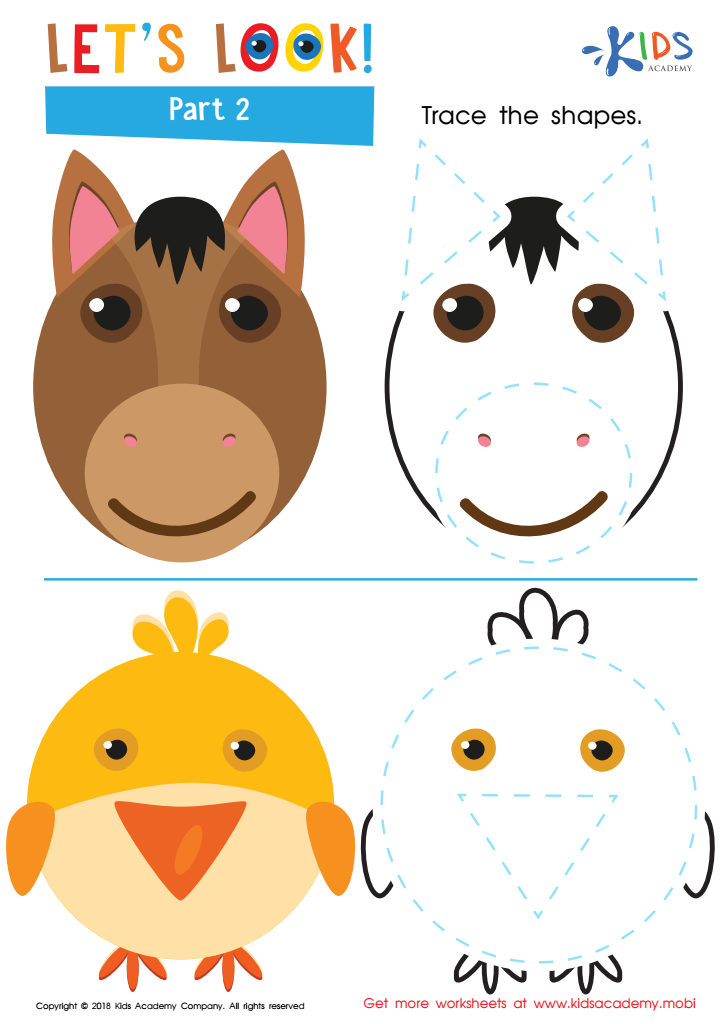
This tracing sheet helps your little ones develop their skills. Ask them to identify the animals, then trace the shapes in the space provided, following the dotted lines. It's a simple task that can help them grow and have fun!
Let's Look! Part 2 Worksheet
Worksheet
Geometry Matching Worksheet

Fun Geometry Worksheet

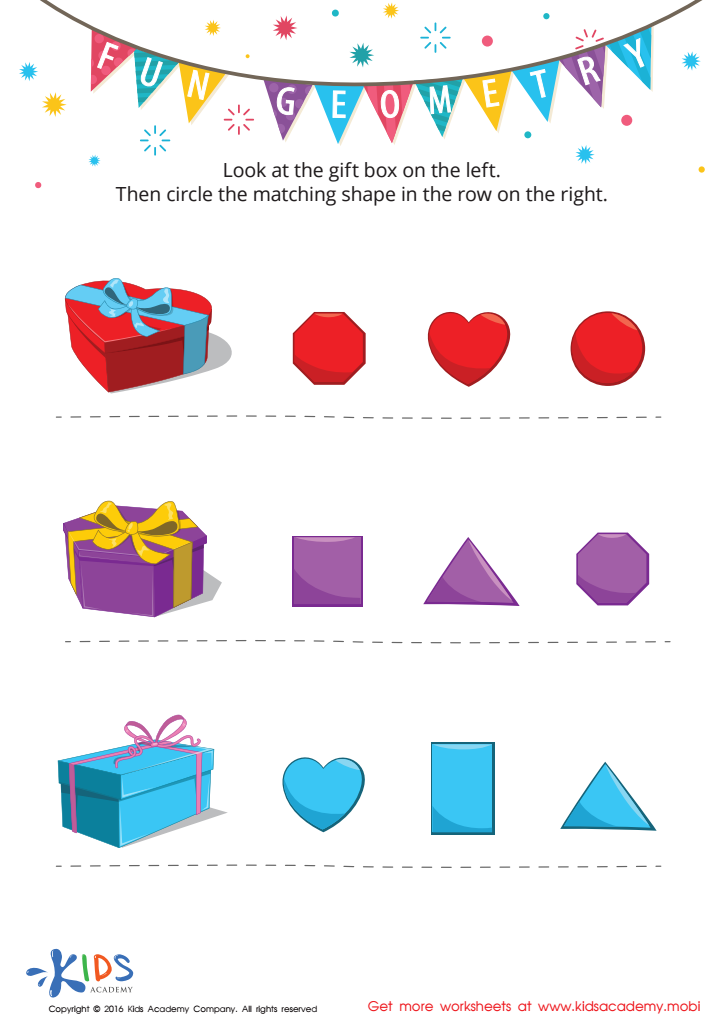
Give your child the gift of learning with this fun and educational geometry matching worksheet! It'll help them develop essential matching and problem-solving skills while having fun. Vibrant pictures will excite them to complete it and get a better grasp of the world around them.
Fun Geometry Worksheet
Worksheet
Bicycle Shapes Worksheet Preview


Bicycle Shapes Worksheet

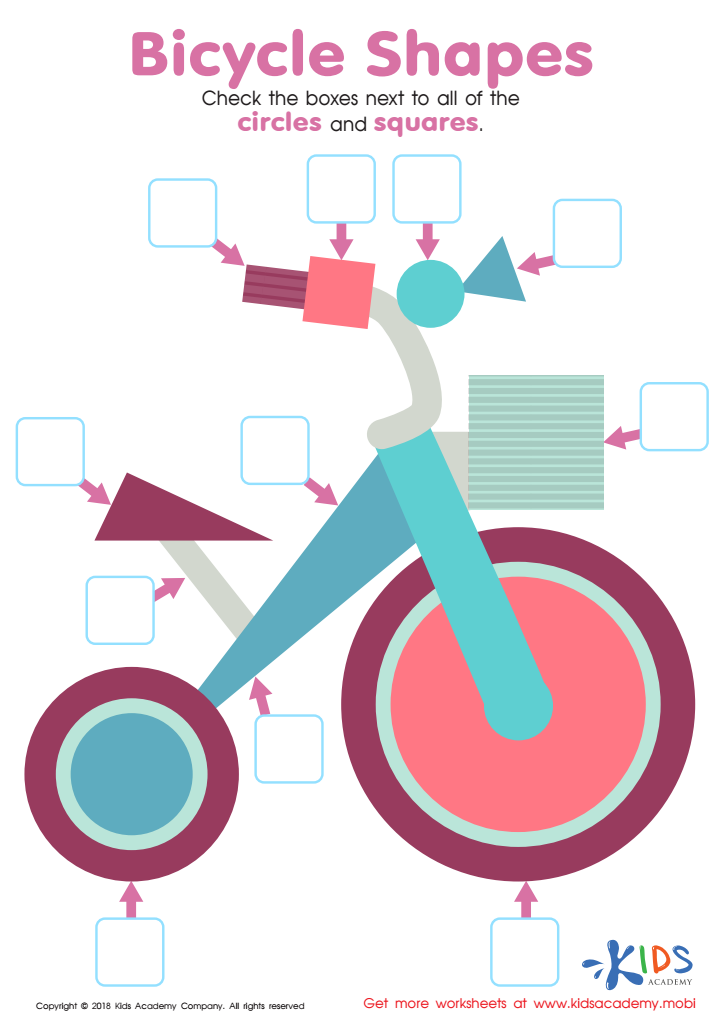
This fun geometry worksheet for preschoolers asks the child to spot hidden shapes (circles, squares) in a colorful bicycle. Each shape varies in size and the child checks the box when it's found. It's a visual way to teach shapes.
Bicycle Shapes Worksheet
Worksheet


Counting and geometry are foundational skills essential for young learners aged 5-8. Engaging in counting practice cultivates a child's ability to recognize numbers, understand quantities, and solve basic math problems. These skills form the basis for more advanced mathematical concepts later on, promoting numerical literacy early in childhood.

Additionally, geometry introduces students to shapes, spatial reasoning, and an understanding of how objects relate to one another. Through activities involving counting and geometry, children learn to identify shapes, understand properties like size and symmetry, and develop critical thinking skills. These skills not only enhance math inherently but also have implications in real-world situations, including art, science, and everyday problem-solving.

For parents and teachers, fostering an environment where counting and geometry are integral to learning helps support cognitive development. Engaging children in playful activities involving shapes or counting—such as building blocks or shape sorting—makes learning enjoyable and interactive. These foundational skills boost confidence and encourage a positive attitude toward mathematics while laying the groundwork for future academic success. Ultimately, investing in counting practice and geometry education empowers children, preparing them for a balanced and enriching educational journey.