Recognizing shapes Geometry Worksheets for Ages 5-8
6 filtered results
-
From - To
Our "Recognizing Shapes Geometry Worksheets for Ages 5-8" are specifically designed to foster your child's understanding of basic geometric shapes. These engaging and interactive worksheets feature a variety of fun activities, including shape identification, matching, and tracing, carefully crafted to develop visual-spatial awareness, fine motor skills, and problem-solving abilities. Aligned with educational standards, these printables are perfect for classroom use or extra practice at home. Watch as your child gains confidence and a solid foundation in geometry through playful exploration and hands-on learning. Make math exciting and enjoyable with Kids Academy's expert resources!
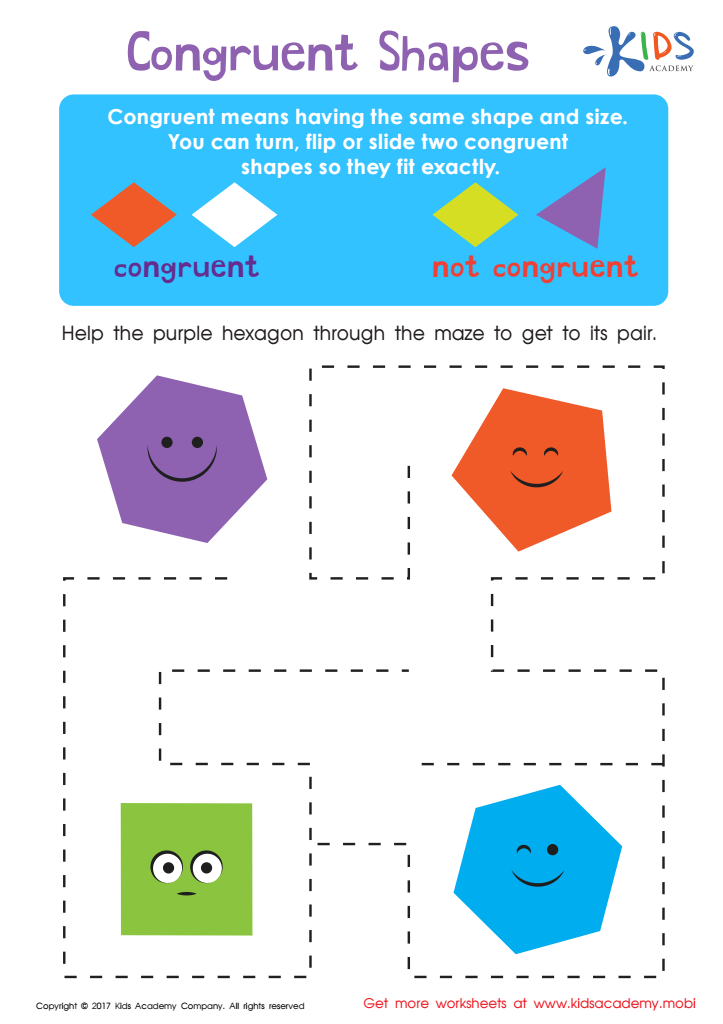
Congruent Shapes Worksheet
 Assign to My Students











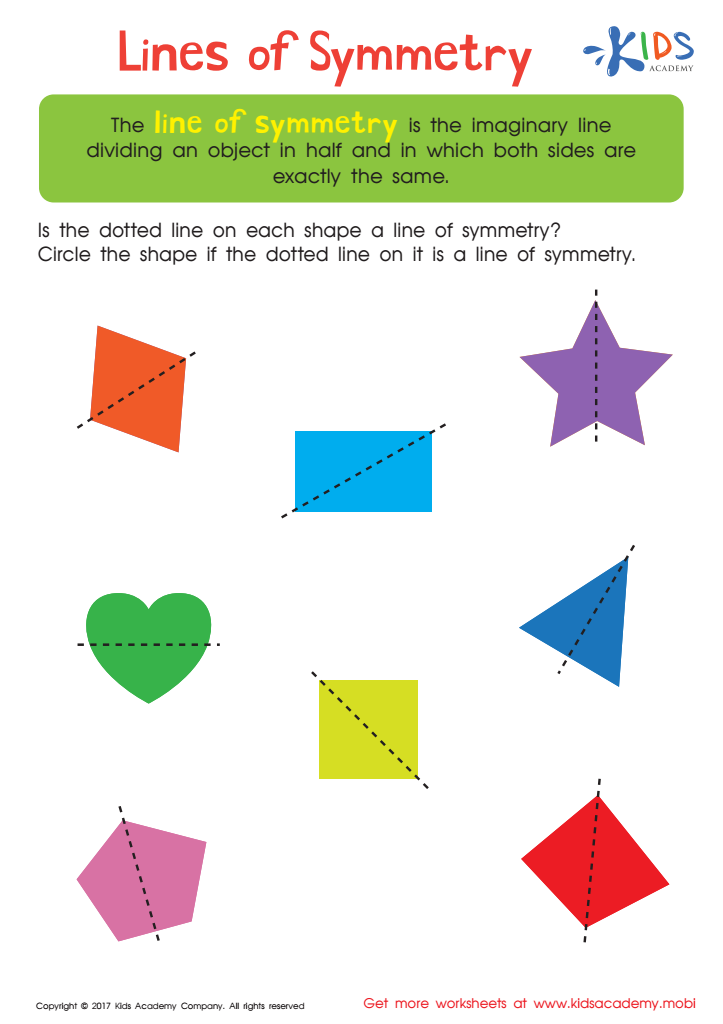
Lines of Symmetry Printable
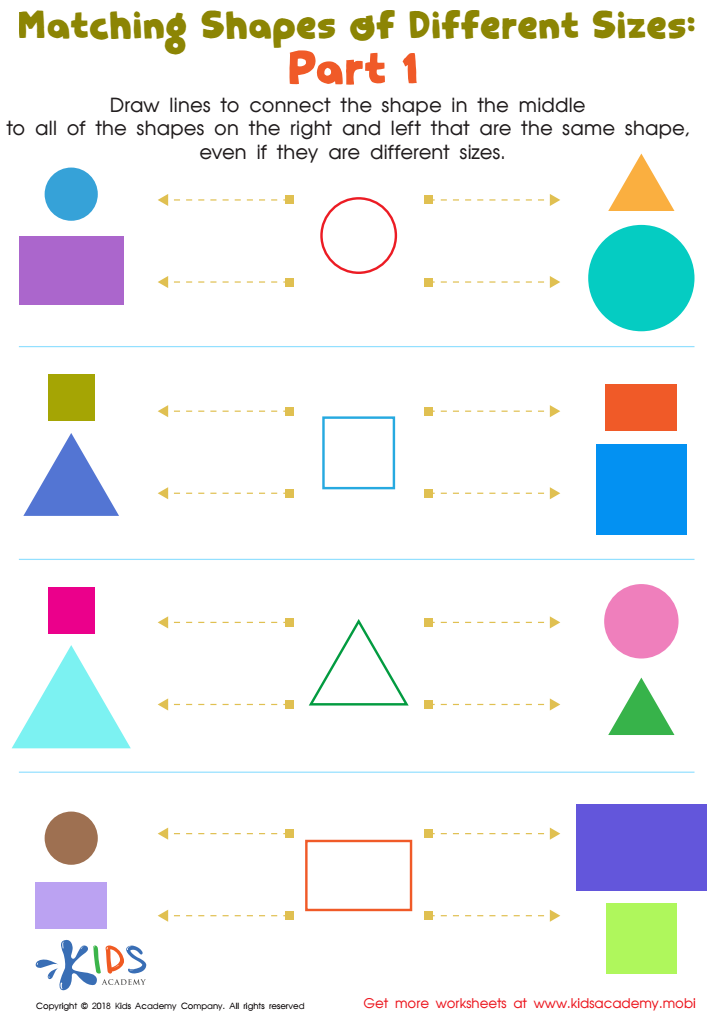
Geometry: part 1 Worksheet
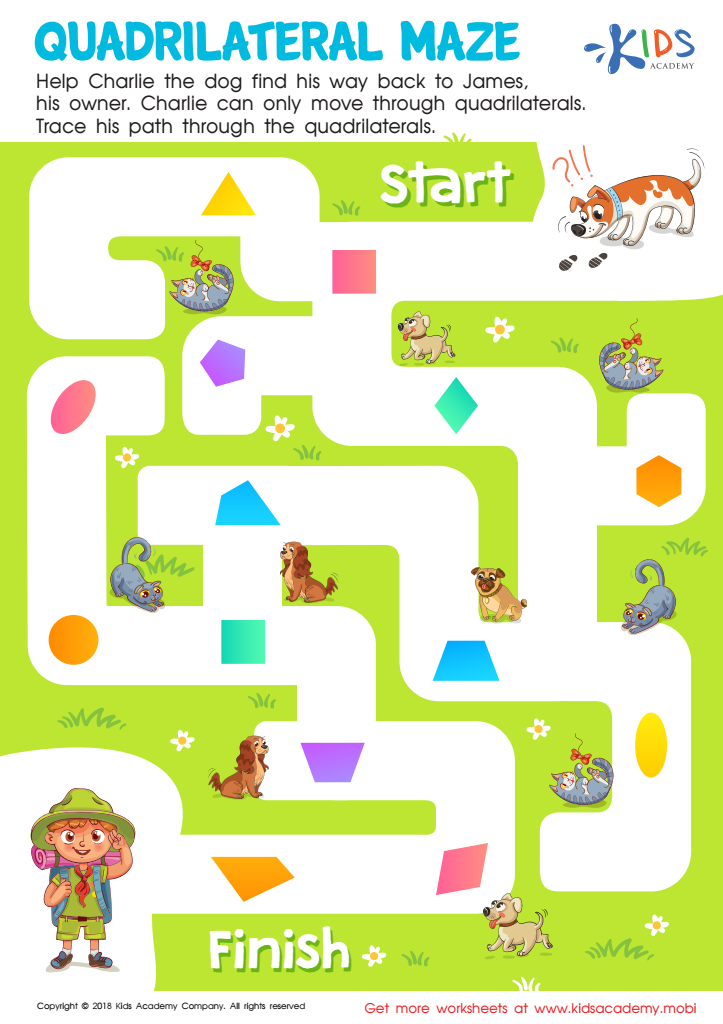
Quadrilateral Maze Worksheet
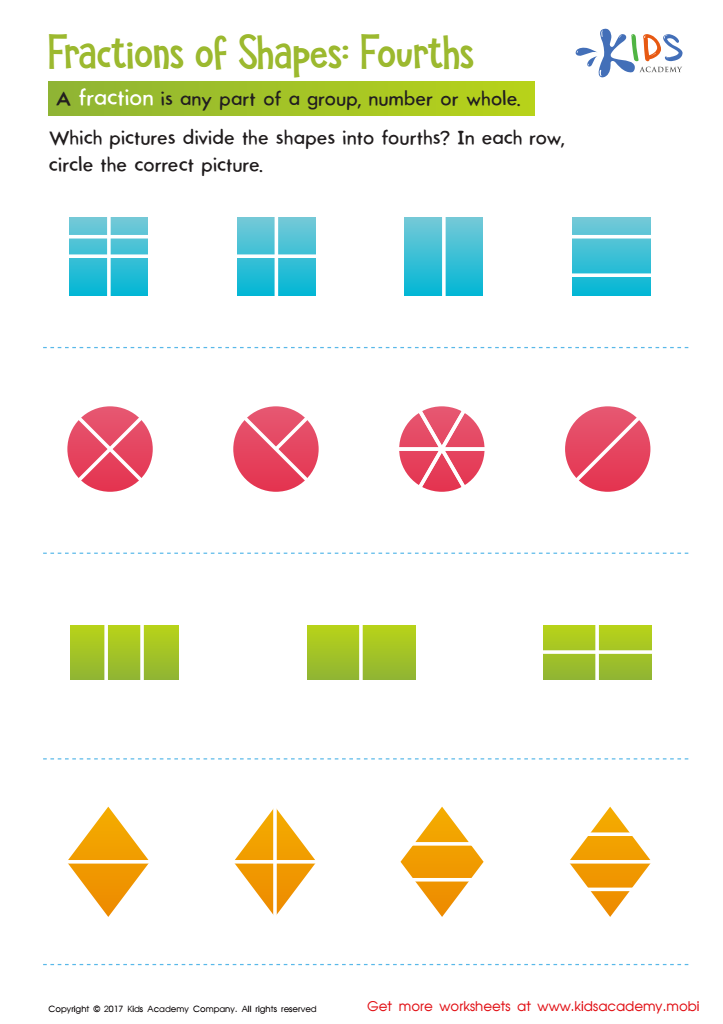
Fractions of Shapes Worksheet
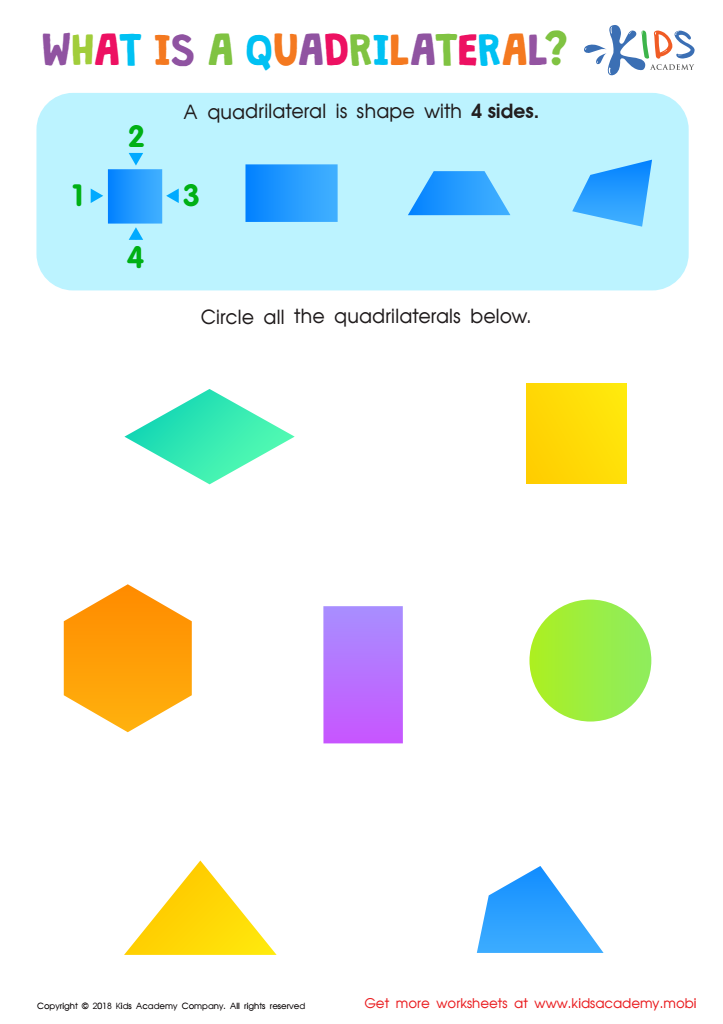
What Is a Quadrilateral? Worksheet








Recognizing shapes and understanding basic geometry are essential skills for children aged 5-8 as they serve as foundational elements for later cognitive development and academic success. At this stage, children's brains are exceptionally receptive to new information and experiences. Learning shapes helps improve their visual-spatial reasoning, a crucial skill not just for geometry, but also for disciplines like science, engineering, and art. Recognizing and categorizing shapes enhances their problem-solving abilities by teaching them to observe, identify patterns, and draw connections between different objects and ideas.
Additionally, geometry's application in daily life cannot be overstated. When children understand shapes, they better navigate the world around them, recognizing objects, understanding maps, and interpreting symbols accurately. Teachers and parents who emphasize shape recognition also support language development by introducing descriptive vocabulary such as sides, corners, and angles.
By engaging in activities focused on shapes, whether through playing with building blocks, drawing, or identifying objects in their environment, children gain satisfaction and confidence in their learning abilities. Lastly, early mastery of basic geometric concepts sets the stage for succeeding in more advanced math and science curricula, fostering a lifelong interest in STEM fields. Therefore, investing time in teaching and reinforcing shape recognition is paramount for a well-rounded and future-ready child.








