Counting skills Graphs Worksheets for Ages 5-8
6 filtered results
-
From - To
Enhance your child's counting skills with our engaging Graphs Worksheets designed for ages 5-8! These colorful and interactive worksheets make learning fun while fostering essential early math concepts. Students will explore counting through various engaging graphs, helping them visualize numbers and patterns effectively. Our carefully crafted activities promote hands-on learning, ensuring your child develops a strong foundation in counting and data interpretation. Perfect for home or classroom use, these worksheets cater to different learning styles and encourage critical thinking. Empower your little learners with essential skills and ignite their love for math with our Counting Skills Graphs Worksheets today!
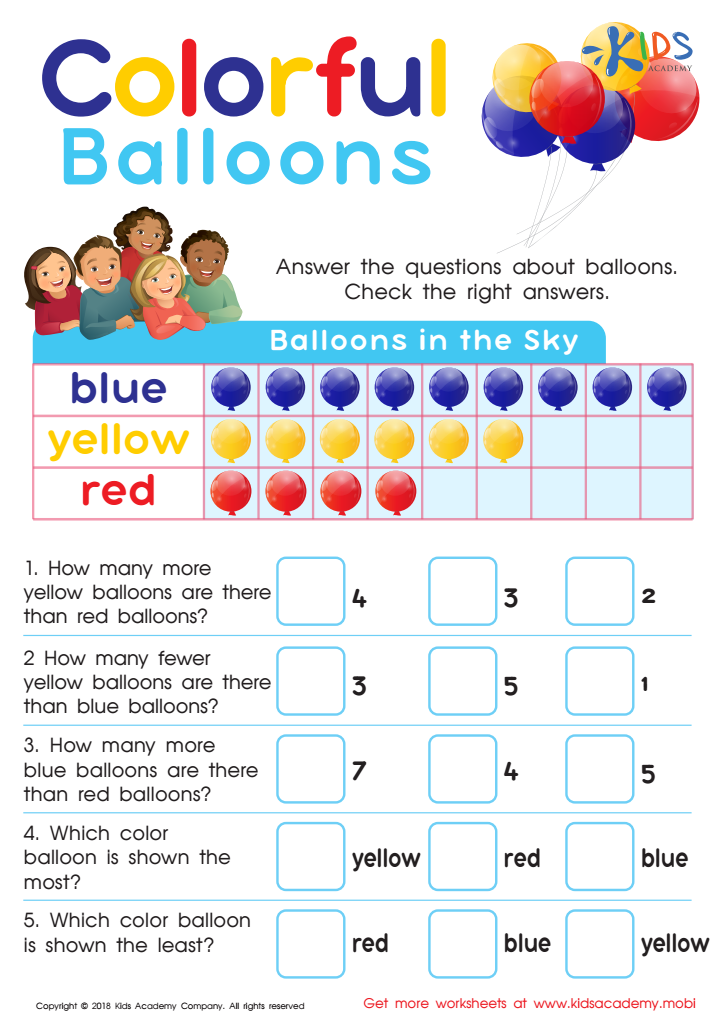
Picture Graphs: Colorful Balloons Worksheet
 Assign to My Students
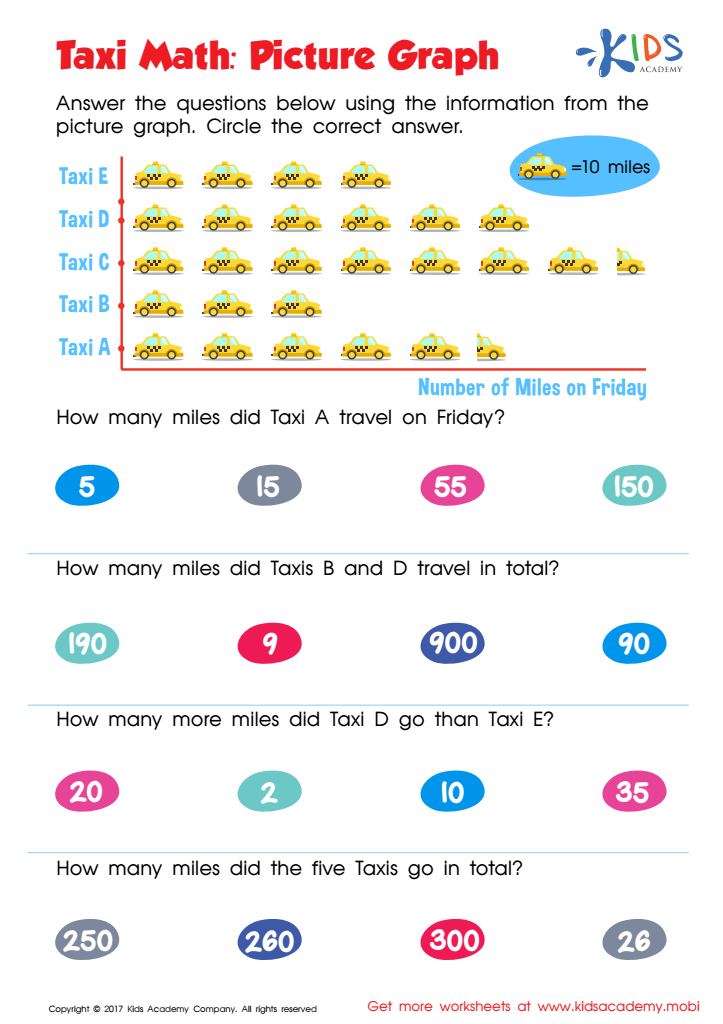
Taxi Math Worksheet
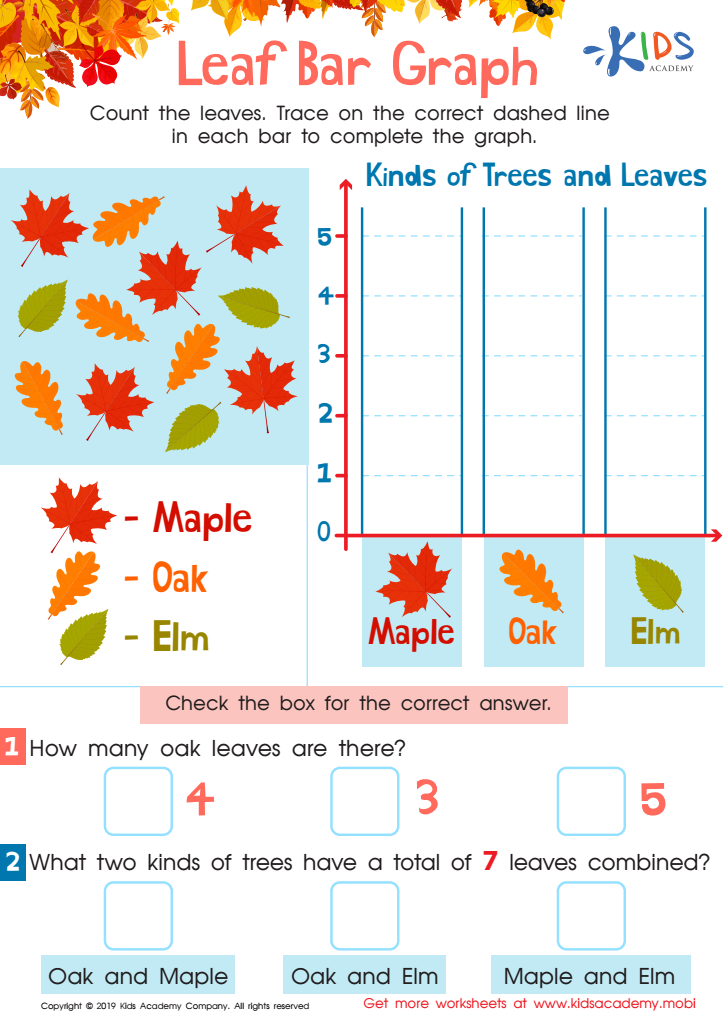
Leaf Bar Graph Worksheet
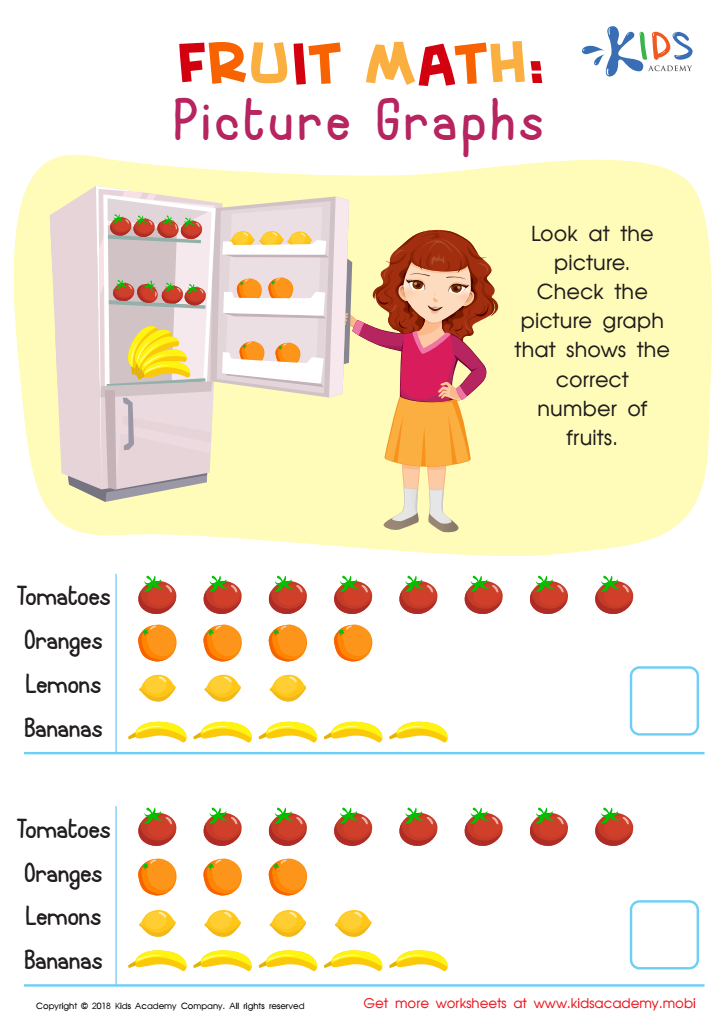
Fruit Math: Picture Graphs Worksheet
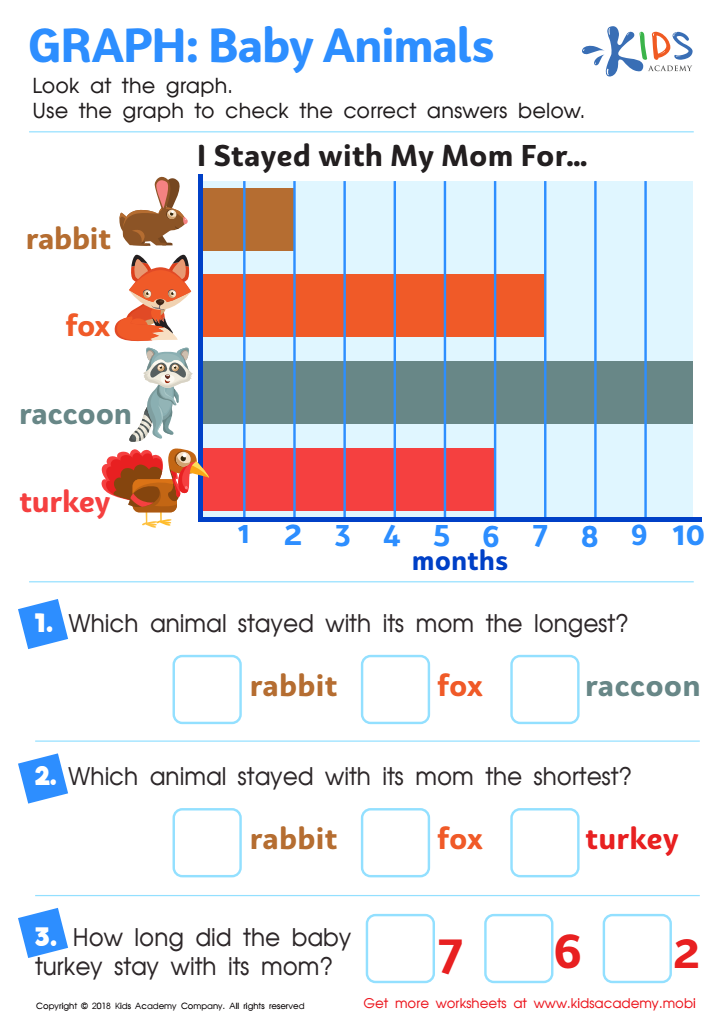
Graph: Baby Animals Worksheet

Aircraft Carrier Picture Graphs Worksheet







Counting skills and familiarity with graphs are foundational components of early mathematics education for children aged 5-8. Teaching kids to count not only instills basic numeracy but also logical thinking and problem-solving abilities that extend far beyond math. When children develop strong counting skills, they gain the confidence to tackle more complex mathematical concepts in later years.
Graphs, on the other hand, introduce children to data interpretation and visual literacy. As they learn to read and create simple charts or graphs, children become adept at organizing information, recognizing patterns, and making comparisons. These skills are vital in a data-driven world where the ability to analyze and interpret information is increasingly essential.
For parents and teachers, fostering counting skills and graph understanding empowers children to make sense of their environment. It encourages active engagement with numbers, boosts critical thinking, and cultivates curiosity about the world around them. This learning also provides a precious opportunity for collaborative, playful experiences between adults and children, such as counting items during a shopping trip or creating graphs based on favorite snacks. Ultimately, nurturing these skills lays the groundwork for academic success and lifelong confidence in engaging with mathematical ideas.








