Interpreting data Graphs Worksheets for Ages 5-8
3 filtered results
-
From - To
Introduce your young learners to the world of data interpretation with our engaging "Interpreting Data Graphs Worksheets for Ages 5-8." Our worksheets are designed to help children develop critical thinking and analytical skills through fun, age-appropriate activities. Kids will learn how to read and analyze bar graphs, pictographs, and more, fostering their ability to make sense of visual information. These worksheets offer a hands-on approach, allowing children to practice and master essential math concepts in an enjoyable way. Perfect for both classroom and home learning, these resources will spark curiosity and build a strong foundation in math and data literacy.
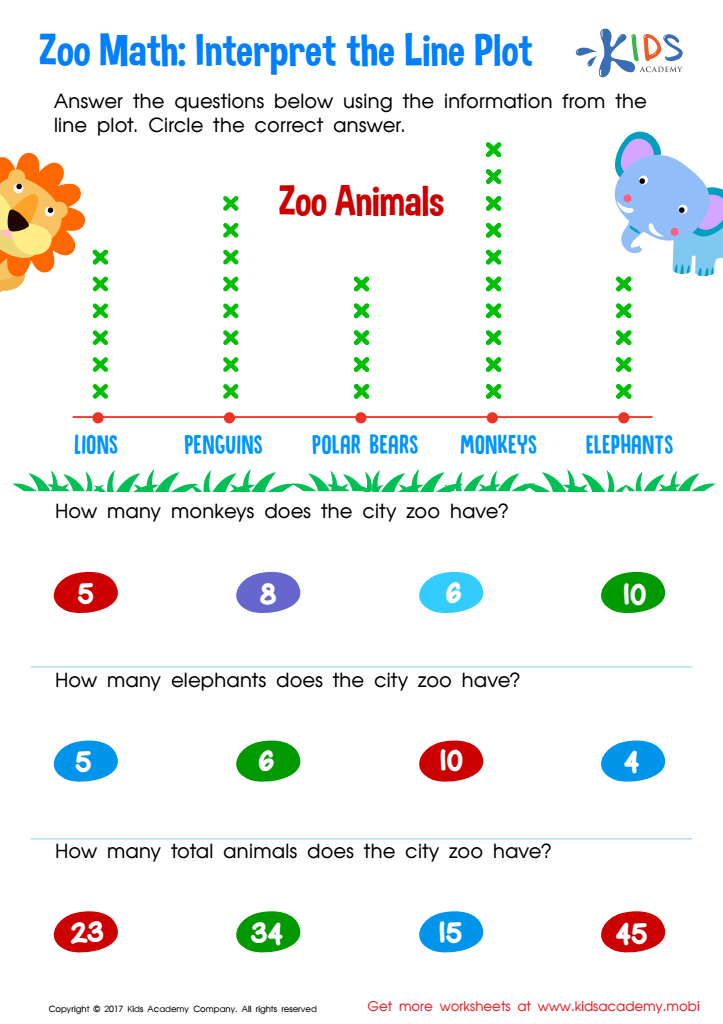
Interpret Line Plot Worksheet
 Assign to My Students
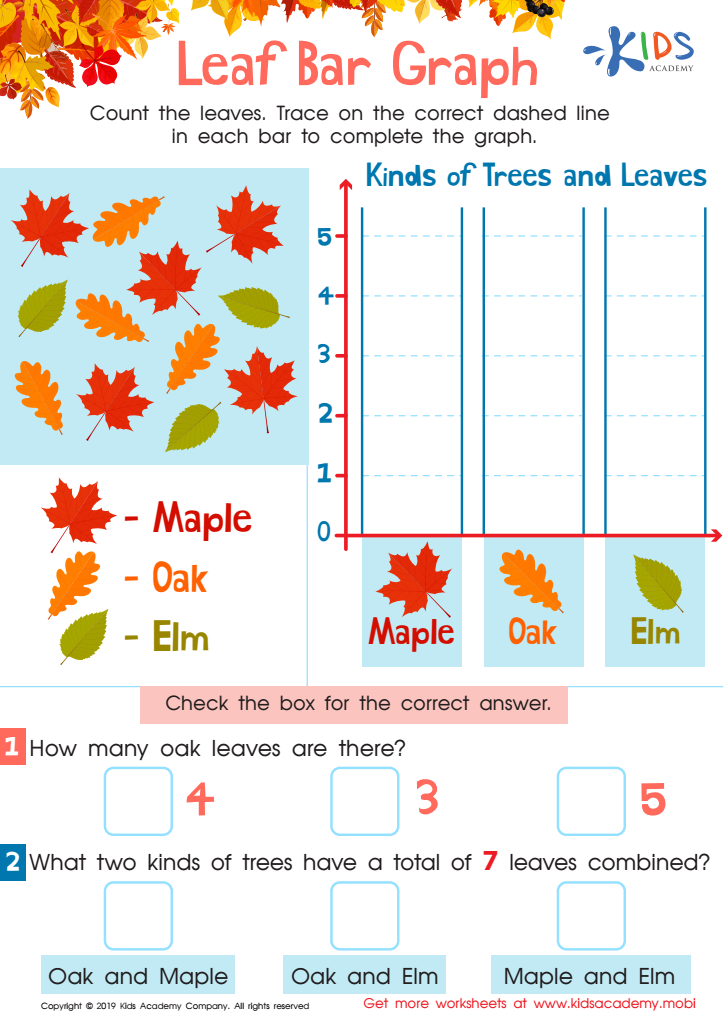
Leaf Bar Graph Worksheet
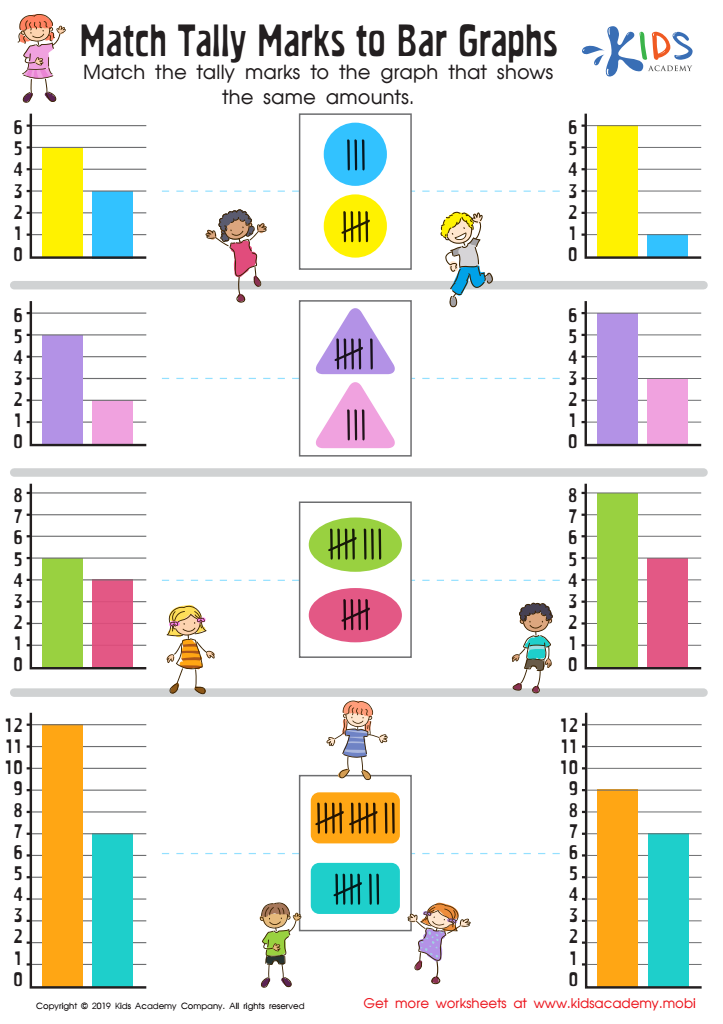
Match Tally Marks to Bar Graphs Worksheet








Interpreting data graphs is an essential skill for young children, ages 5-8, as it lays the foundation for critical thinking, math proficiency, and informed decision-making. At this formative stage, engaging with graphs helps children to visually organize and interpret information, fostering comprehension in both numeric and non-numeric contexts. Parents and teachers who prioritize this skill support the development of logical reasoning and problem-solving abilities, which are crucial for success not only in math but across all subject areas.
From bar charts showcasing favorite fruits to pie charts reflecting daily activities, interpreting these visuals enhances children’s ability to discern patterns, relationships, and trends. These skills are deeply intertwined with the Common Core State Standards in mathematics, ensuring that children are on the right track academically.
Moreover, familiarity with data interpretation encourages students to ask meaningful questions and make evidence-based conclusions, promoting analytical thinking. These abilities are not merely academic; they are life skills that enable children to navigate a data-driven world, making sense of information ranging from household finances to civic duties.
Thus, fostering an early understanding of data graphs empowers children with the tools to make smart decisions and paves the way for future academic and life successes, making it a pertinent focus for educators and parents alike.








