Pattern recognition Numbers Worksheets for Ages 5-8
5 filtered results
-
From - To
Enhance your child’s math skills with our engaging "Pattern Recognition Numbers Worksheets for Ages 5-8". Specially designed by educational experts, these worksheets help young learners identify and complete number patterns, bolster critical thinking, and improve problem-solving abilities. Through fun and colorful activities, children will practice sequencing and develop a strong foundation in early math concepts. Perfect for use at home or in the classroom, these worksheets cater to Kindergarten to 2nd grade students, making learning numbers exciting and interactive. Equip your child with essential pattern recognition skills that pave the way for future success in mathematics.
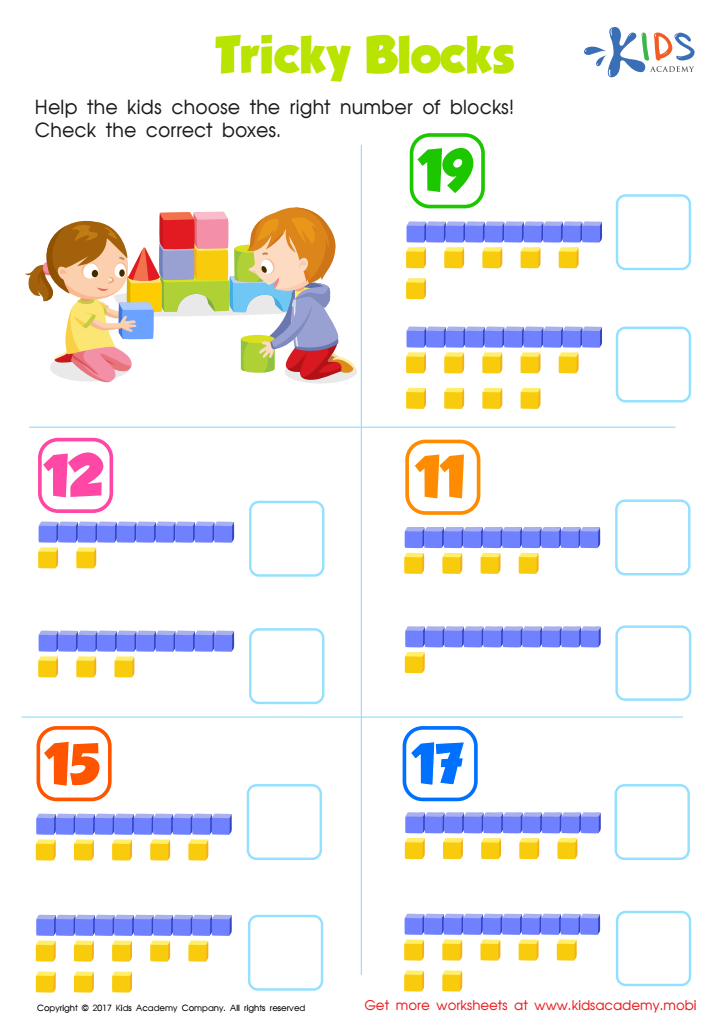
Tricky Blocks Worksheet
 Assign to My Students
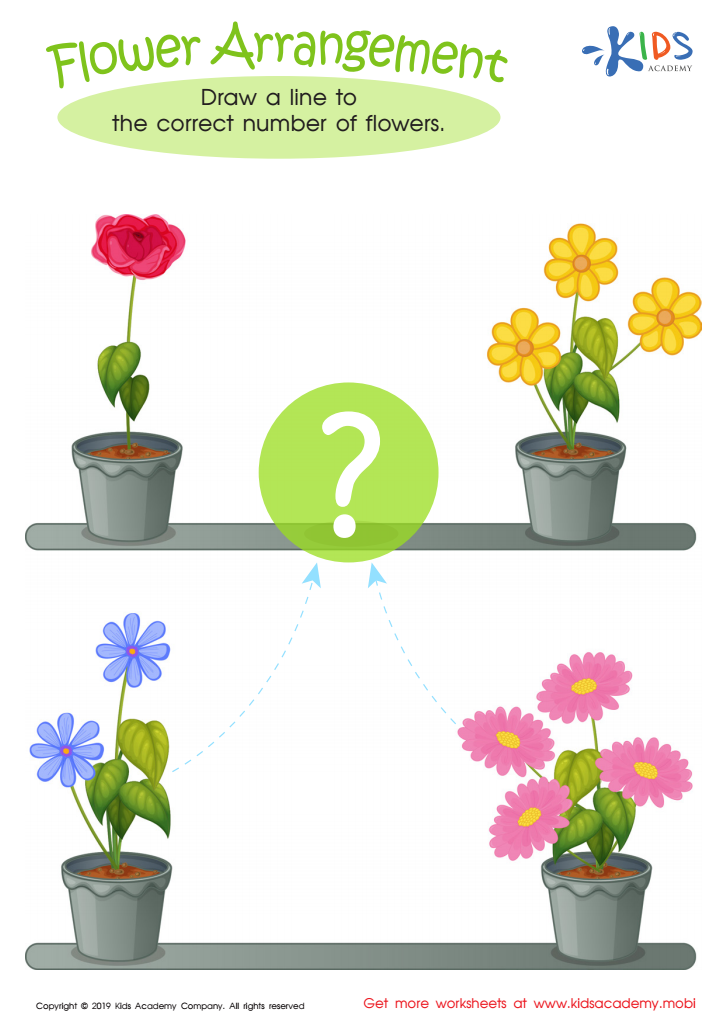
Flower Arrangement Worksheet
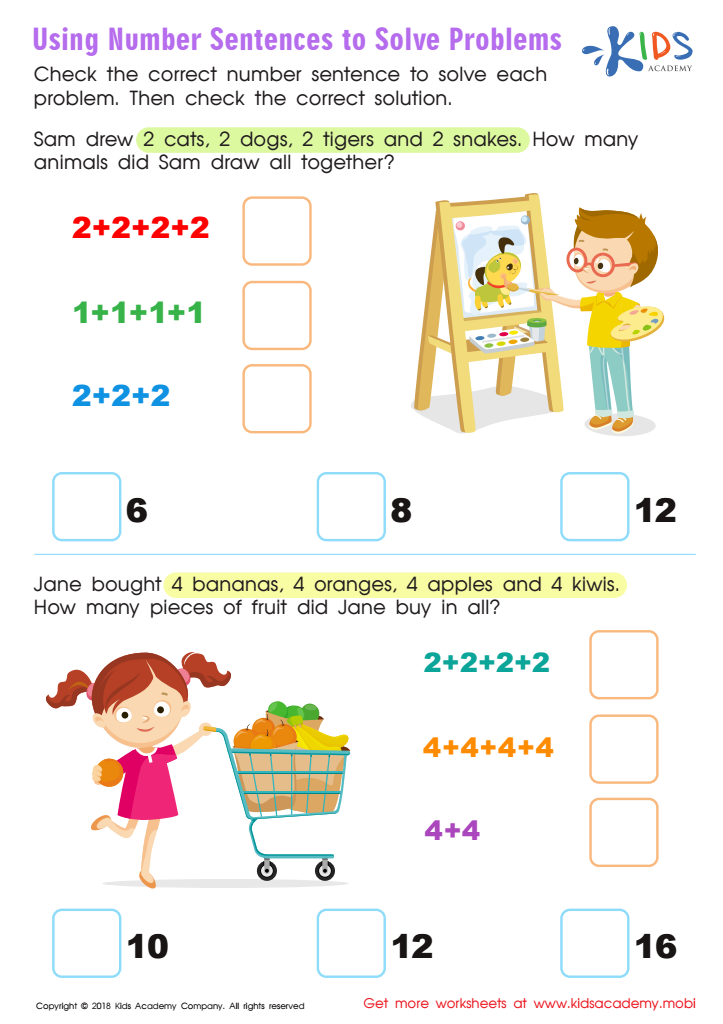
Using Number Sentences to Solve Problems Worksheet
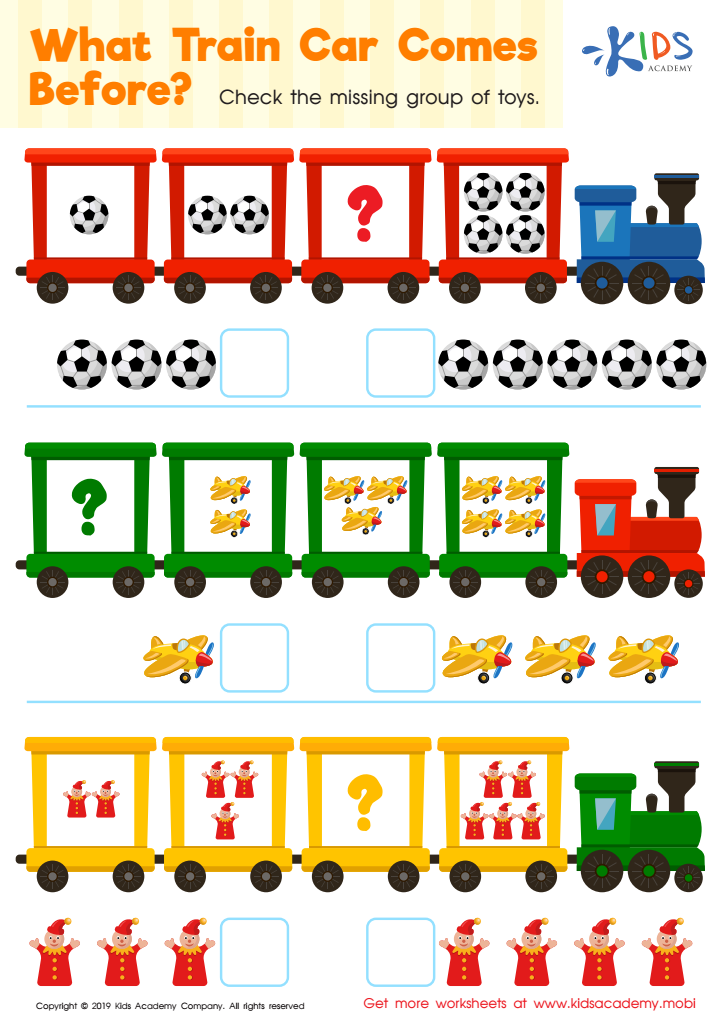
What Train Car Comes Before? Worksheet
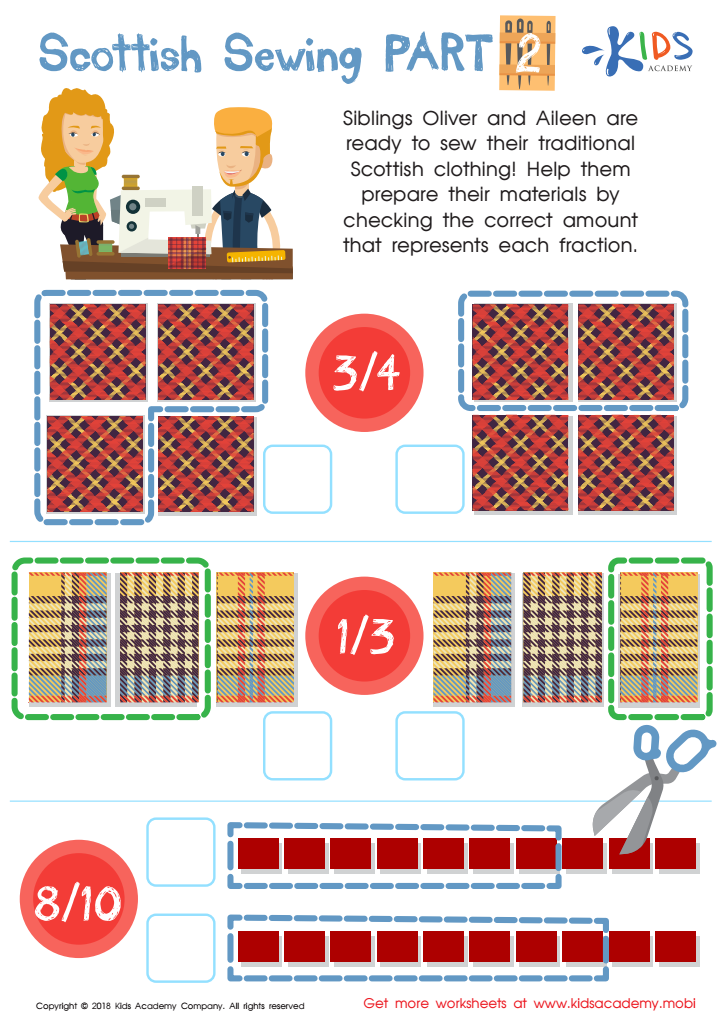
Scottish Sewing Part 2 Worksheet








Pattern recognition is a foundational skill critical for young children's cognitive development, particularly in the crucial age range of 5-8 years. At this developmental stage, children's brains are highly receptive to recognizing and discerning patterns, a skill that significantly impacts their mathematical thinking, vocabulary acquisition, and problem-solving abilities.
Firstly, understanding number patterns helps children grasp fundamental math concepts such as addition, subtraction, and the ability to predict sequences. Early competence in these areas sets the stage for more complex arithmetic and algebraic concepts in later years, making math feel more intuitive and less daunting.
Secondly, pattern recognition nurtures logical thinking and analytical skills. When children learn to identify and extend number patterns, they engage in practices like hypothesis testing, identifying consistencies, and foreseeing outcomes—cognitive skills that are valuable across all academic subjects and in everyday life.
Thirdly, incorporating pattern recognition activities in early education also enhances memory and concentration. Following numerical sequences or visual patterns requires focus, helping young learners strengthen their ability to pay sustained attention to tasks.
For parents and teachers, fostering pattern recognition entails more than just bolstering academic skills but also catalyzes intellectual curiosity and confidence. Utilizing engaging activities such as games, puzzles, and hands-on experimentation can make learning both effective and enjoyable. This holistic approach not only benefits children's current educational progression but also lays a robust foundation for lifelong learning and problem solving.








