
Addition up to 5 Math Worksheets for Ages 5-8
4 filtered results
Difficulty Level
Grade
Age
-
From - To
Subject
Activity
Standards
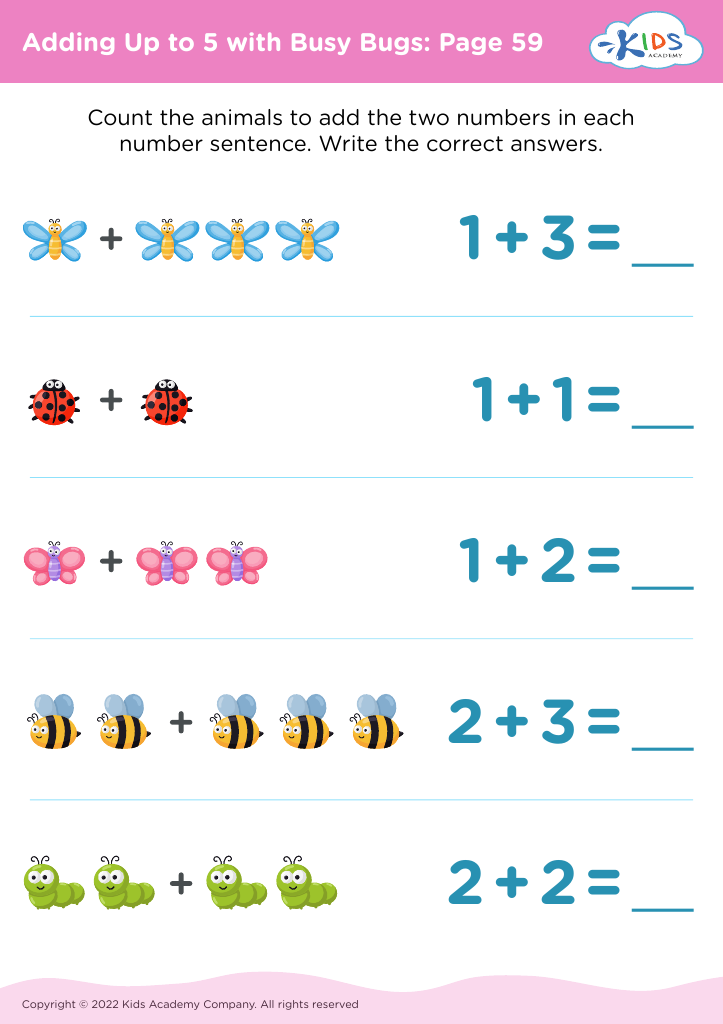
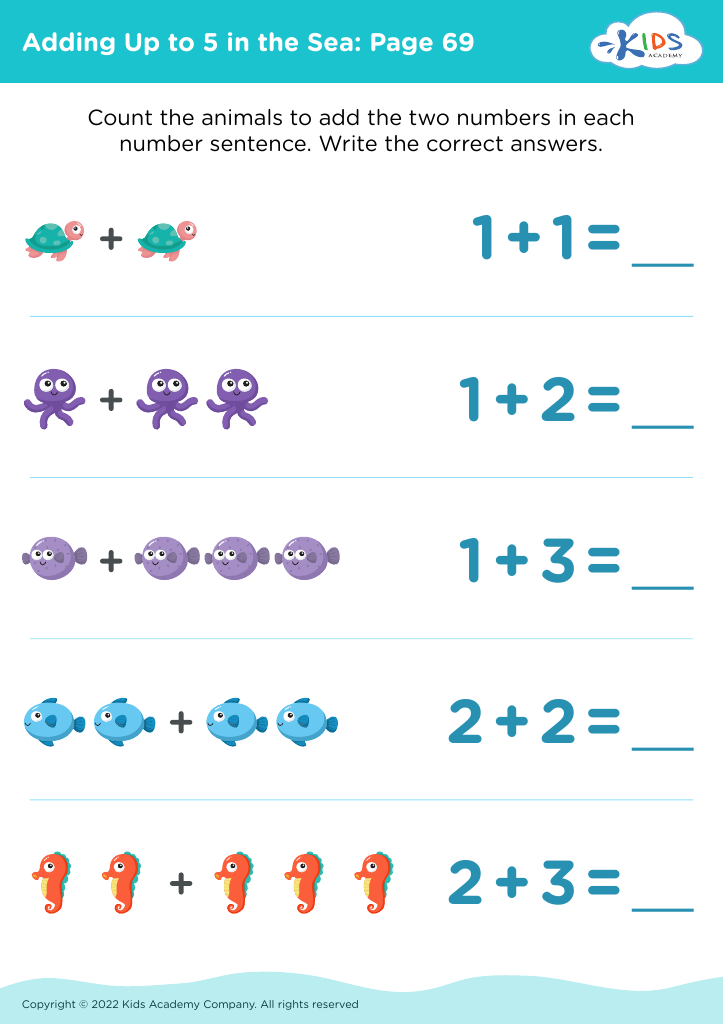
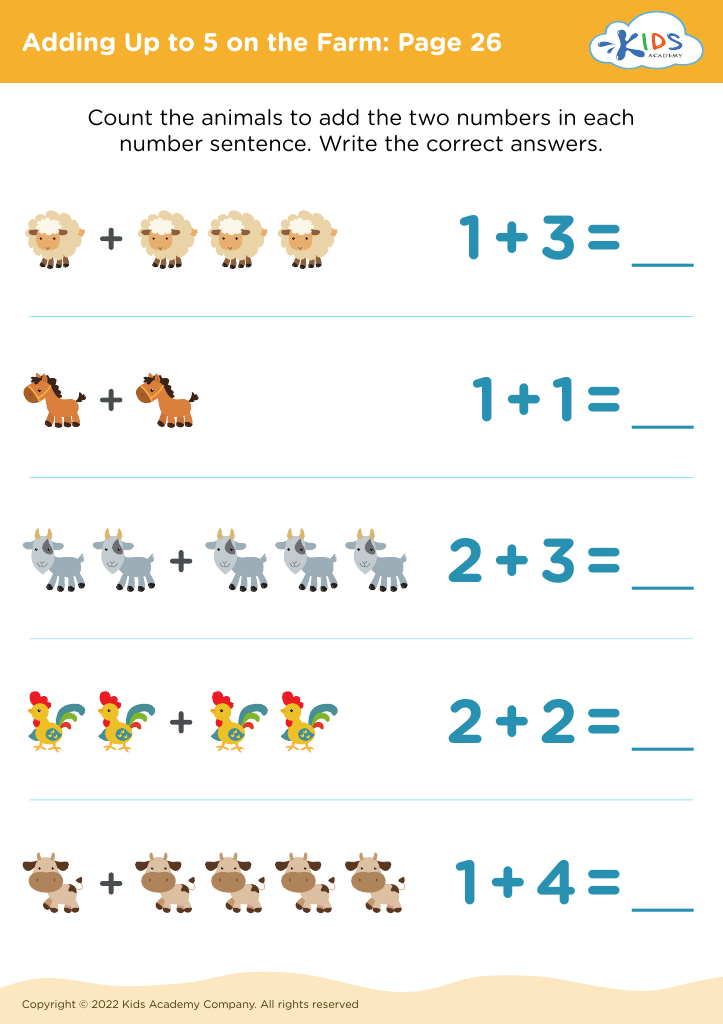
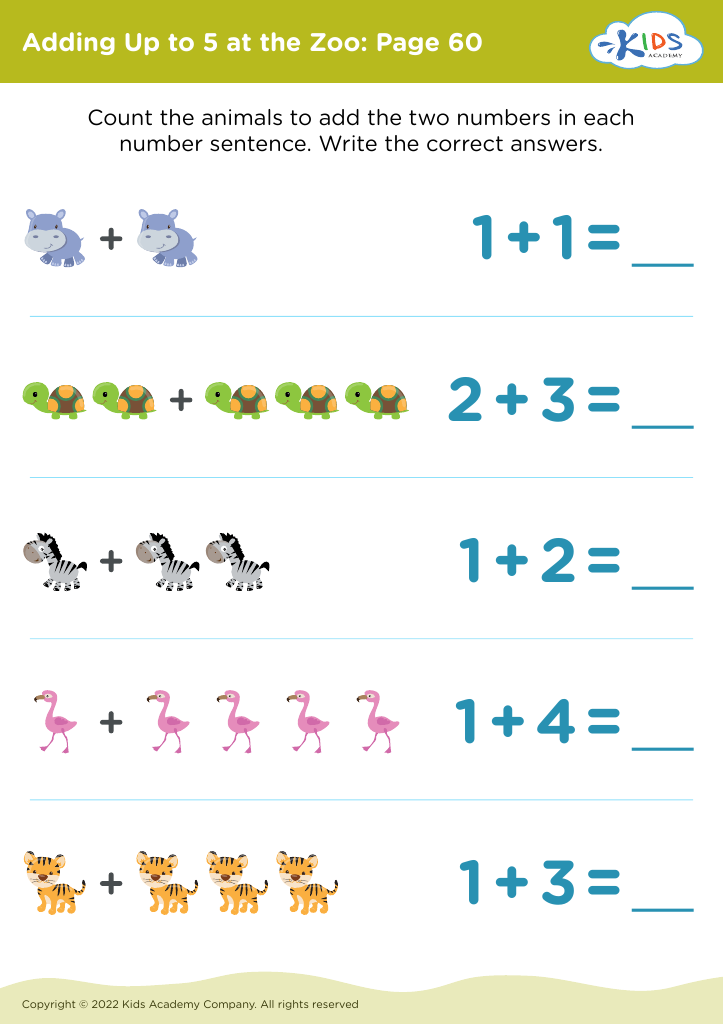
Welcome to our "Addition up to 5 Math Worksheets" page, designed specifically for children ages 5-8. These engaging worksheets introduce young learners to the fundamental concept of addition with numbers up to 5, fostering both understanding and confidence in early math skills. Each worksheet features colorful illustrations and fun exercises that capture children’s interest while providing essential practice. Perfect for classroom use or home learning, these resources help develop counting, number recognition, and simple addition skills in an enjoyable way. Start your child’s math journey today with our interactive, printable worksheets that make learning fun and effective!
Favorites
With answer key
Interactive
Join Kids Academy for Free
Who is primarily going to use this learning content?






.jpg)
Parents and teachers should prioritize teaching Addition up to 5 for children aged 5-8 because it serves as a foundational skill that supports overall mathematical development. Mastery of addition lays the groundwork for more complex mathematical concepts in the future. At this age, children are developing crucial problem-solving skills, and simple addition provides opportunities to practice logical thinking.
Additionally, early exposure to addition fosters number sense—a vital skill that allows children to understand the relationships between numbers and the world around them. By engaging with numbers up to 5, children can also enhance their counting abilities, improve their cognitive skills, and gain confidence in their mathematical capabilities.
Engaging in addition activities helps develop fine motor skills too, especially when using counters, fingers, or drawings. Moreover, making math relatable through everyday activities encourages a positive attitude towards learning.
Lastly, frequent practice at home and school solidifies these addition concepts, ensuring children are prepared for more advanced math challenges. Thus, mastering addition up to 5 not only promotes academic success but also enriches children's integral life skills and self-esteem.








