Basic geometry concepts Math Worksheets for Ages 5-8
3 filtered results
-
From - To
Introducing our Basic Geometry Concepts Math Worksheets for Ages 5-8, designed to make learning fun and effective for young minds. Tailored specifically for early graders, these worksheets cover essential geometry skills such as shapes, patterns, angles, and spatial understanding. Each activity is crafted to build a solid foundation in mathematics while engaging children through colorful illustrations and simple instructions. Perfect for classroom use or at-home practice, these printable worksheets will boost mathematical confidence and skills. Visit Kids Academy to explore our comprehensive collection and turn geometry into an exciting adventure for your child!
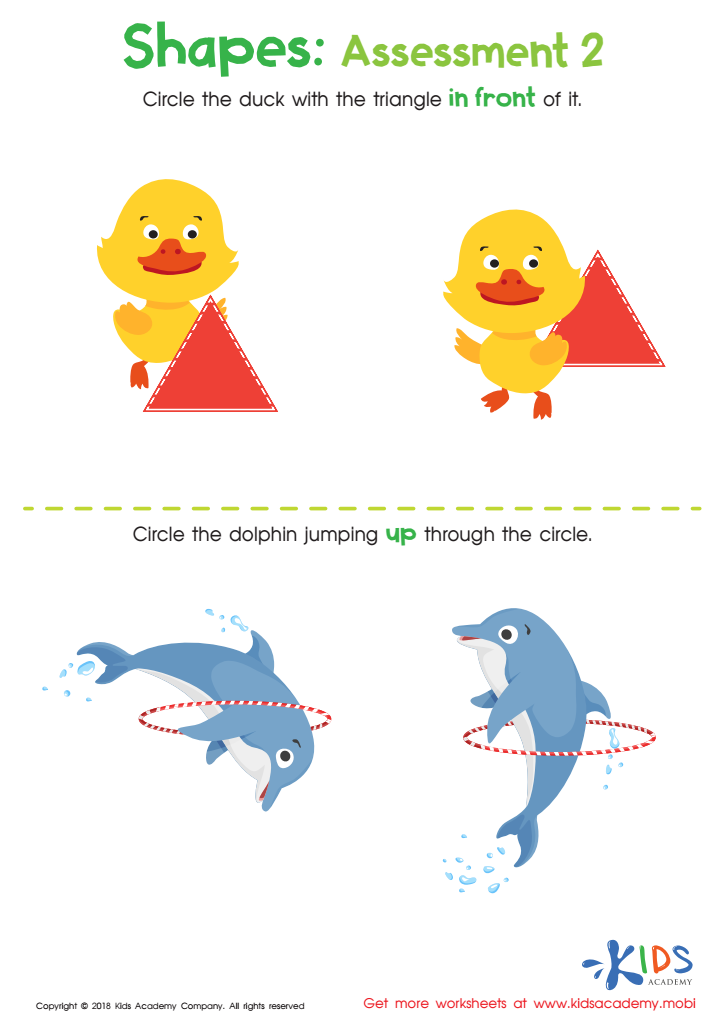
Geometry – Assessment 2 Worksheet
 Assign to My Students
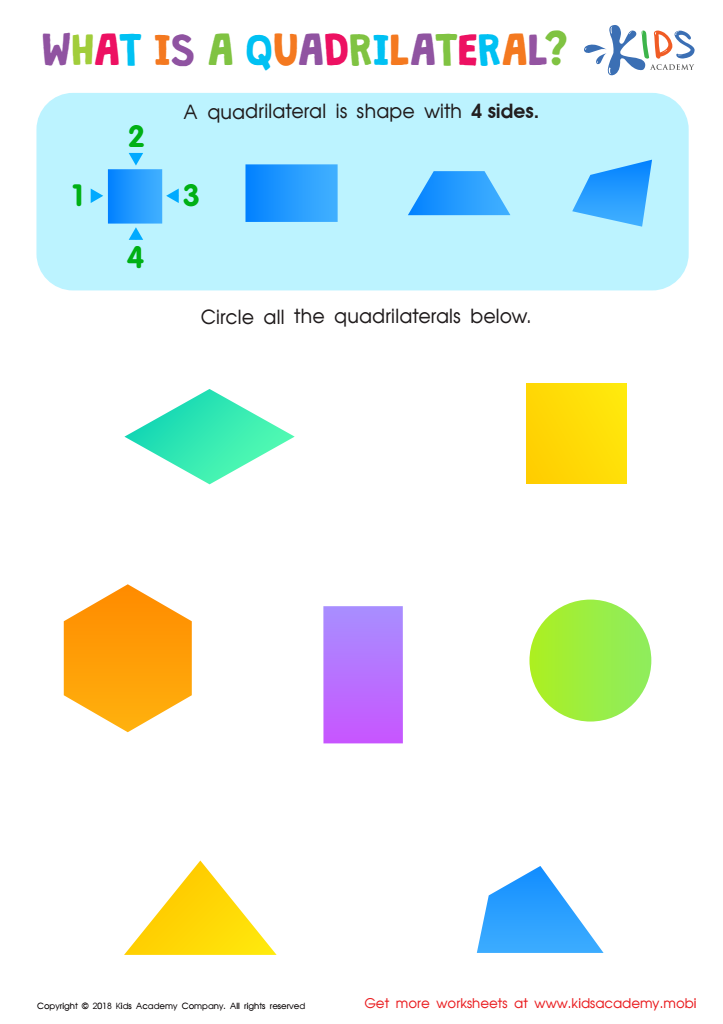
What Is a Quadrilateral? Worksheet








Basic geometry concepts are critical for children ages 5-8 because they lay the foundational building blocks for future mathematics and improve spatial thinking and problem-solving skills. Understanding shapes, sizes, patterns, and spatial relationships helps children make sense of the world around them. For instance, recognizing different shapes and their properties can aid in everyday tasks, from completing jigsaw puzzles to organizing their room.
Moreover, early exposure to geometry enhances children’s ability to think abstractly and logically. As they learn to differentiate between shapes like squares, triangles, and circles, they begin to process information systematically and recognize patterns, fostering cognitive development.
Additionally, blending geometry with other subjects, such as art, encourages creativity and helps solidify these concepts. Coloring shapes, cutting out forms, or building with blocks integrates spatial awareness with hands-on activities, making learning both effective and enjoyable.
For parents and teachers, focusing on basic geometry prepares kids for more advanced mathematical concepts they will encounter later in education, such as algebra and calculus. Beyond academic benefits, these skills are practical in daily life, thus empowering children with confidence, curiosity, and critical thinking abilities essential for lifelong learning and success.








