
Counting money Math Worksheets for Ages 5-8
3 filtered results
Difficulty Level
Grade
Age
-
From - To
Subject
Activity
Standards
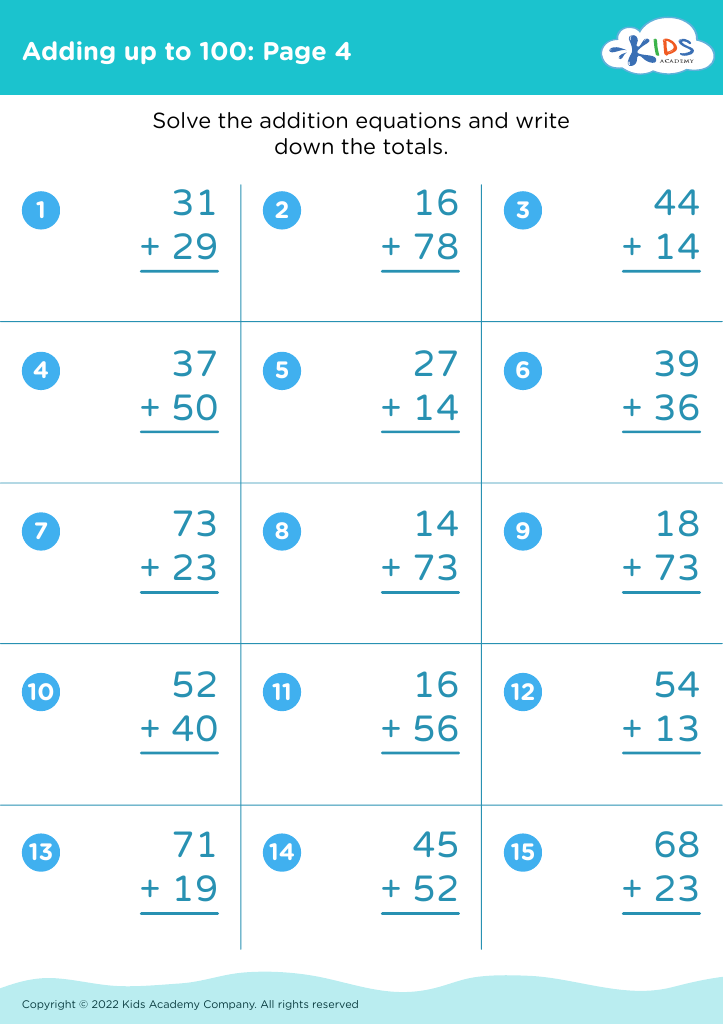
Looking to enhance your child's money-counting skills? Our Counting Money Math Worksheets for Ages 5-8 are the perfect tool! These engaging and interactive worksheets help young learners grasp the fundamental concepts of counting coins and bills. By practicing with real-life scenarios, kids develop essential financial literacy and improve their math skills through hands-on activities. Ideal for kindergarten through 2nd grade, these worksheets make learning fun and accessible for everyone. Suitable for classroom use or at-home practice, give your child the confidence to handle money smartly and become a math whiz in no time!
Favorites
With answer key
Interactive
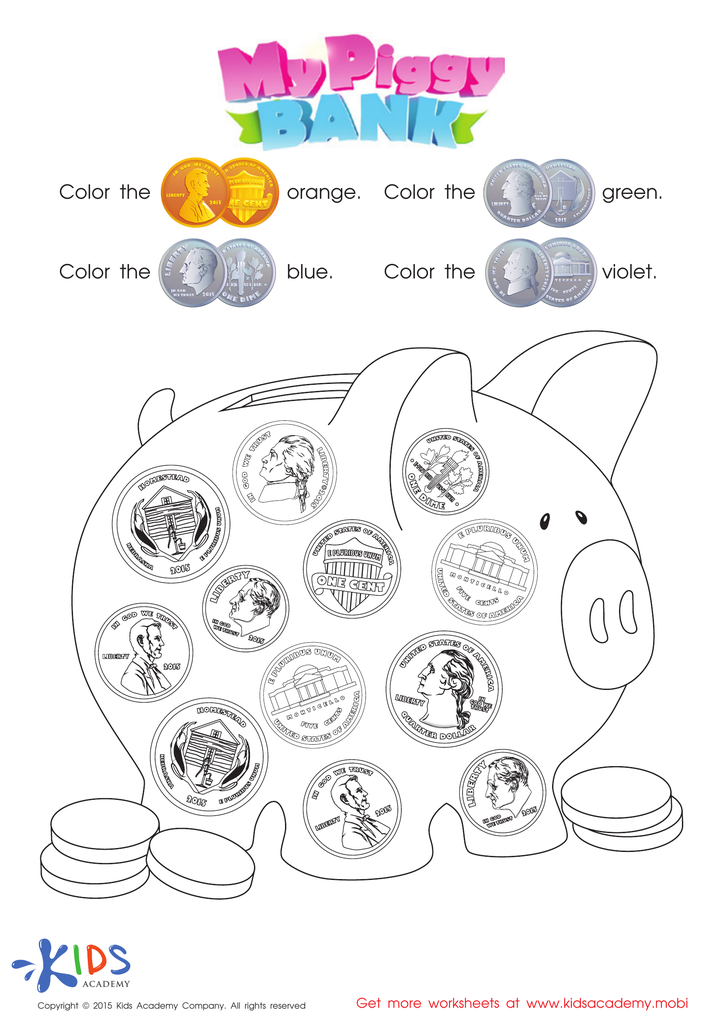
Recognizing Money Money Worksheet
Help the piggy bank by coloring its coins with Kids Academy's free money worksheets! Learn the different coins and their values with your kids. Printable worksheets are available to continue the lesson. Let's learn and have fun!
Recognizing Money Money Worksheet
Worksheet
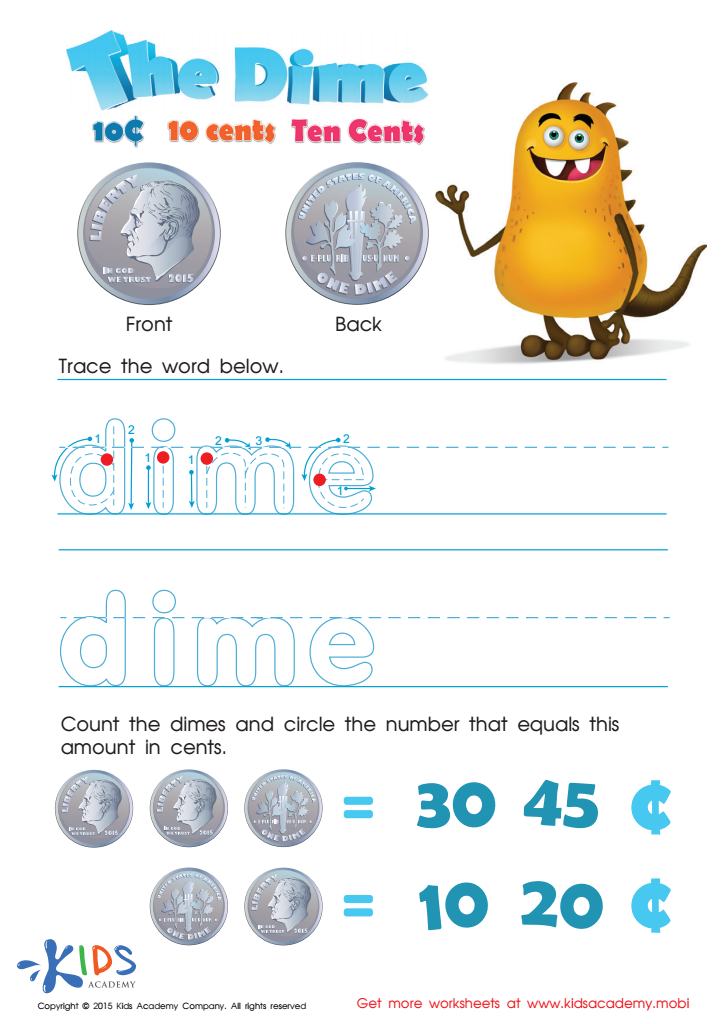
Ten Cents or the Dime Money Worksheet
Introduce your kids to coin games! Start with a dime: trace the word on both sides and count the dimes. Kids Academy has printable worksheets to help your kids learn how to count money.
 Assign to My Students
Ten Cents or the Dime Money Worksheet
Worksheet
Join Kids Academy for Free
Who is primarily going to use this learning content?


%20(1).jpg)





Counting money is a crucial skill for children aged 5-8 because it combines fundamental math concepts with real-world applications. At this developmental stage, children are beginning to grasp more complex numeric systems, and learning to count money builds a strong foundation for their future financial literacy.
Firstly, counting money enhances basic arithmetic skills. Children practice addition, subtraction, multiplication, and division as they identify and sum up coins and bills. This not only strengthens their computation skills but also improves their number recognition and sequencing abilities.
Secondly, counting money teaches essential problem-solving and critical-thinking skills. Real-life scenarios, such as making purchases or receiving change, require kids to analyze situations, make estimations, and quickly arrive at correct solutions. These experiences help children become more confident and independent thinkers.
Additionally, early exposure to money concepts fosters a sense of responsibility and financial awareness. Understanding the value of money, budgeting, and saving are fundamental life skills that contribute to wiser financial decision-making in the future.
Finally, counting money is engaging and interactive, providing children with hands-on learning opportunities. This practical approach makes math enjoyable and accessible, encouraging a positive attitude toward learning and continued academic success.
For parents and teachers alike, investing in these foundational skills can have a lasting impact on a child's educational journey and everyday life.








