Enhance vocabulary skills Math Worksheets for Ages 5-8
5 filtered results
-
From - To
Unlock the power of words with our engaging Enhance Vocabulary Skills Math Worksheets, designed specifically for children aged 5-8. These worksheets seamlessly combine math concepts with vocabulary enhancement, helping young learners build both their mathematical foundation and language skills. Children will explore essential terms and definitions in a fun and interactive way, reinforcing their understanding through various activities. Perfect for classroom use or homeschooling, these printable resources are aligned with early learning standards. Encourage curiosity and confidence in your child's learning journey with our delightful math worksheets that transform vocabulary building into an exciting adventure! Start enhancing your child’s skills today!
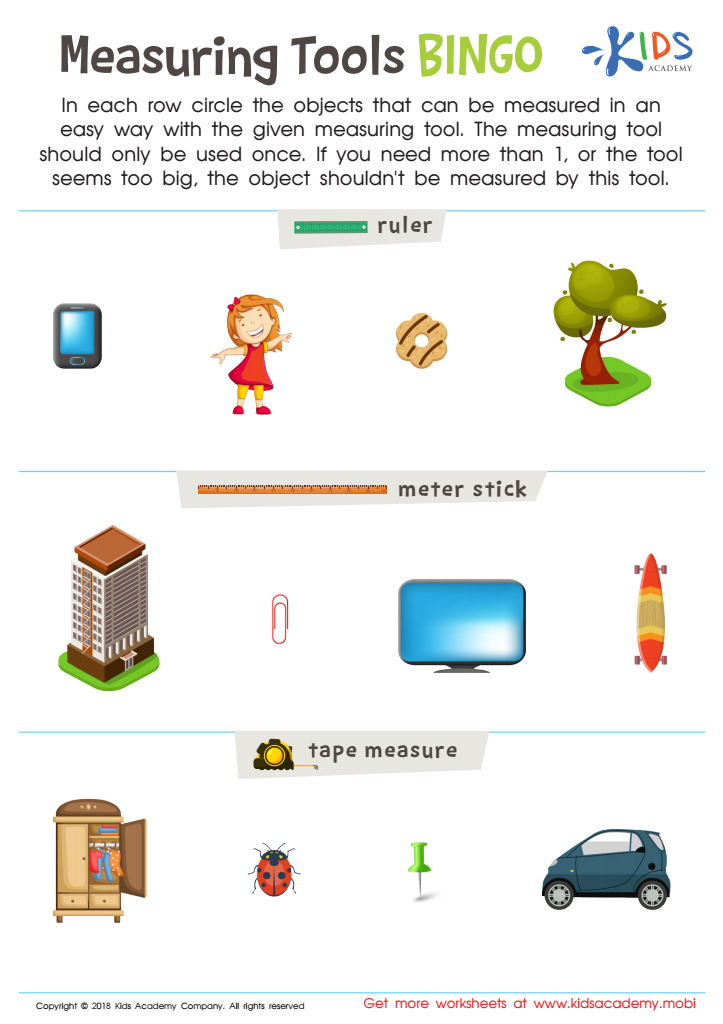
Measuring Tools Bingo Worksheet
 Assign to My Students







Enhancing vocabulary skills in math for young learners aged 5-8 is crucial for a variety of reasons. First, a rich mathematical vocabulary enables children to articulate their thoughts and understanding more clearly, fostering deeper comprehension of concepts such as addition, subtraction, shapes, and measurements. When children can use terms like “capacity,” “difference,” or “parallel,” they engage more fully in lessons, encouraging active participation and critical thinking.
Moreover, strong vocabulary skills help children make connections between math and everyday life. When they understand and can use financial terms or spatial language, they better grasp how math applies beyond the classroom, making the subject more relevant and engaging. This real-world connection can also boost their confidence as they tackle new problems.
Additionally, a robust vocabulary can help lessen math anxiety. Students who can articulate what they are learning are more likely to ask questions and seek help when needed, which is vital for their academic growth. Parents and teachers, therefore, should prioritize vocabulary development within math to ensure students not only succeed academically but also develop a lifelong interest in learning. Investing in vocabulary skills now lays a foundation for critical thinking and problem-solving abilities necessary in all areas of life.








