Following directions Math Worksheets for Ages 5-8
3 filtered results
-
From - To
Explore our "Following Directions Math Worksheets for Ages 5-8," designed to enhance young learners' math skills while promoting critical-thinking abilities. These engaging worksheets will guide children through fun activities that require careful attention to instructions, helping them develop essential skills in problem-solving and comprehension. With a variety of topics and exercises, including shape identification, counting, and simple equations, each worksheet encourages active participation and boosts confidence in math. Perfect for home or classroom use, our resources support early education and make learning an enjoyable experience. Empower your little ones to master math by emphasizing the importance of following directions in every task!
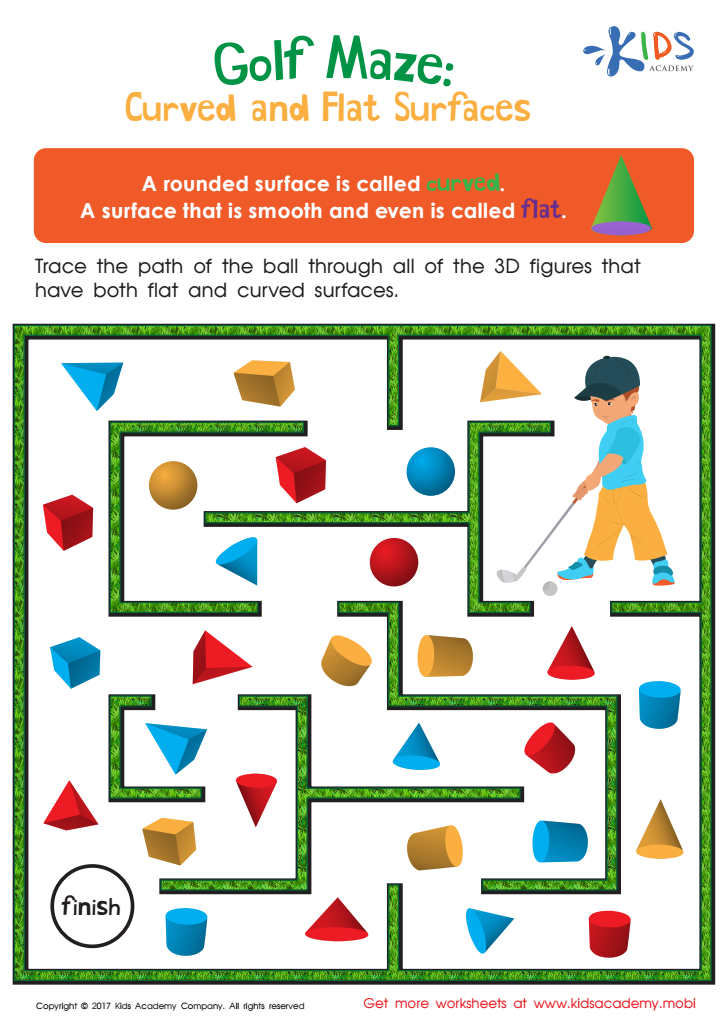
Golf Maze: Curved and Flat Surfaces Worksheet
 Assign to My Students
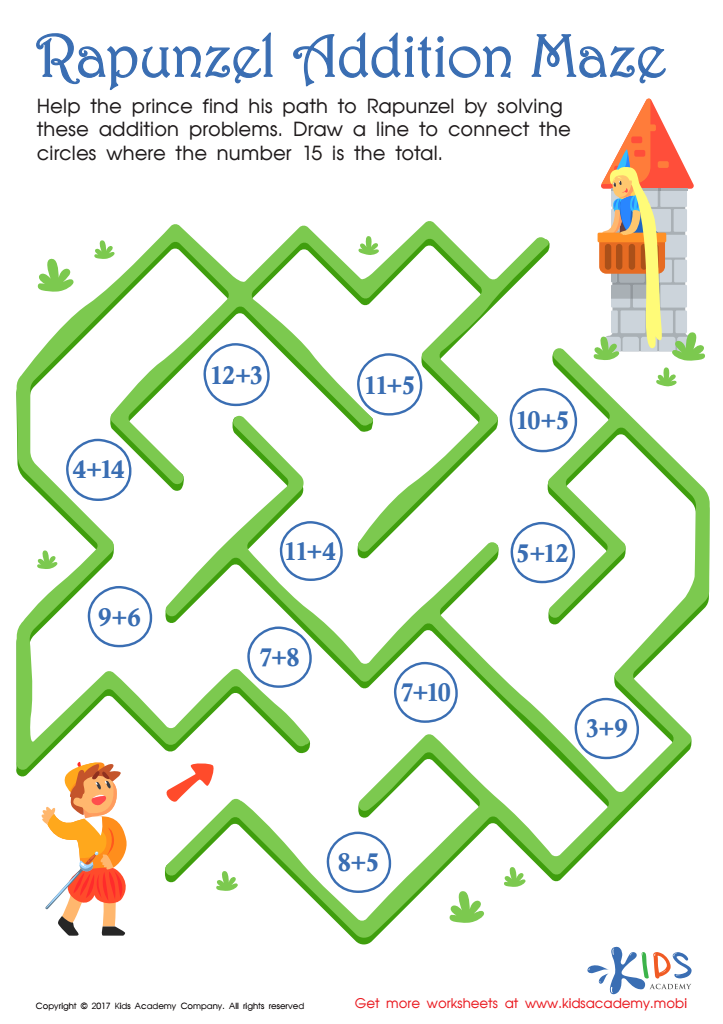
Rapunzel Addition Maze Worksheet
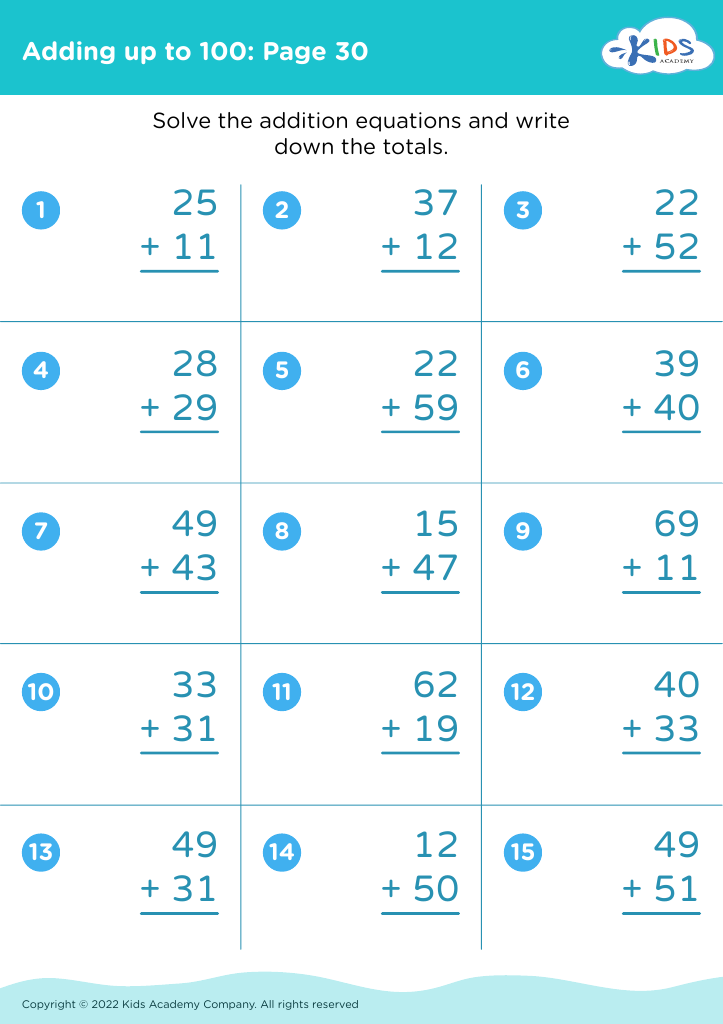








Following directions in math is crucial for children aged 5-8, as it lays the foundation for their academic success and life skills. At this stage, children are developing their cognitive and problem-solving abilities, and understanding how to follow directions in math helps them navigate complex tasks, enhances their critical thinking, and builds their confidence.
When children learn to follow directions, they become more proficient in understanding mathematical concepts such as addition, subtraction, shapes, and measurements. This capability not only aids in accurate problem-solving but also fosters their ability to focus and stay engaged in classroom activities. Parents and teachers should emphasize this skill because it encourages active listening, reading comprehension, and the ability to work independently—skills that are not only valuable in math but across all subjects.
Moreover, learning to follow directions can lead to better classroom behavior and reduced frustration, promoting a positive learning environment. By prioritizing this skill, parents and teachers can help children recognize the importance of clear instructions, paving the way for lifelong learning and success in various areas of life. Ultimately, understanding how to systematically approach tasks can significantly impact a child's overall development.








