Check out this FREE Trial Lesson on Math for age 5-8!

L

Favorites
With answer key
Interactive
  • 5-8
  • Fraction simplification
  • Math
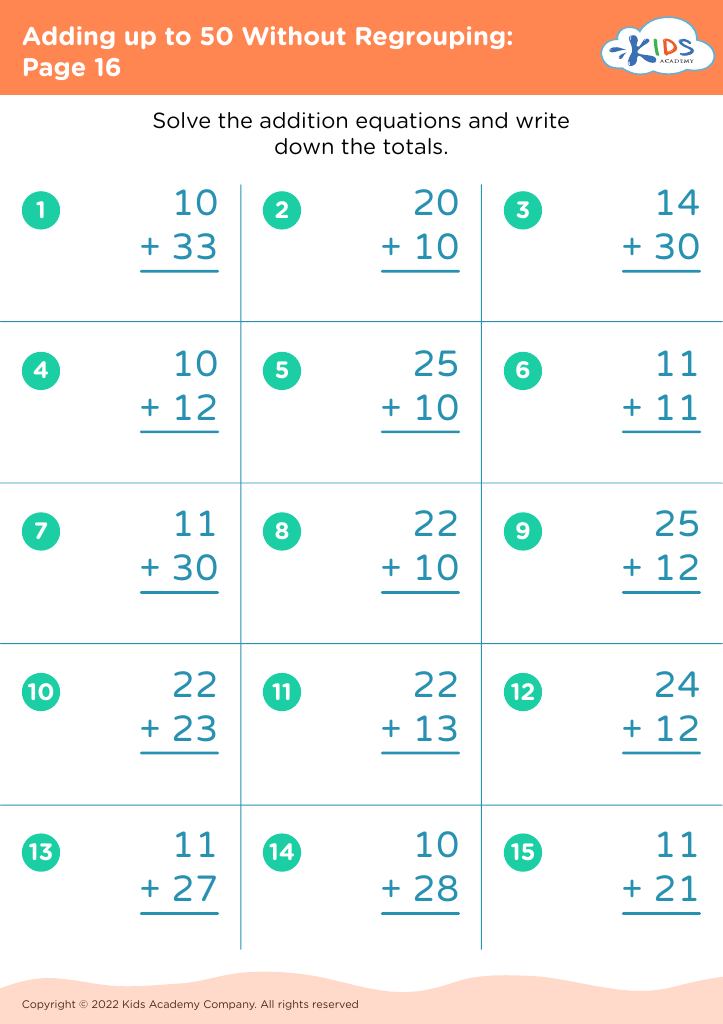
Adding up to 50 Without Regrouping: Page 16
Worksheet
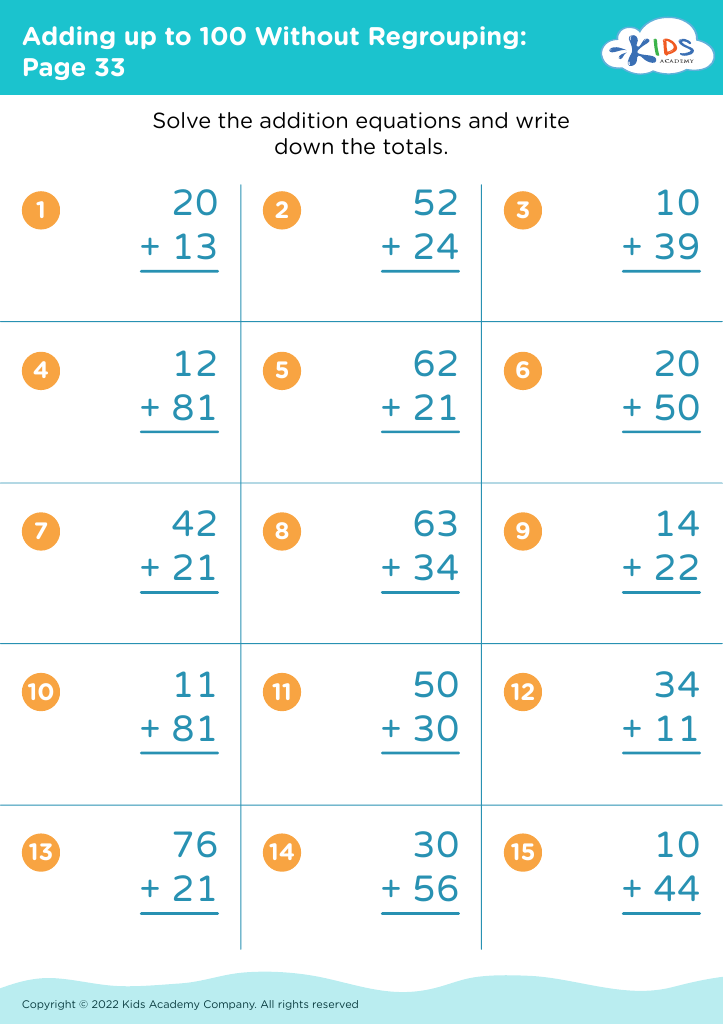
Adding up to 100 Without Regrouping: Page 33
Worksheet
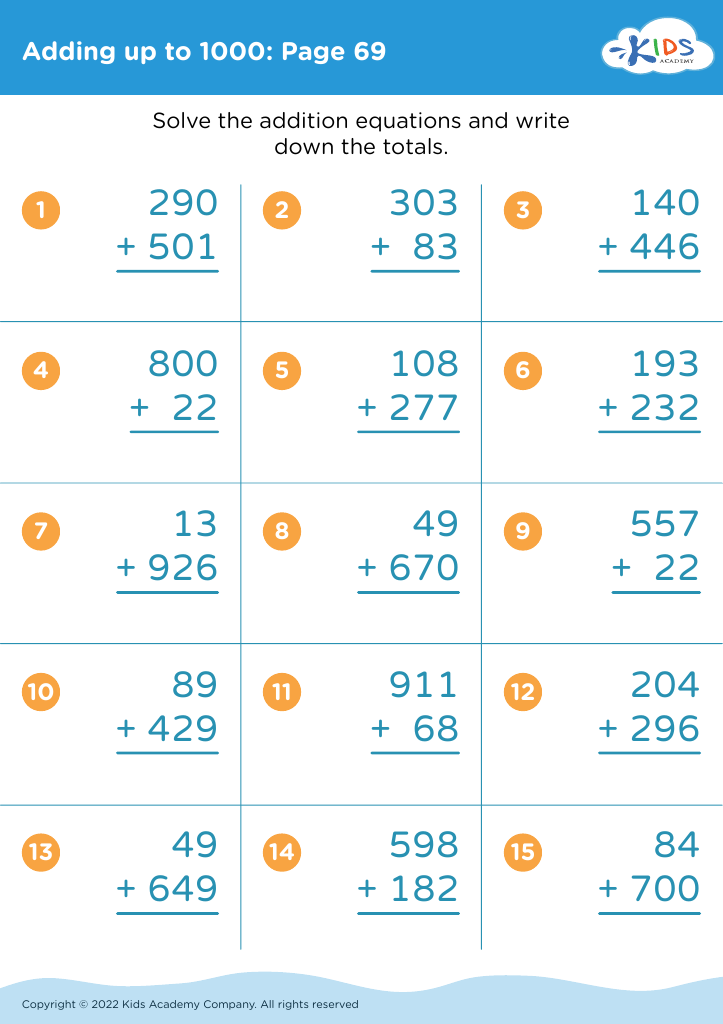
Adding up to 1000: Page 69

Adding up to 1000: Page 69

Adding up to 1000: Page 69
Worksheet
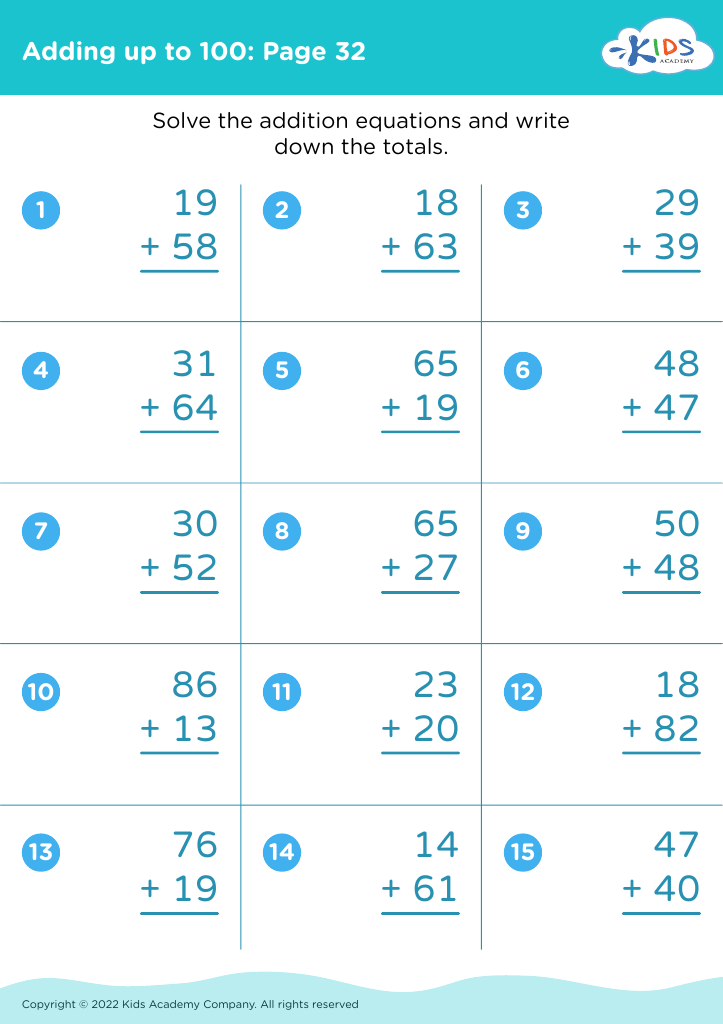
Adding up to 100: Page 32

Adding up to 100: Page 32

Adding up to 100: Page 32
Worksheet
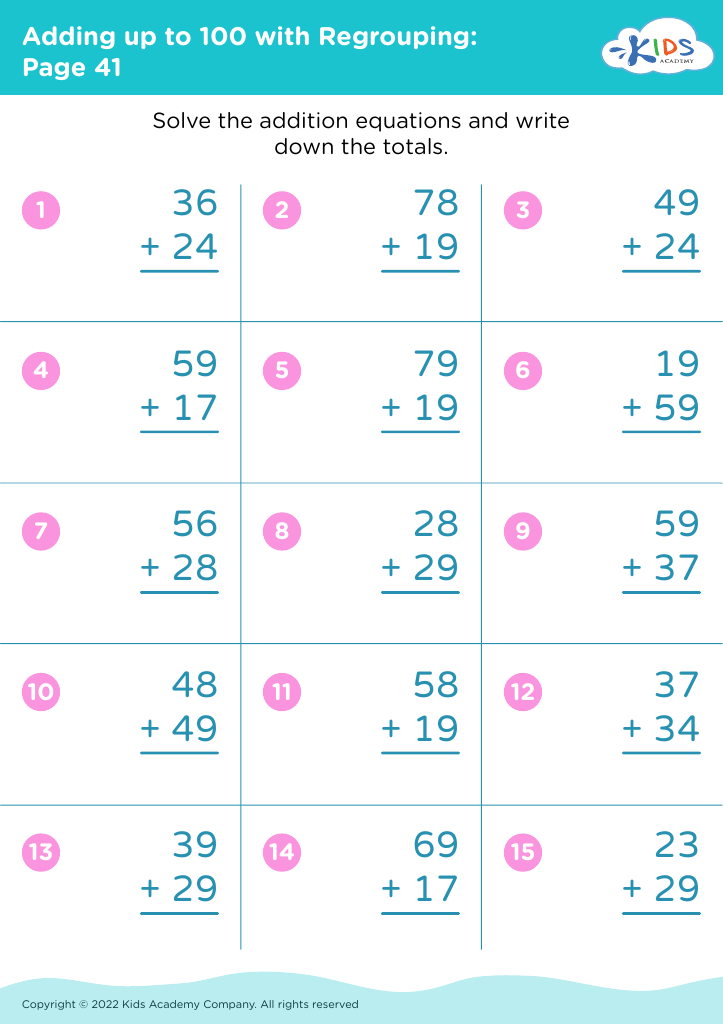
Adding up to 100 with Regrouping: Page 41
Worksheet
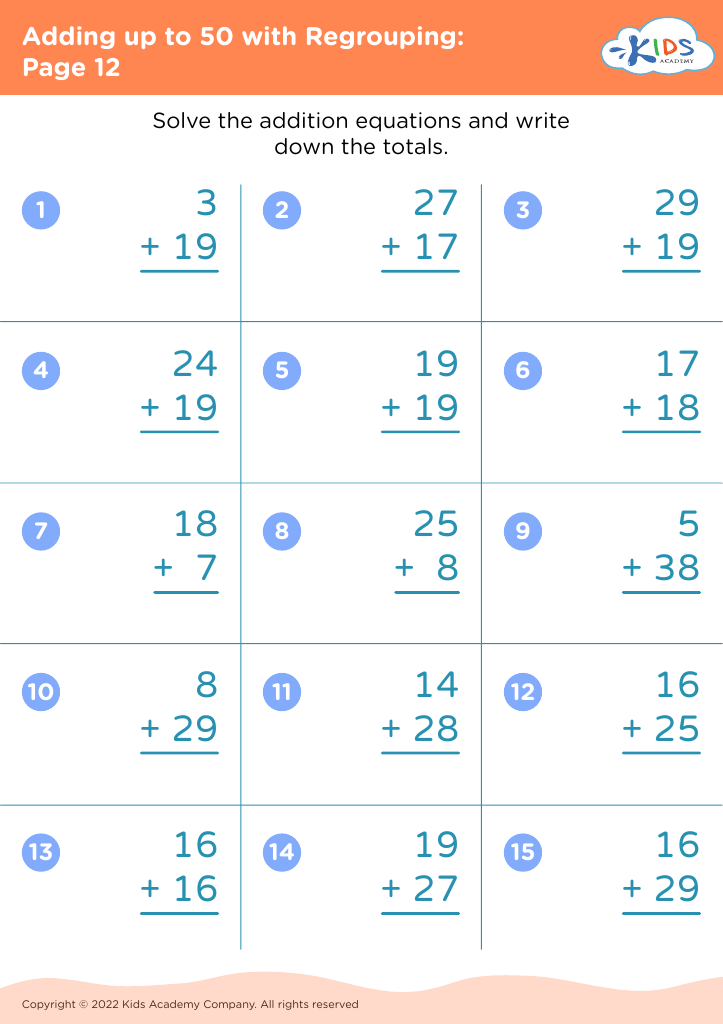
Adding up to 50 with Regrouping: Page 12
Worksheet
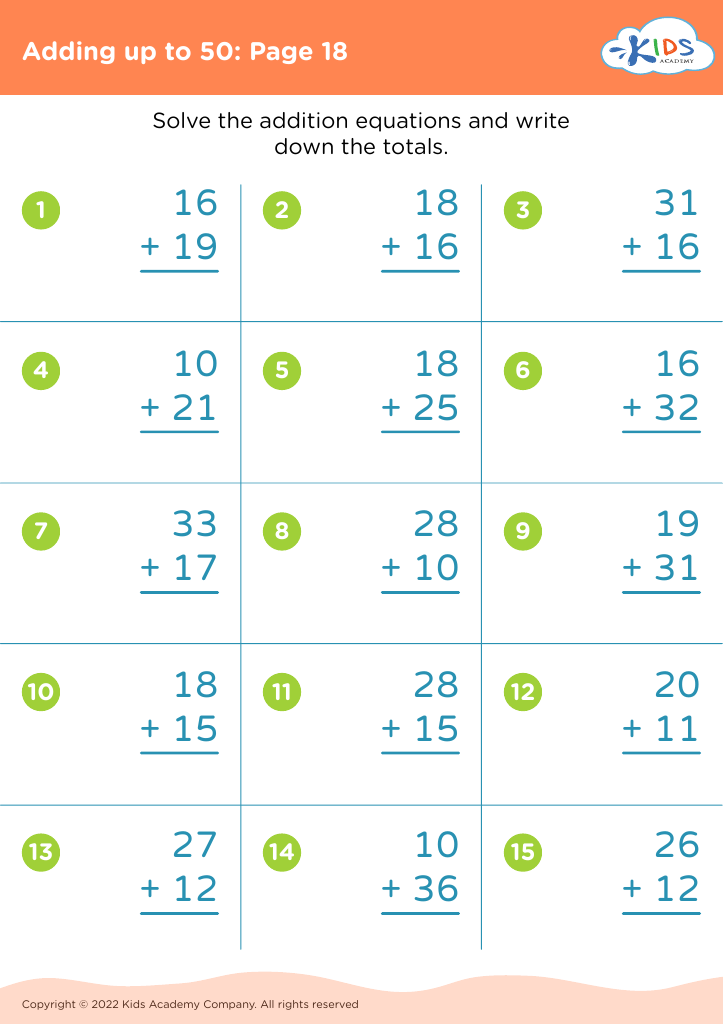
Adding up to 50: Page 18

Adding up to 50: Page 18

Adding up to 50: Page 18
Worksheet
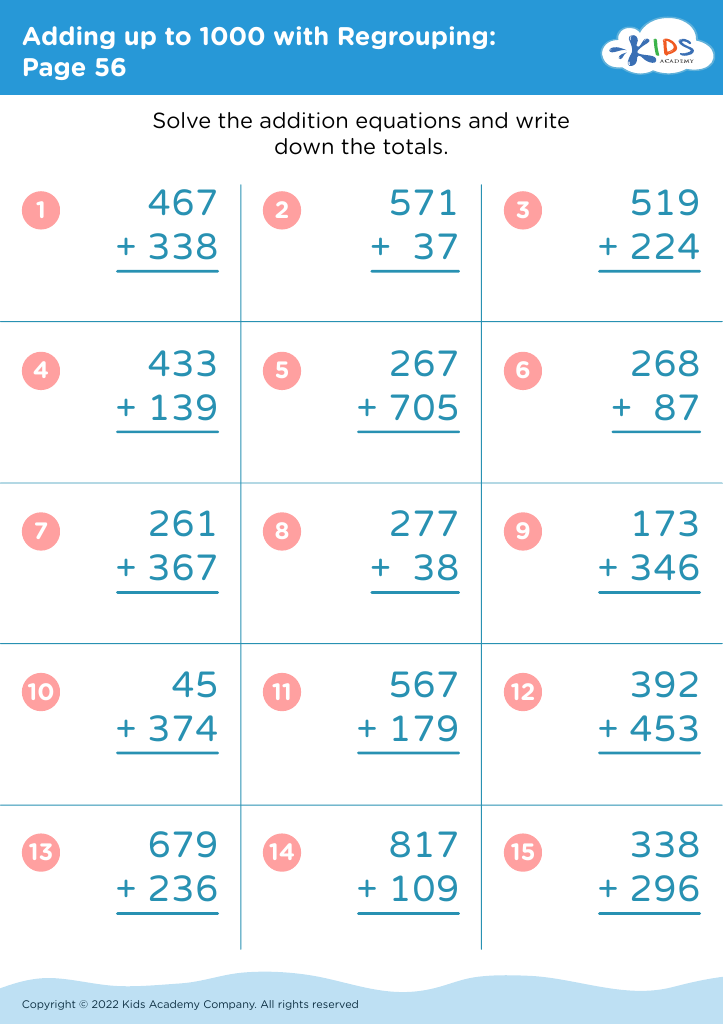
Adding up to 1000 with Regrouping: Page 56
Worksheet
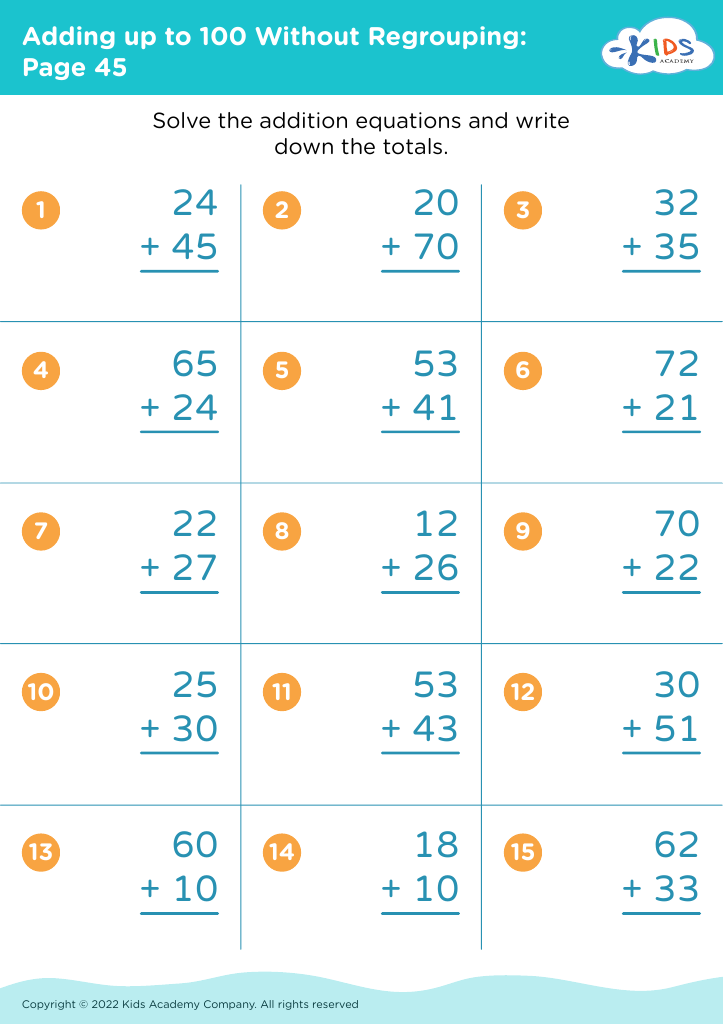
Adding up to 100 Without Regrouping: Page 45
Worksheet
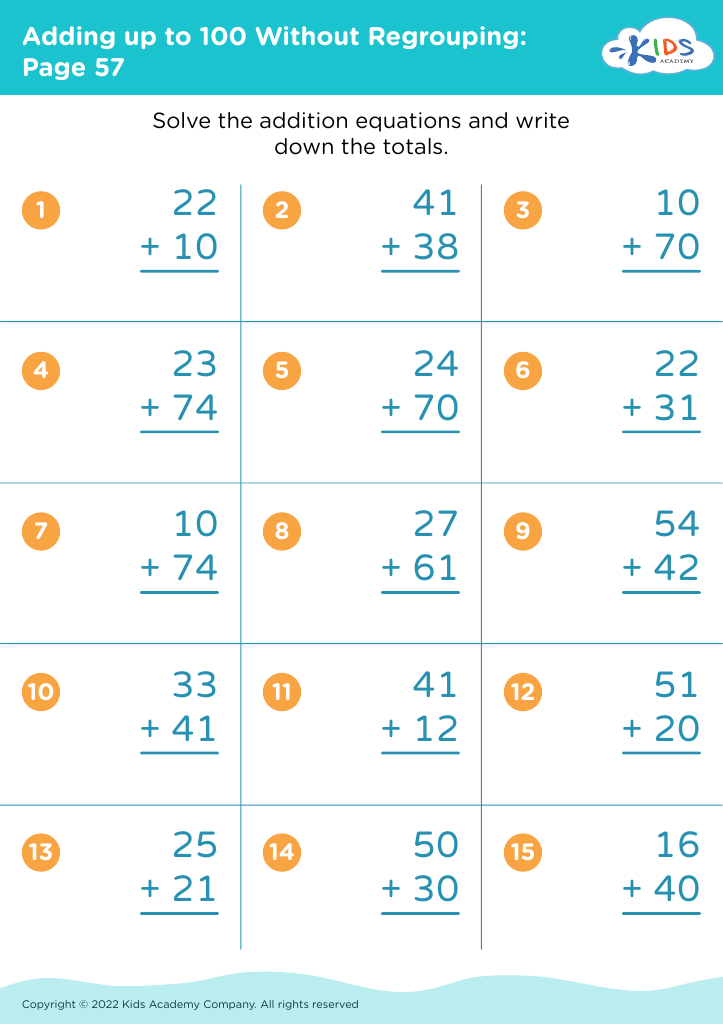
Adding up to 100 Without Regrouping: Page 57
Worksheet
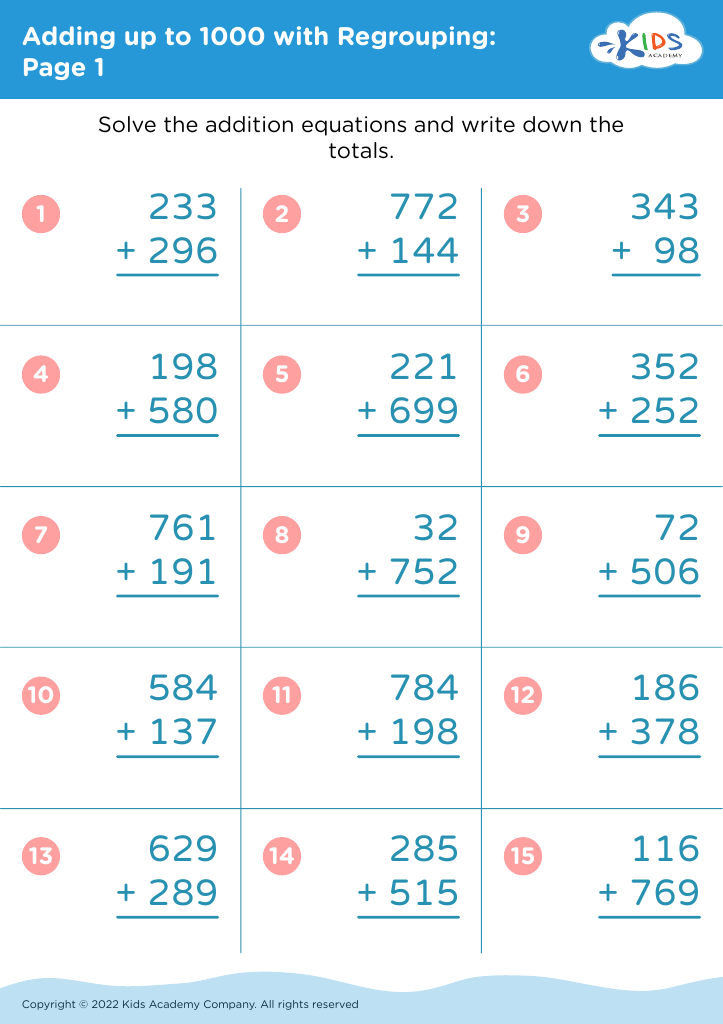
Adding up to 1000 with Regrouping: Page 1
Worksheet
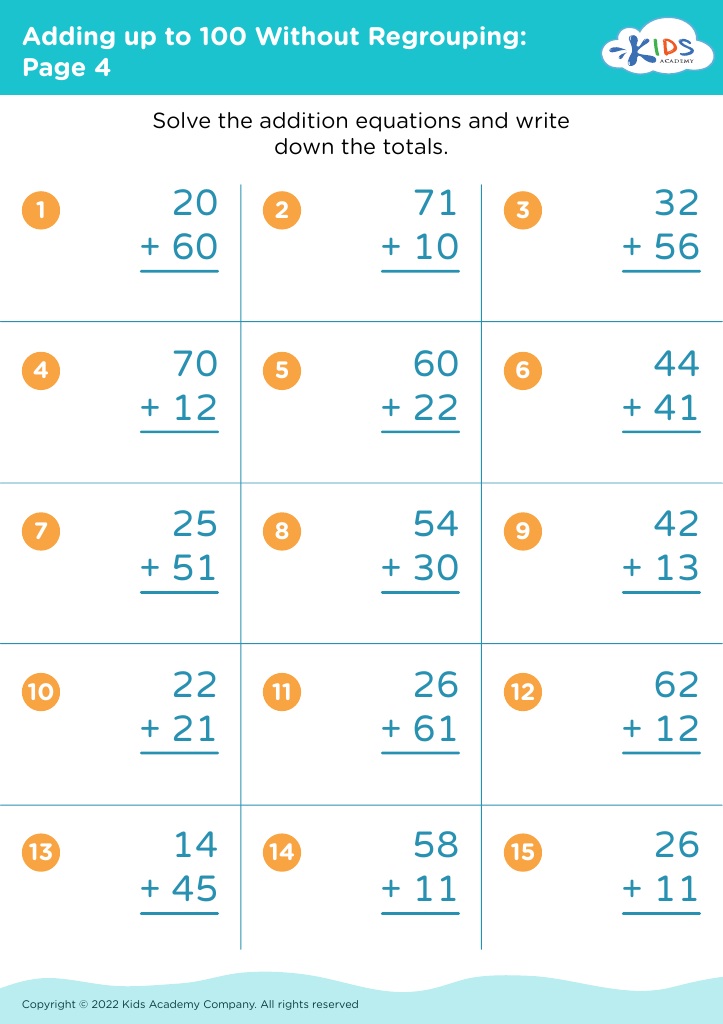
Adding up to 100 Without Regrouping: Page 4
Worksheet
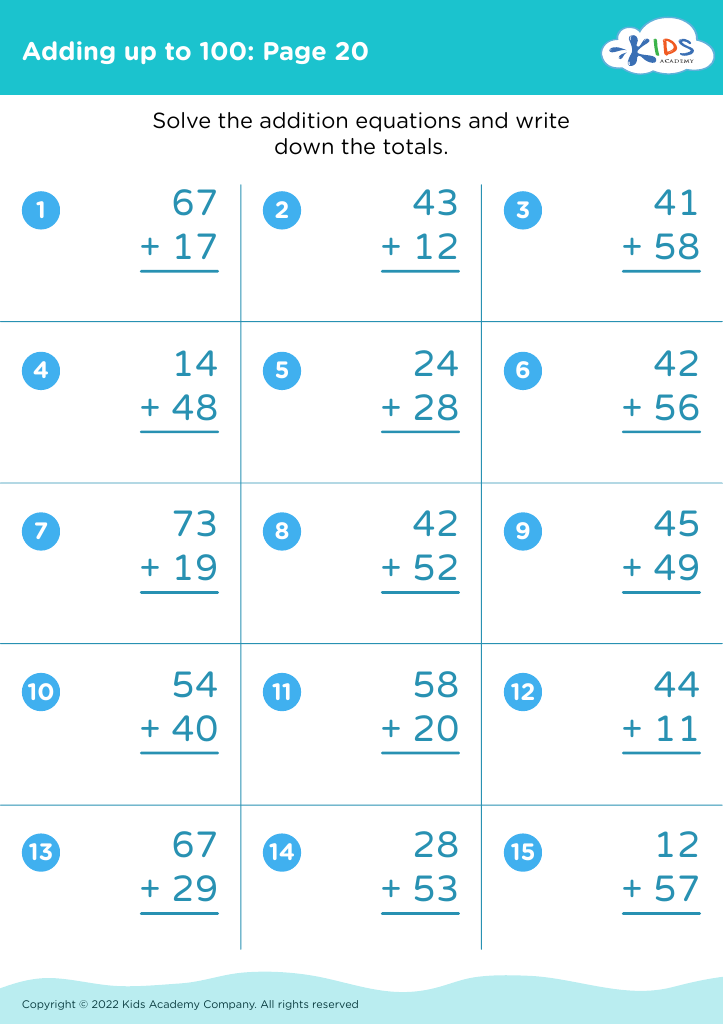
Adding up to 100: Page 20

Adding up to 100: Page 20

Adding up to 100: Page 20
Worksheet
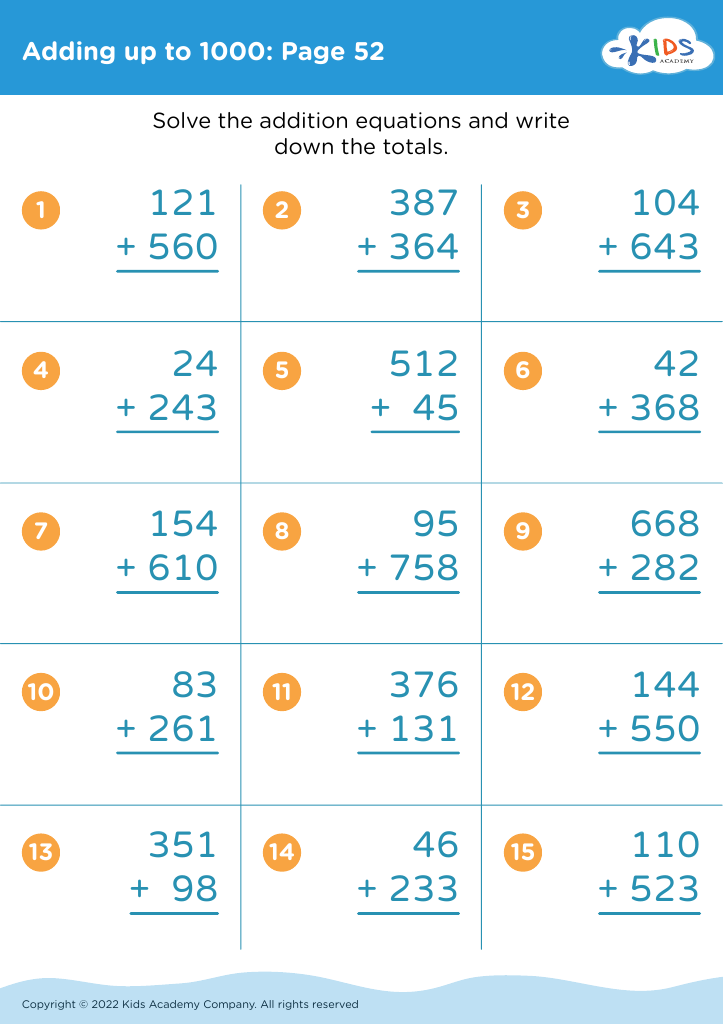
Adding up to 1000: Page 52

Adding up to 1000: Page 52

Adding up to 1000: Page 52
Worksheet
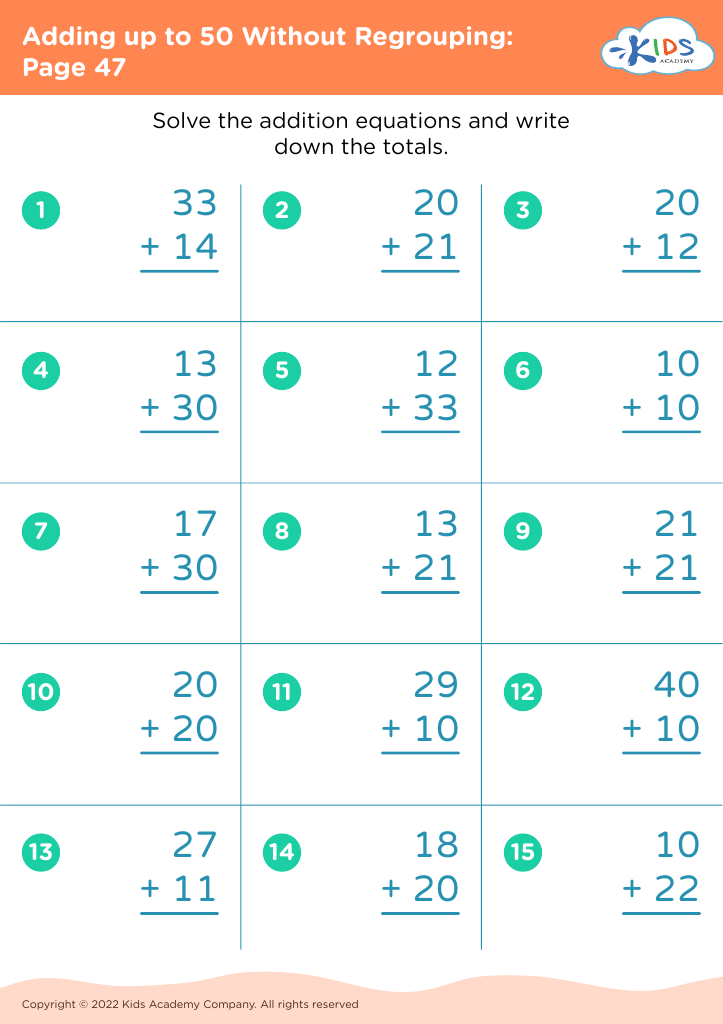
Adding up to 50 Without Regrouping: Page 47
Worksheet
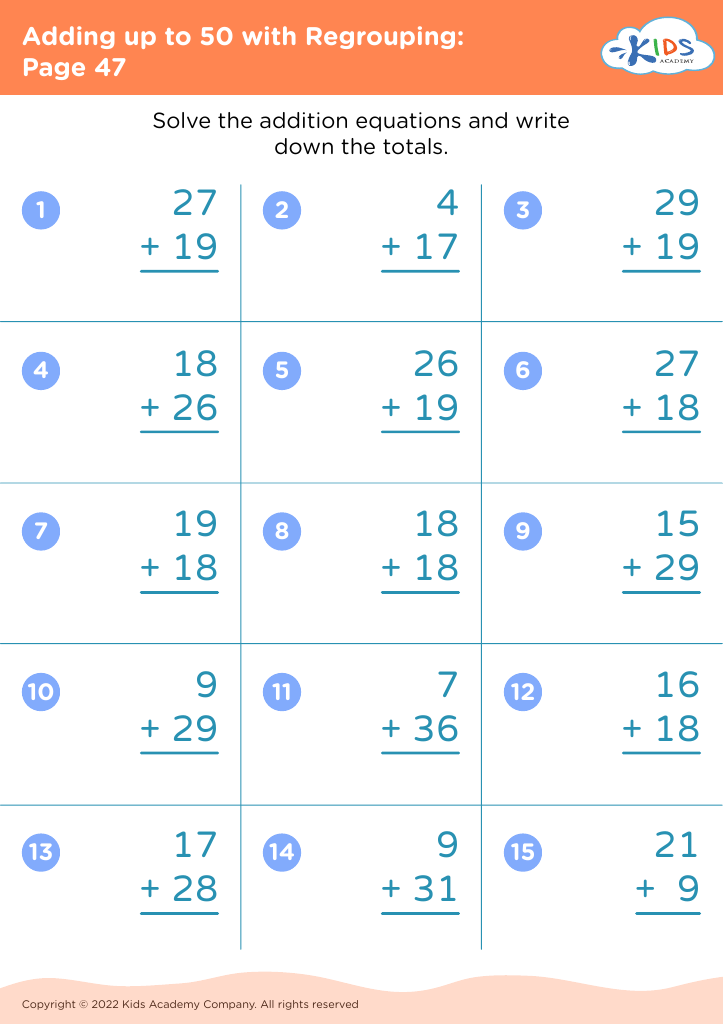
Adding up to 50 with Regrouping: Page 47
Worksheet
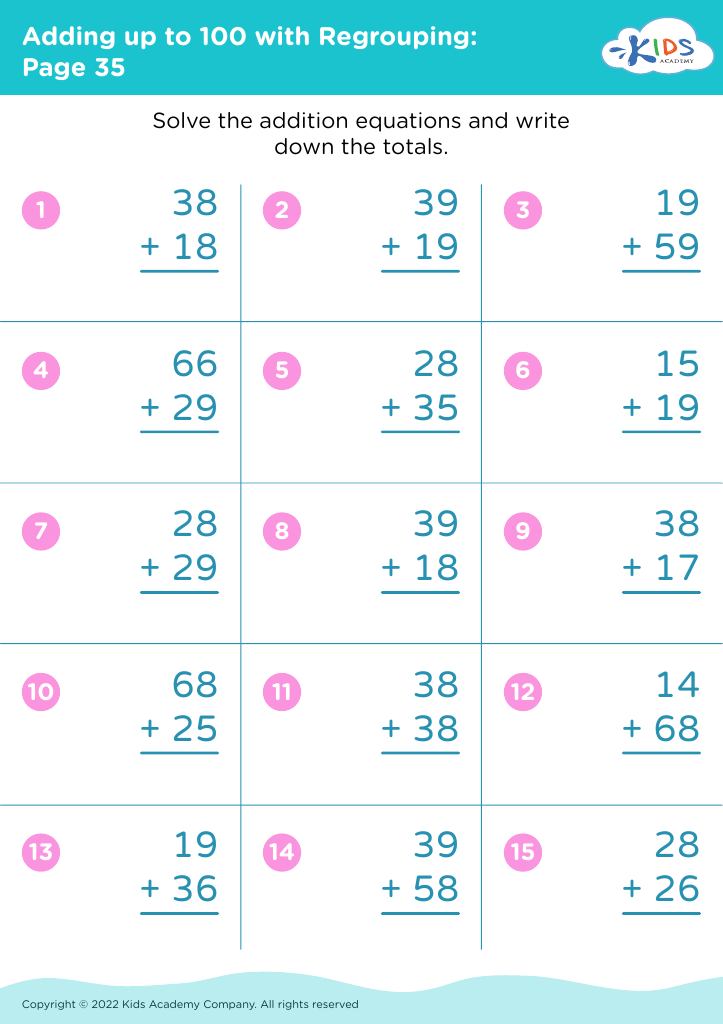
Adding up to 100 with Regrouping: Page 35
Worksheet
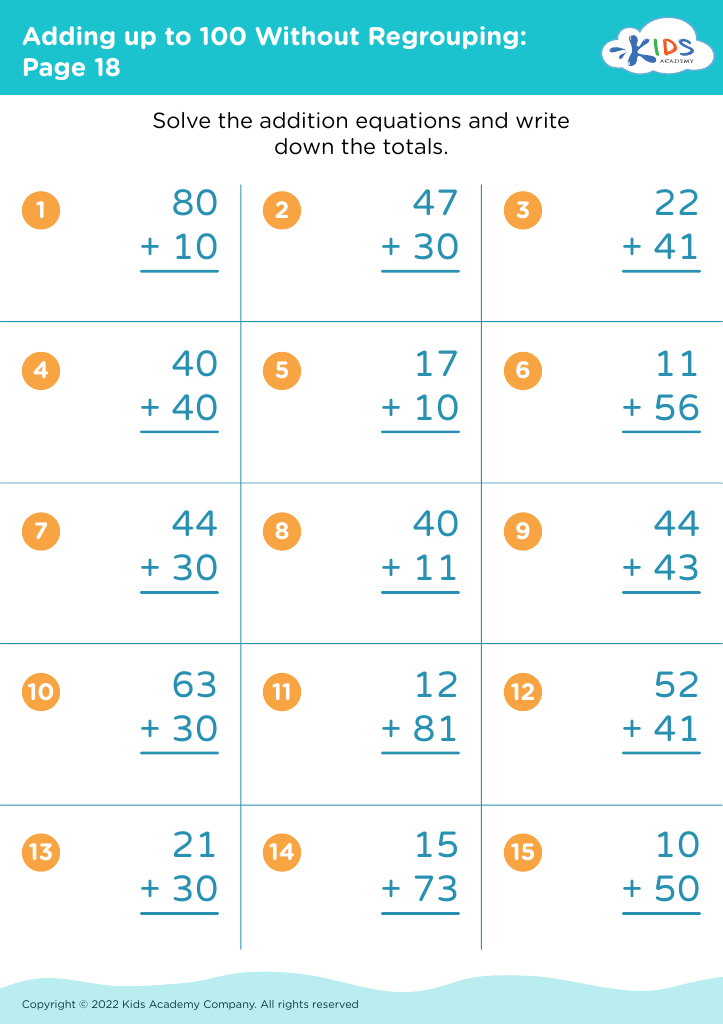
Adding up to 100 Without Regrouping: Page 18
Worksheet
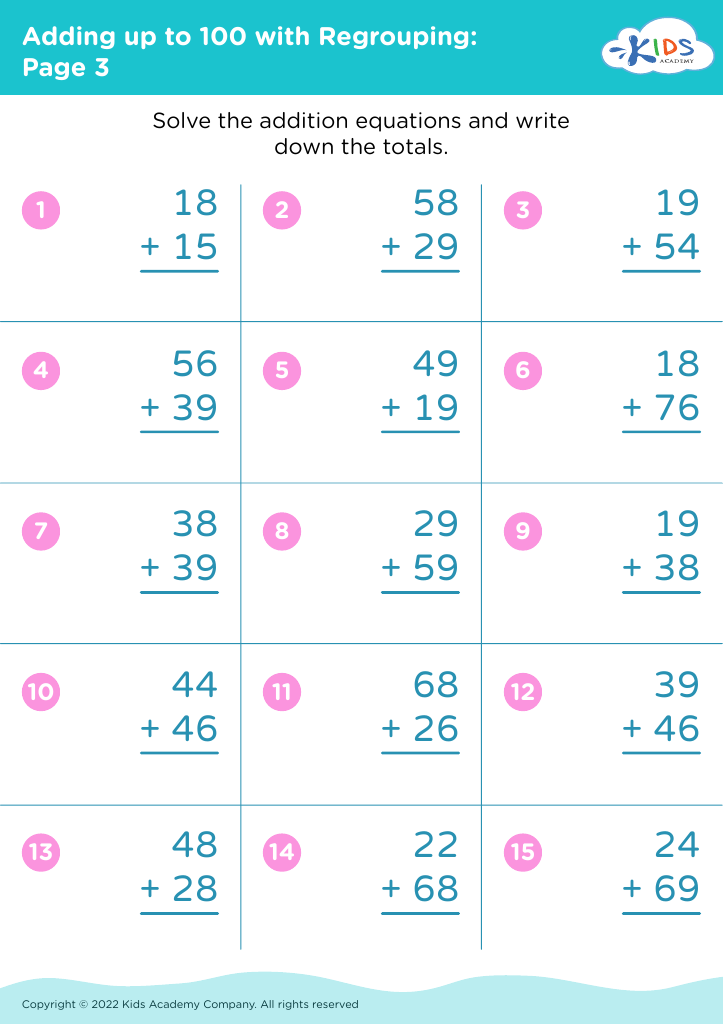
Adding up to 100 with Regrouping: Page 3
Worksheet
Adding up to 100: Page 17

Adding up to 100: Page 17

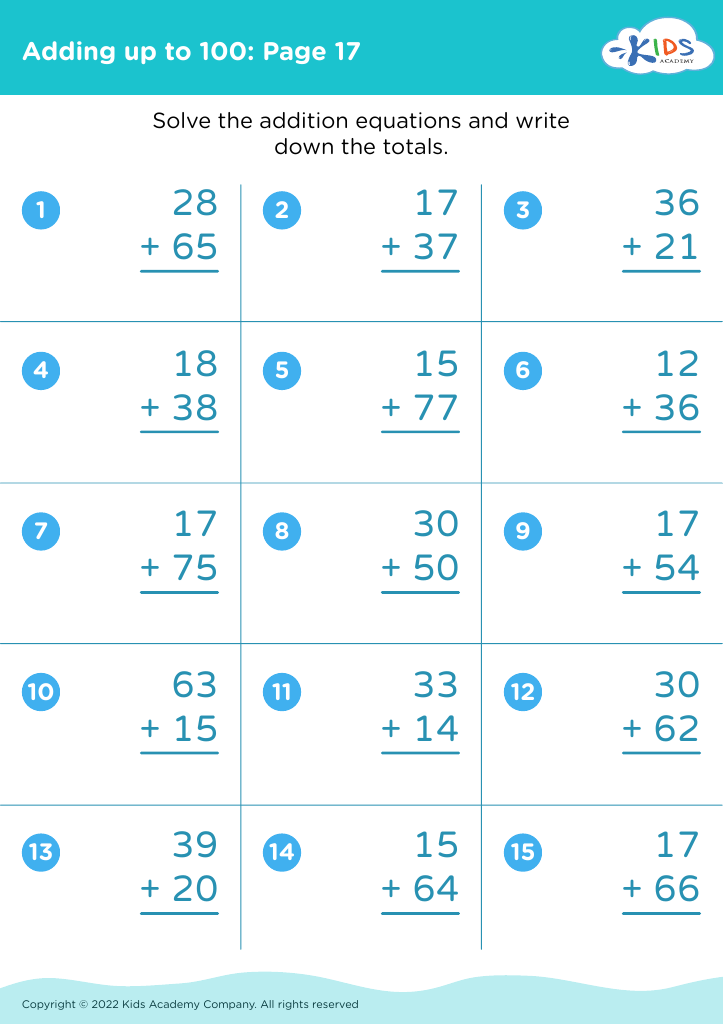
Adding up to 100: Page 17
Worksheet
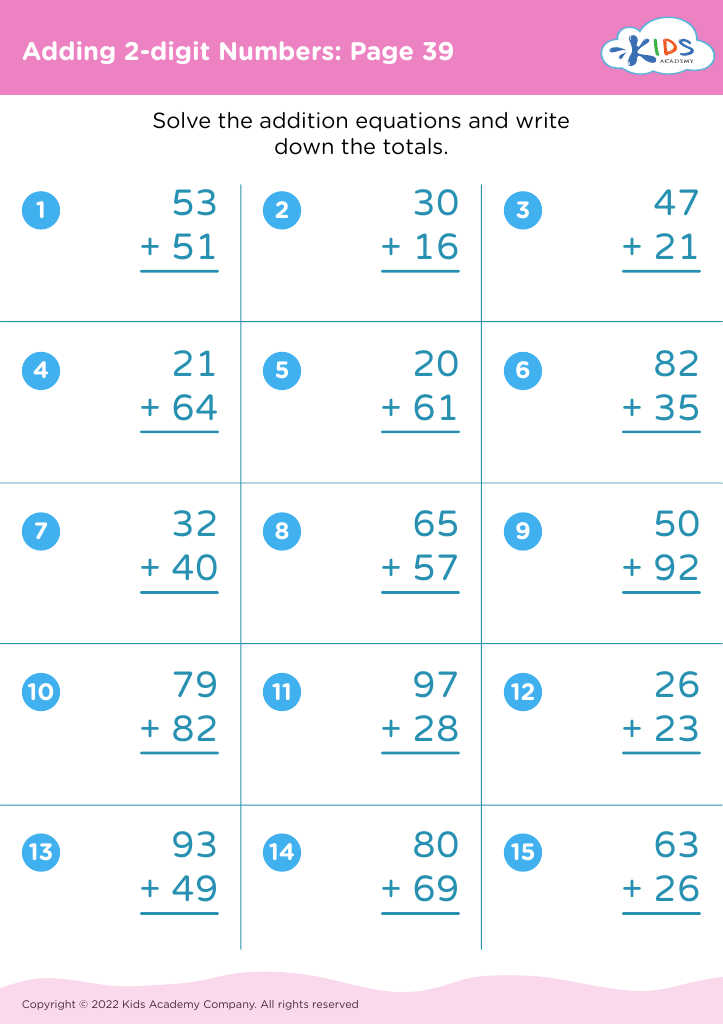
Adding 2-digit Numbers: Page 39

Adding 2-digit Numbers: Page 39

Adding 2-digit Numbers: Page 39
Worksheet
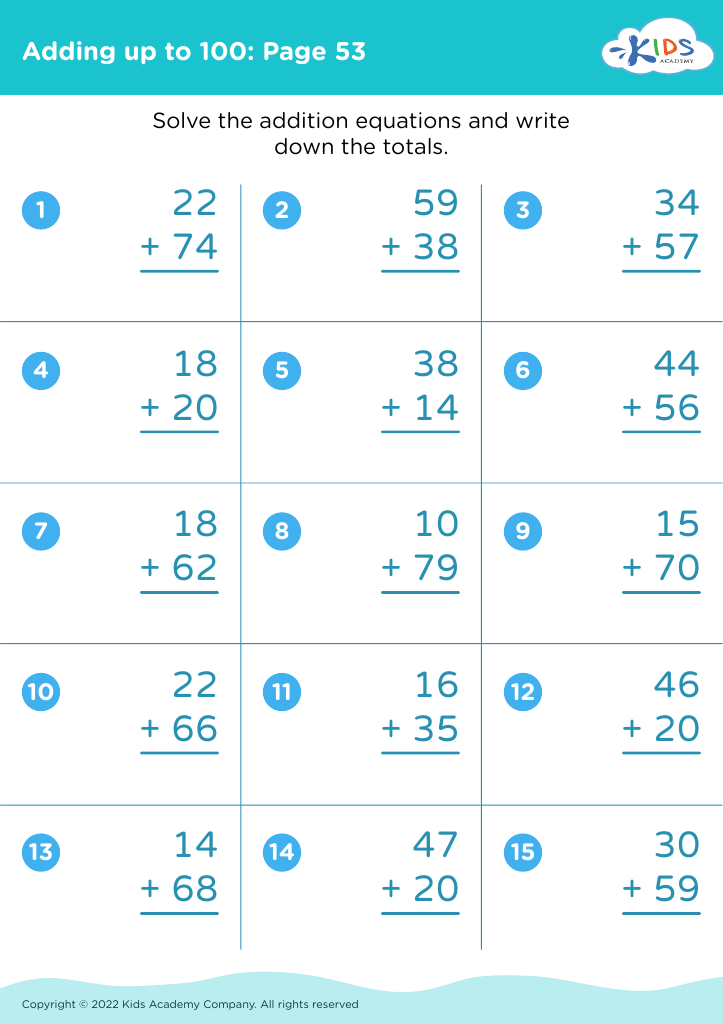
Adding up to 100: Page 53

Adding up to 100: Page 53

Adding up to 100: Page 53
Worksheet
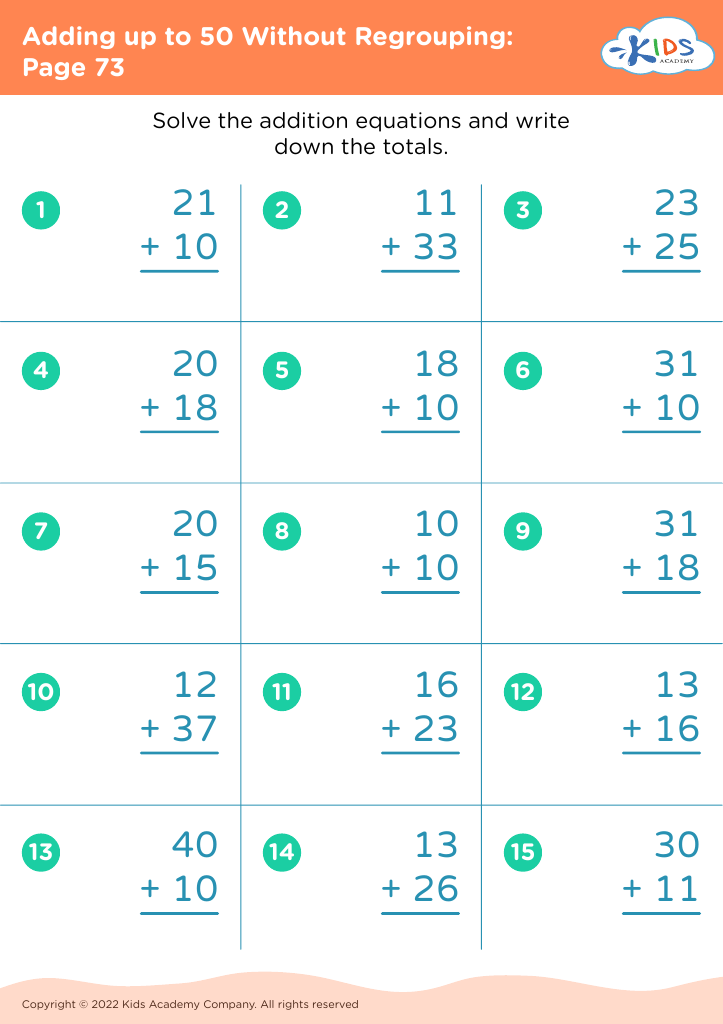
Adding up to 50 Without Regrouping: Page 73
Worksheet
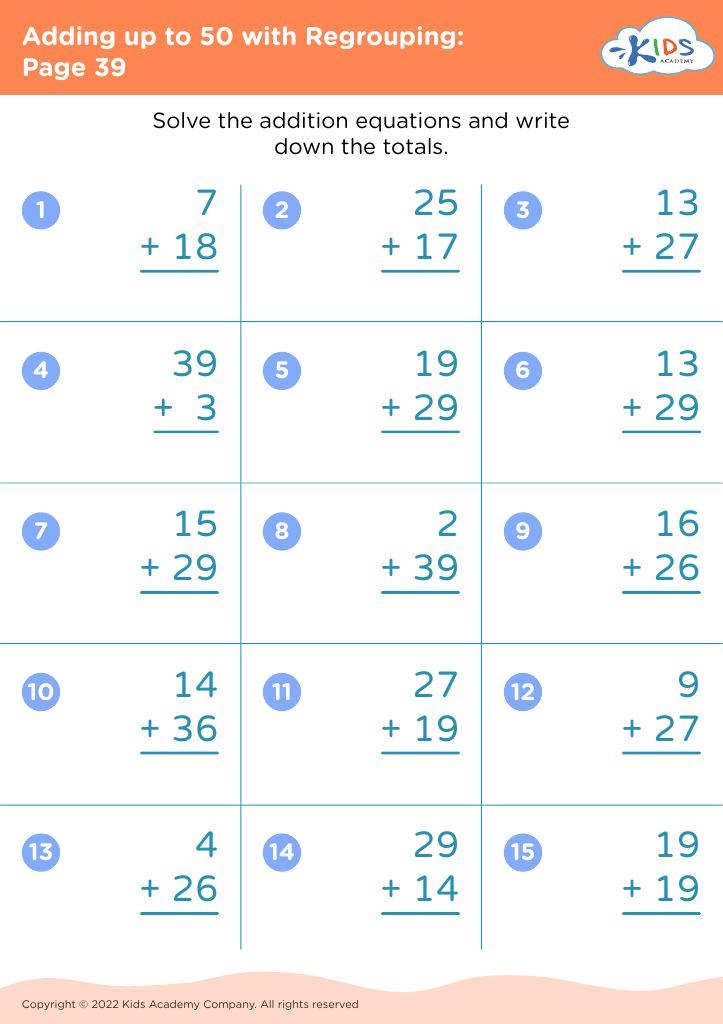
Adding up to 50 with Regrouping: Page 39
Worksheet


Fraction simplification is a crucial math skill for children ages 5-8, and parents and teachers play a significant role in fostering this understanding. Simplifying fractions lays the groundwork for more advanced mathematical concepts and promotes numeracy skills essential for everyday life. By learning to simplify fractions, children develop a deeper understanding of number relationships and the concept of equivalency, which reinforces their overall mathematical reasoning.

Moreover, simplifying fractions enhances problem-solving abilities. As children practice this process, they cultivate critical-thinking skills by recognizing patterns and identifying common divisors. These skills not only apply to fractions but also extend to various areas of math and daily decision-making.

Supporting children in mastering fraction simplification helps them build confidence as they progress through their math education. It addresses potential anxieties around the subject by presenting math as not just abstract concepts but as practical and relatable skills. By prioritizing this foundational concept, parents and teachers encourage a positive attitude towards math, fostering a learning environment where kids feel empowered to tackle new challenges. Ultimately, understanding fraction simplification provides young learners with the tools they need for future academic success and real-life applications.