Identifying Animals Math Worksheets for Ages 5-8
5 filtered results
-
From - To
Welcome to our "Identifying Animals Math Worksheets" designed specifically for children aged 5-8! These engaging worksheets help young learners develop their math skills through fun animal-themed activities. Each worksheet encourages children to identify various animals while practicing essential counting, addition, and number recognition skills. With vibrant illustrations and interactive formats, kids will enjoy learning as they explore the fascinating animal kingdom. Perfect for classrooms or home learning, our worksheets cater to different learning styles, ensuring that every child can grasp math concepts effectively. Download today and watch your child's confidence and skills grow while having fun with animals!
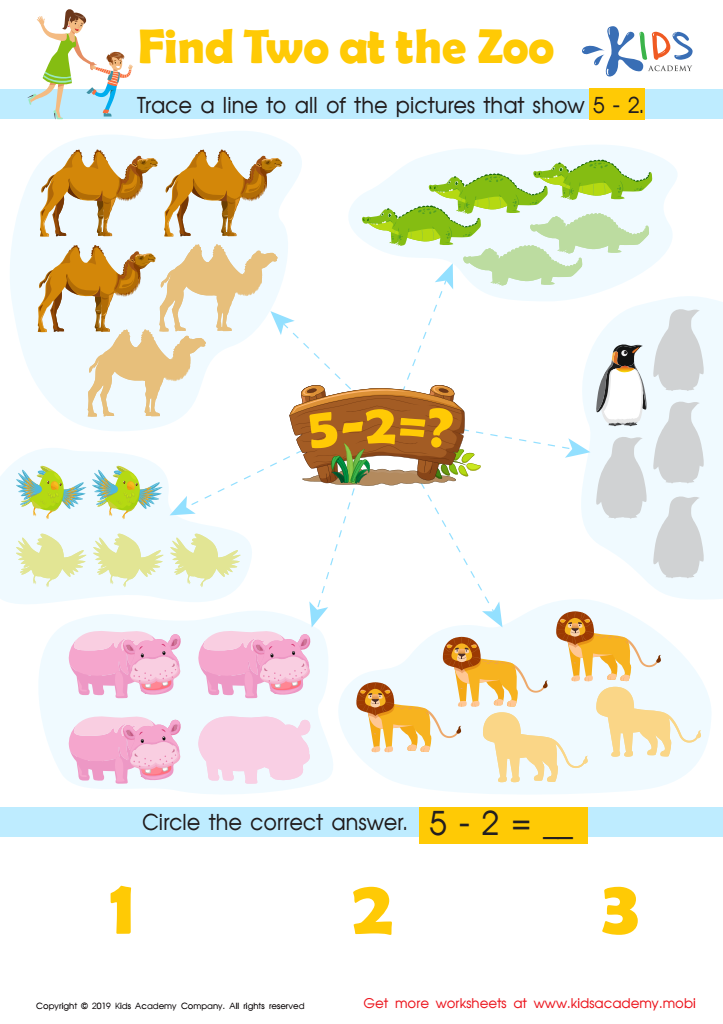
Find Two at the Zoo Worksheet
 Assign to My Students
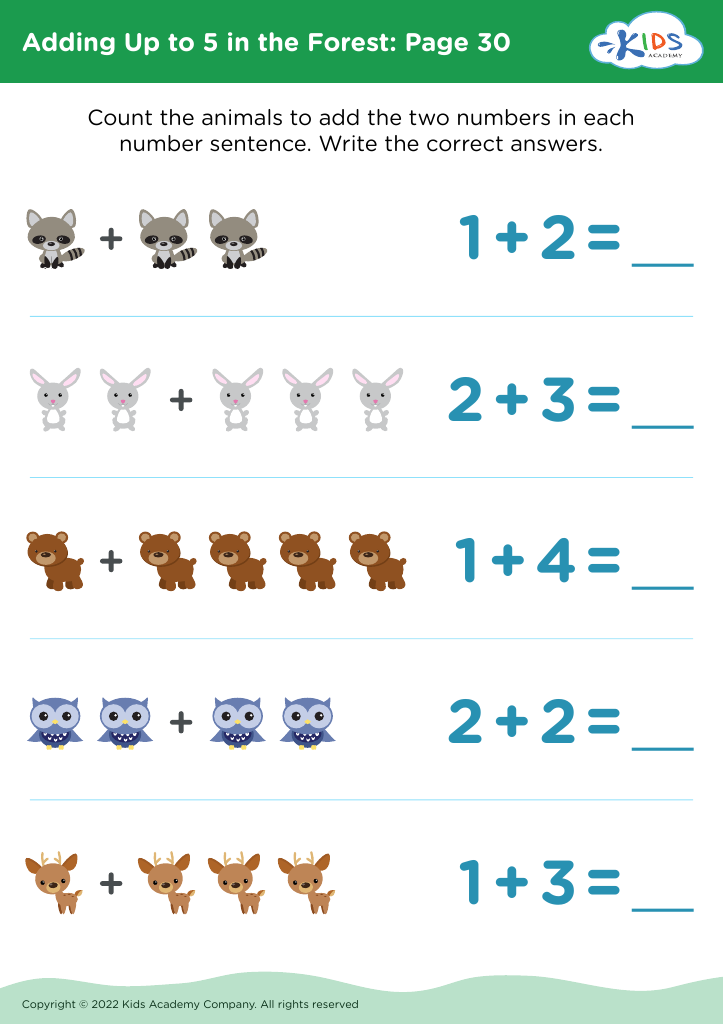



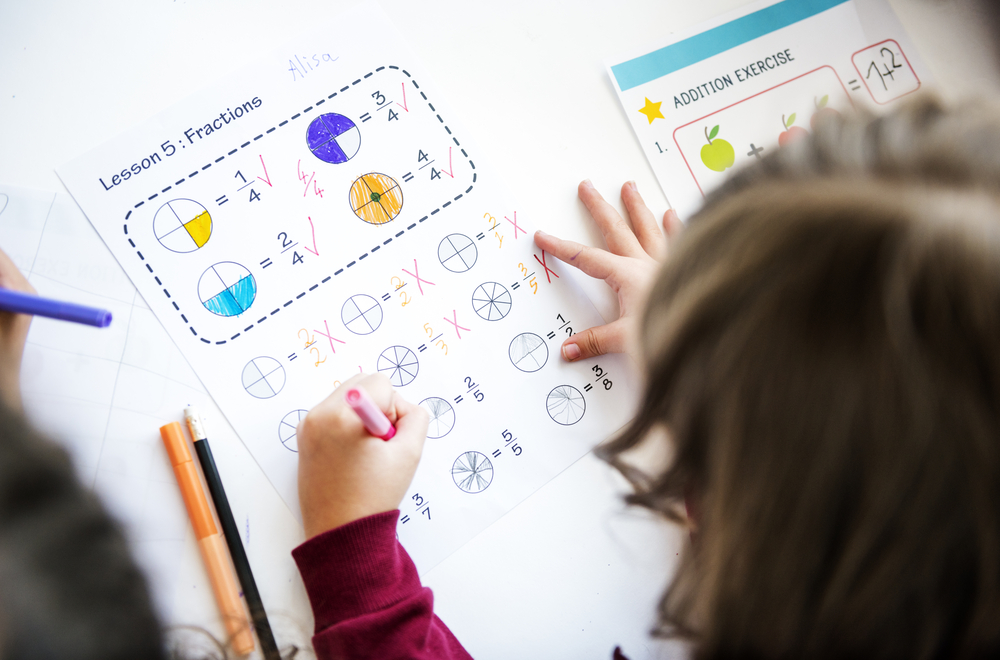



Identifying Animals Math for ages 5-8 is crucial for several reasons. First, it integrates fundamental math skills with engaging animal themes, making learning more relevant and exciting for young students. Children in this age group are naturally curious about animals and connecting math to their interests can enhance motivation and facilitate learning.
Moreover, understanding how to categorize and identify animals encourages critical thinking and observational skills. It helps children grasp key math concepts such as addition, subtraction, and classification while reinforcing knowledge about the animal kingdom.
This educational approach fosters a sense of responsibility and stewardship for the environment and wildlife, as children learn to recognize and appreciate different species. It also promotes language development through vocabulary expansion as they learn to label and describe various animals.
Incorporating animal identification in math lessons can enhance social skills, as group activities may involve collaboration and discussion. Additionally, the interactive and playful nature of this learning promotes emotional engagement, making educational experiences memorable. Hence, parents and teachers should prioritize identifying animals in math education, as it paves the way for holistic development, laying a strong foundation for both academics and a lifelong interest in nature.








