Learning number patterns Math Worksheets for Ages 5-8
4 filtered results
-
From - To
Discover engaging "Learning Number Patterns" math worksheets designed for children aged 5-8! Our resources focus on developing early math skills through fun and interactive activities that encourage pattern recognition, sequencing, and critical thinking. Each worksheet is crafted to enhance understanding of number relationships while making learning enjoyable. With a variety of exercises that cater to different learning styles, your child will gain confidence in their math abilities. Perfect for home or classroom use, these worksheets provide the ideal support for young learners to explore the world of numbers. Start their math journey today and watch them thrive in their learning!
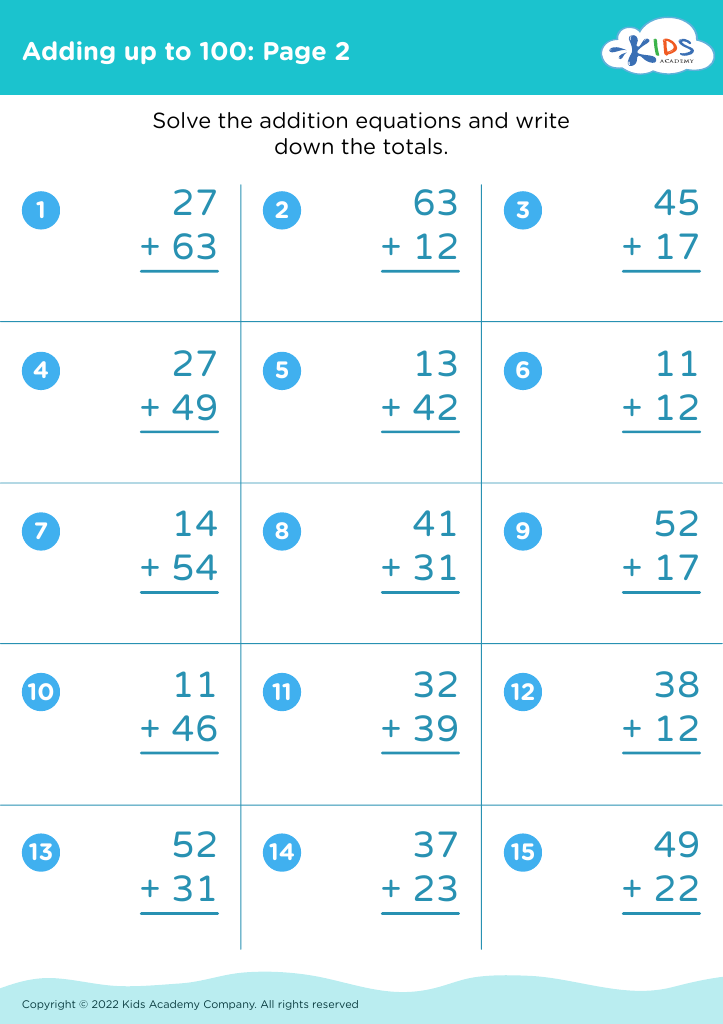
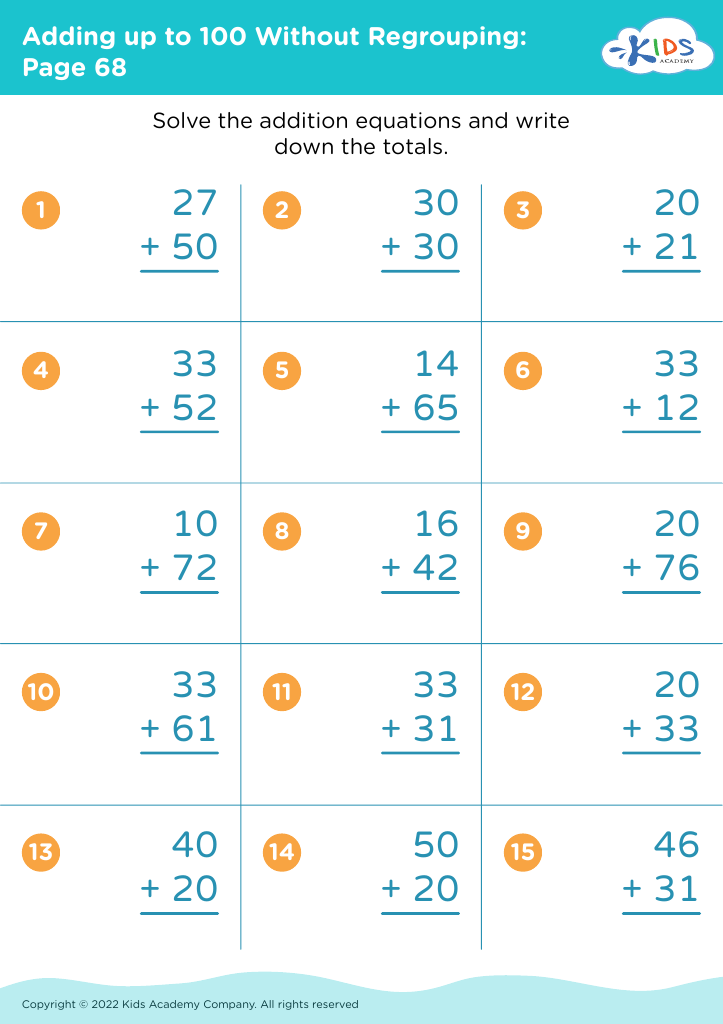
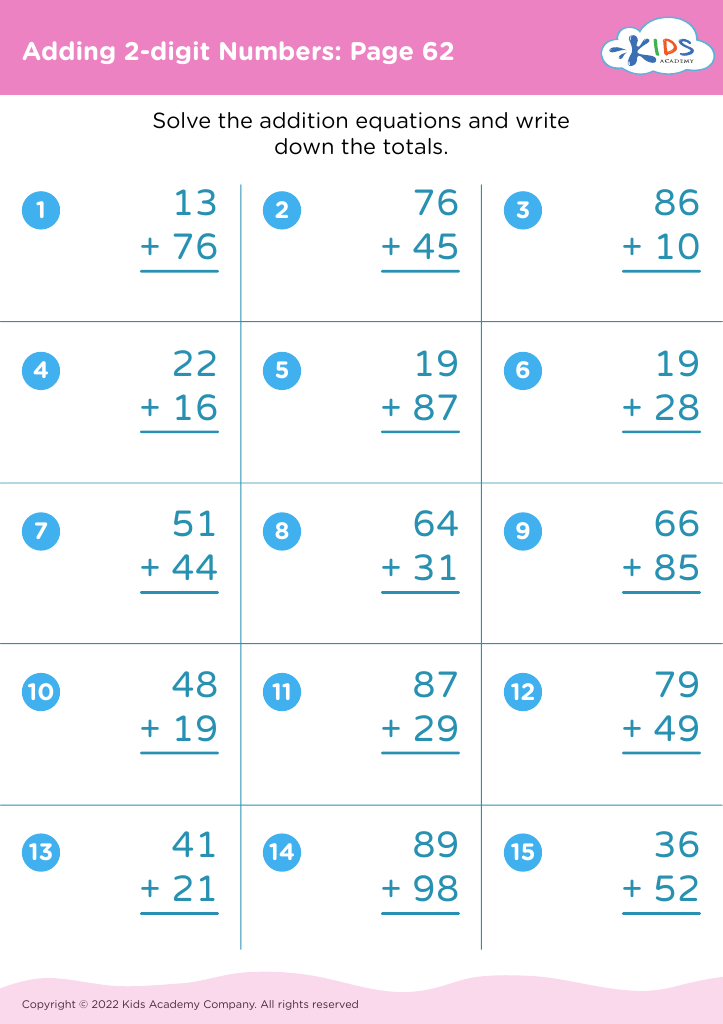
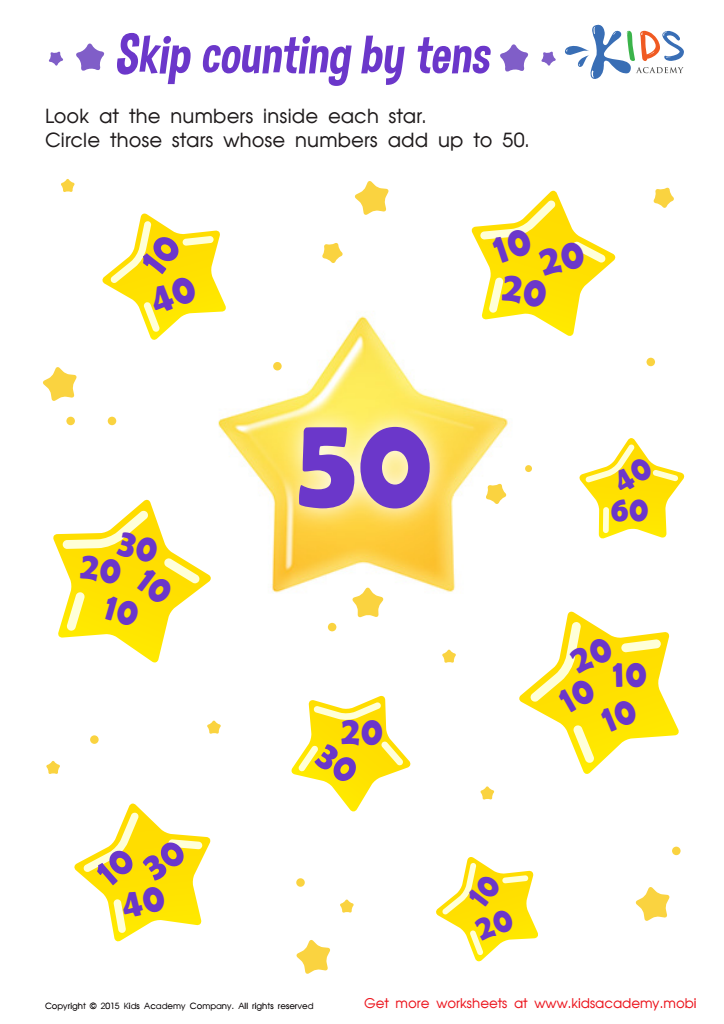
Learn Dozens: Skip Counting by Tens Printable
 Assign to My Students








Learning number patterns in math is crucial for children aged 5-8 for several reasons. First, it builds foundational mathematical understanding. Recognizing patterns helps young learners develop skills necessary for more complex math concepts later, such as addition, subtraction, and multiplication. When children learn to identify patterns, they are better equipped to understand numerical relationships, which paves the way for algebraic thinking.
Additionally, engaging with number patterns enhances problem-solving skills. When children recognize sequences or trends, they become more adept at predicting outcomes and making connections between different mathematical ideas. This vital cognitive development fosters analytical thinking, which applies beyond math and into everyday situations.
Moreover, teaching number patterns promotes confidence and encourages creativity in young learners. Exploring variations in patterns enriches their learning experience, allowing for rich discussions and deeper understanding. It makes math enjoyable and interactive, reducing anxiety around the subject.
Ultimately, nurturing a grasp of number patterns early on instills a strong mathematical foundation, critical thinking skills, and a positive attitude toward math, laying the groundwork for lifelong learning and success in science, technology, engineering, and mathematics (STEM), which are increasingly important in today’s world.








