
Logical reasoning development Math Worksheets for Ages 5-8
3 filtered results
Difficulty Level
Grade
Age
-
From - To
Subject
Activity
Standards
Unlock your child's potential with our Logical Reasoning Development Math Worksheets tailored for ages 5-8! At Kids Academy, we offer engaging activities designed to enhance critical thinking and problem-solving skills. Each worksheet incorporates fun puzzles, pattern recognition, and basic arithmetic to nurture young minds. Ideal for both classroom and home use, our adaptive worksheets foster a love for learning while building strong mathematical foundations. Boost your child's confidence and cognitive abilities with our expertly crafted resources. Explore our collection today to provide an enriching educational experience that paves the way for future academic success!
Favorites
With answer key
Interactive
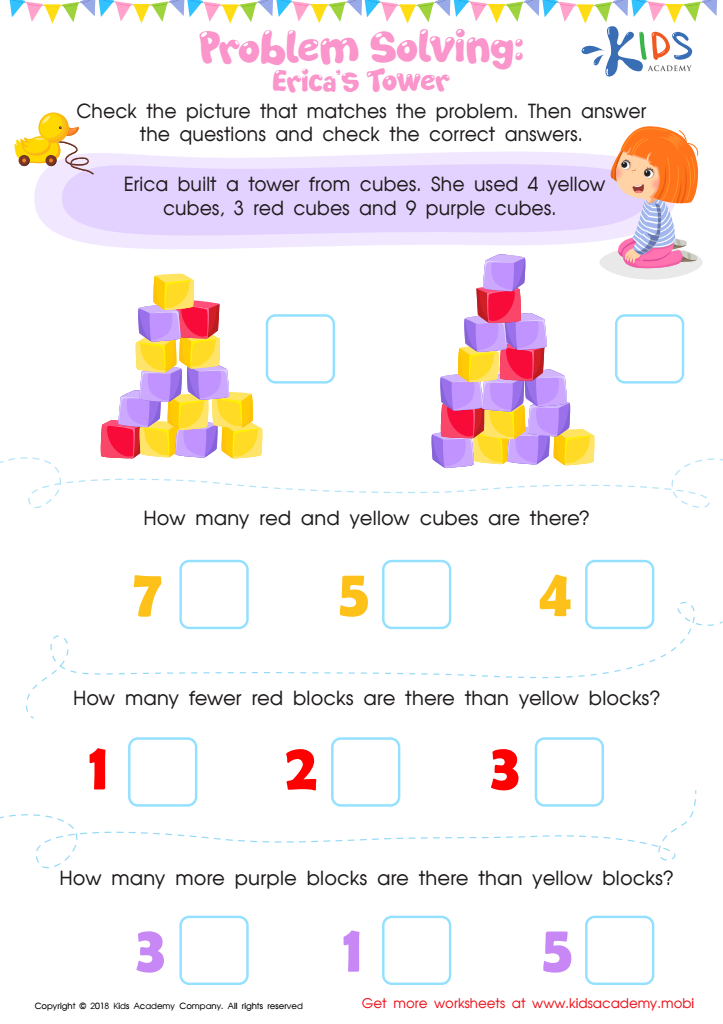
Problem Solving: Erica's Tower Worksheet
Sweet Erica needs your math student's help! Download the PDF worksheet and have your little math whiz read the word problems, match the pictures and solve basic addition/subtraction problems with two/three addends, minuends and subtrahends. They'll be having fun while strengthening their math fact skills!
 Assign to My Students
Problem Solving: Erica's Tower Worksheet
Worksheet
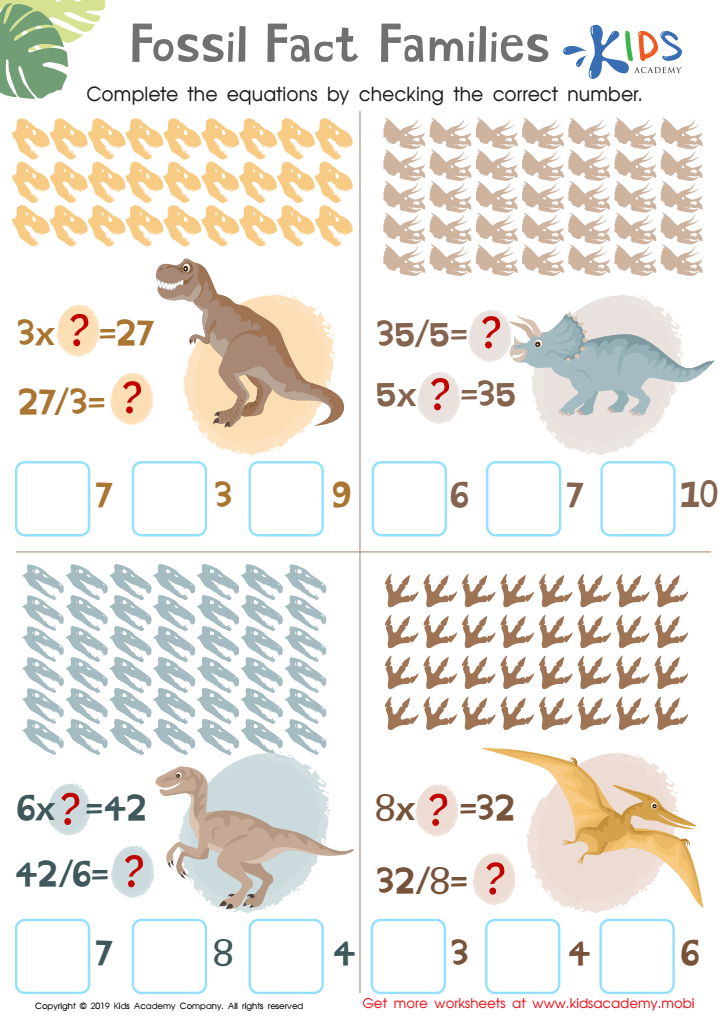
Fossil Fact Families Worksheet
Kids love dinosaurs, so why not learn about fact families with some fun prehistoric friends? This PDF worksheet uses picture arrays to help kids understand the relationships between multipliers and dividends. It helps them build automaticity with multiplication facts so they can quickly solve division problems and see the relationships between the two fact families.
Fossil Fact Families Worksheet
Worksheet
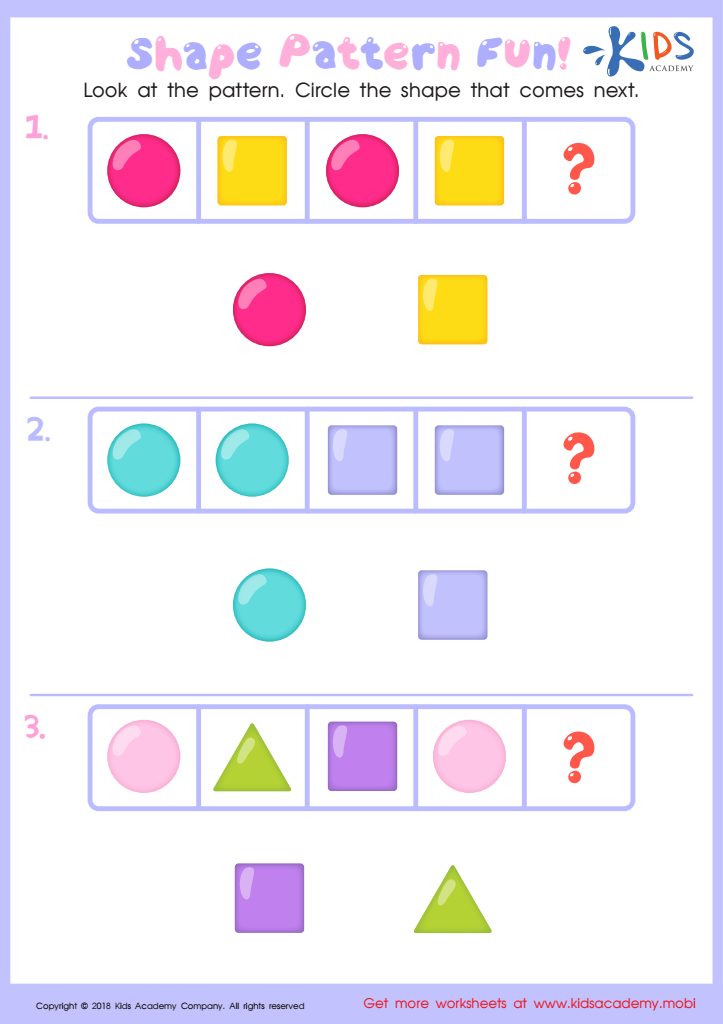
Shape Pattern Fun Worksheet
Challenge your kids to look at the pictures and identify colors, shapes and patterns. Ask them to circle the shapes that follow the sequence. See if they can spot the pattern and stick to it!
Shape Pattern Fun Worksheet
Worksheet
Join Kids Academy for Free
Who is primarily going to use this learning content?





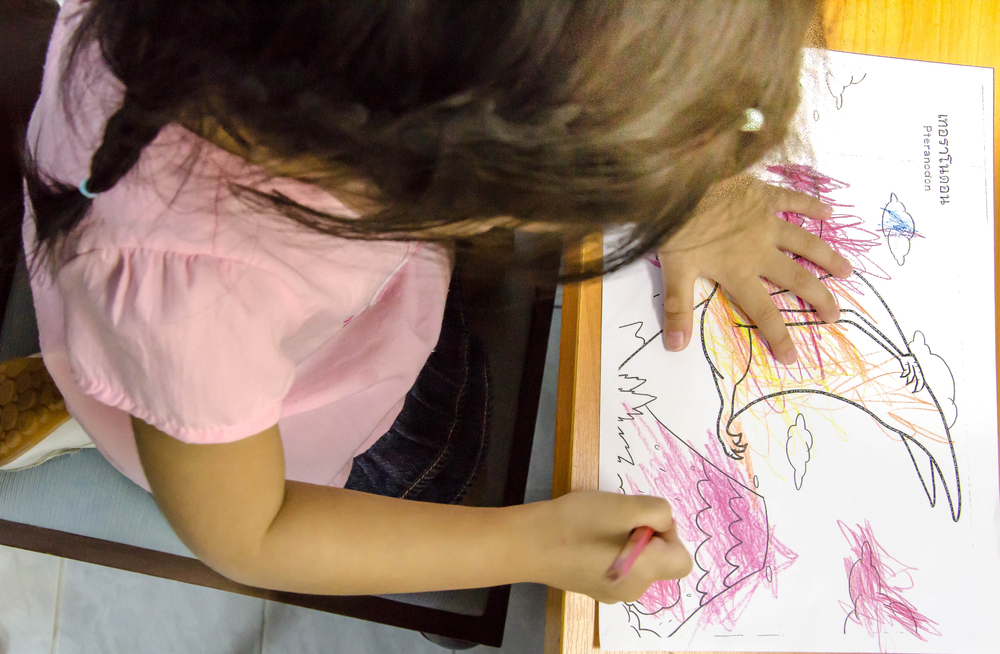


Logical reasoning is a critical skill that underpins nearly every mathematical concept children will encounter, making its early development vital for ages 5-8. When parents and teachers prioritize logical reasoning in math, they equip young learners with the foundational skills needed to solve problems, think critically, and understand the world around them.
During these formative years, children's brains are incredibly receptive to new ideas and ways of thinking. By fostering logical reasoning, adults help them develop the ability to make connections between concepts, recognize patterns, and apply strategies systematically. These skills are not only fundamental to succeeding in math but are also transferable to other subjects and real-life scenarios. For instance, understanding the concept of "more or less" aids in comprehending numbers and arithmetic, while pattern recognition is crucial for reading and problem-solving in daily life.
Moreover, nurturing logical reasoning in math encourages a growth mindset. Children learn that complex problems can be broken down into manageable parts and approached systematically. This resilience and perseverance are invaluable for personal development and academic success.
By consciously integrating logical reasoning activities into everyday learning, parents and teachers lay a strong foundation for a child's future academic achievements and problem-solving capabilities, making it an essential focus for early education.








