Mental math practice Math Worksheets for Ages 5-8
13 filtered results
-
From - To
Boost your child's confidence and arithmetic skills with our Mental Math Practice Worksheets for Ages 5-8. These engaging, thoughtfully-designed worksheets help young learners master fundamental math concepts, such as addition, subtraction, multiplication, and division, all while building crucial problem-solving abilities. Our vibrant, interactive exercises make learning math fun and effective, empowering kids to develop quick mental calculations effortlessly. Ideal for homeschooling or supplementary practice, these worksheets cater to various skill levels, ensuring every child can progress confidently and enjoyably. Start your child's journey to becoming a math whiz today with Kids Academy!
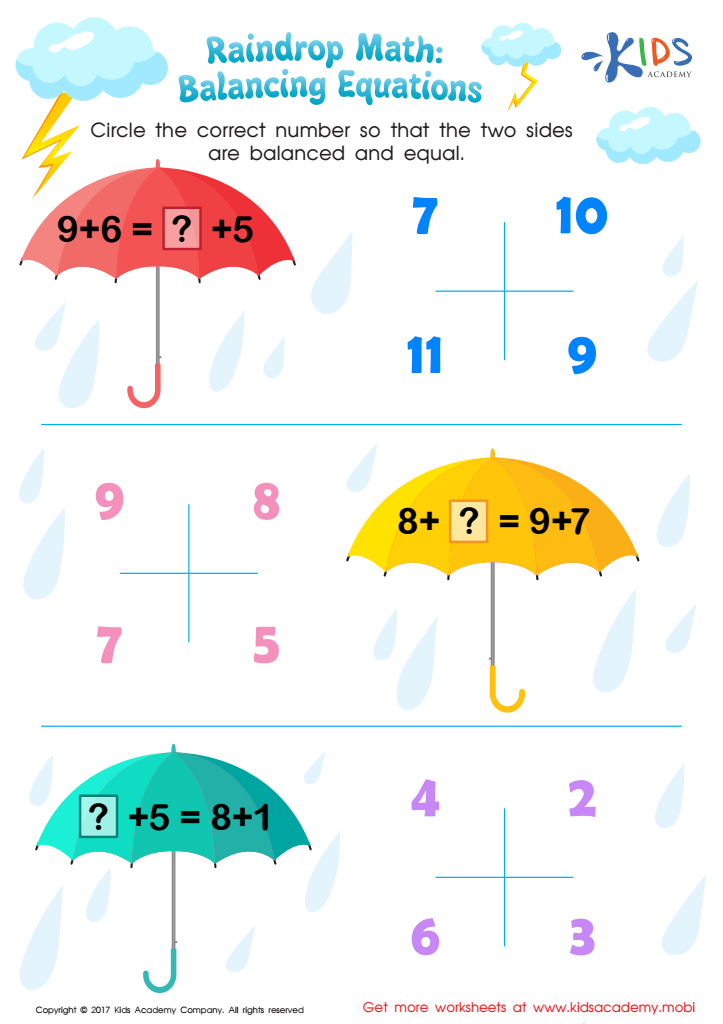
Raindrop Math Printable
 Assign to My Students
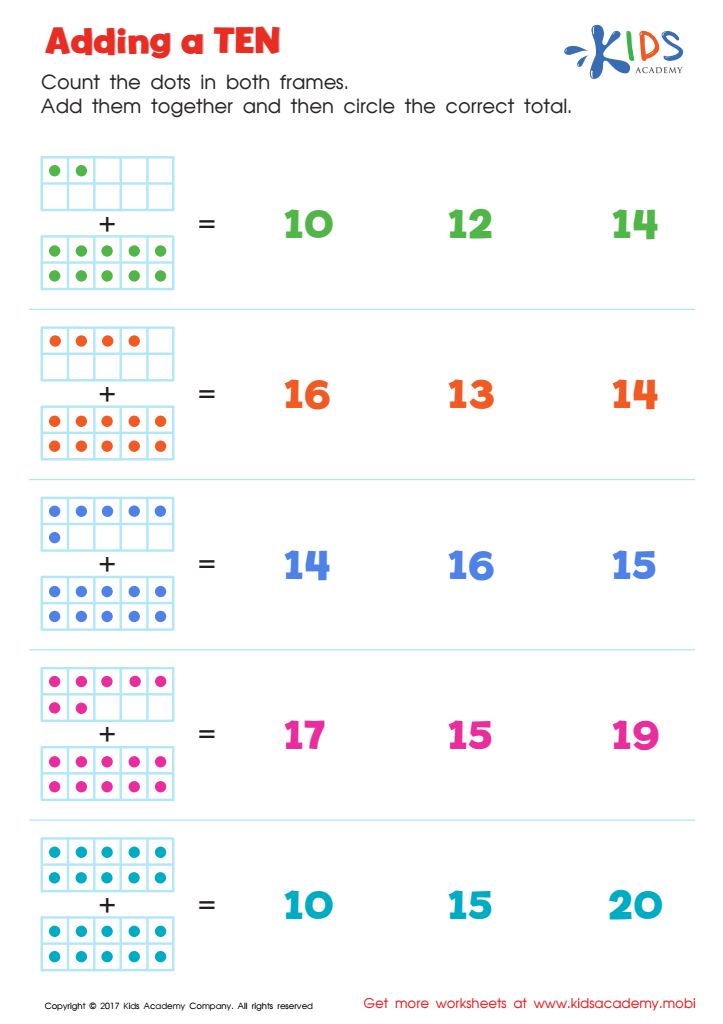
Adding a Ten Worksheet
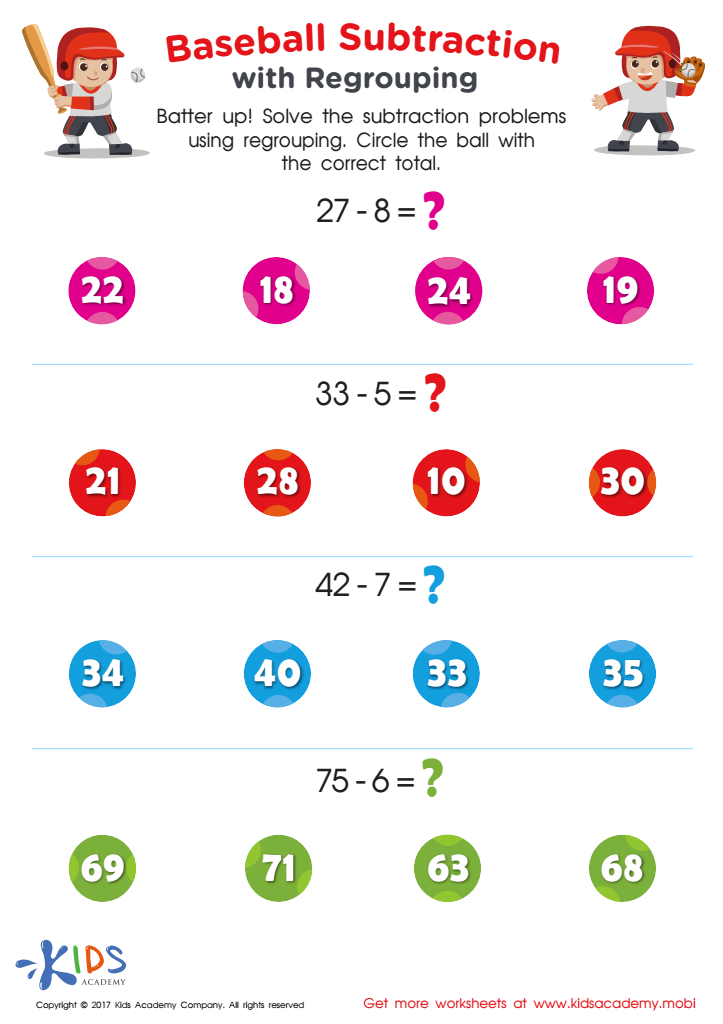
Subtraction With Regrouping for 2nd Grade Worksheet
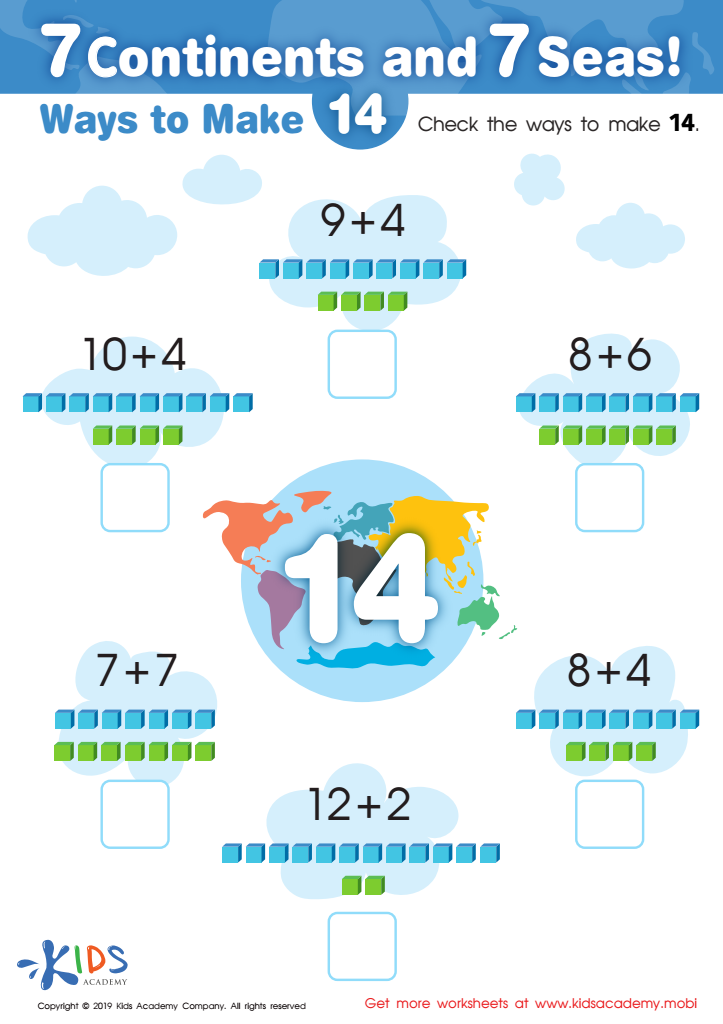
7 Continents and 7 Seas Worksheet
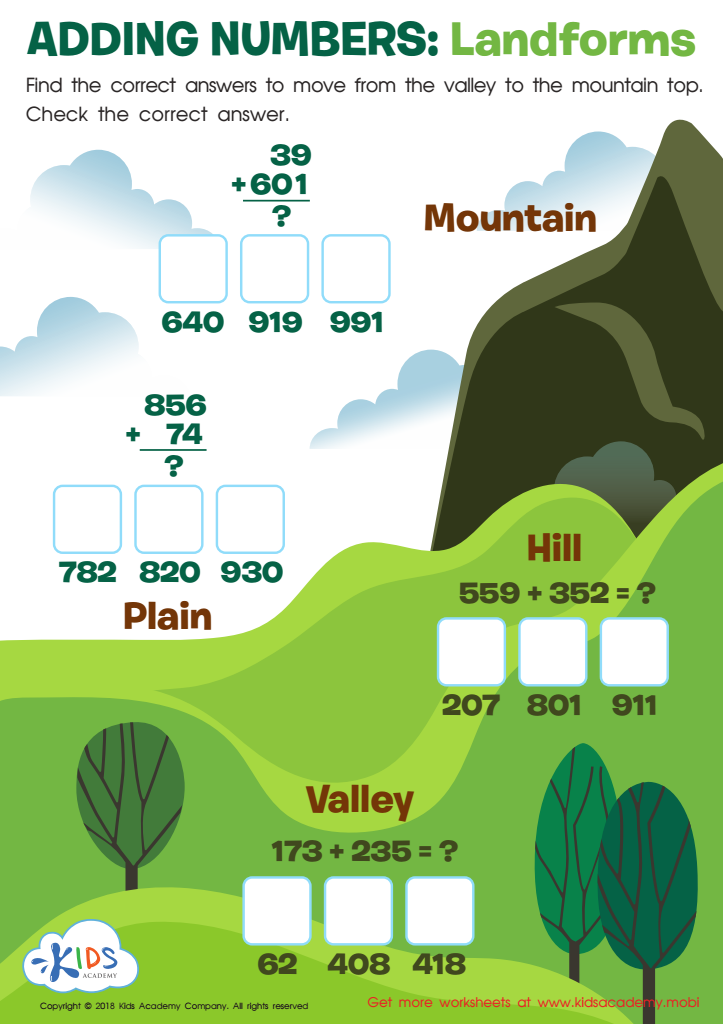
Adding Numbers: Landforms Worksheet

Adding at the Hospital Worksheet
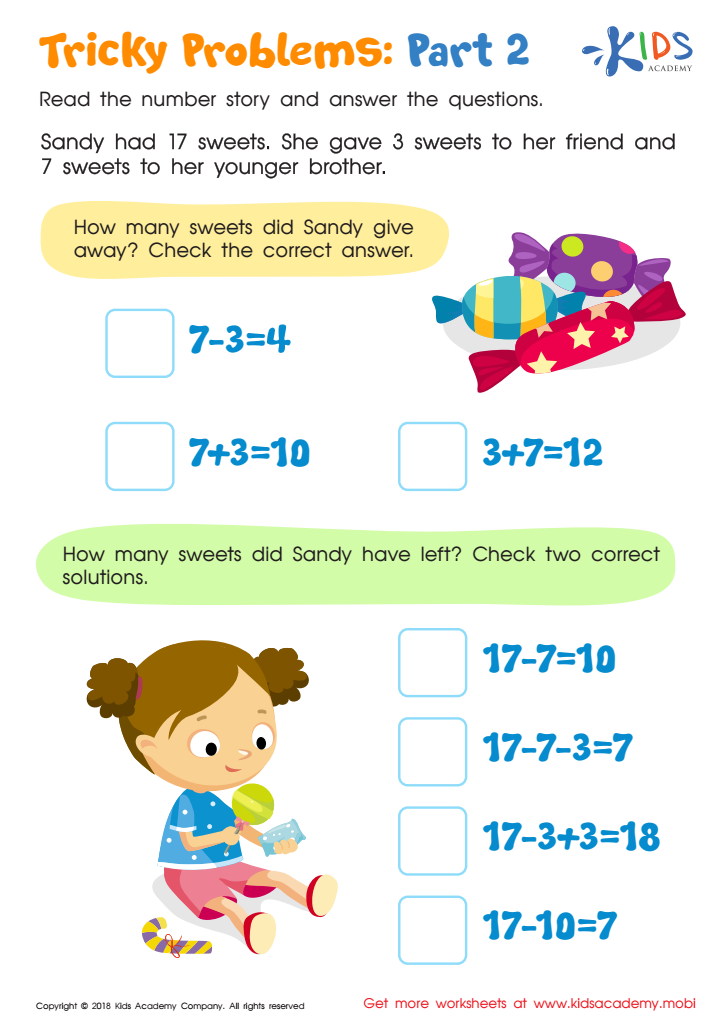
Tricky Problems Worksheet: Part 2
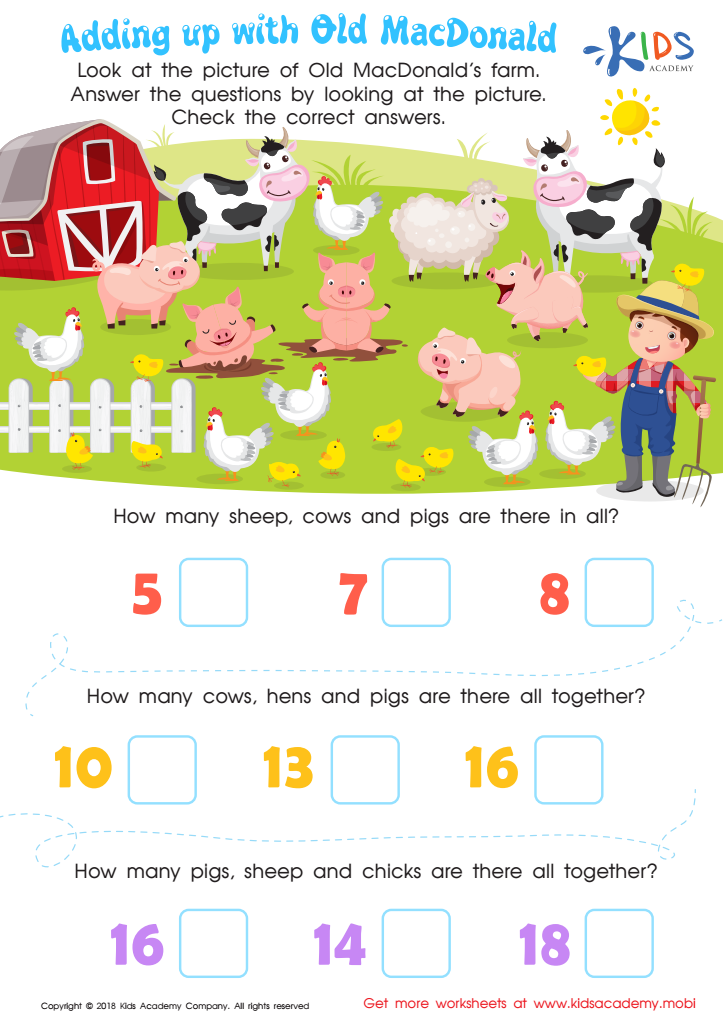
Adding Up with Old MacDonald Worksheet
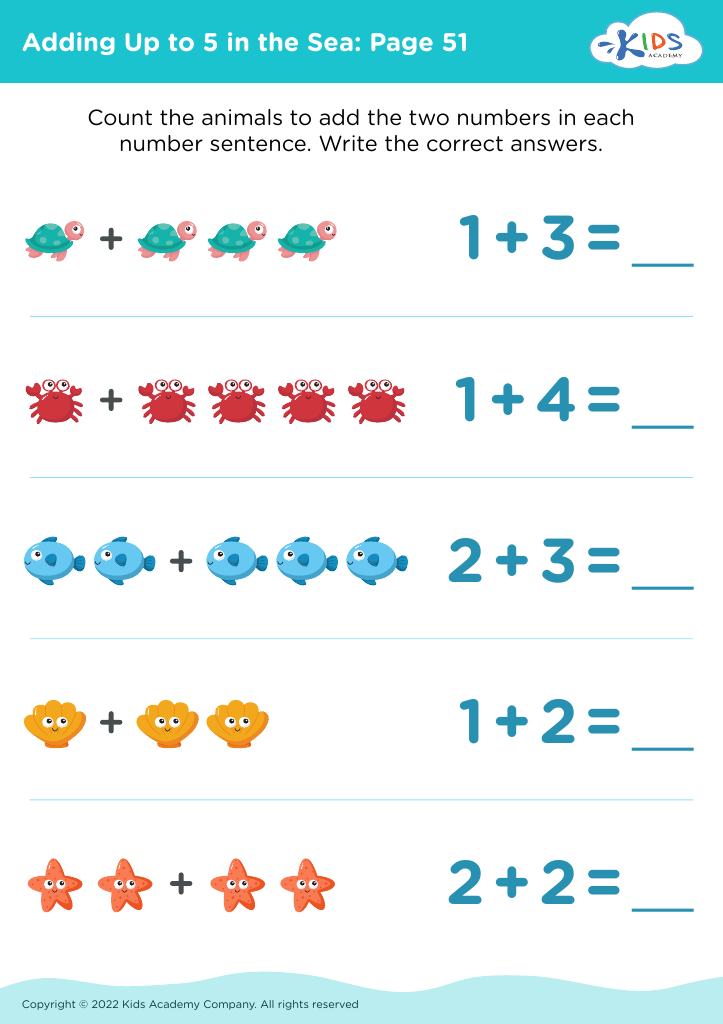
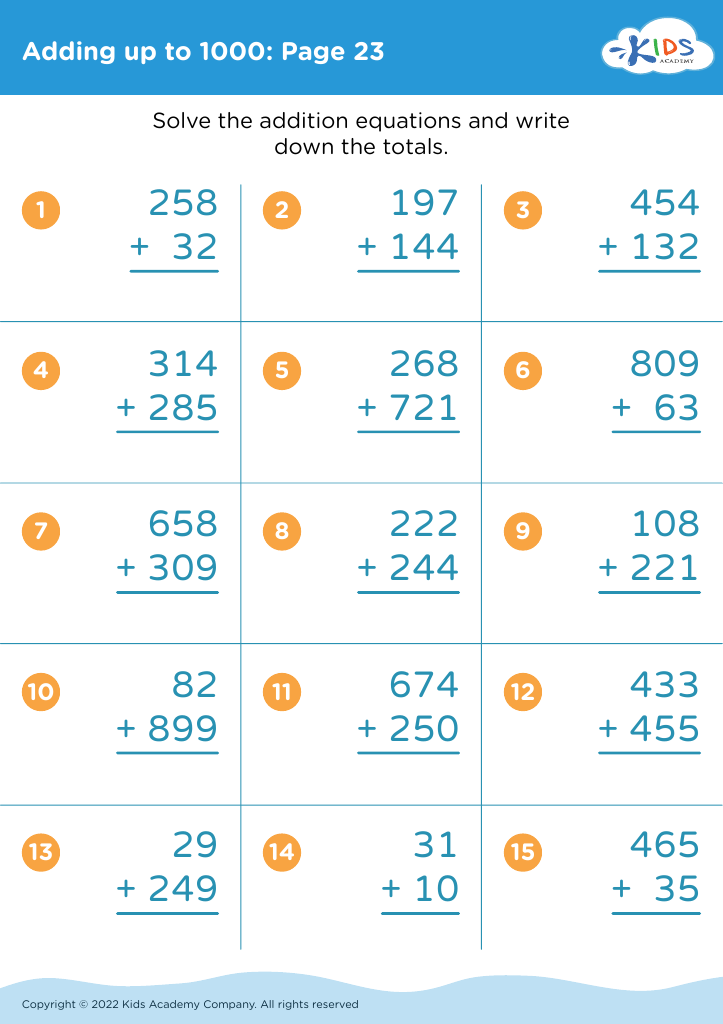
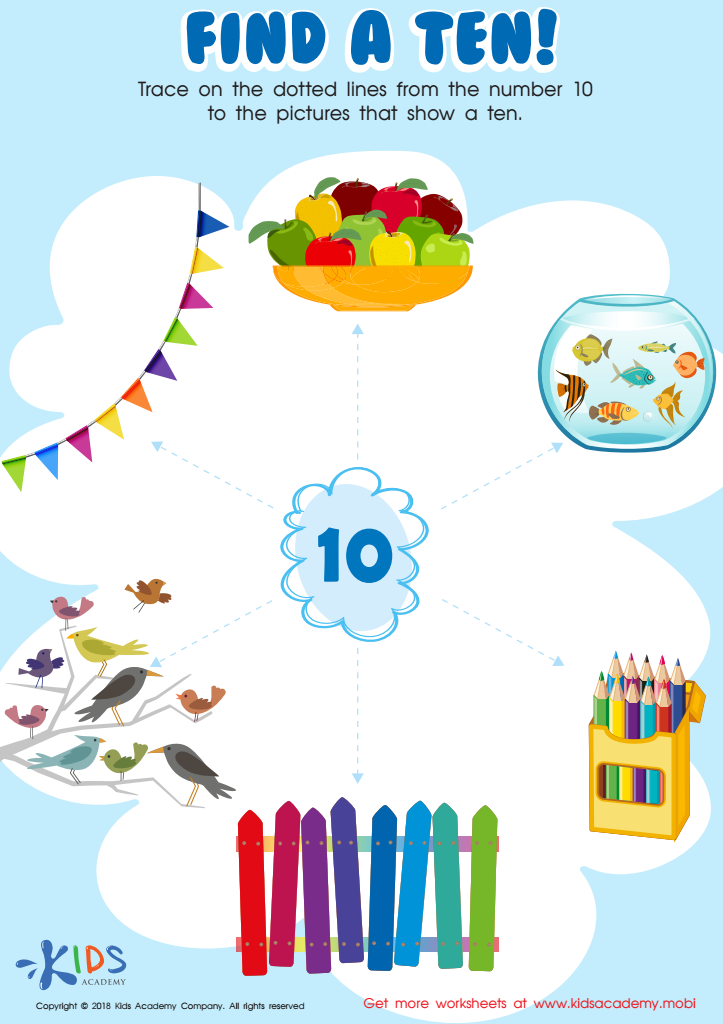
Kindergarten Math Worksheet: Find a Ten
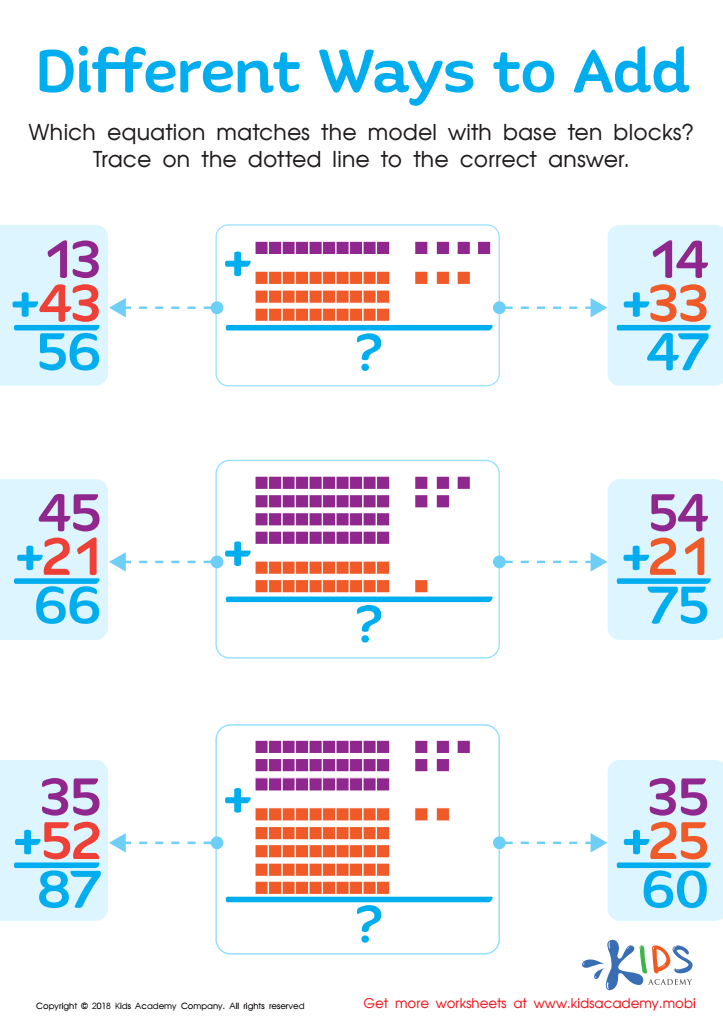
Different Ways to Add Worksheet
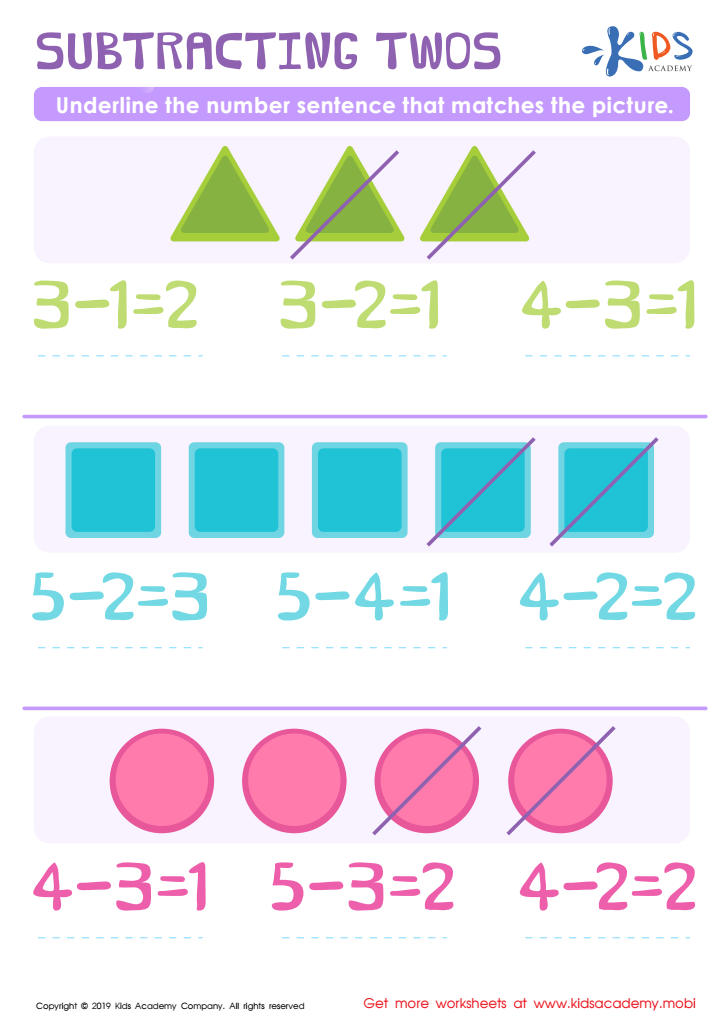
Subtracting Twos Worksheet








Parents and teachers should prioritize mental math practice for children aged 5 to 8 because it builds a crucial foundation for future mathematical understanding and academic success. At this early age, children's brains are highly malleable and receptive to new concepts. Developing mental math skills enhances their numerical fluency, making it easier for them to grasp more complex mathematical ideas later on.
Mental math also stimulates cognitive development by encouraging problem-solving and critical thinking. As children learn to calculate mentally, they improve their memory, concentration, and ability to think abstractly. These skills are not only applicable to mathematics but are transferable to other academic subjects and real-world situations.
Moreover, mental math practice helps children develop confidence in their mathematical abilities. When they can solve problems quickly and accurately in their heads, they build a positive association with math, reducing the likelihood of math anxiety—a common issue that can hinder academic performance long-term.
Engaging in mental math activities can also make learning math more enjoyable. Fun exercises and games can spark interest and motivate young learners, fostering a lifelong love for the subject. Therefore, by incorporating mental math practice into daily routines, parents and teachers support holistic educational development that sets children on the path to success.








