Number tracing Math Worksheets for Ages 5-8
4 filtered results
-
From - To
Discover the perfect tool to boost your child's number recognition and handwriting skills with our Number Tracing Math Worksheets for Ages 5-8. At Kids Academy, our worksheets offer engaging activities designed to help children learn to write numbers while reinforcing counting skills. Each worksheet features fun and interactive tasks that not only make learning enjoyable but also help to build fine motor skills. These resources cater to young learners’ developmental stages, ensuring each exercise is age-appropriate and effective. Ideal for parents and teachers alike, our number tracing worksheets are a cornerstone in building foundational math skills.
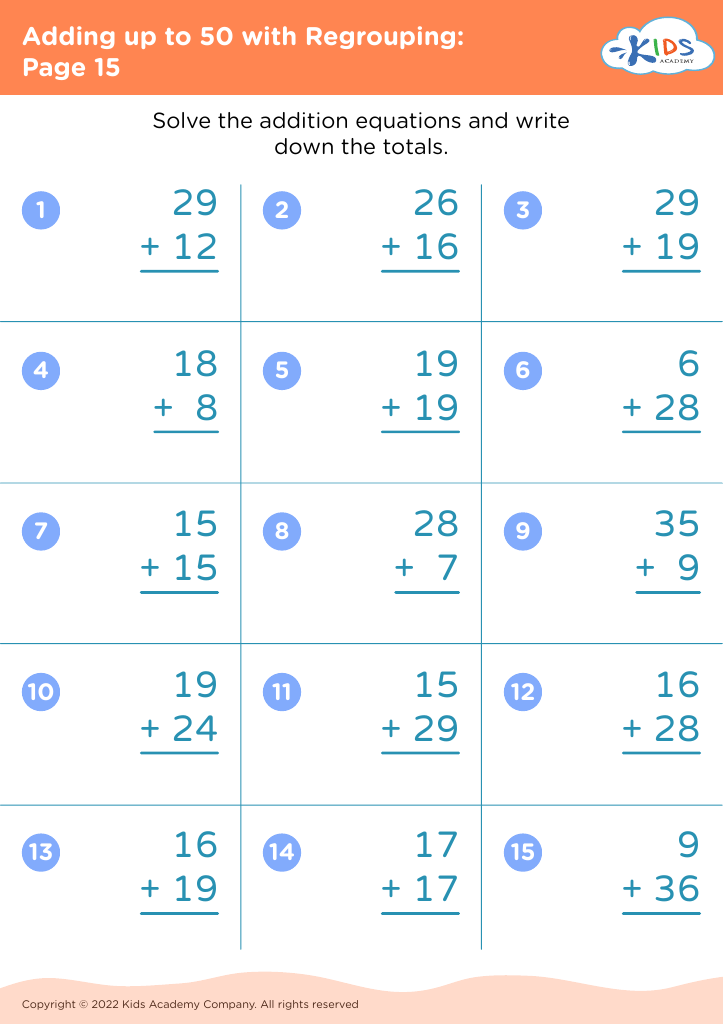
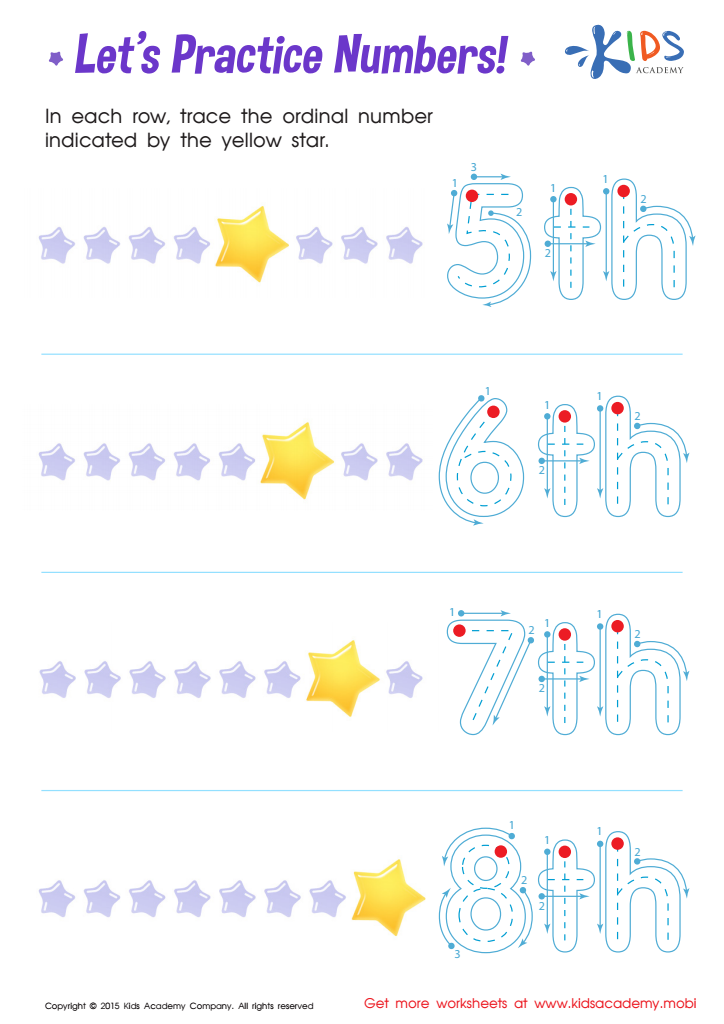
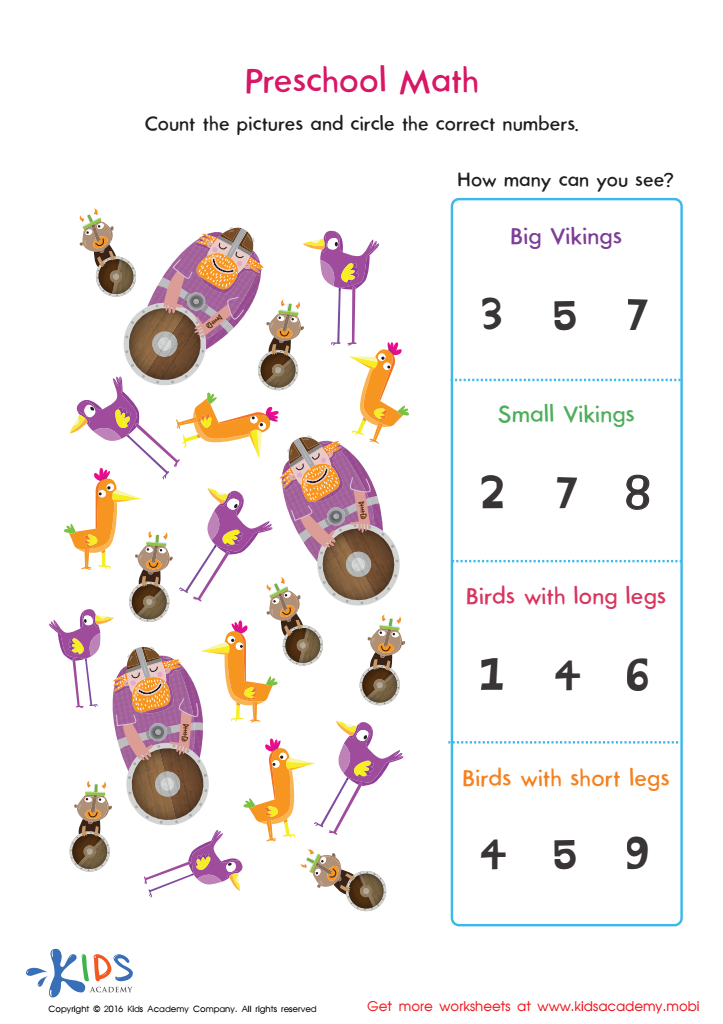
 Assign to My Students
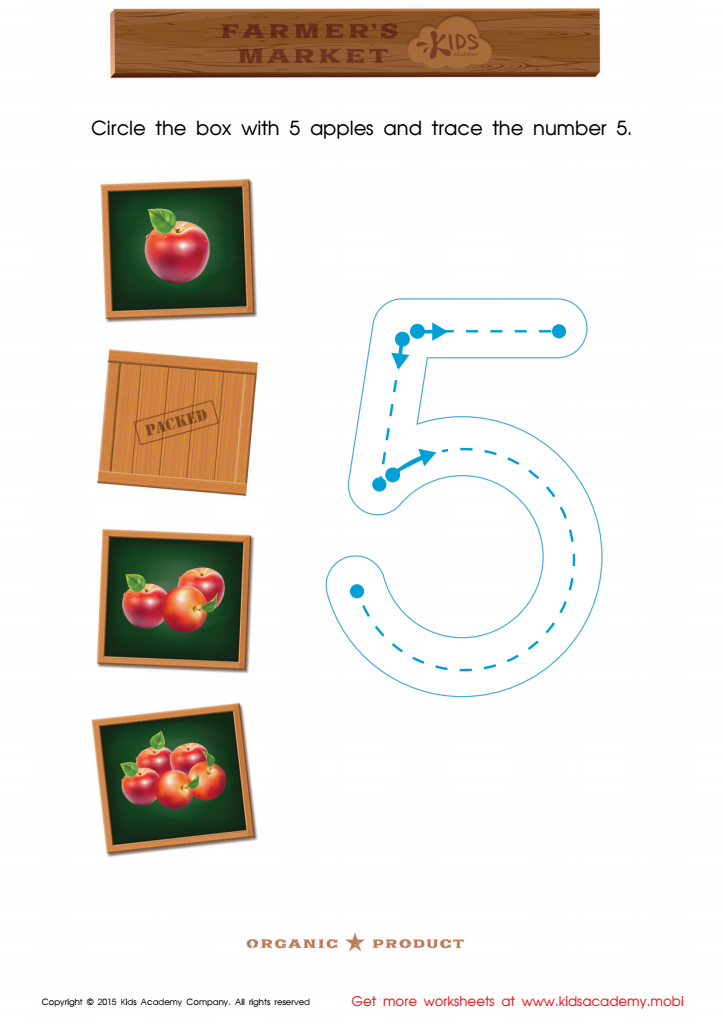
Count the Apples and Trace the Number 5 Printable








Number tracing for ages 5-8 is crucial because it lays the foundation for essential numerical and fine motor skills. As an early years teacher or parent, encouraging number tracing helps young children develop proper number formation, crucial for legible handwriting and accurate math work in later years. Proper number formation contributes significantly to cognitive retention due to the motor activity associated with learning.
Additionally, number tracing engages multiple senses—sight, touch, and movement—all of which reinforce learning through multisensory input. As children trace numbers, they not only learn to identify numerical symbols but also internalize the concept of numerical order and quantity, which are critical for their later understanding of more complex mathematical operations.
Furthermore, regular number tracing activities improve fine motor skills and hand-eye coordination, skills that are fundamental not just for future academic success, but for life skills such as tying shoes or buttoning clothes. The practice also instills a discipline of practice and effort, reinforcing that repetition helps mastery.
Finally, positive early experiences with math can foster a love for learning and reduce math anxiety, thus setting a robust base for future positive attitudes towards math. By incorporating fun and engaging number tracing activities, parents and teachers can make a significant difference in a child’s early educational journey.








