Numerical recognition Math Worksheets for Ages 5-8
3 filtered results
-
From - To
Discover our engaging Numerical Recognition Math Worksheets designed specifically for children aged 5-8! These worksheets provide interactive activities that help young learners enhance their number recognition skills, laying a solid foundation for future math concepts. Featuring colorful visuals and fun exercises, our resources make learning enjoyable and effective. From identifying numbers to comparing quantities, each worksheet encourages hands-on practice and boosts confidence in math abilities. Perfect for teachers and parents alike, our printable worksheets cater to various learning styles, ensuring every child can thrive. Explore our collection today to support your child’s mathematical journey with enjoyable and educational content!
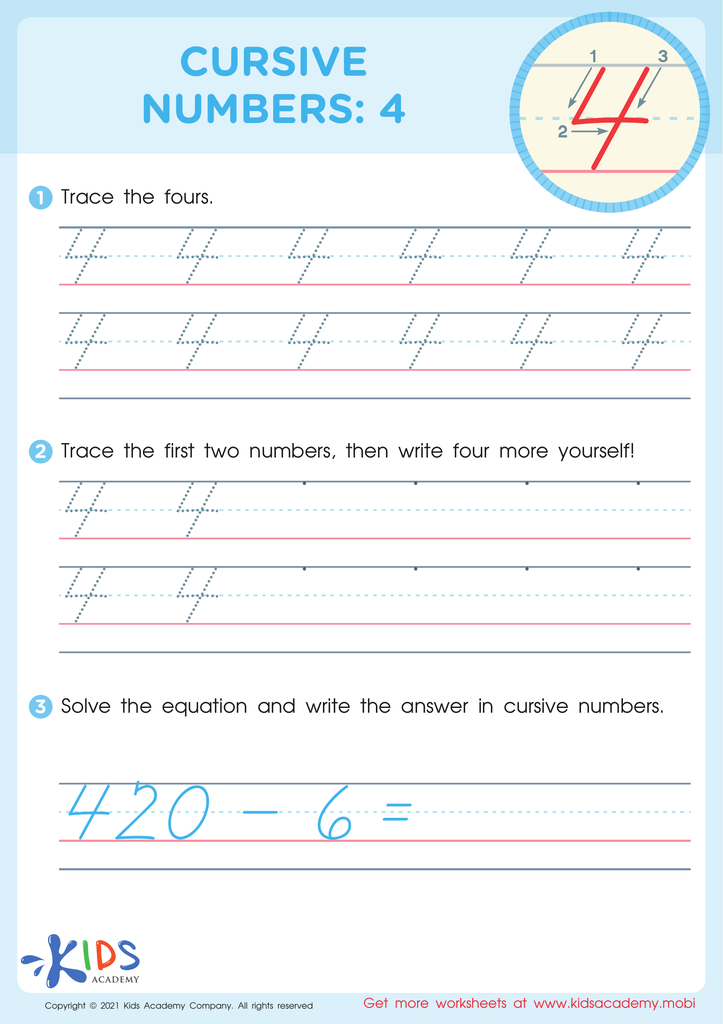
Cursive Numbers: 4 Worksheet








Numerical recognition is a fundamental building block of mathematics for children aged 5-8, and it holds significant importance for both parents and teachers. At this crucial developmental stage, children are starting to make sense of numbers, quantities, and basic mathematical concepts. Mastery in numerical recognition not only aids in early math skills, but it also fosters confidence and a positive attitude toward learning mathematics.
For parents, recognizing the importance of numerical skills can empower them to create supportive home environments that encourage practice through games, activities, and everyday experiences. This engagement reinforces the value of learning and helps children see math as a fun and integral part of life.
For teachers, focusing on numerical recognition allows them to tailor lessons that support diverse learning styles and paces. Early interventions can identify students who may struggle, enabling personalized approaches to enhance their understanding. Developing numerical recognition skills ensures that children are prepared for more complex mathematical concepts as they progress in their education.
Ultimately, nurturing numerical recognition at an early age lays the groundwork for future success in math and related subjects, paving the way for lifelong learning and problem-solving skills that are essential in an increasingly complex world.








