
Practice counting Math Worksheets for Ages 5-8
6 filtered results
Difficulty Level
Grade
Age
-
From - To
Subject
Activity
Standards
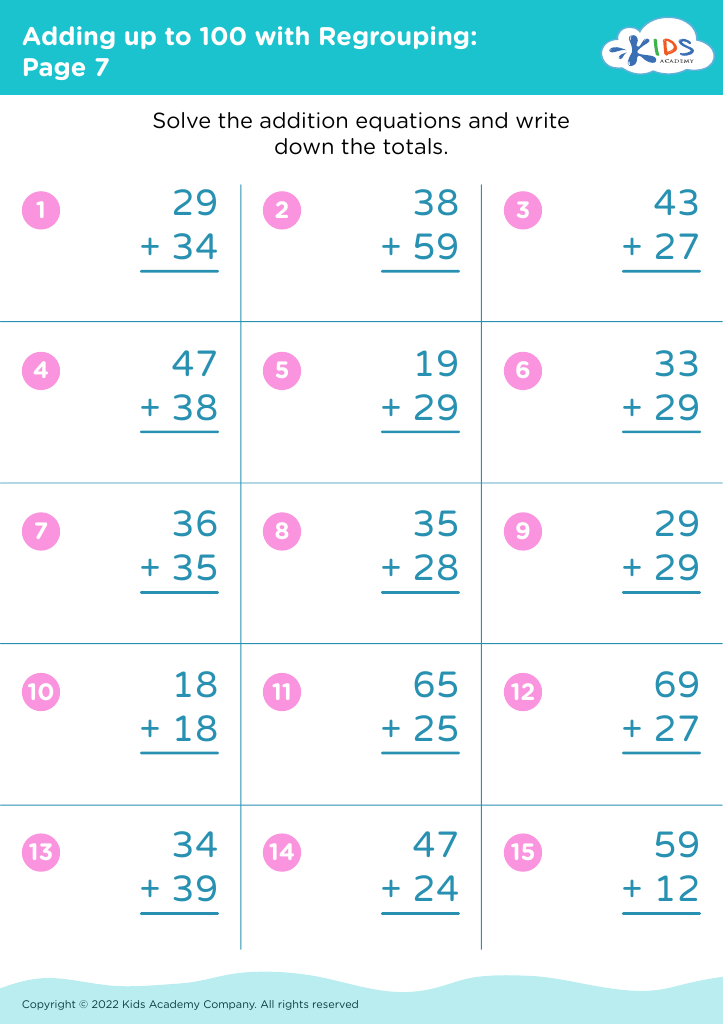
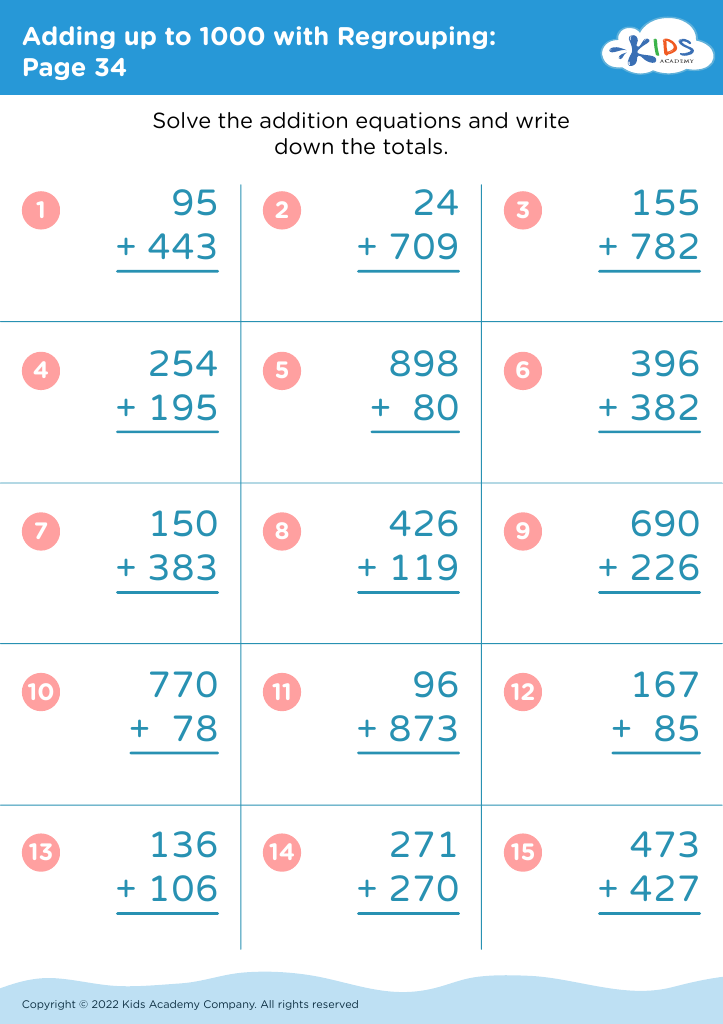
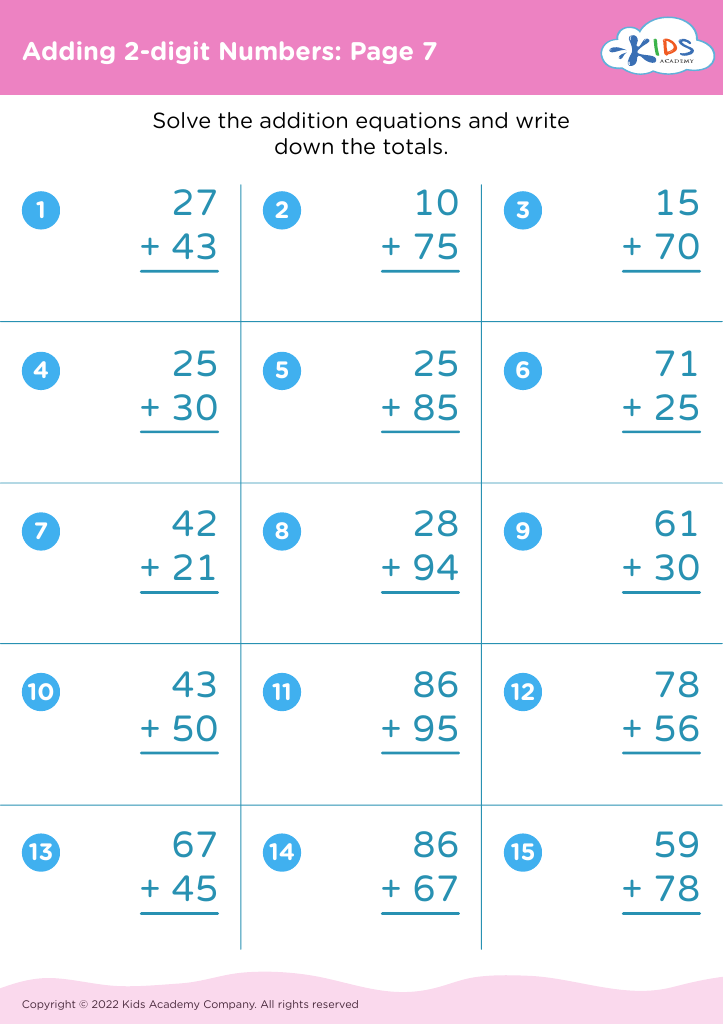
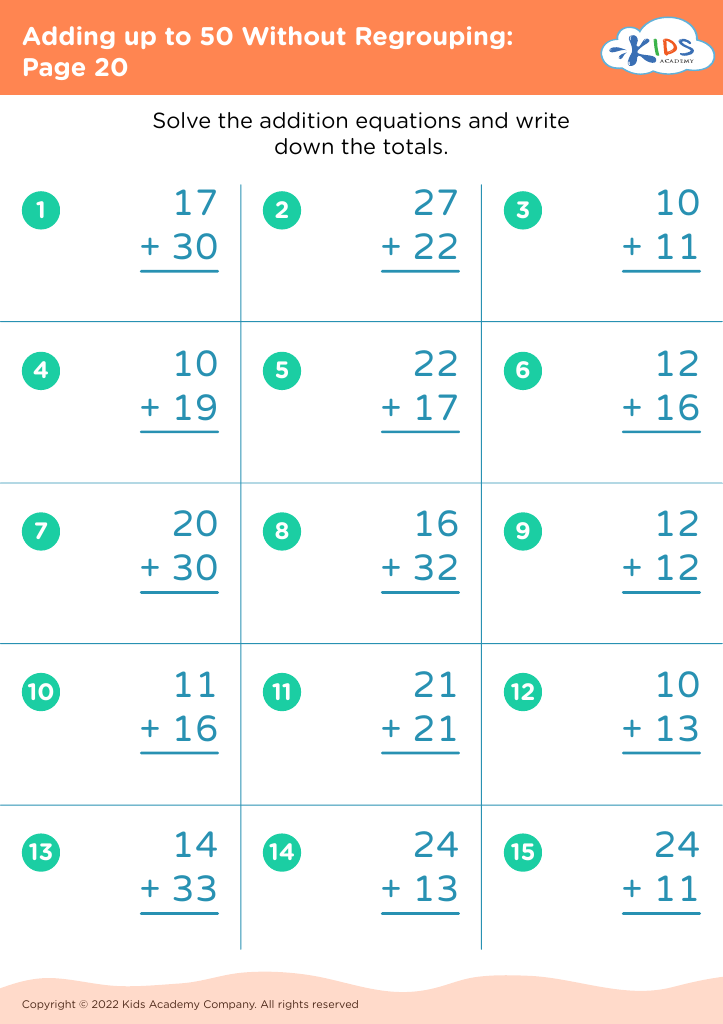
Enhance your child’s counting skills with our engaging practice counting math worksheets for ages 5-8. These meticulously designed printables help young learners master counting through fun and interactive activities. Each worksheet promotes numerical proficiency, critical thinking, and problem-solving by incorporating playful themes and colorful illustrations. Whether counting objects, filling in missing numbers, or sequencing, these activities provide foundational math skills essential for future success. Ideal for classroom use or home practice, our worksheets make learning a delightful adventure. Boost your child’s mathematical confidence and ensure crucial skills development with our specially tailored counting exercises.
Favorites
With answer key
Interactive
Join Kids Academy for Free
Who is primarily going to use this learning content?








Parents and teachers should emphasize practice counting in math for ages 5-8 as it lays the fundamental groundwork for future mathematical concepts. At this developmental stage, children are forming their understanding of numbers and patterns, which are critical for more complex mathematical operations. Mastering counting skills helps young learners build number sense, enabling them to grasp the concepts of quantity, order, and the relationship between numbers.
Moreover, consistent practice in counting fosters cognitive development, improving memory, attention, and logical thinking. Children who are proficient in counting are better prepared to tackle addition, subtraction, and later, multiplication and division. Beyond academics, counting enhances problem-solving skills and supports everyday activities, such as telling time, measuring ingredients while cooking, and managing money.
From a confidence-building perspective, early success in math ensures children develop a positive attitude towards the subject, encouraging a lifelong interest and reducing math anxiety. Daily counting practice can also be engaging for young learners when integrated through games, songs, and hands-on activities, making the learning process enjoyable. Therefore, by focusing on counting practice during ages 5-8, parents and teachers provide children with a strong numerical foundation, setting the stage for academic success and practical life skills.








