Shape identification Math Worksheets for Ages 5-8 - Page 2
33 filtered results
-
From - To
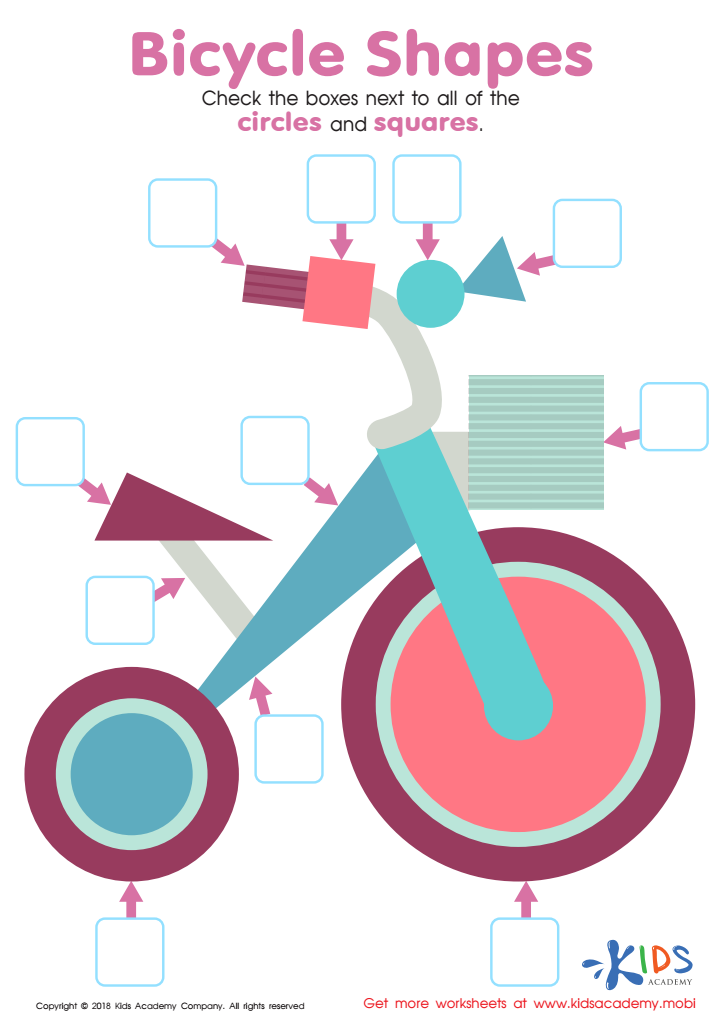
Bicycle Shapes Worksheet
 Assign to My Students
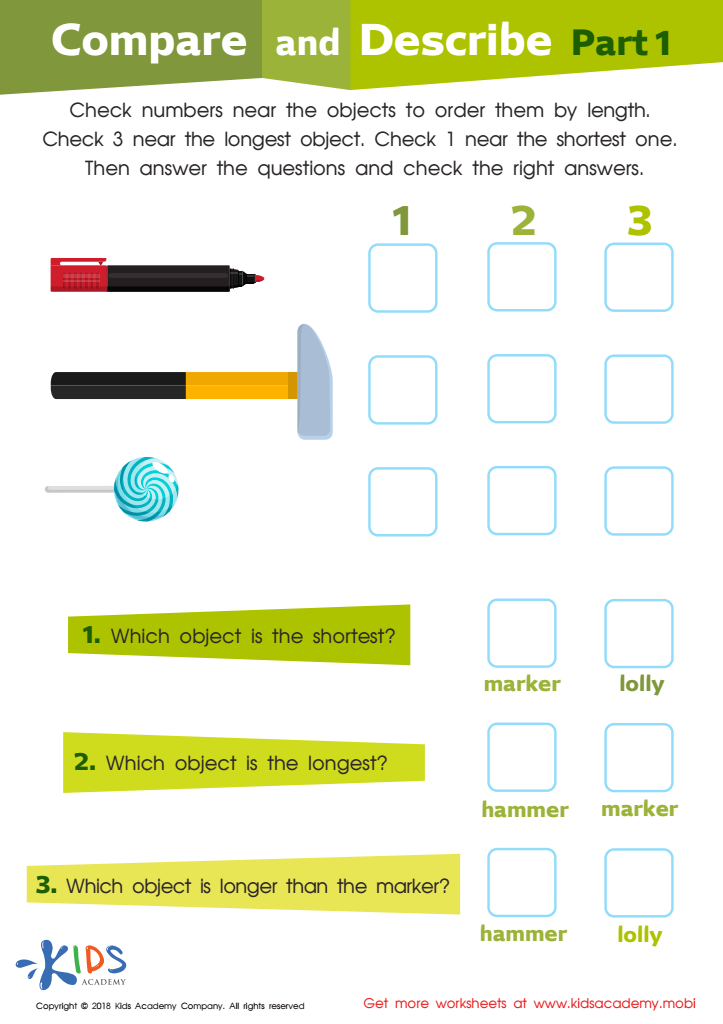
Compare and Describe: Part 1 Worksheet
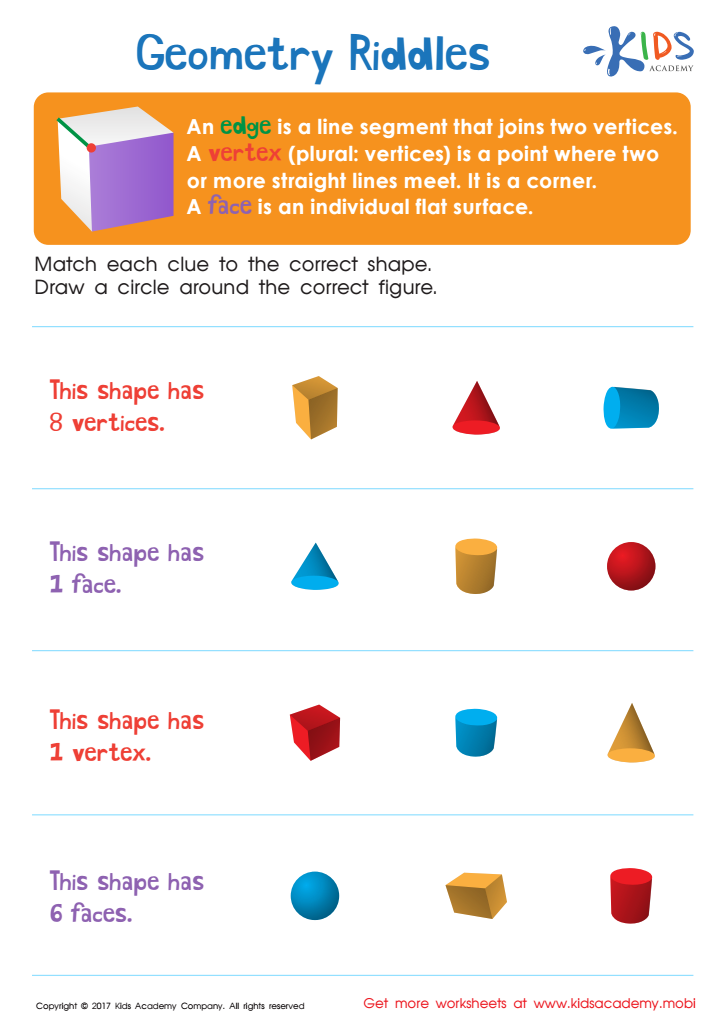
Geometry Riddles Printable
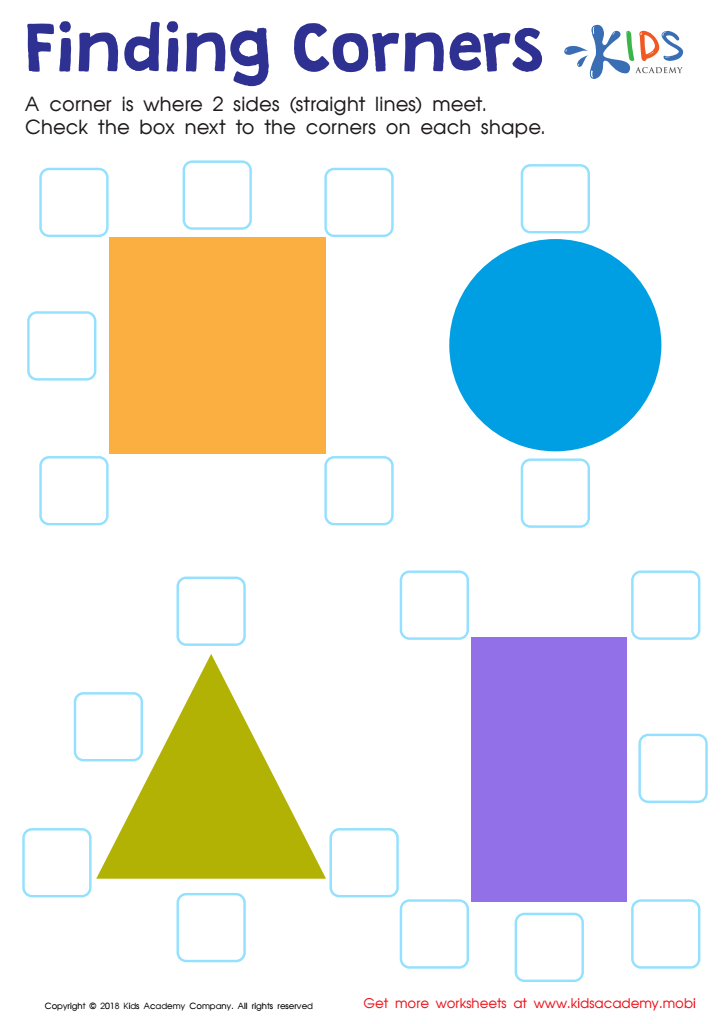
Finding Corners Worksheet
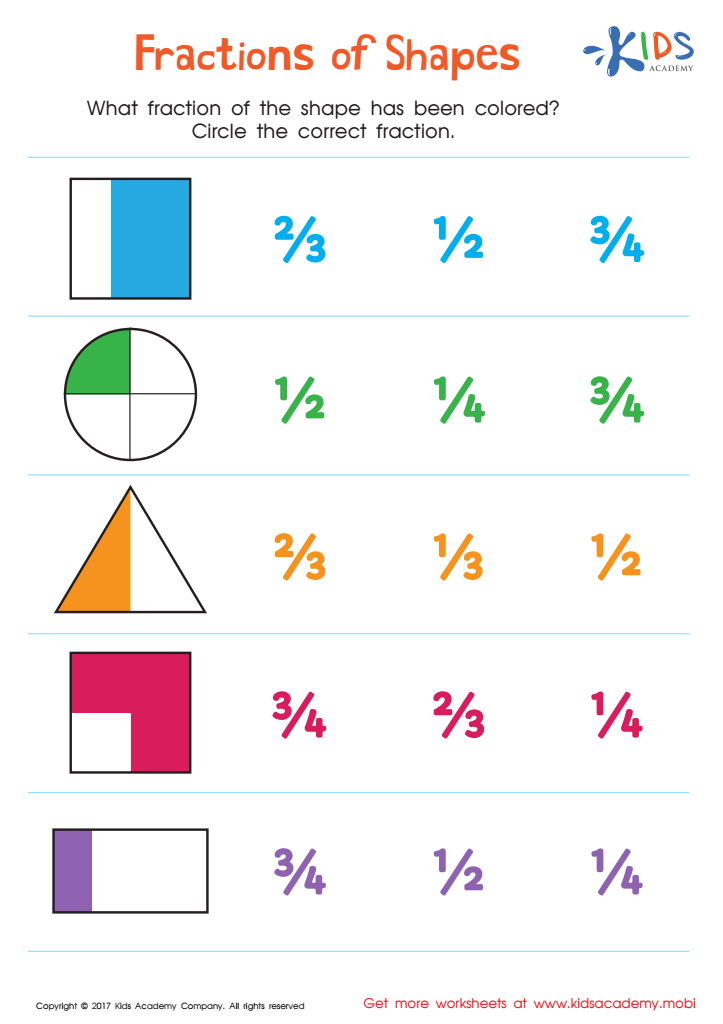
Fractions of Shapes: Math Concept Worksheet
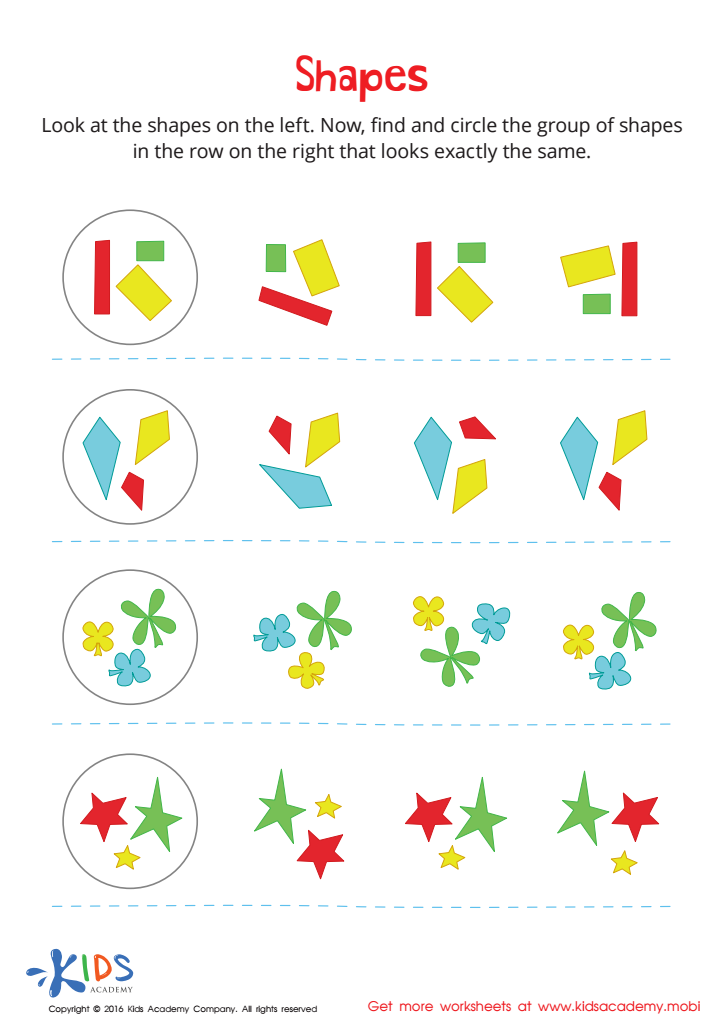
Shapes Worksheet








Shape identification is a foundational aspect of early mathematics education, and it is crucial for the cognitive and spatial development of children aged 5-8. Parents and teachers should care about this skill for several reasons.
Firstly, recognizing and naming shapes builds a strong mathematical vocabulary. This language proficiency is essential for communicating ideas and understanding more complex concepts in later grades.
Secondly, shape identification contributes to spatial awareness, which is vital in daily life. Children who can easily identify shapes are better equipped to understand their surroundings and navigate the world around them. This skill aids in various subjects beyond math, including science, art, and geography.
Moreover, engaging with shapes helps develop critical thinking and problem-solving abilities. Children learn to classify and manipulate shapes, fostering creativity and analytical skills.
Additionally, incorporating shape identification into play and activities encourages engagement and makes learning enjoyable.
Overall, supporting shape identification enhances children's learning and sets a strong academic foundation, making it essential for parents and teachers to prioritize this skill in early education.








