Understanding clocks Math Worksheets for Ages 5-8
5 filtered results
-
From - To
Welcome to our "Understanding Clocks" Math Worksheets for ages 5-8, designed to help young learners develop essential time-telling skills. Our engaging and interactive worksheets cater to various learning styles, making math fun and accessible. Kids will practice reading both analog and digital clocks, comprehend half past and quarter past, and explore real-world applications of keeping time. Ideal for classroom use or at-home learning, these resources are aligned with educational standards, ensuring a comprehensive understanding of time concepts. Start your child's journey to mastering clocks today with our thoughtfully designed worksheets that promote confidence and encourage critical thinking!
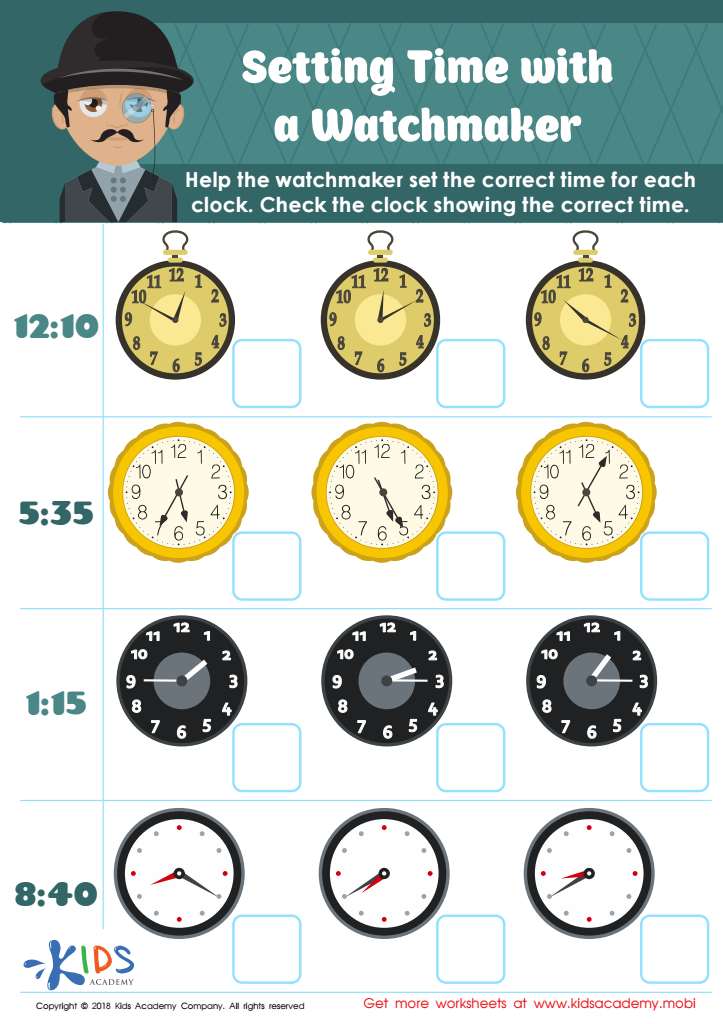
Setting Time with Watchmaker Worksheet
 Assign to My Students
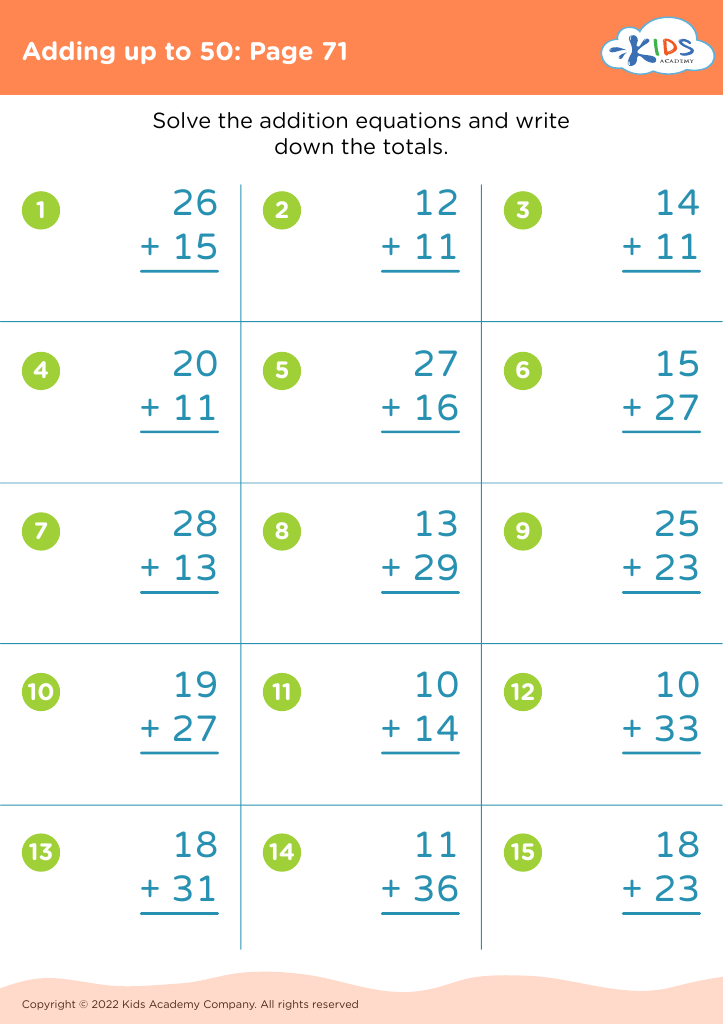
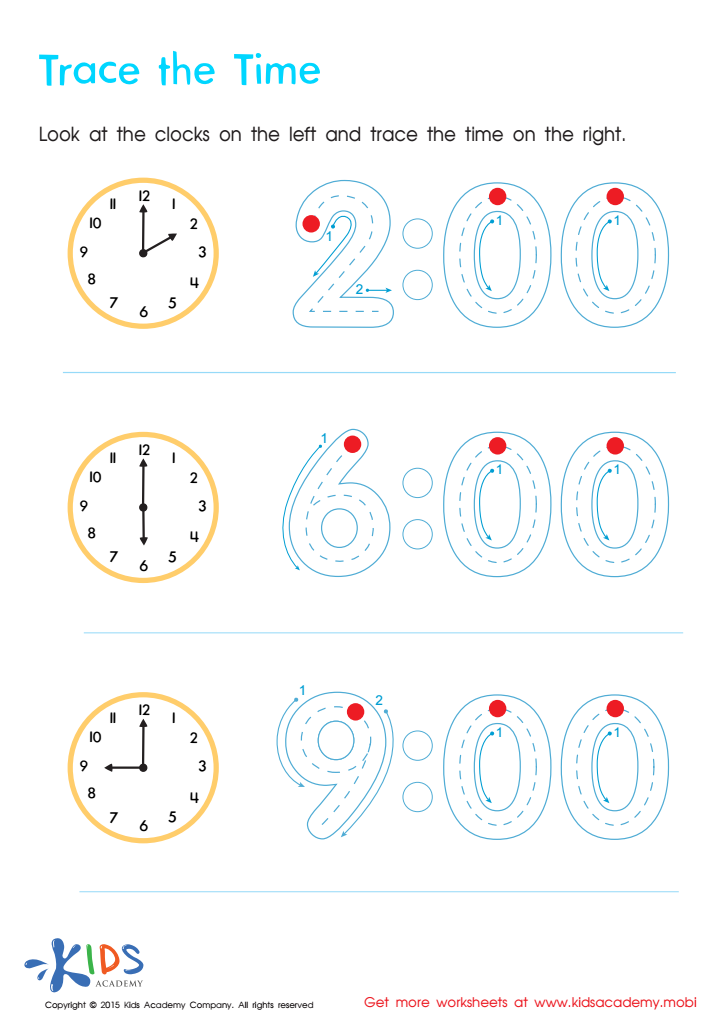
Telling The Time Worksheet: Part 2
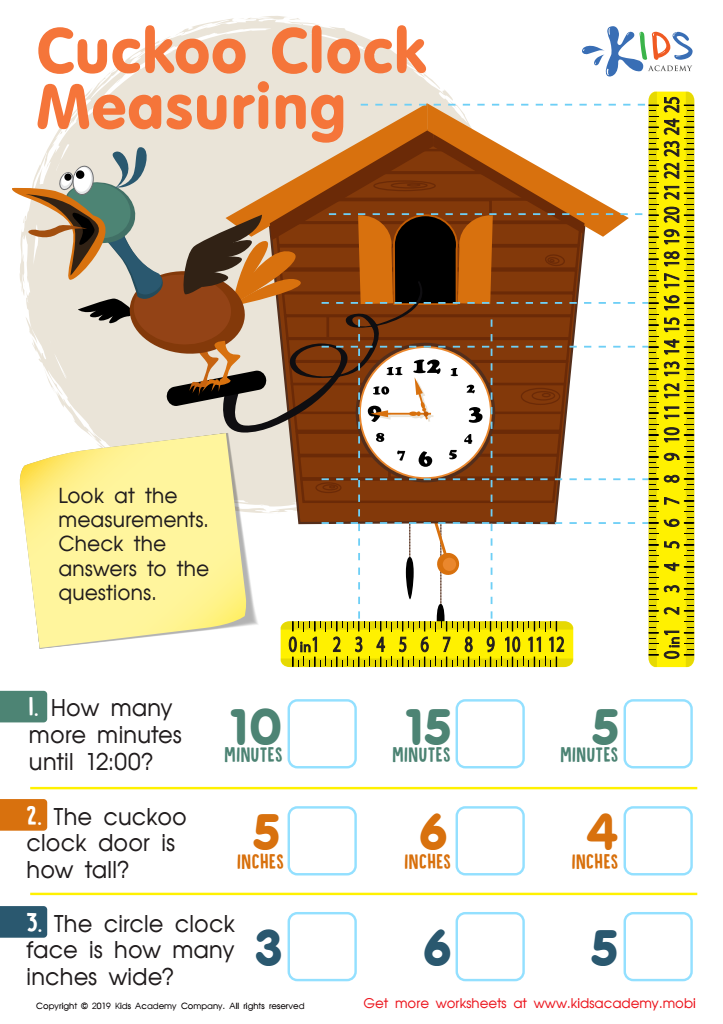
Cuckoo Clock Measuring Worksheet
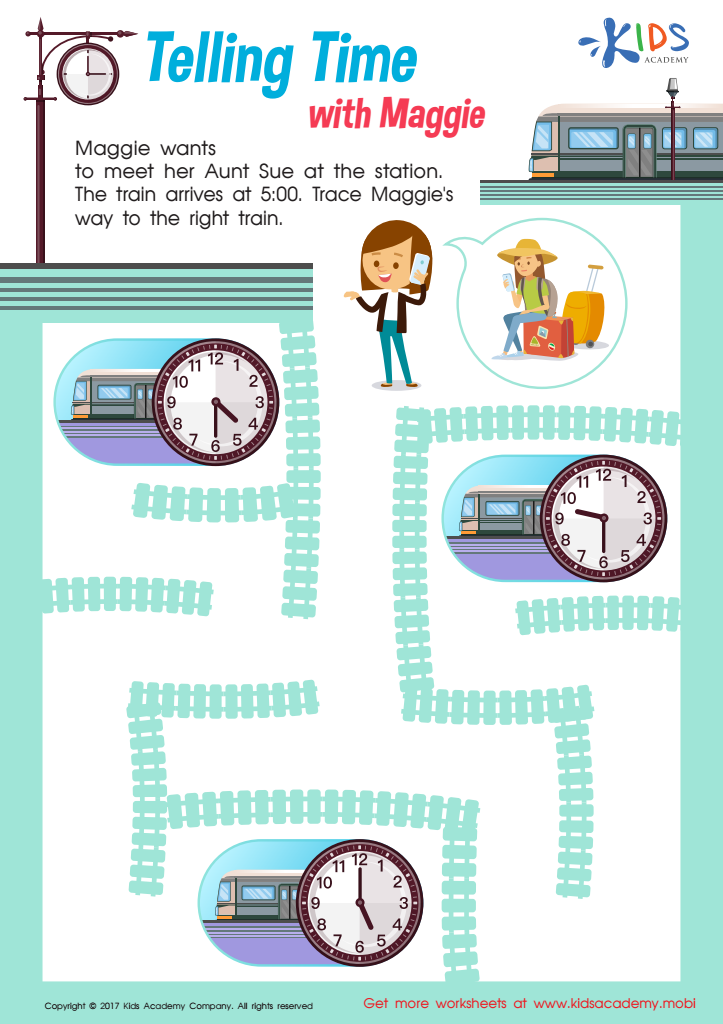
Telling Time With Maggie Time Worksheet




.jpg)


Understanding clocks and concepts of time is crucial for children aged 5-8 because it lays the foundation for both mathematical skills and everyday life experiences. At this age, kids are developing cognitive abilities and starting to make sense of their environment, which includes understanding temporal concepts such as hours, minutes, and schedules.
Learning to read clocks fosters critical thinking and problem-solving skills. As children grasp how to tell time, they also engage in vital mathematical practices such as counting, comparing, and understanding fractions. For example, dividing hours into quarters helps them comprehend the division of numbers, enhancing their overall math competence.
Additionally, understanding clocks equips children with essential life skills. It helps them learn routines, be punctual, and understand the importance of time management. Parents and teachers can use this opportunity to teach responsibility and independence by encouraging children to manage their own schedules and daily activities.
Ultimately, a solid grasp of time not only influences academic success, particularly in mathematics, but also supports effective communication and social skills, as kids learn to coordinate activities and interact with peers. Therefore, investing in children's understanding of clocks is vital for their holistic development.








