Check out this FREE Trial Lesson on Math for age 5-8!

T

Favorites
With answer key
Interactive
  • 5-8
  • Understanding fractions
  • Math
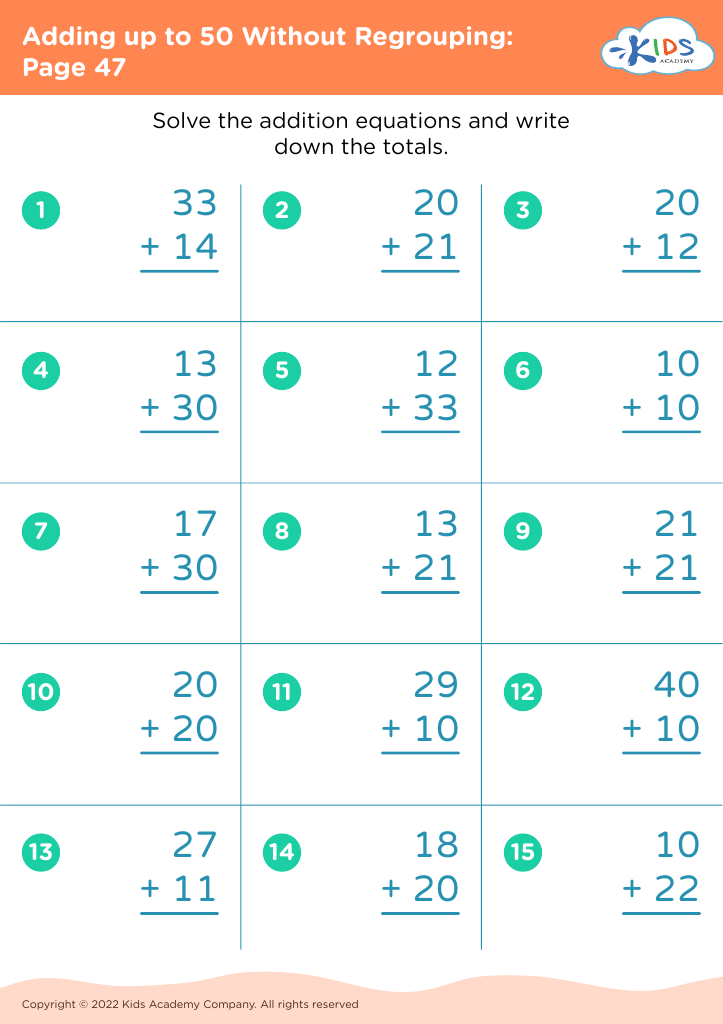
Adding up to 50 Without Regrouping: Page 47
Worksheet
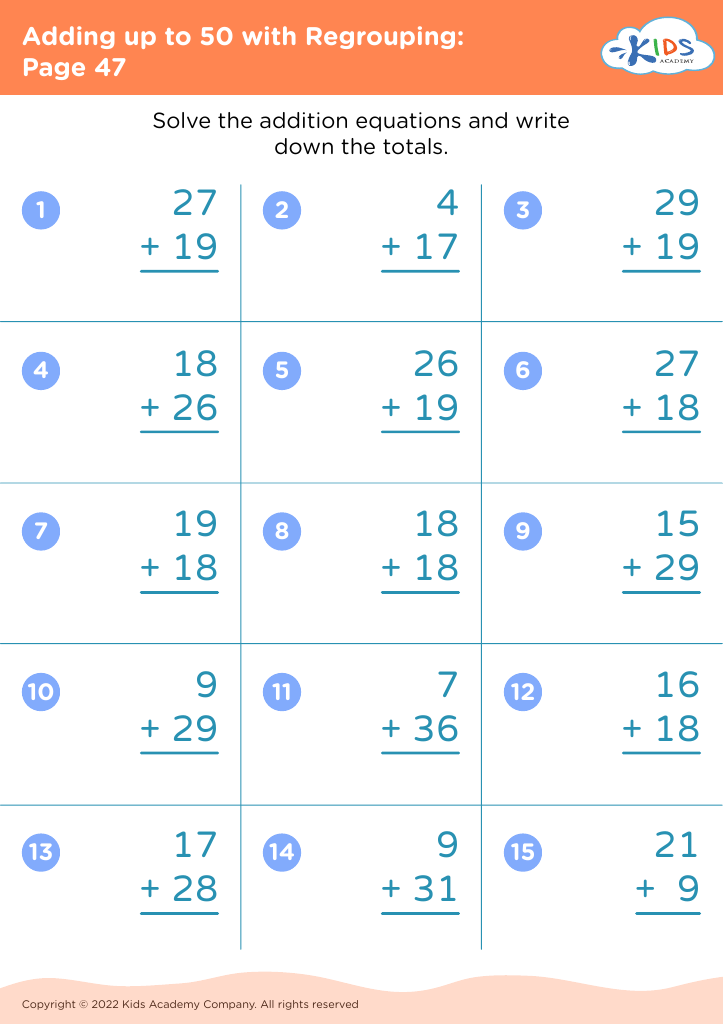
Adding up to 50 with Regrouping: Page 47
Worksheet
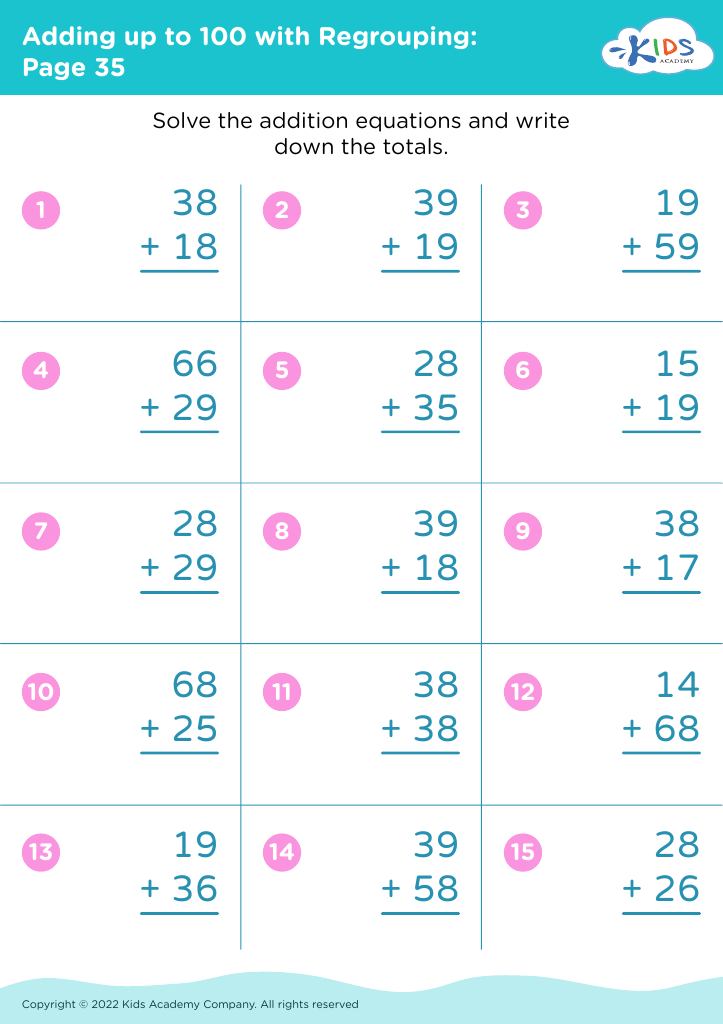
Adding up to 100 with Regrouping: Page 35
Worksheet
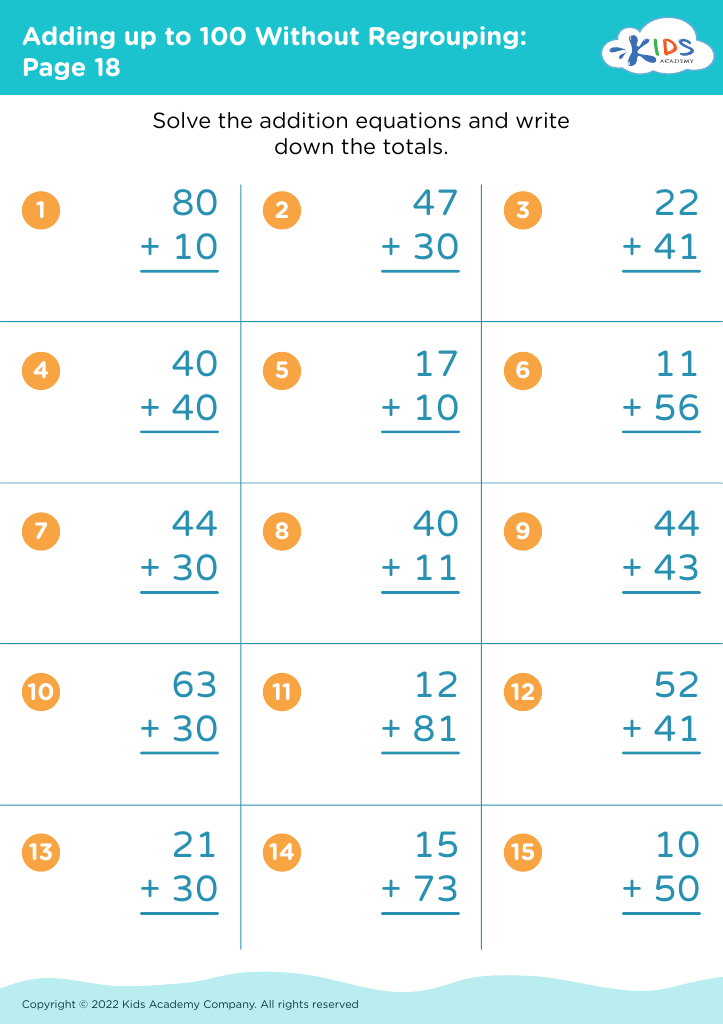
Adding up to 100 Without Regrouping: Page 18
Worksheet
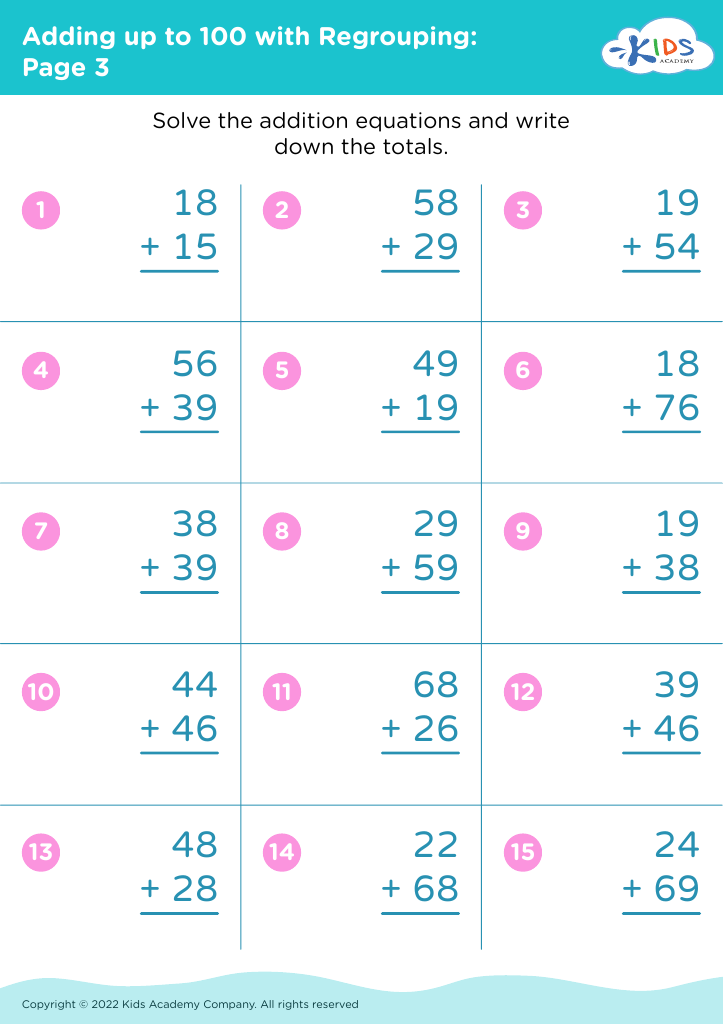
Adding up to 100 with Regrouping: Page 3
Worksheet
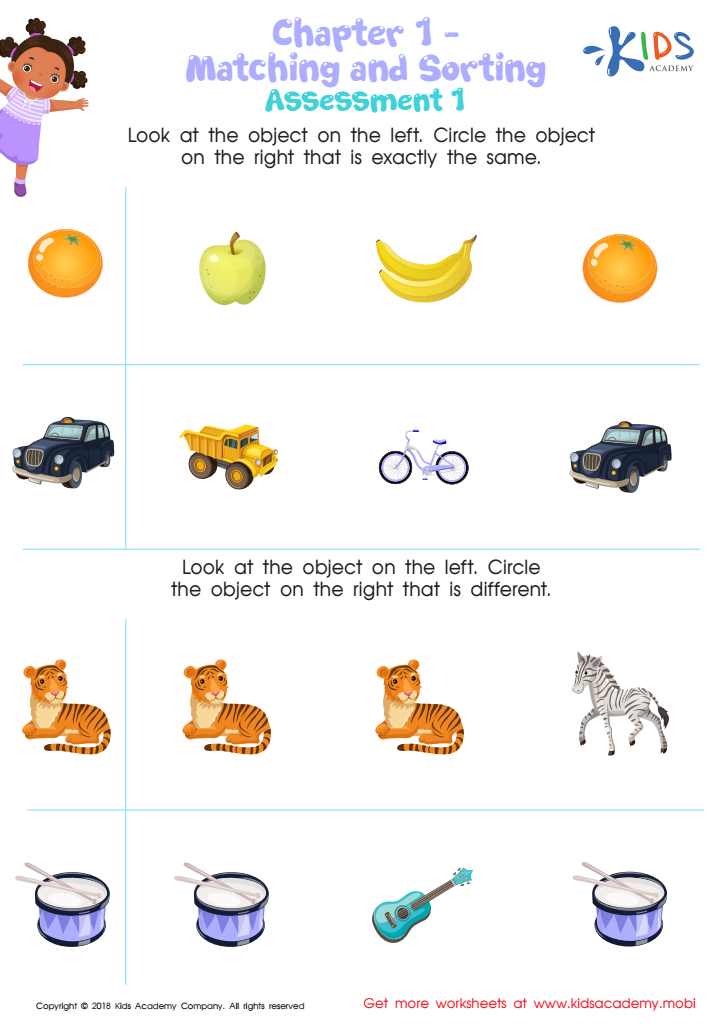
Matching and Sorting for Preschool: Assessment 1 Worksheet

Matching and Sorting for Preschool: Assessment 1 Worksheet

Test your child's matching skills with this worksheet! Ask them to name each of the objects pictured, then circle the ones that are the same. Repeat for the second task. It's a great way to assess their skills and have fun at the same time!
Matching and Sorting for Preschool: Assessment 1 Worksheet
Worksheet
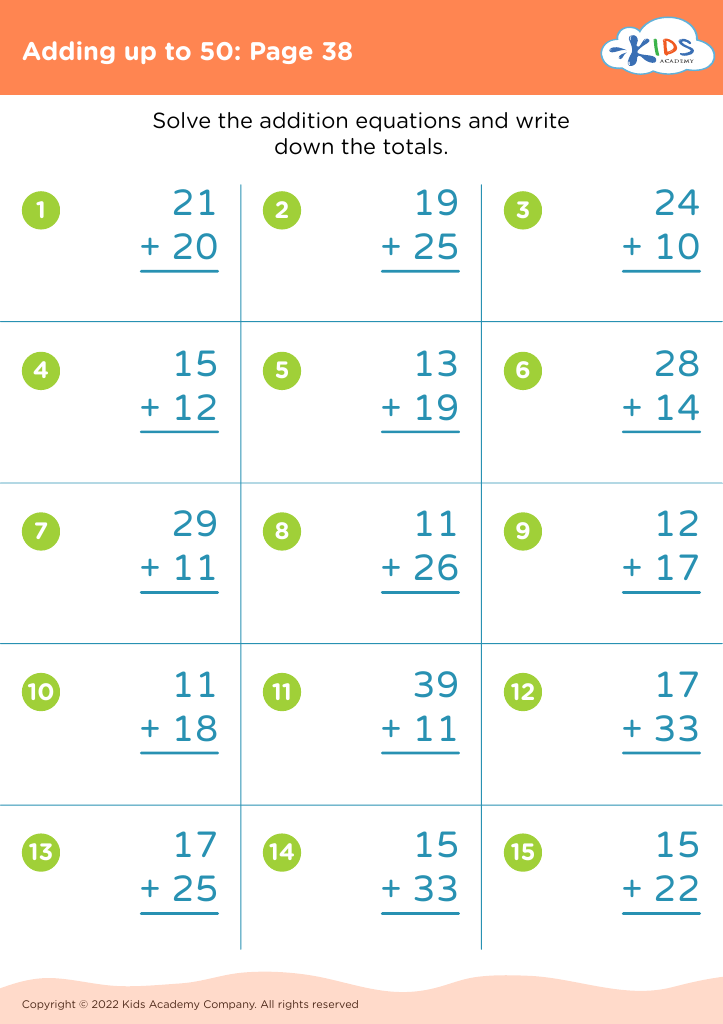
Adding up to 50: Page 38

Adding up to 50: Page 38

Adding up to 50: Page 38
Worksheet
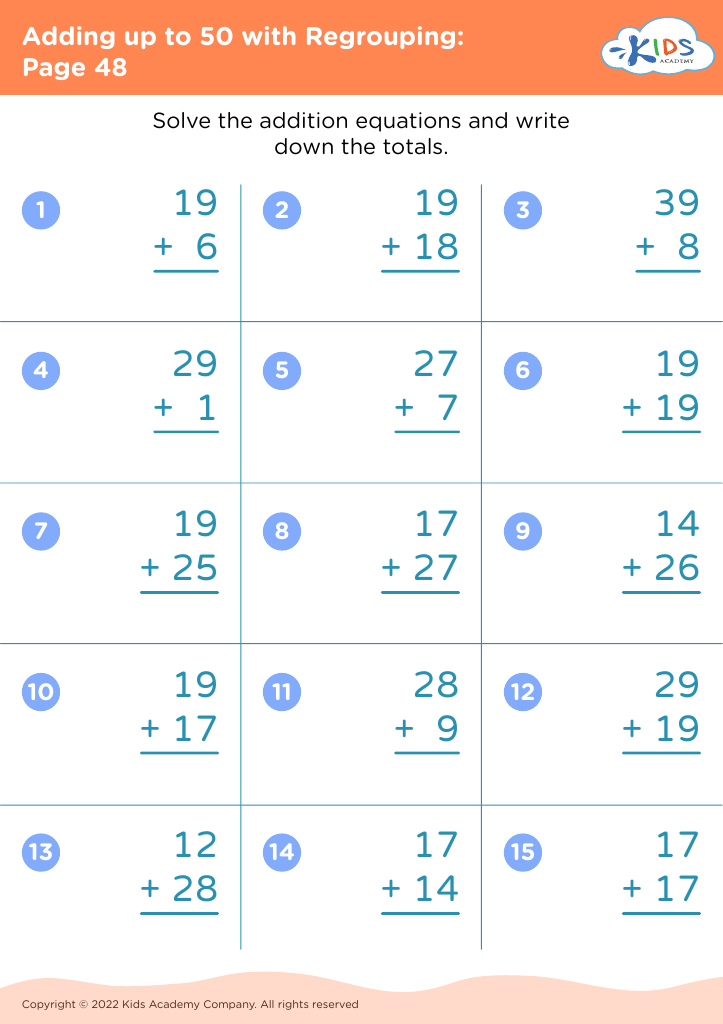
Adding up to 50 with Regrouping: Page 48
Worksheet
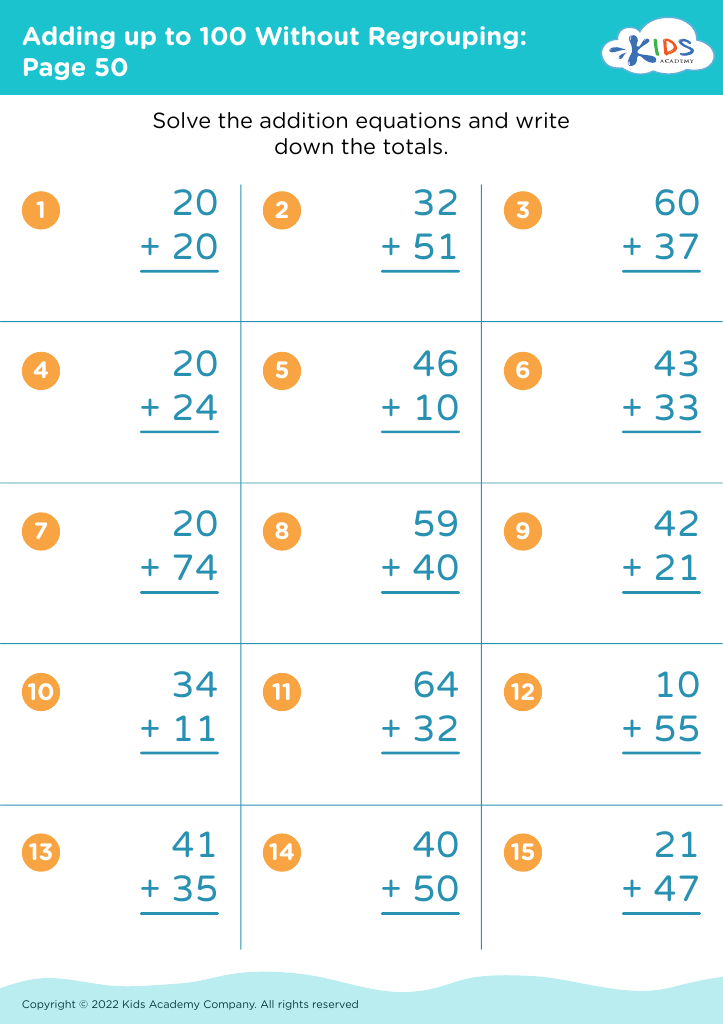
Adding up to 100 Without Regrouping: Page 50
Worksheet
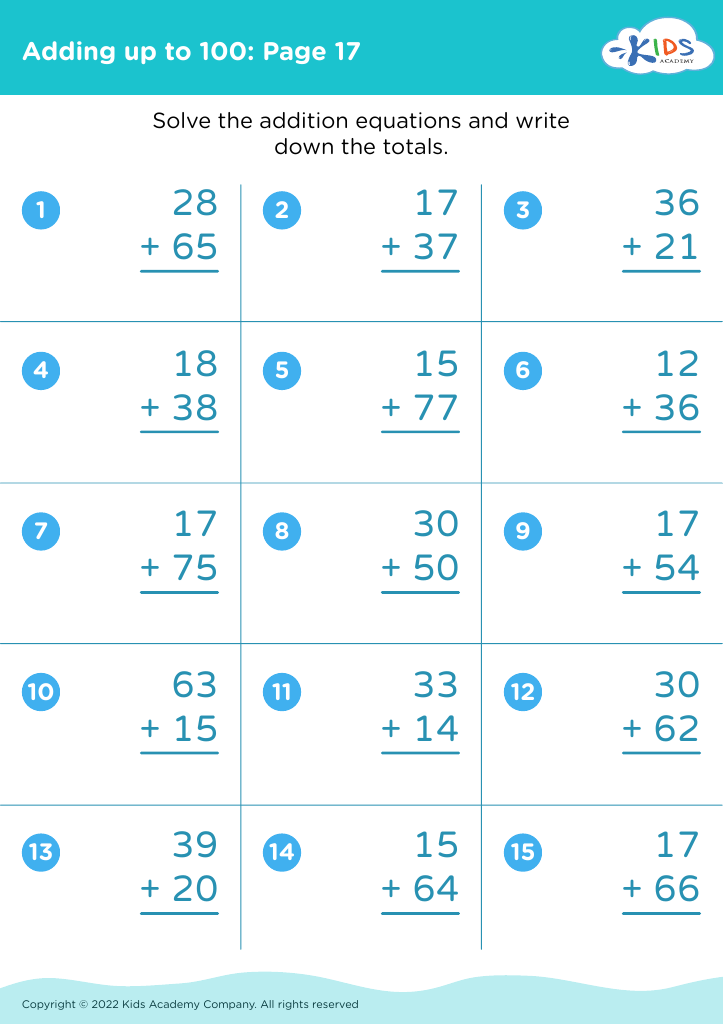
Adding up to 100: Page 17

Adding up to 100: Page 17

Adding up to 100: Page 17
Worksheet
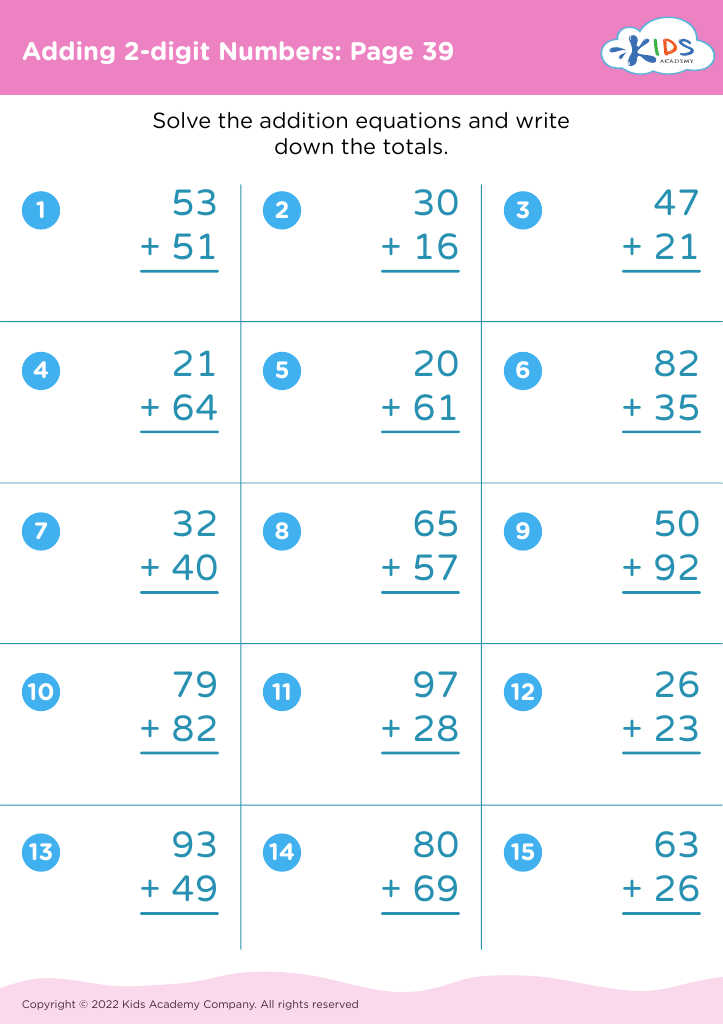
Adding 2-digit Numbers: Page 39

Adding 2-digit Numbers: Page 39

Adding 2-digit Numbers: Page 39
Worksheet
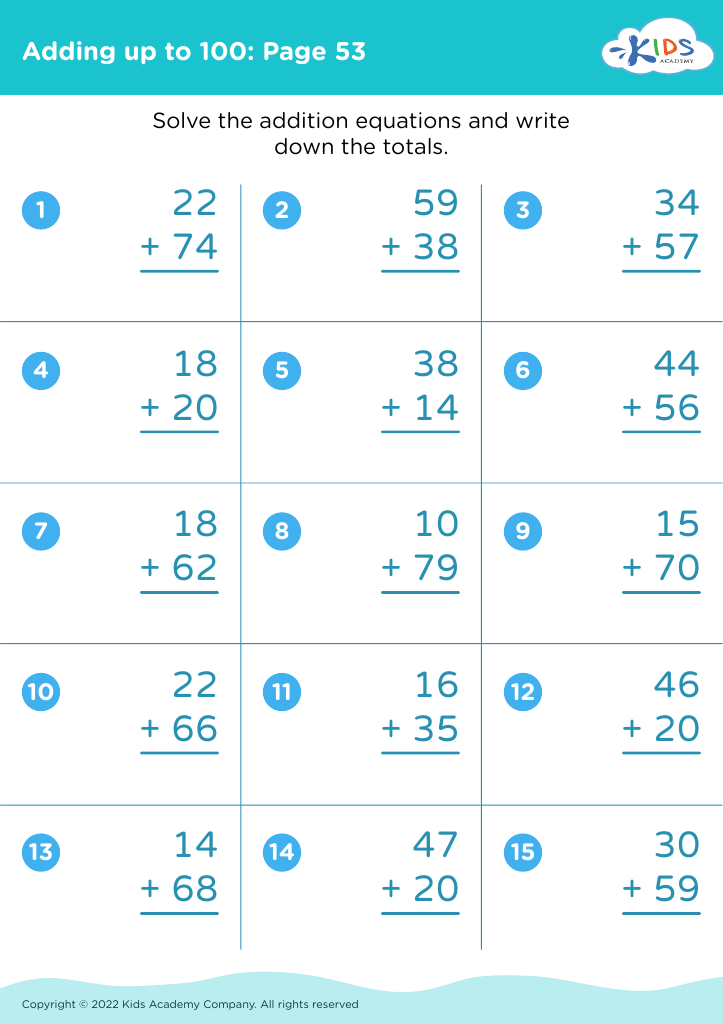
Adding up to 100: Page 53

Adding up to 100: Page 53

Adding up to 100: Page 53
Worksheet
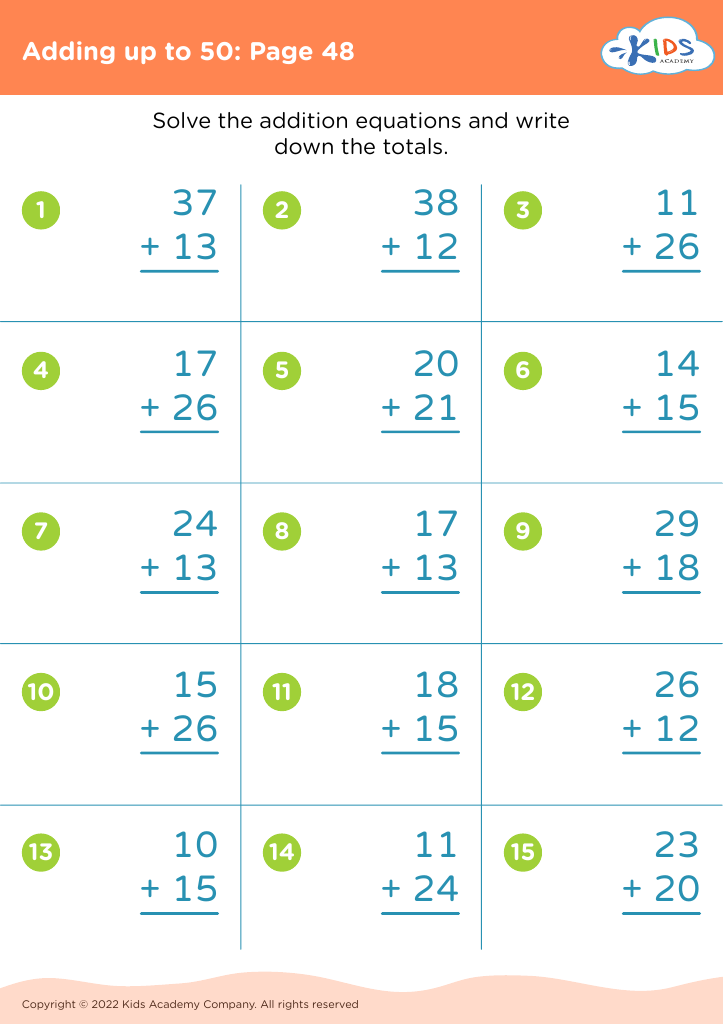
Adding up to 50: Page 48

Adding up to 50: Page 48

Adding up to 50: Page 48
Worksheet
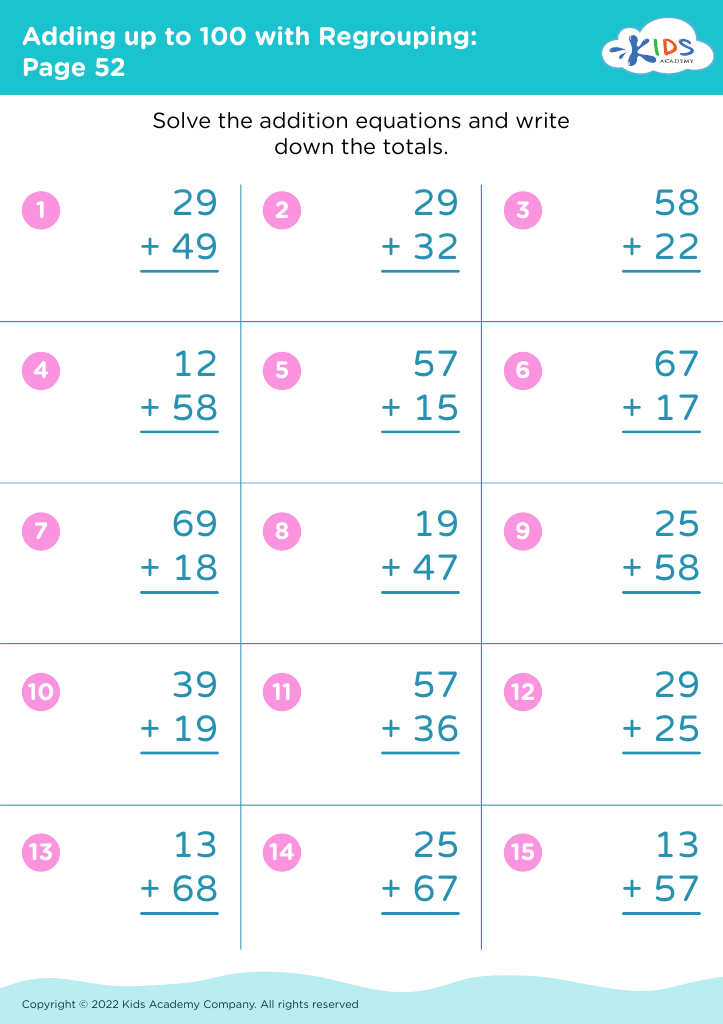
Adding up to 100 with Regrouping: Page 52
Worksheet
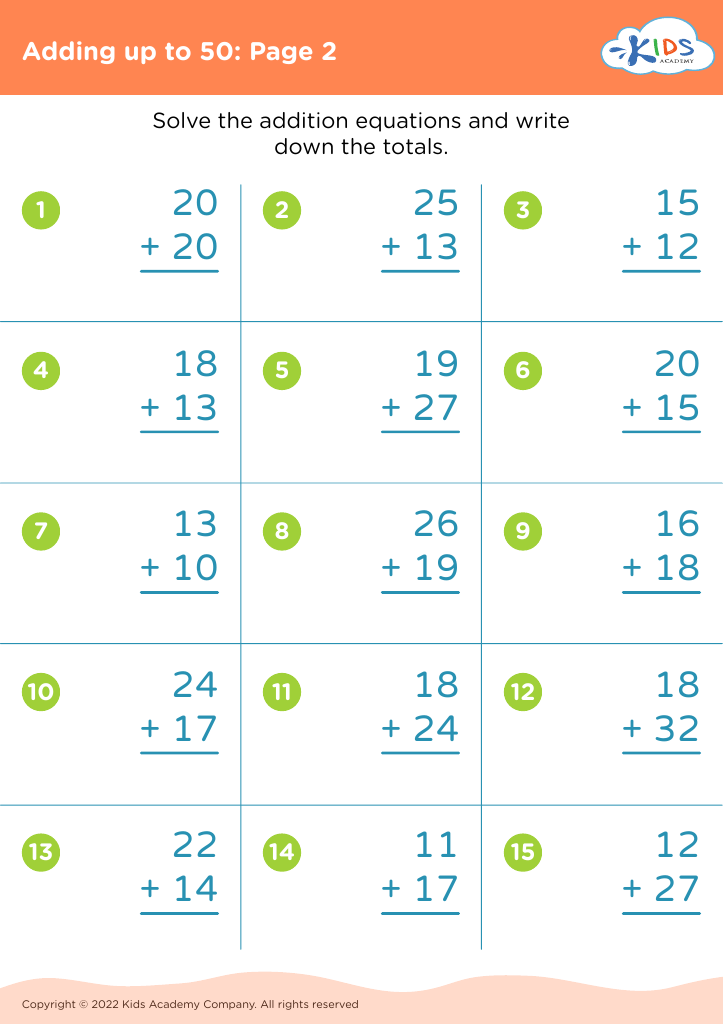
Adding up to 50: Page 2

Adding up to 50: Page 2

Adding up to 50: Page 2
Worksheet
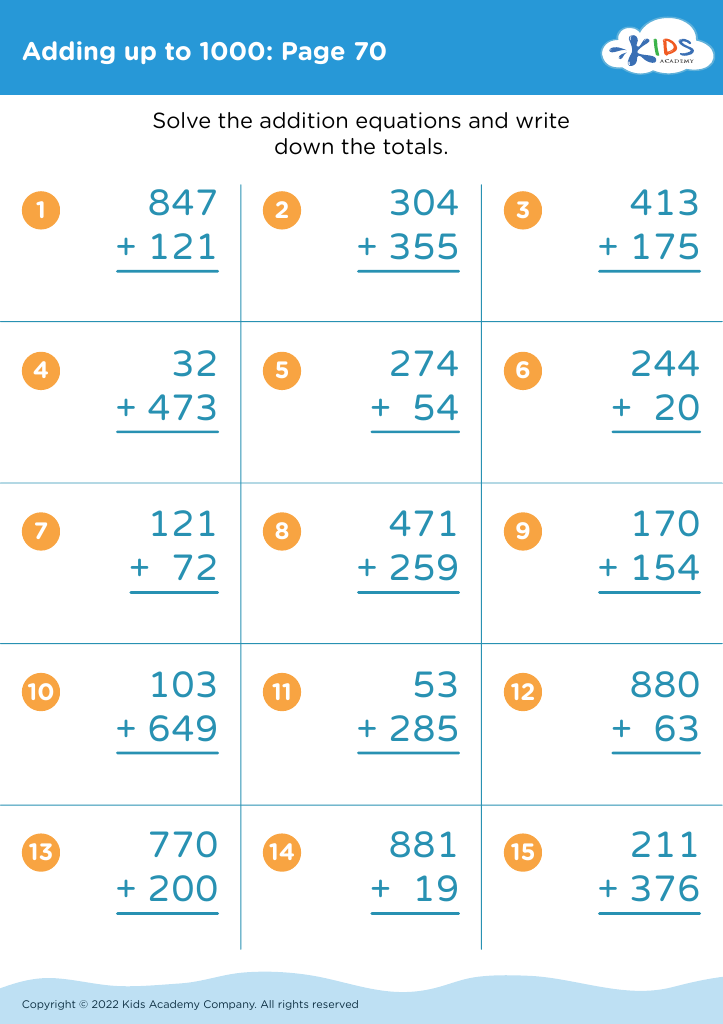
Adding up to 1000: Page 70

Adding up to 1000: Page 70

Adding up to 1000: Page 70
Worksheet
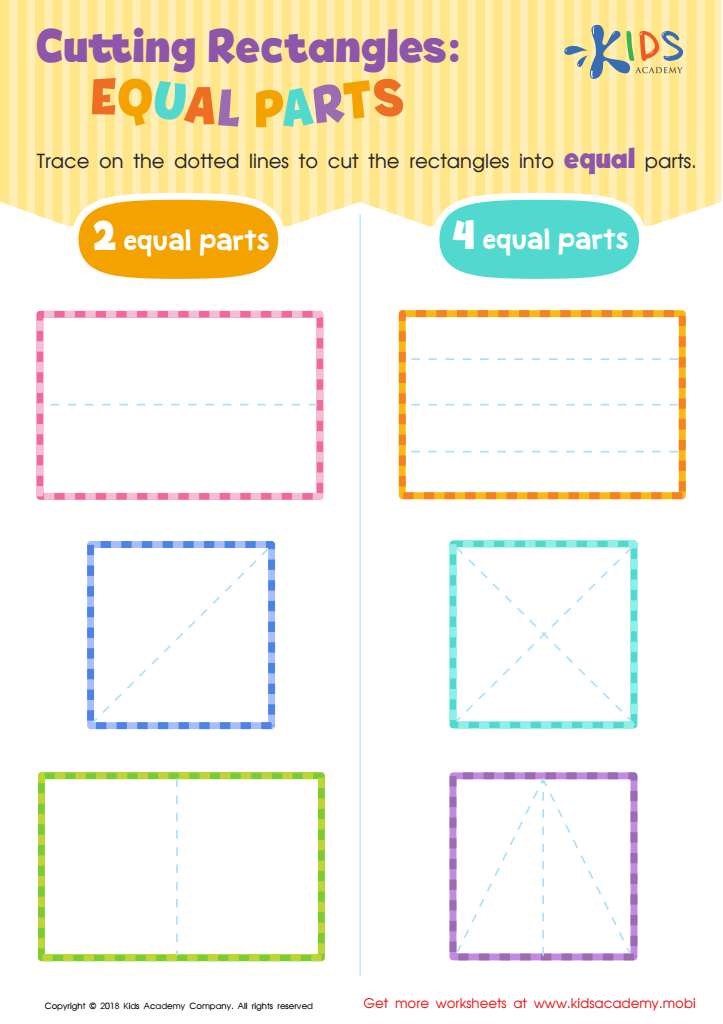
Cutting Rectangles: Equal Parts Worksheet
Cutting Rectangles: Equal Parts Worksheet
Help your child learn to divide shapes into two or four equal parts with this worksheet. It has six rectangles that need to be cut up as directed, following the dotted lines. Show it to your child and watch them gain confidence in mastering this skill.
Cutting Rectangles: Equal Parts Worksheet
Worksheet
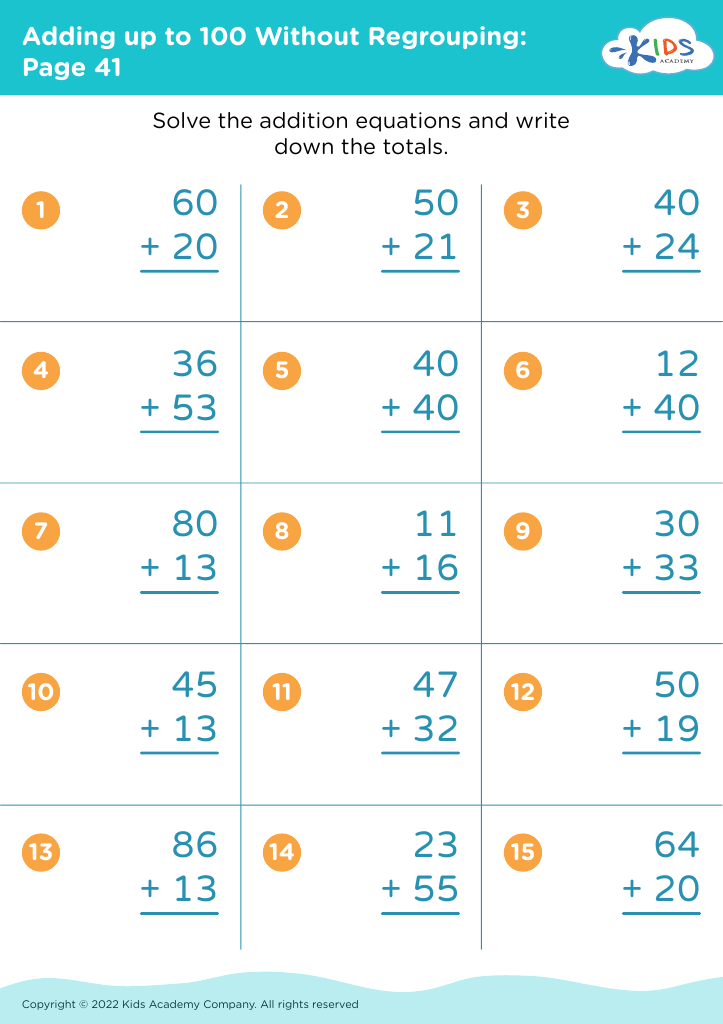
Adding up to 100 Without Regrouping: Page 41
Worksheet
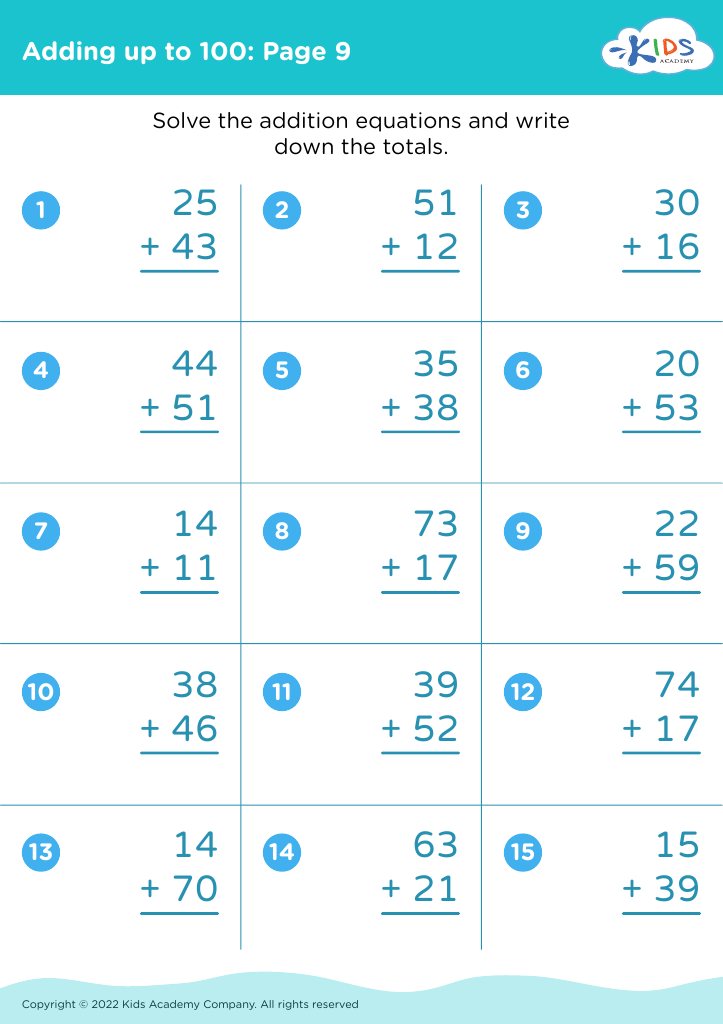
Adding up to 100: Page 9

Adding up to 100: Page 9

Adding up to 100: Page 9
Worksheet
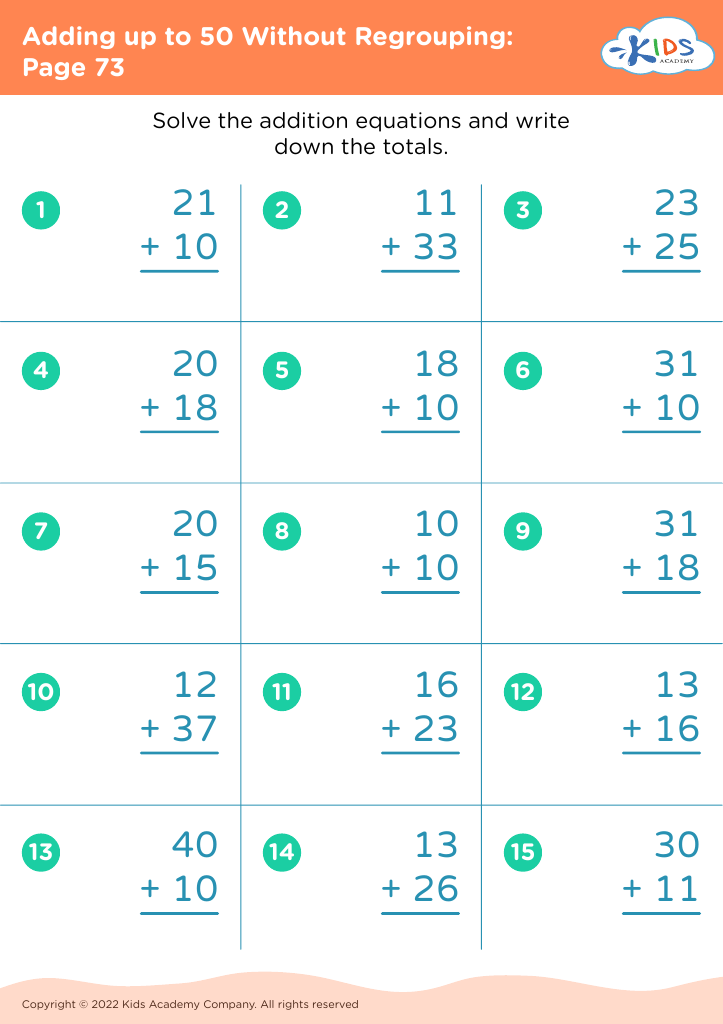
Adding up to 50 Without Regrouping: Page 73
Worksheet
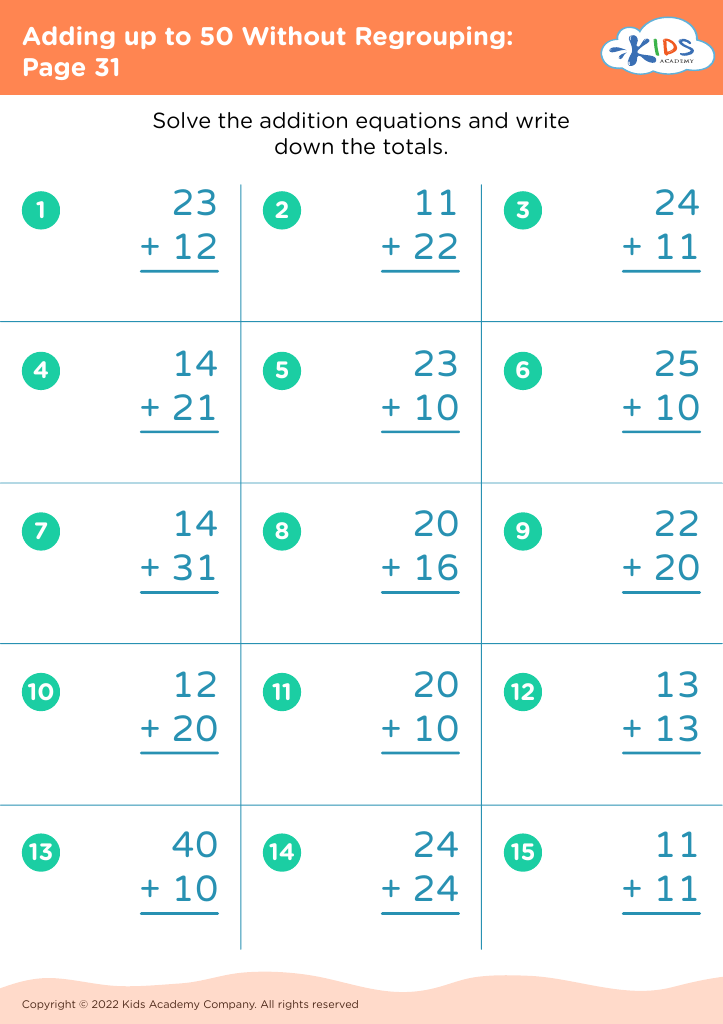
Adding up to 50 Without Regrouping: Page 31
Worksheet
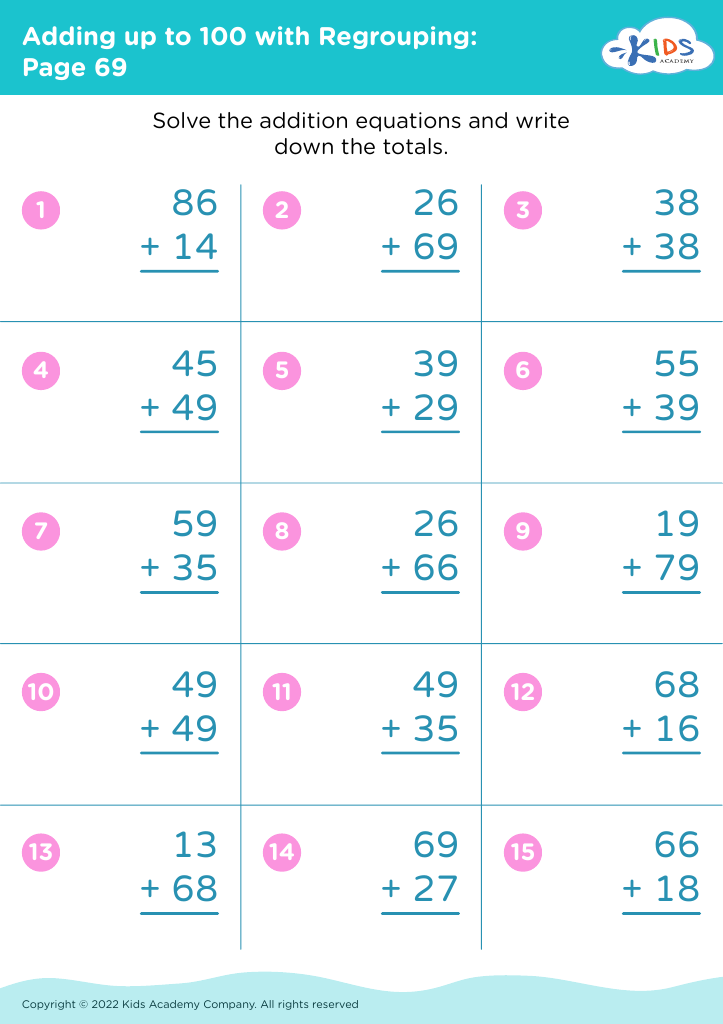
Adding up to 100 with Regrouping: Page 69
Worksheet
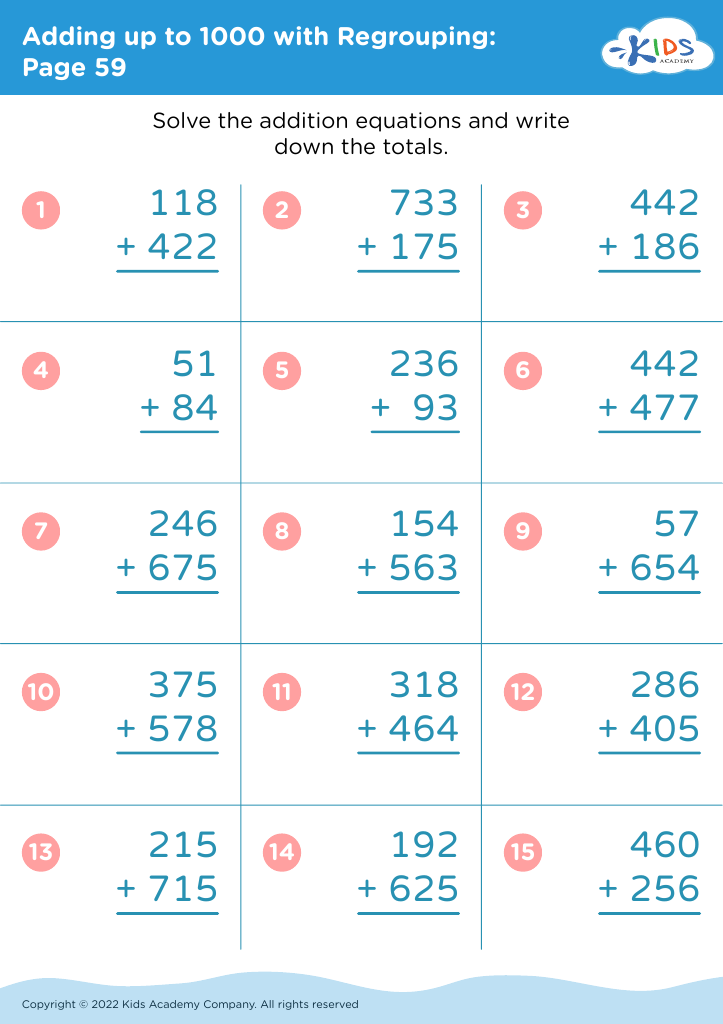
Adding up to 1000 with Regrouping: Page 59
Worksheet
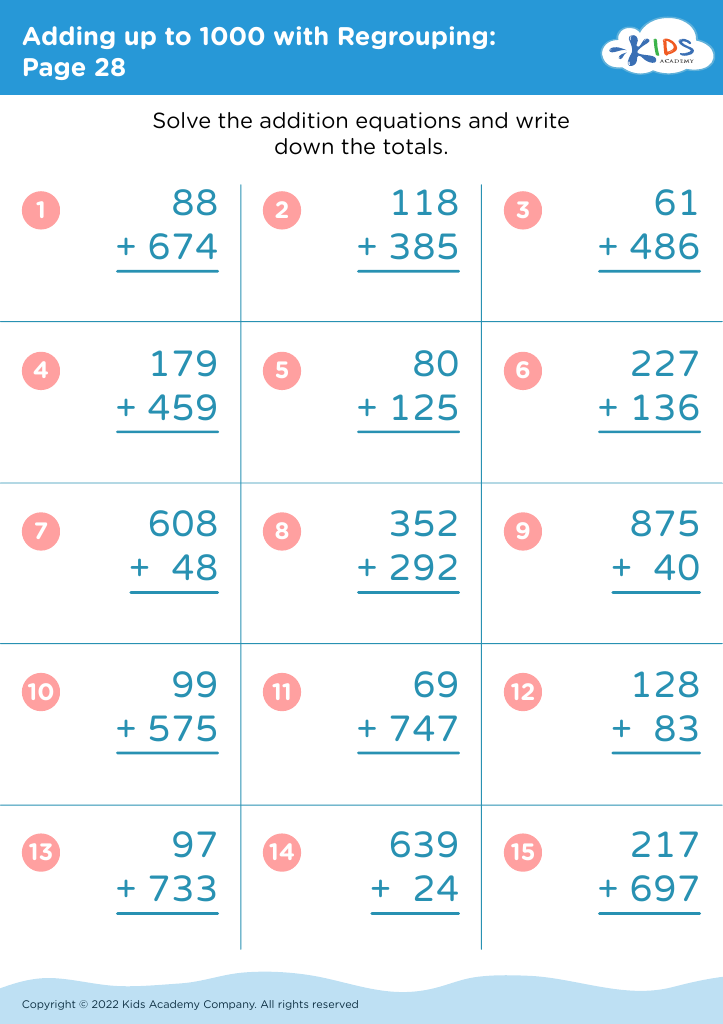
Adding up to 1000 with Regrouping: Page 28
Worksheet


Understanding fractions is an essential milestone for children aged 5-8, making it vital for parents and teachers to engage with this concept early on. At this age, children begin to develop numeracy skills, and introducing fractions helps them understand the idea of parts and wholes, promoting deep mathematical thinking.

Fractions are everywhere in everyday life—from dividing a pizza to measuring ingredients for recipes. By learning fractions, children gain practical skills that contribute to their overall mathematical literacy. Moreover, strong foundational knowledge in fractions helps scaffold later concepts in math, including ratios, percentages, and algebra.

Furthermore, mastery of fractions supports critical thinking and problem-solving abilities. When children manipulate fractions, they learn to analyze and compare, fostering skills that are applicable beyond math, such as in science and finance.

As parents and teachers guide children through this learning phase, they create engaging and immersive activities—like cooking or crafting—that enhance understanding. This nurturing approach not only solidifies knowledge but also cultivates a positive attitude towards math. In essence, investing time in teaching fractions equips children with the tools they need for academic success and real-world problem-solving.