
Understanding grouping Math Worksheets for Ages 5-8
3 filtered results
Difficulty Level
Grade
Age
-
From - To
Subject
Activity
Standards
Explore our "Understanding Grouping Math Worksheets" designed specifically for children ages 5-8! These engaging worksheets introduce young learners to the concept of grouping objects, fostering foundational math skills. By working through fun and interactive activities, students will practice categorizing items based on different attributes, enhancing their problem-solving abilities and critical thinking. Ideal for classroom use or at-home learning, our worksheets make math enjoyable and approachable for early learners. Help your child develop essential math skills through hands-on experiences that promote creativity and logical reasoning. Start exploring the world of grouping today and watch your child's confidence grow!
Favorites
With answer key
Interactive
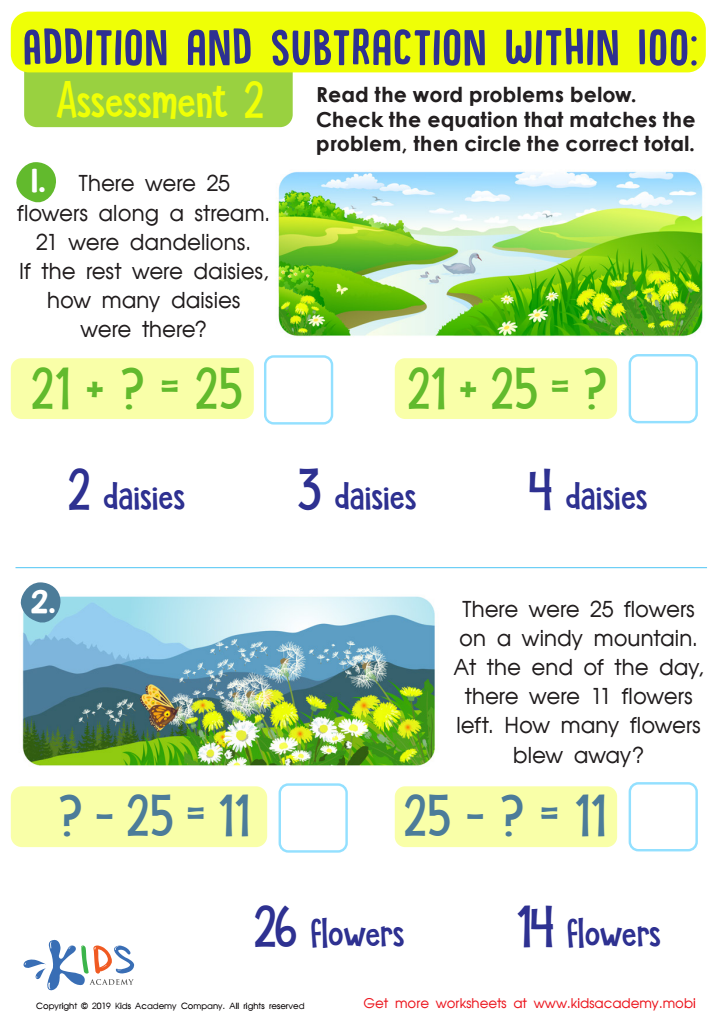
Assessment 2 Math Worksheet
Using fun exercises and pictures, you can get kids excited about math. With practice and reminders of what they've learnt, they'll be solving simple addition and subtraction equations with ease. Read the word problems in the picture to them, then help them check the equation and choose the correct answer.
 Assign to My Students
Assessment 2 Math Worksheet
Worksheet
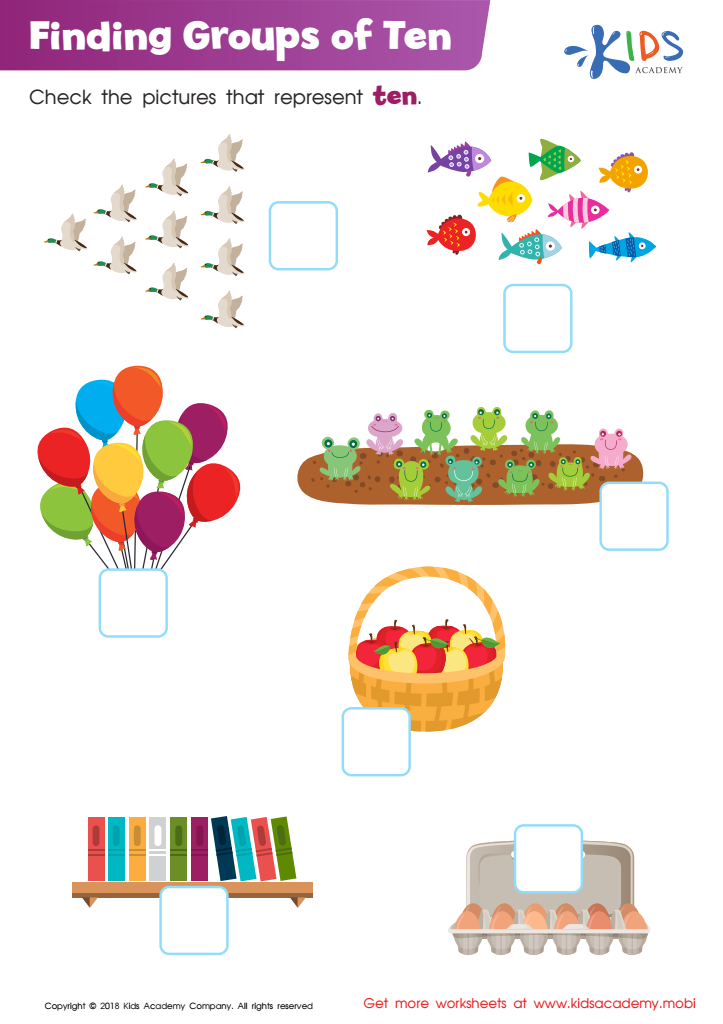
Finding Groups of Ten Worksheet
Can your kids count? If they can't go higher than tens, introduce them to this worksheet. Counting can be fun and easy with this exercise. Ask if they can identify the pictures, then help them count each group. Help them check the pictures that represent ten.
Finding Groups of Ten Worksheet
Worksheet
Join Kids Academy for Free
Who is primarily going to use this learning content?






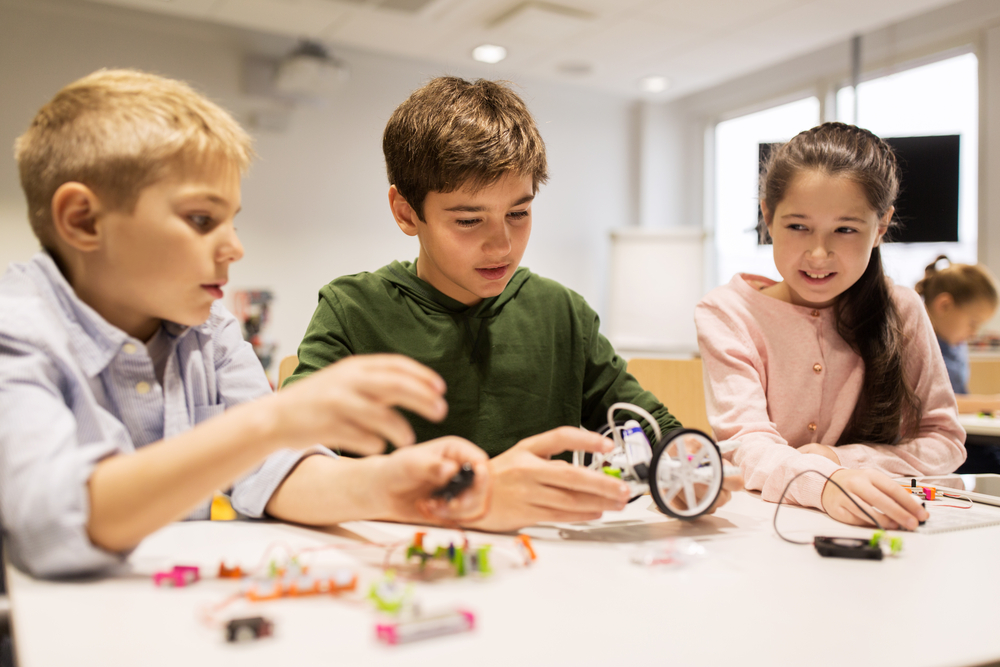
Understanding grouping in math is essential for children ages 5-8, as it forms the foundation for their future mathematical skills and cognitive development. At this age, children begin to explore the concept of numbers and operations, and grouping helps them to visualize mathematical concepts in a concrete way. Grouping fosters logical thinking and problem-solving abilities by allowing children to see relationships among quantities, which is crucial for addition and subtraction.
When children learn to group objects, they develop a deeper understanding of number sense—recognizing that numbers can be broken down into smaller, more manageable parts. For example, the ability to group items helps children understand concepts like even and odd numbers or aid in simple multiplication by adding equal sets.
Additionally, mastery of grouping supports differentiation in learning. Teachers and parents can tailor activities that meet individual children's needs. It also promotes collaboration and communication among peers, as children discuss their grouping strategies. Overall, the concept of grouping nurtures a child's curiosity and confidence in math, paving the way for future academic achievement and a positive attitude towards numbers and problem-solving.








