Understanding mass Math Worksheets for Ages 5-8
3 filtered results
-
From - To
Boost your child’s grasp of mass with our tailored math worksheets for ages 5-8! Designed for young learners, these engaging worksheets help children understand mass through interactive activities and real-life examples. They provide hands-on experiences comparing weights, using balance scales, and exploring measurement concepts. Whether in the classroom or at home, these worksheets make learning fun and effective. Help your child develop a strong foundation in math with expertly crafted exercises that emphasize understanding and application. Perfect for beginners, these printables foster a love for learning while enhancing essential math skills related to mass. Start exploring today!
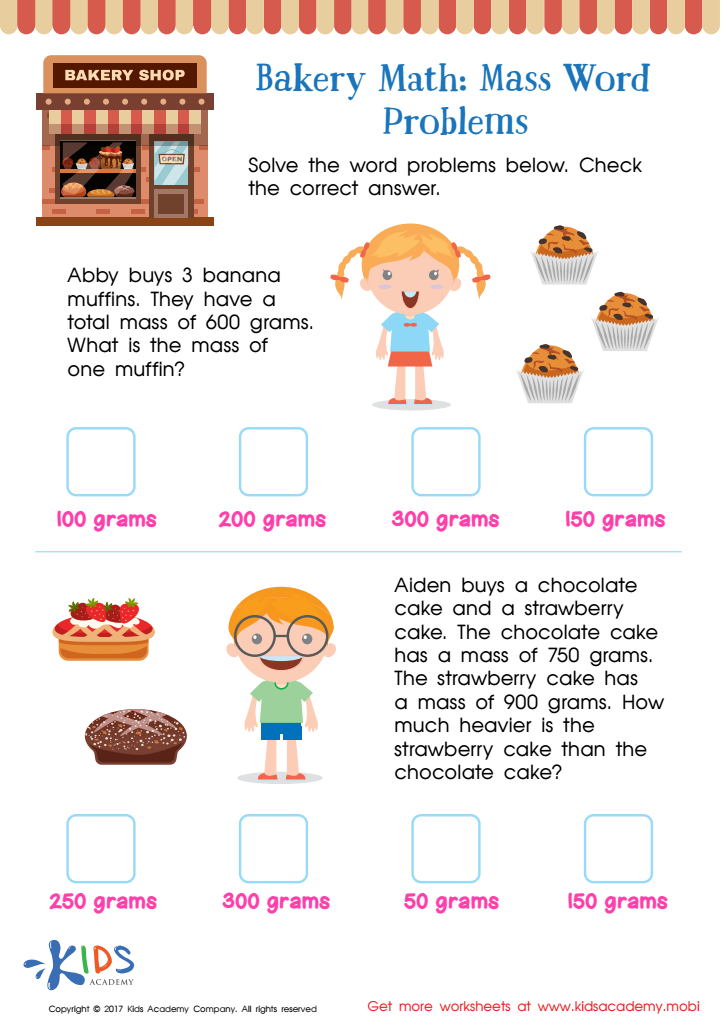
Mass Word Problems Worksheet
 Assign to My Students
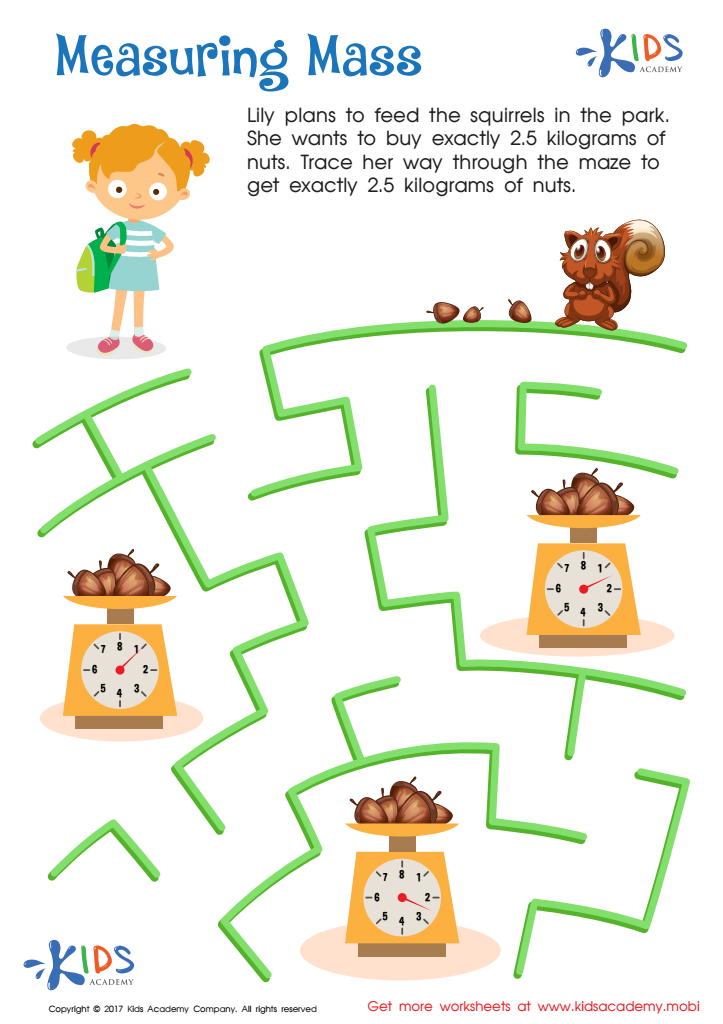
Measuring Mass Worksheet






Understanding basic math concepts, such as mass, is crucial for children aged 5-8 for several reasons. Firstly, these early years are foundational in developing cognitive skills and logical thinking. When children learn about mass, they begin to grasp the concepts of measurement, comparison, and estimation, which are integral to their overall mathematical understanding and literacy.
Secondly, introducing mass and other measurement concepts early helps children relate math to the real world. For example, they learn to understand the difference between heavy and light objects, which can influence problem-solving and decision-making skills in daily life. This hands-on and practical approach engages children, making math more interesting and relevant.
Furthermore, developing a strong mathematical foundation at an early age sets the stage for future academic success. Proficiency in basic math concepts, including mass, is a predictor of later achievement in more complex subjects like algebra, geometry, and even sciences that require a solid numerical grasp.
Parents and teachers should recognize that fostering an understanding of mass and other early math skills enhances not just academic prospects but also critical thinking and reasoning abilities. This nurtures confidence, curiosity, and a positive attitude towards learning, ultimately helping children become well-rounded, intelligent individuals.








