Understanding number relationships Math Worksheets for Ages 5-8
9 filtered results
-
From - To
Explore our engaging "Understanding Number Relationships" math worksheets designed for ages 5-8! These printable resources help young learners build a solid foundation in essential math concepts. With colorful visuals and interactive activities, children will grasp the connections between numbers, reinforcing skills like addition, subtraction, counting, and comparing values. Our thoughtfully crafted worksheets cater to various learning styles while promoting critical thinking and problem-solving abilities. Ideal for both classroom settings and home practice, these materials make math fun and accessible. Dive into the world of numbers today and empower your child with the confidence to conquer mathematical relationships!
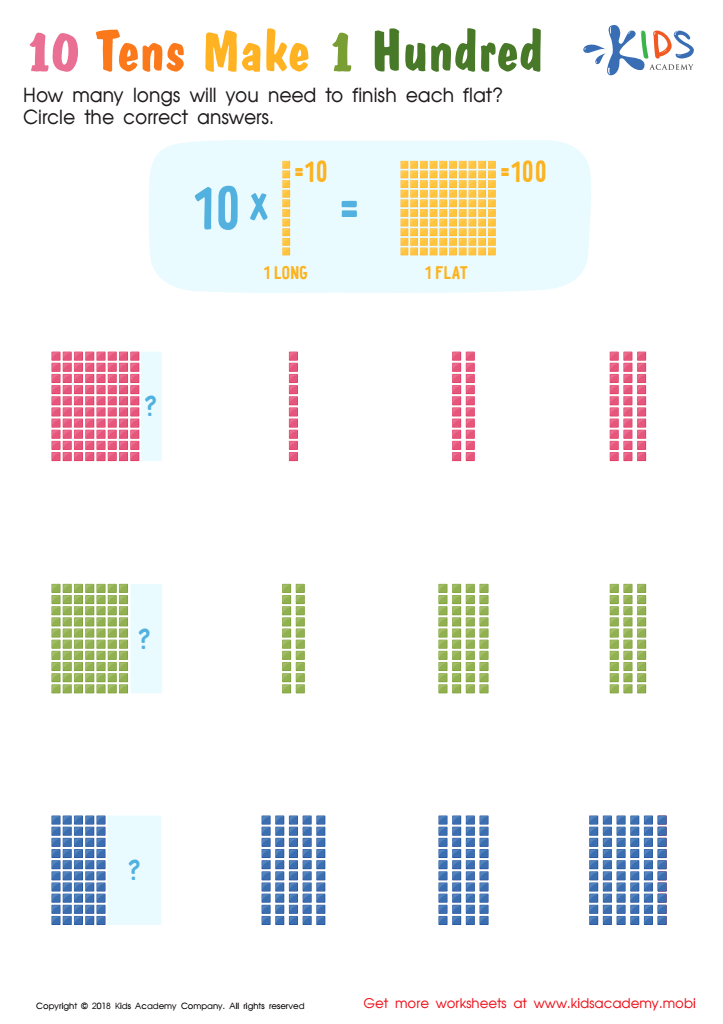
10 Tens Make 1 Hundred Worksheet
 Assign to My Students
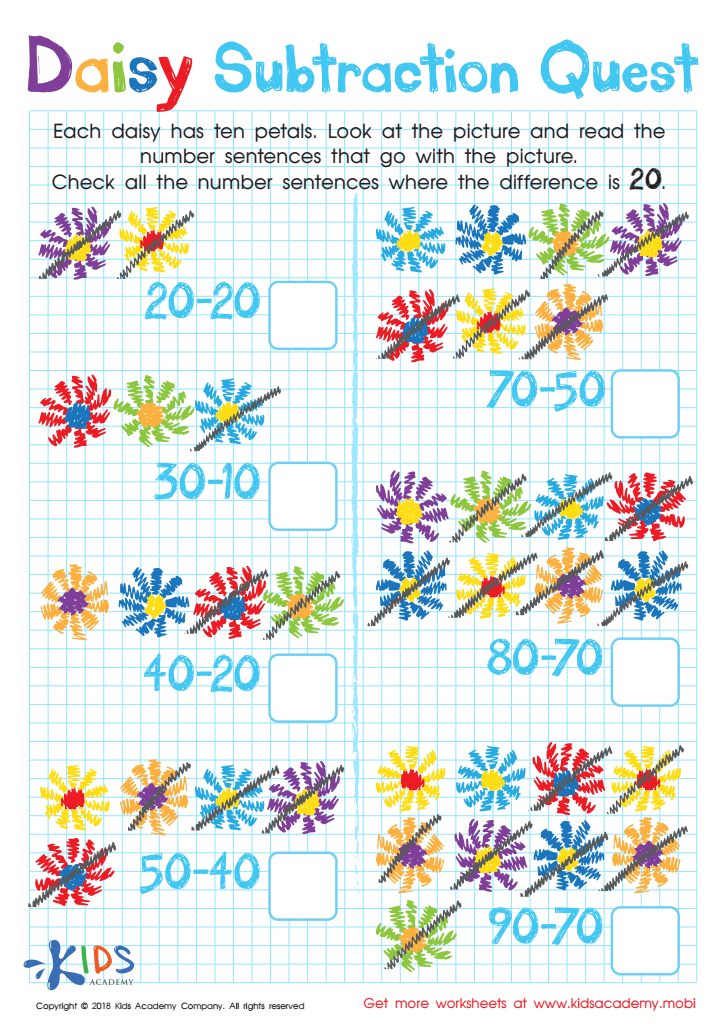
Daisy Subtraction Quest Worksheet
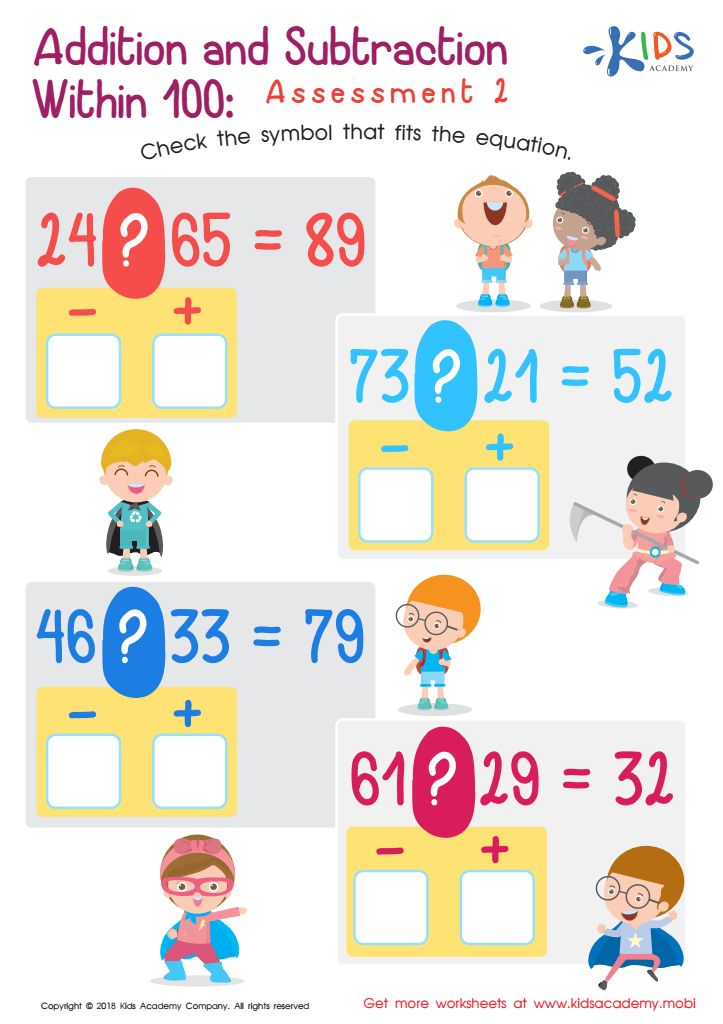
Addition and Subtraction Within 1: Assessment 2 Worksheet
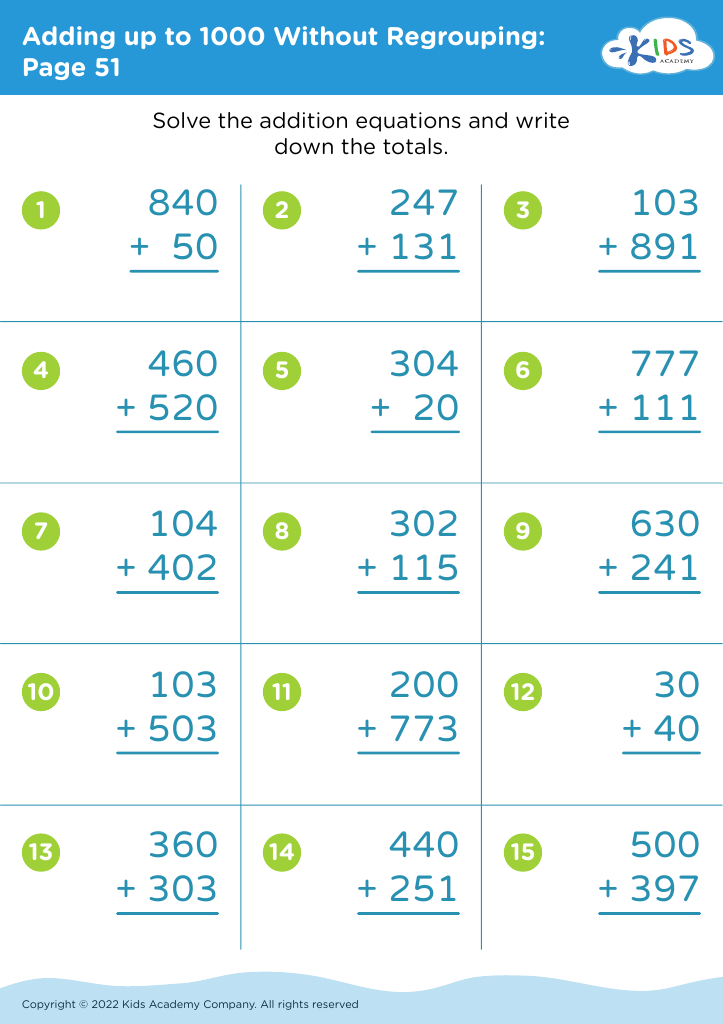
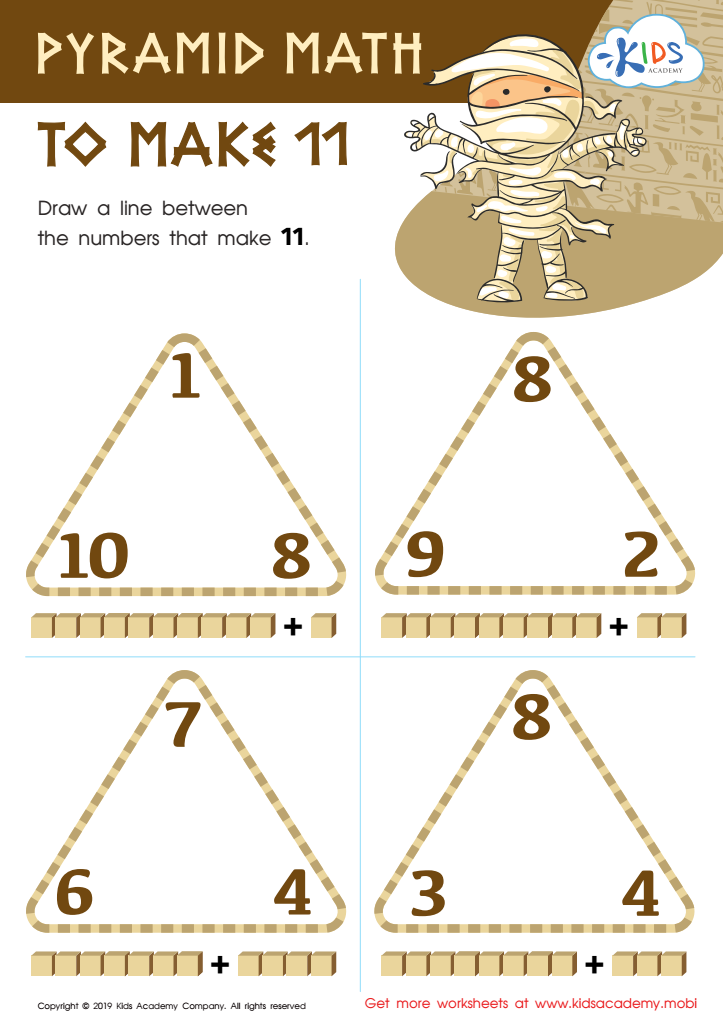
Pyramid Math to Make 11 Worksheet
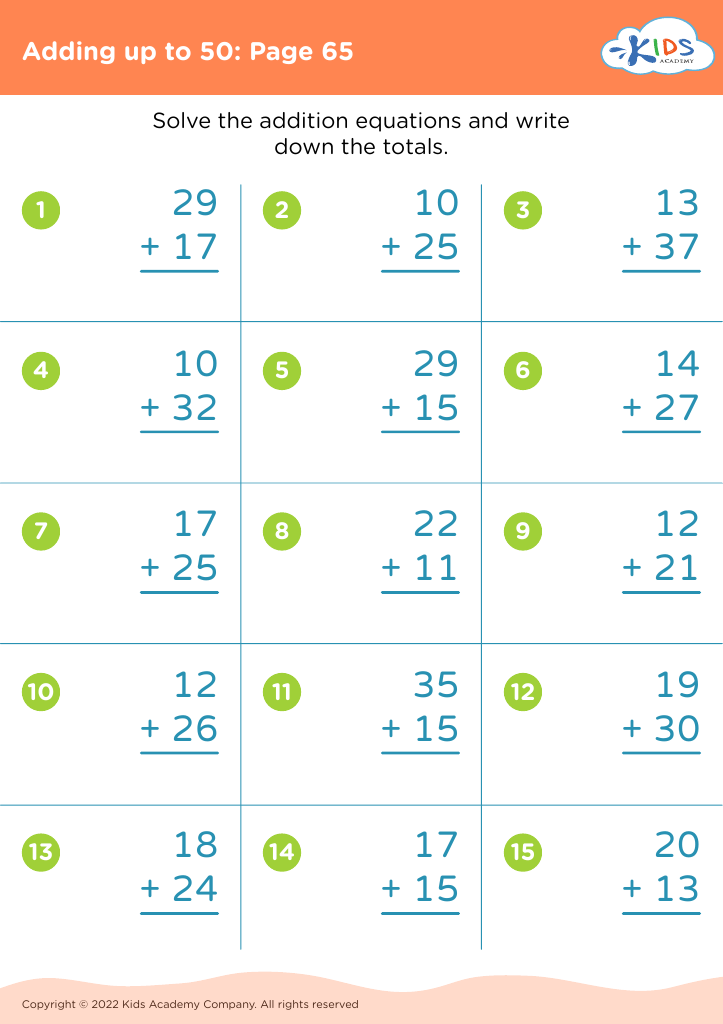







Understanding number relationships is vital for children ages 5-8 as it forms the foundation for mathematical thinking and problem-solving skills. During these formative years, children begin to explore and grasp essential concepts such as addition, subtraction, and place value. By emphasizing number relationships—such as recognizing how numbers are connected, understanding greater or fewer, or seeing the value of numbers in different contexts—parents and teachers can foster deeper cognitive skills.
When children understand how numbers interact, they learn to approach math with confidence and creativity. This early comprehension leads to proficiency in more advanced mathematical concepts later on, such as multiplication, division, and even algebra. Additionally, recognizing number relationships helps children make real-world connections, enhancing their problem-solving abilities both in and outside the classroom.
For parents and teachers, promoting a solid understanding of number relationships can create a positive attitude towards learning math. This mindset encourages children to view math as a fun and engaging challenge rather than a daunting obstacle. Ultimately, investing time and effort in teaching this skill nurtures lifelong learners who appreciate the value of mathematics in everyday life.








